🔥 Hot off the press: We identified how and where AF begins.
I am excited to share this work.
Since the discovery of PV triggers more than 25 years ago, AF ablation has evolved into an empiric therapy centered on PVI. Yet, we have never been able to identify the arrhythmogenic substrate that determines why a premature beat initiates AF at one site and not another.
We believe this study changes that.
In this mechanistic study, we found that AF initiation arose predominantly through reentry originating from a small number of spatially discrete regions with steep repolarization gradients. Their distribution was unique to each patient, and they accounted for more than 92% of AF initiation episodes.
Importantly, the arrhythmogenic substrate was not defined by low voltage, and while conduction abnormalities were often present, they appeared to play a secondary role.
Its patient-specific distribution may help explain the controversy surrounding posterior wall isolation: the posterior wall harbored the substrate in only approximately 30% of patients. Importantly, in redo patients with durable PVI, right-atrial substrate (which is often beyond standard mapping strategies) was identified in 30%.
Most encouragingly, in an exploratory cohort of 24 patients with recurrent AF and durable PVI (50% PerAF), targeted elimination of these sites achieved 87.5% single-procedure freedom from any atrial tachyarrhythmia over a median of 489 days, without antiarrhythmic drugs.
The thoughtful accompanying editorial by Jon Kalman highlights the significance of this discovery and its central translational challenge of bringing it into real-world clinical practice.
But stay tuned! Technology is under development to transform this discovery into a rapid, automated functional mapping.
Current electroanatomic mapping relies largely on voltage amplitude and activation timing. We need to move beyond these measures and map how tissue actually functions - how it conducts, repolarizes, and responds to premature stimulation. This can add the critical dimension that has long been missing from substrate mapping and may reveal what truly makes cardiac tissue arrhythmogenic.
To me, this is the beauty of physiology: there are no black boxes. We can identify the sites that reproducibly initiate the arrhythmia, define their EP properties, eliminate them with ablation, and confirm that arrhythmia can no longer be initiated.
The next steps are prospective multicenter validation and technological development. Together, they may move AF ablation beyond empiric therapy toward truly individualized, mechanism-guided therapy.
📄 Paper in @JACCJournals:
https://t.co/izIR8HbNYk
📝 Editorial:
https://t.co/mYIilXkjJ7
#JACCCEP #AtrialFibrillation #CardiacElectrophysiology #CatheterAblation #EPeeps
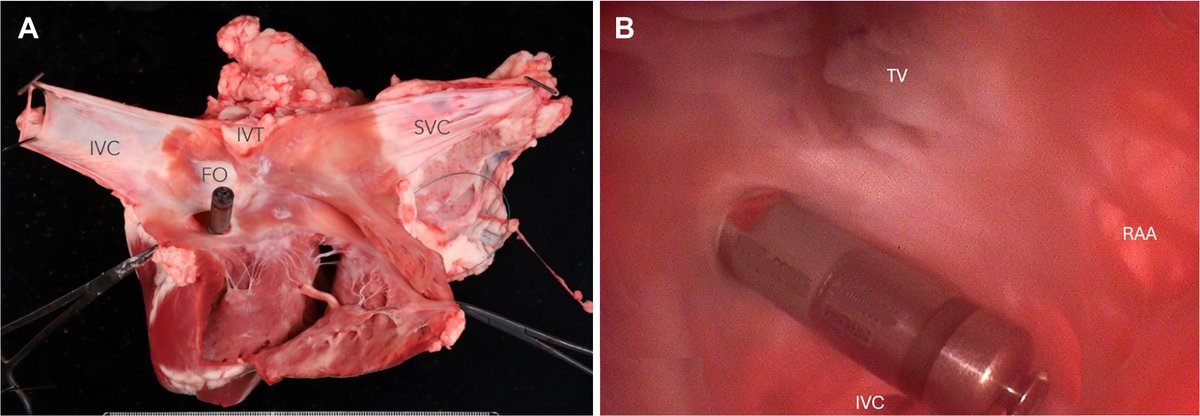
The Septopulmonary Bundle Revisited as an Integrated 3-Dimensional Myocardial Region With Implications for Atrial Ablation
@JACCJournals#DaVincicorner#JACCCR@cardiac_anatomy
Dear colleagues and friends,
I hope you enjoy this video and find it useful.
https://t.co/EwzuWCiopV
CSP is powerful - but you still can't pace what you can't reach.
New open-access review: CS & cardiac venous anatomy for #CRT, a clinician's view.
🔗 https://t.co/dhYtks8bCO #EPeeps
First case with the novel Medtronic OmniaSecure ICD lead at HDZ NRW Bad Oeynhausen, Germany.
Intially attempted as a DDD-ICD with LBBAP utilizing the novelOmnia Secure 4.7 ICD lead and theS45 delivery catheter. @HdzNrw@Phiso_de@chris_sohns@KarHarutyun@Cardioschool@Medtronic
🤩Grateful and proud to share that I’ve been elected Fellow of the European Society of Cardiology (FESC).
🤝This isn’t about a title — it reflects years of shared work, learning, mistakes, and progress in electrophysiology, research, and education.
🙏Huge thanks to Prof. @Phiso_de and the @HdzNrw EP team. Proud to be part of the team! @chris_sohns, Thomas Fink, @MBraunEP, Thomas Eitz, @VanessaSciacca_ , @MoneebKhalaph, @KarHarutyun, @AngelikiDarma, Philipp Lukas, @N_Trajkovska
During pulsed field ablation, a novel ablation index combined with contact force and number of burst pulses provides high prediction accuracy of irreversible lesion depth #Epeeps https://t.co/0FURC177BP
New Evidence in AF Ablation: ICE Matters!
A multicenter study shows that confirming catheter tissue contact with ICE during PFA dramatically improves outcomes.
Recurrence: ICE 12.6% vs Fluoro 22.3%
Reconnection at redo: ICE: 10.3% vs Fluoro: 59.2%
Source: HRJ, 2025 Mohanty et al.
🫀First AF Fellows Workshop & FARADAY programme in Madrid.
A joint initiative by the #MedEd team and R&D, bringing together 12 fellows from 7 countries for two days of real anatomy, hands-on simulation & peer-to-peer learning.
More to come in 2026!
#PFA#Epeeps#CardioX
Great day in Lisbon 🇵🇹 opening the #EHRA VT Ablation Course with anatomy–EP correlations and live specimen demos.
Sharp questions, great energy. Two more days ahead! 😉 @EHRAPresident@ivroca@Petr_Peichl@tomdepotter
CASTLE-HTx 3-year outcomes: effects of catheter ablation & GDMT compared to medical therapy alone in pts w/ end-stage HF & AFib were maintained through 36 months
Primary end-point of death, HTx, LVAD implant: 19.6% in ablation & 40.2% in medical therapy https://t.co/qym9KGCUfQ
I’m pleased to share our latest work: “Antegrade Approach for Left Ventricular Tachyarrhythmia in Patients with Previous Transcatheter Edge-to-Edge Mitral Valve Repair.”
💥 Proud to contribute to advancing VT-Ablation in complex structural heart settings.
@Phiso_de@Cardioschool@chris_sohns@melhamriti
#VTablation #TEER #HeartRhythm #Innovation
https://t.co/8KKNnvs7MI
In England, EP training is being squeezed by the need for dual accreditation in general internal medicine.
We argue that this risks a generation of underprepared specialists.
Our article in AER : https://t.co/xx4WVIVmLp
@tom__slater@drashnisbet@DhirajGuptaBHRS@johnpaisey