The Thoughts of a Spiderweb https://t.co/6b6D3CQYhY via @Pocket This is an interesting read, which mirrors #informationencountering. Serendipity favoring the prepared mind is like the spider dangling a sticky web and thus we have animal examples of IE. @iesanda
https://t.co/a55Uvx33u5 @iesanda The intersection of information encountering and AI to power personalized medical care for conditions the patient and their provider didn't even know they had. :)
6. Next we need to integrate Zotero with SciSummary.
Log in to your SciSummary account and click on your name in the top-right corner and select "Profile."
Scroll down to Zotero and click on "Login with Zotero." You will be asked to sign in to your Zotero account.
Zotero will tell you that SciSummary wants to access your account. Click on "Accept Defaults."
This will integrated Zotero and SciSummary.
@iesanda Thought of you when I saw that, "The discovery occurred serendipitously during a drainage renovation within the tourist attraction of Gough's Cave."
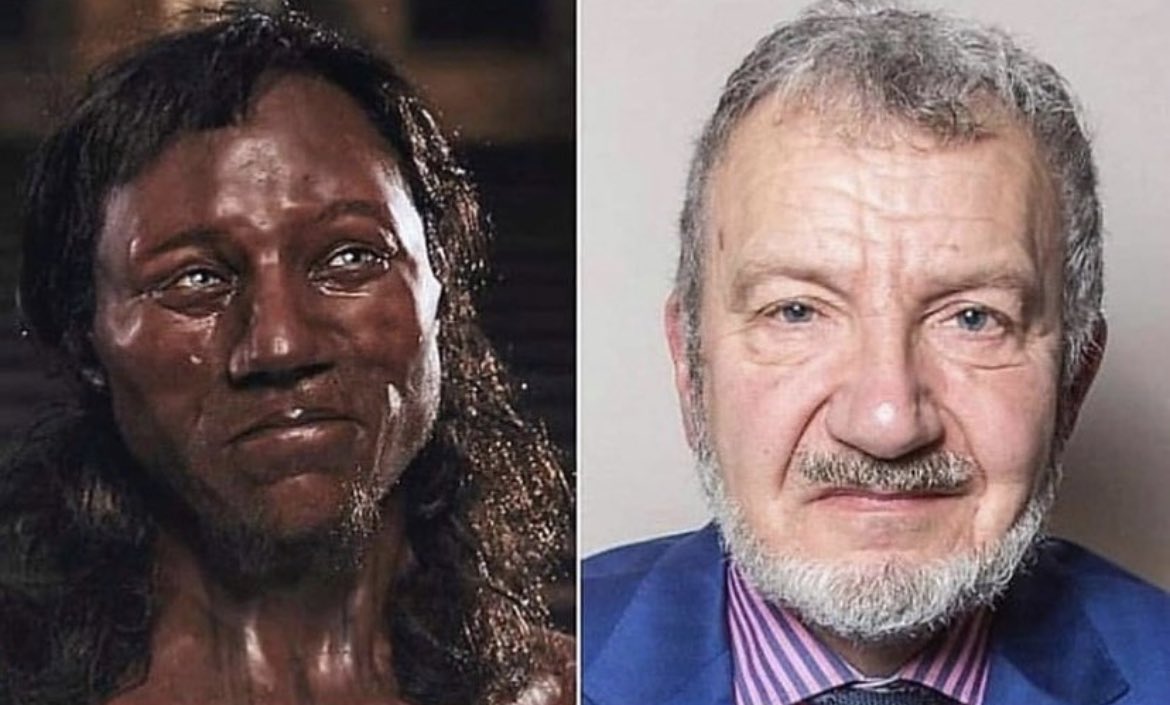
A 9,000-year-old skeleton was discovered inside a cave in Cheddar, England, and was affectionately dubbed "Cheddar Man." DNA testing confirmed that a living relative lived approximately half a mile away, tracing their lineage back nearly 300 generations.
In 1903, while conducting excavations in Cheddar Gorge, Somerset, UK, researchers stumbled upon a remarkable find: the skeletal remains of a Homo sapien who had lived around 9,000 years ago. This individual ranks among the oldest modern humans ever found in Britain. The discovery occurred serendipitously during a drainage renovation within the tourist attraction of Gough's Cave.
Cheddar Man thrived during the Mesolithic period roughly 9,000 years ago. Most likely, he was a hunter-gatherer who passed away in his twenties and stood at a height of approximately 5 feet, 5 inches.
The use of cutting-edge technology has enabled researchers to reconstruct Cheddar Man's facial features, determine his skin and eye coloring, and even discern the texture of his hair. Genetic material extracted from one of Cheddar Man's molar teeth allowed scientists to identify Adrian Targett, a retired history teacher, as a relative.
Upon analysis, it was revealed that Targett's family lineage had endured in the Cheddar Gorge region for approximately nine millennia, with genes passed from mother to daughter through mitochondrial DNA, inherited from the egg.
In simple terms, Adrian Targett and Cheddar Man share a common maternal ancestor.
A 9,000-year-old skeleton was discovered inside a cave in Cheddar, England, and was affectionately dubbed "Cheddar Man." DNA testing confirmed that a living relative lived approximately half a mile away, tracing their lineage back nearly 300 generations.
In 1903, while conducting excavations in Cheddar Gorge, Somerset, UK, researchers stumbled upon a remarkable find: the skeletal remains of a Homo sapien who had lived around 9,000 years ago. This individual ranks among the oldest modern humans ever found in Britain. The discovery occurred serendipitously during a drainage renovation within the tourist attraction of Gough's Cave.
Cheddar Man thrived during the Mesolithic period roughly 9,000 years ago. Most likely, he was a hunter-gatherer who passed away in his twenties and stood at a height of approximately 5 feet, 5 inches.
The use of cutting-edge technology has enabled researchers to reconstruct Cheddar Man's facial features, determine his skin and eye coloring, and even discern the texture of his hair. Genetic material extracted from one of Cheddar Man's molar teeth allowed scientists to identify Adrian Targett, a retired history teacher, as a relative.
Upon analysis, it was revealed that Targett's family lineage had endured in the Cheddar Gorge region for approximately nine millennia, with genes passed from mother to daughter through mitochondrial DNA, inherited from the egg.
In simple terms, Adrian Targett and Cheddar Man share a common maternal ancestor.
@CMExley1@DrDLittle Yeah. And radiographers HATE being called technicians. We aren't physicians, but we have a significant professional knowledge base.
@HarryBliss@salfordrads@SCoRMembers@PromotingRads I have taken in a geiger counter and some random items that in clude a fiestaware cup and a piece of vasaline glass and let them guess which objects might be radioactive. Then we talk about the properties of x-rays and how we use them.
"Burnout is insidious," @edzitron writes for @thisisinsider.
It almost always grows out of a poor work-life balance, but understanding that balance is difficult to do. Zitron explains how toxic managers are creating a burnout crisis. 👇
https://t.co/LR1U8PiSpR
@gazepoint I purchased the UX Bundle earlier this summer and am needing to download the software, but your website is not responding. How can I access the software download?
Helpful steps of feedback & remediation inspired by motivational Interviewing from Dr. Teri Turner
1. Expressing Empathy and Establishing Rapport
2. Developing the Discrepancy
3. Rolling with Resistance
4. Supporting Self-Efficacy
Resourceful reflection: https://t.co/cPxsolMqbU
-Look your learners in their eyes when speaking
-hypothetical questioning, never pimping
-Ask what scares learners
-Teach health equity
-role model
-Feedback formula
-inclusive space
-Radical candor
-Get to know learner
-positivity
@TJRobin00085400@JayKnock@Mizzou Yep . That's what mine looked like from summer welcome '89. They took your picture after the walking tour of campus when you were hot and sweaty - excellent photo material. 😆
This article is really resonating with me. #radiographer education should be about relationship-building.
Activate a Relationship-rich Culture with Three Simple Practices - https://t.co/Y1blGRvdmb via @facultyfocus
New study found informal social interaction within global R&D teams is pivotal and contributes to serendipity. #serendipity
https://t.co/Rw1UYF9sIG