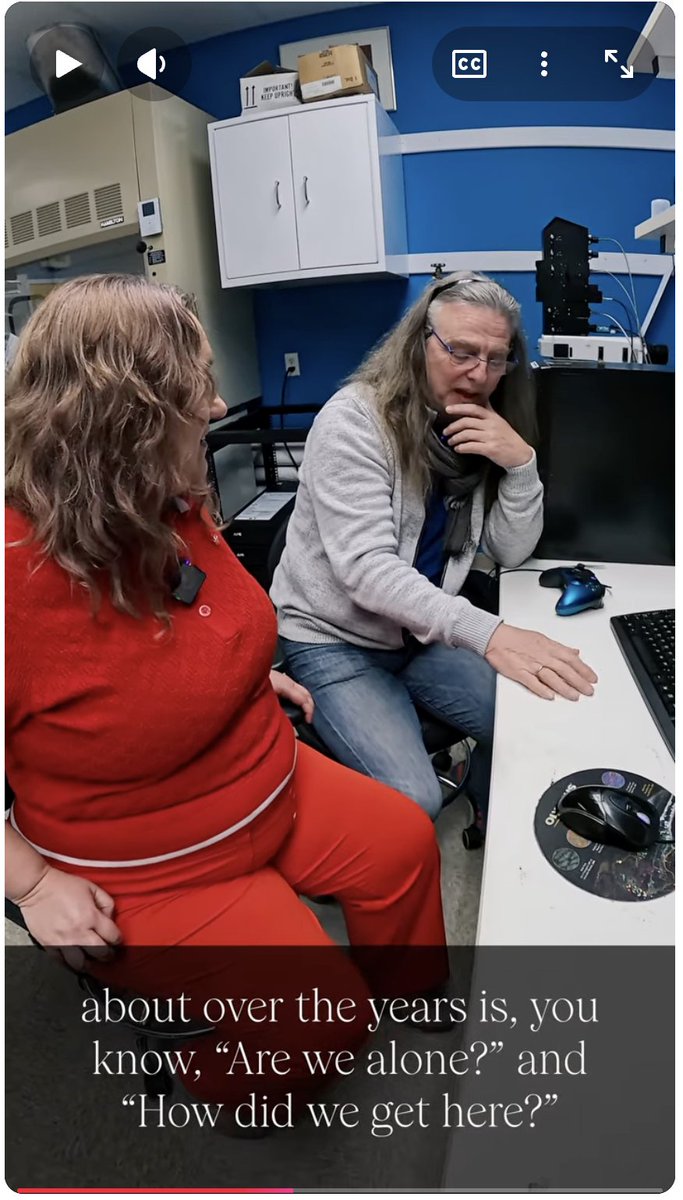
Leading up to #CarnegieScienceDay, we’re diving into some big questions, starting with one of the biggest—How did we get here?
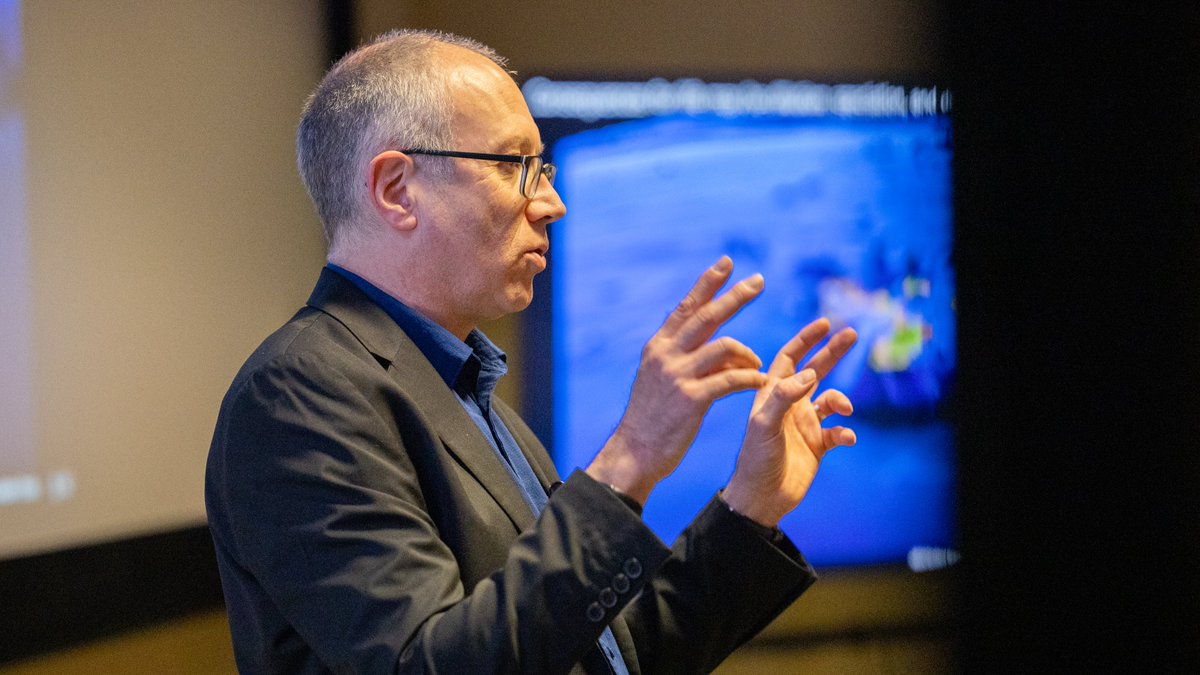
Carnegie's Andrew Steele talks about the search for life on Mars & what it can tell us about life itself.
📽️ https://t.co/2sBQe90UlB
#HBDCarnegieScience
🎉 Congratulations to @CarnegieScience geochemist @SteveShirey, who received @theAGU 2025 Harry Hess Medal last night at #AGU25.
A well-deserved honor recognizing Shirey’s lifetime contributions to understanding Earth’s evolution. 🌍🔬
Read more: https://t.co/OSRxXhjgAU
Undergrads, this could be you! Applications are open for #EPIIC2026.
📍 Earth & Planets Laboratory, DC
📆 6/1–8/7 (10 weeks, paid internship)
🔬 Planetary science, geophysics, geochemistry, astrobiology, & more
💡 Professional development
Apply 👉 https://t.co/p8bj2V2I3X
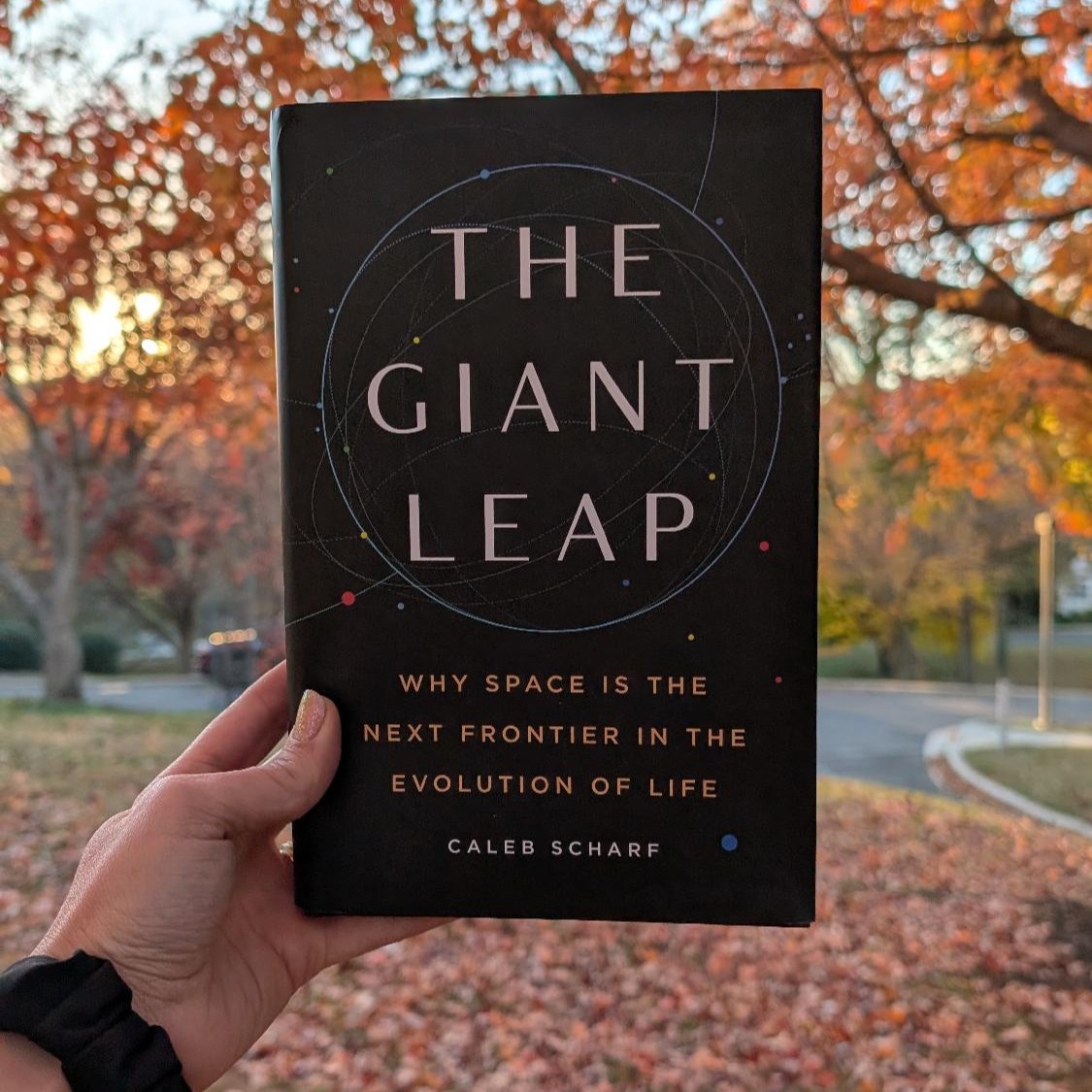
ICYMI: Last week, @caleb_scharf asked us to imagine space exploration as life’s next "Giant Leap" during our most recent #NeighborhoodLecture.
We pulled out five of the most mind-blowing ideas and posted the full recording here.👇🤯
https://t.co/u2HXM41WIL
It’s #NeighborhoodLecture night at the Earth & Planets Laboratory!
Join NASA astrobiologist and author Dr. Caleb Scharf for "The Giant Leap"—a look at how humanity’s move into space could reshape life itself.
6:30 PM (Doors @ 6) | NW DC | Free RSVP👇
https://t.co/JA3I7ijVs2
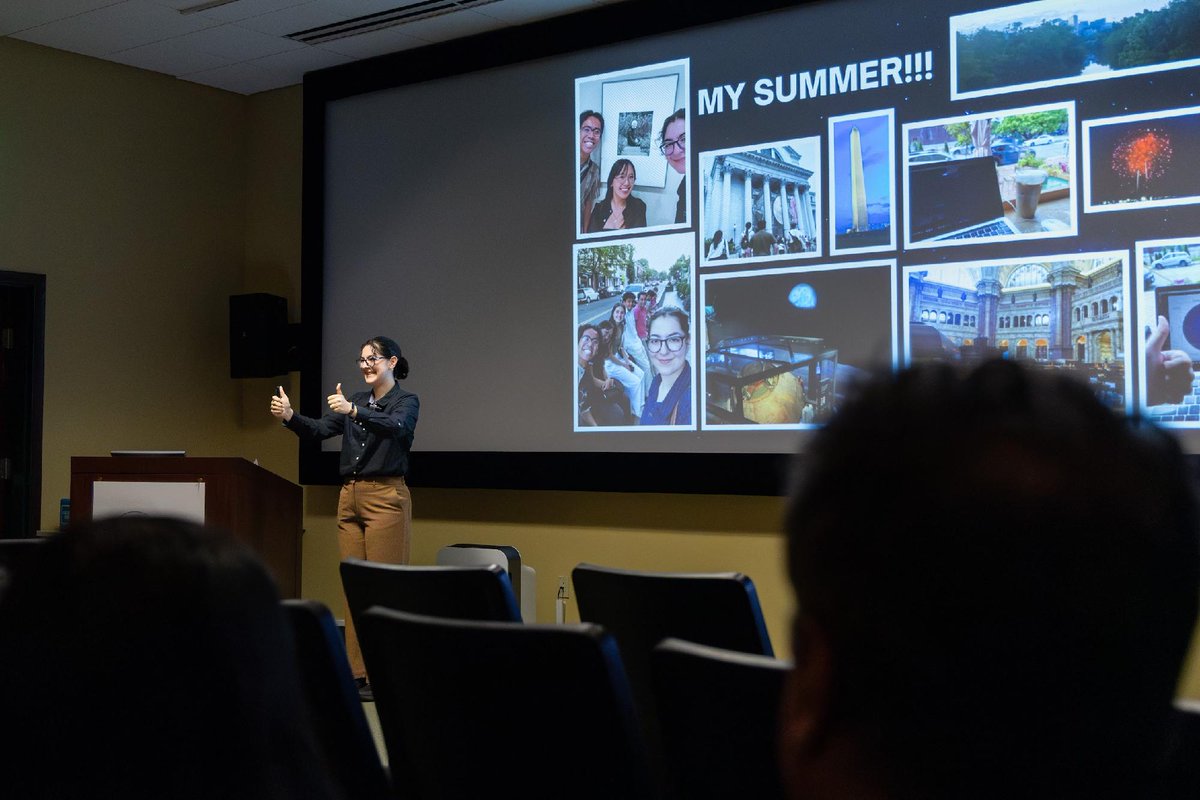
From spying on baby planets to gas giants that shouldn’t exist, our last #NeighborhoodLecture was a rare double feature on the extremes of world-building—told by two @CarnegieScience postdocs.
🎥 Recording + recap: https://t.co/yhyOxoKzpn
#PostdocAppreciation
Thank you to the 500+ guests who joined us for a day of discovery at our first-ever #EPLOpenHouse. It was a blast—literally! 🌋
Your curiosity made the day shine, and we can’t wait to do it again next year!
Until then, check out our upcoming events:
👉 https://t.co/jgYickB9HS
How do planets get wet? 💦
A new study in @Nature, led by Carnegie’s @AnatShahar & @Miozzi_F (now at @ETH_en), shows that water can form naturally during planet formation when hydrogen-rich atmospheres meet molten rock.
No comets required. (1/9)
👉 https://t.co/SI8YavTMrD
For the 1st time in 4 billion years, life has escaped its home planet!
Join @NASAAmes astrobiologist @caleb_scharf as we venture into the void to see how space exploration is reshaping our next great leap.
11/6 | 6:30 PM EST
Carnegie Science, NW DC
👉 https://t.co/VT8W4Drlwx
Discovery awaits at the first-ever #EPLOpenHouse! Meet the scientists, tour the labs, & explore distant worlds—all here in NW DC!
📅 10/25/25 | 1–4 PM
📍 5241 Broad Branch Rd NW
🎟️ Free & family-friendly
Learn more 👇
https://t.co/5xA6QwkyG7
@foresthillsnews@BarredinDC
Rock Scientists 🤝 Rock Creek
Tomorrow, we're taking a break from the lab and heading to Rock Creek Park to help celebrate its 135th birthday with rock facts, science activities, & a revamped astronomy exhibit!
Will we see you there? #RockCreekParkDay
https://t.co/ZCymOGghVB
Shubham Kanodia zoomed in to the planetary level to discuss "forbidden planets" —giant planets that form around low mass stars.
Based on Kanodia's recent models, massive planets form as long as the disk is also massive. The star's size may not matter as much as we thought!
TOMORROW: Two talks, one big night of discovery!
Join @CarnegiePlanets postdocs Sierra Grant & Shubham Kanodia as they reveal how planets are born and the giants that defy all the rules. #NeighborhoodLecture
📅 Sept 25—6:30 PM ET—DC & Online
🔗 RSVP: https://t.co/LthvR91O14
Sierra Grant's talk is all about the composition of protoplanetary disks.
- Disks around Sunlike stars have a lot of water.
-Disks around low mass objects are full of carbon.
-Disks around planetary mass objects are also very carbon rich.
Hey DC, the cosmos is calling… and it wants you to come over tonight!
Join us at 6:30 PM ET for a special double-feature #NeighborhoodLecture featuring Carnegie astronomers Sierra Grant and Shubham Kanodia.
✨https://t.co/cBiI0YOMBo
TOMORROW: Two talks, one big night of discovery!
Join @CarnegiePlanets postdocs Sierra Grant & Shubham Kanodia as they reveal how planets are born and the giants that defy all the rules. #NeighborhoodLecture
📅 Sept 25—6:30 PM ET—DC & Online
🔗 RSVP: https://t.co/LthvR91O14
TOMORROW: Two talks, one big night of discovery!
Join @CarnegiePlanets postdocs Sierra Grant & Shubham Kanodia as they reveal how planets are born and the giants that defy all the rules. #NeighborhoodLecture
📅 Sept 25—6:30 PM ET—DC & Online
🔗 RSVP: https://t.co/LthvR91O14
This Saturday we're headed to the Astronomy Festival on the National Mall (5–11 PM) for hands-on science and stargazing.
☀️ Safe "Sun-gazing"
🌈 Make a spectrometer
🪨 See a slice of Mars
👩🔬 Meet Carnegie astronomers!
https://t.co/QZdwqVBhFo
#AstronomyOnTheMall@HofstraU
So much science, so little time! Join us this fall for inspiring talks, hands-on exploration, and exciting discoveries:
- Astronomy on the Mall (9/20)
- Birth of Worlds, Rise of Giants (9/25)
- @RockCreekNPS Park Day (9/27)
- EPL Open House (10/25)
👉https://t.co/3uHqjGAMKa
It’s #PostdocAppreciationWeek! 🎉
Our postdocs fuel discovery with fresh ideas, sharp insights & boundless curiosity. We’re grateful for all you bring to Carnegie—today and every day.
Learn about our #postdoc program👇https://t.co/xZHRdA2dpt
@CarnegiePlanets The kickoff #TIMESworkshop at @CarnegiePlanets wraps today—but we’re just getting started!
With new collaborations, clear priorities & a 5-year roadmap, this global team is ready to turn 100M years of climate history into a unified timeline.
Stay tuned to see what comes next!