America wants to copy #Shenzhen. But is it copying the wrong things?
@zanehengsperger says America can win the next manufacturing race. After 6 years in Shenzhen, I asked what’s actually copyable—and what isn’t.
I think the answer may surprise both sides. https://t.co/Nrvi0tIP1x
Silicon Valley spent decades putting everything on a screen. Now AI is pulling it back into the physical world.
Hardware. Robots. Factories.
The next race: who can turn intelligence into reality faster?
#AI#PhysicalAI#Hardware#SiliconValley#China https://t.co/HvtimmaP9G
When I was at @Stanford , I planned to spend a year studying abroad through programs in Oxford, Paris and Washington.
Then after my sophomore summer internship at @MorganStanley , I got a return offer, decided to graduate a year early—and missed the whole thing.
I regretted it for years. 😅
Funny how life comes full circle.
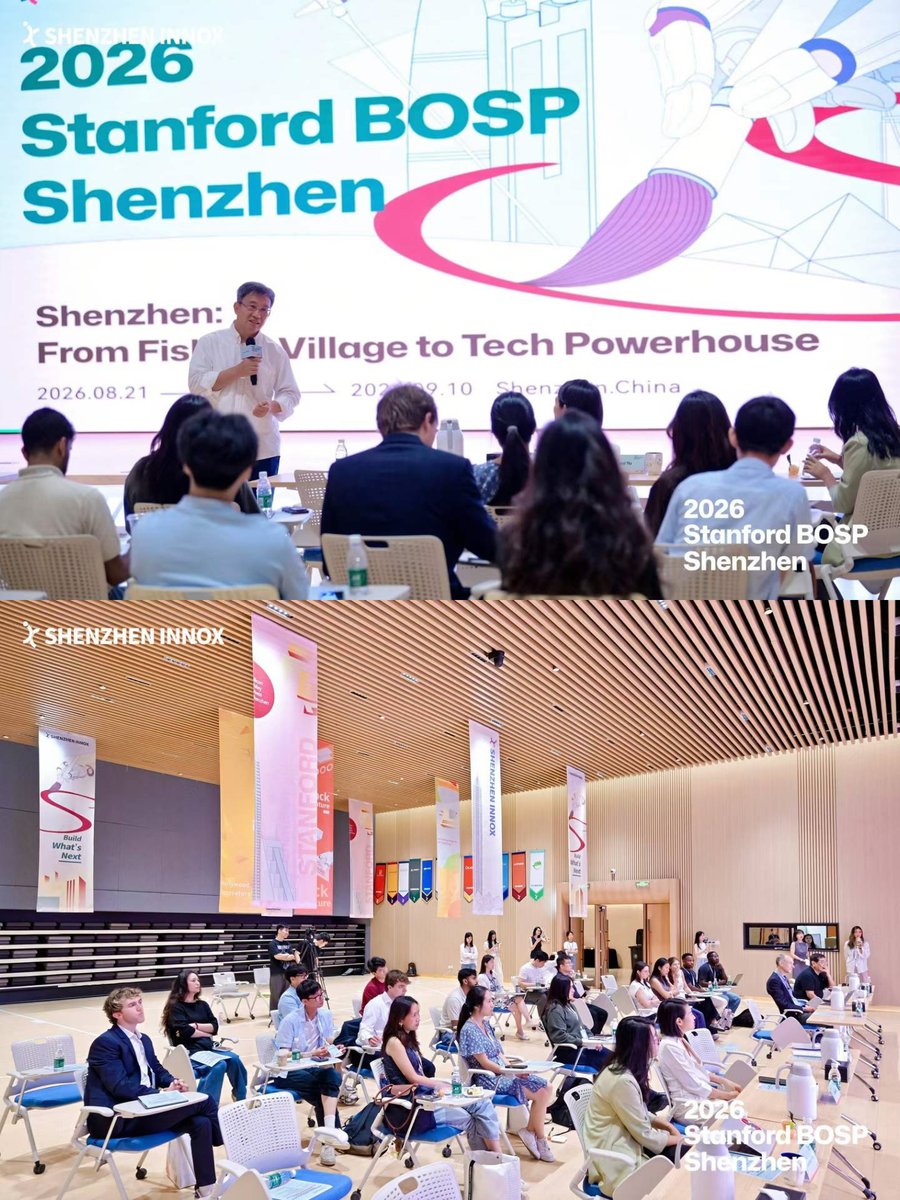
This year, #Shenzhen became a Stanford #BOSP destination for the first time, and we welcomed 15 Stanford undergrads and their professor to InnoX for three weeks.
Their classroom? Shenzhen itself.
They went from product ideas to engineering, prototypes and final pitches, while meeting founders, visiting companies and experiencing the Greater Bay Area innovation ecosystem firsthand.
Years ago, I missed my own Stanford overseas experience. This year, I got to be part of creating one for a new generation of students—in the city I now call home. ❤️
Maybe I got my Stanford abroad experience after all—just from the other side. 😊
#Stanford #ShenzhenTech #ChinaTech #InnoX
But that doesn’t mean America needs to recreate Shenzhen.
The U.S. can build a new manufacturing system with AI, software + robotics from day one.
China is adding the same technologies to an ecosystem that’s been learning for decades.
So the next race isn’t U.S. AI vs. China manufacturing. It’s whose ecosystem can learn faster.
And #Shenzhen can’t afford to stand still either.
What’s hardest to copy about #Shenzhen isn’t the factories. It’s what happens between them.
Decades of know-how. Engineers who know what will break at scale. Suppliers who know exactly who to call. Trust built through solving thousands of problems together.
Shenzhen’s real density isn’t just physical. It’s knowledge + relationships.
What’s hardest to copy about #Shenzhen isn’t the factories. It’s what happens between them.
Decades of know-how. Engineers who know what will break at scale. Suppliers who know exactly who to call. Trust built through solving thousands of problems together.
Shenzhen’s real density isn’t just physical. It’s knowledge + relationships.
AI is getting smarter. Are we?
After conversations with @tegmark, Kiril Sokoloff & @wef, one question stays with me:
What must remain fundamentally human?
#AI#FutureOfWork#SiliconValley https://t.co/grZlnQhlRD
The U.S. is blocking new Chinese robots. 🤖
Security concerns are real. But so is the race to control the next technology ecosystem.
Where does national security end—and protectionism begin?
#FCC#Unitree#Robotics#HumanoidRobots#ChinaNews#TechNews#chineserobots
My latest #InsideChinaTech 👇
https://t.co/C5zZ5DCBJ2
In the #AI era, ideas are getting cheaper. What stays rare?
Finding a real problem, the right people—and actually building it.
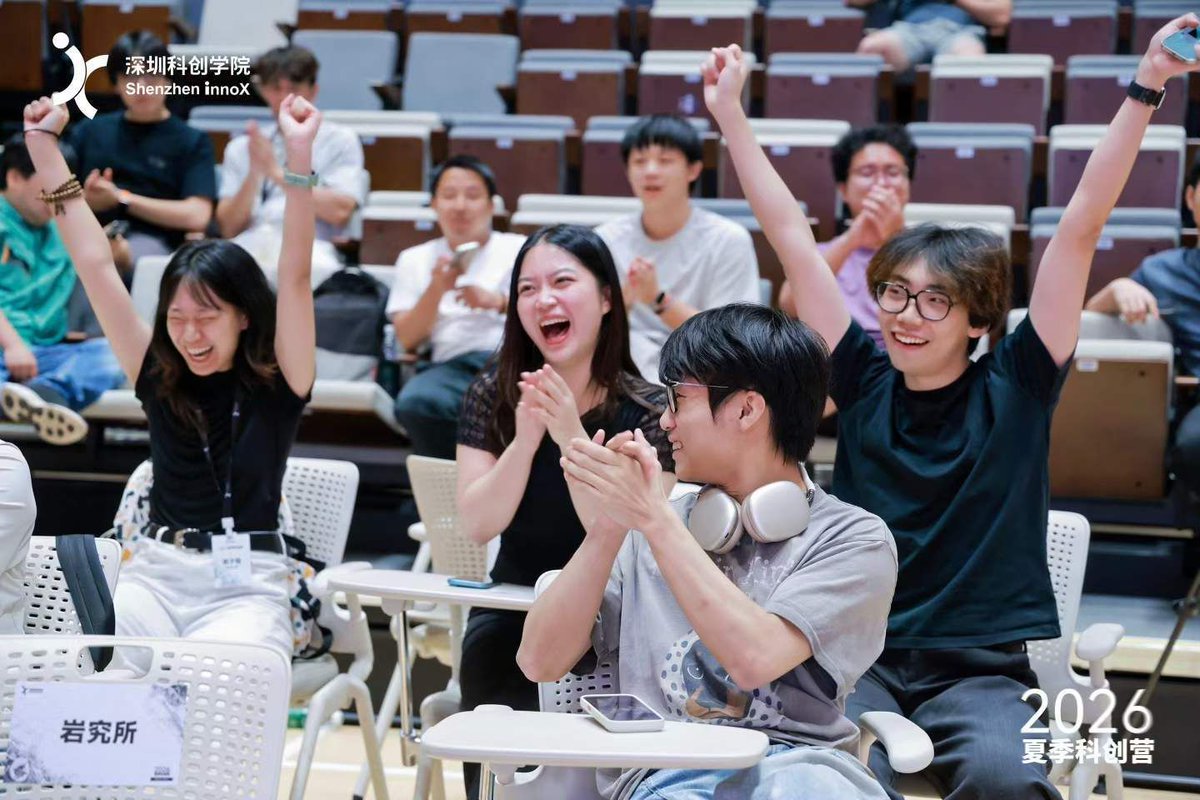
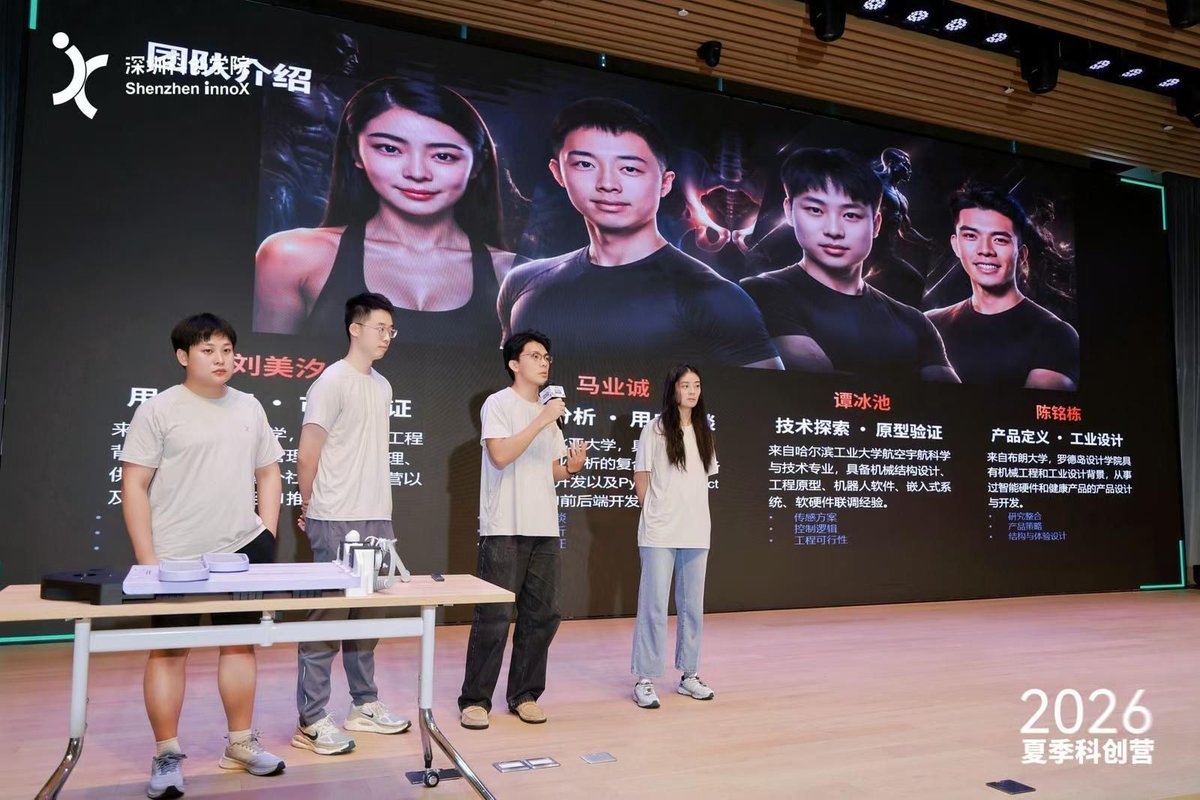
14 days at #InnoX Summer Camp with talented young entrepreneurs, turning ideas into real products.
The camp ends. The building begins. #Shenzhen#China
Why do some founders build great companies—while a rare few reshape entire industries?
I looked at @elonmusk, @nvidia’s @JensenHuang, and founders I’ve interviewed over the years.
The pattern I found surprised me. https://t.co/Xjn3DvRJVN
First post on X 👋
I’m Carol Yu, host of #InsideChinaTech, based in Shenzhen at the heart of China’s tech ecosystem.
So let me start here:
When did China suddenly become… cool? 🇨🇳
https://t.co/jNuCRmOrvD
#ChinaTech#Shenzhen