And it begins
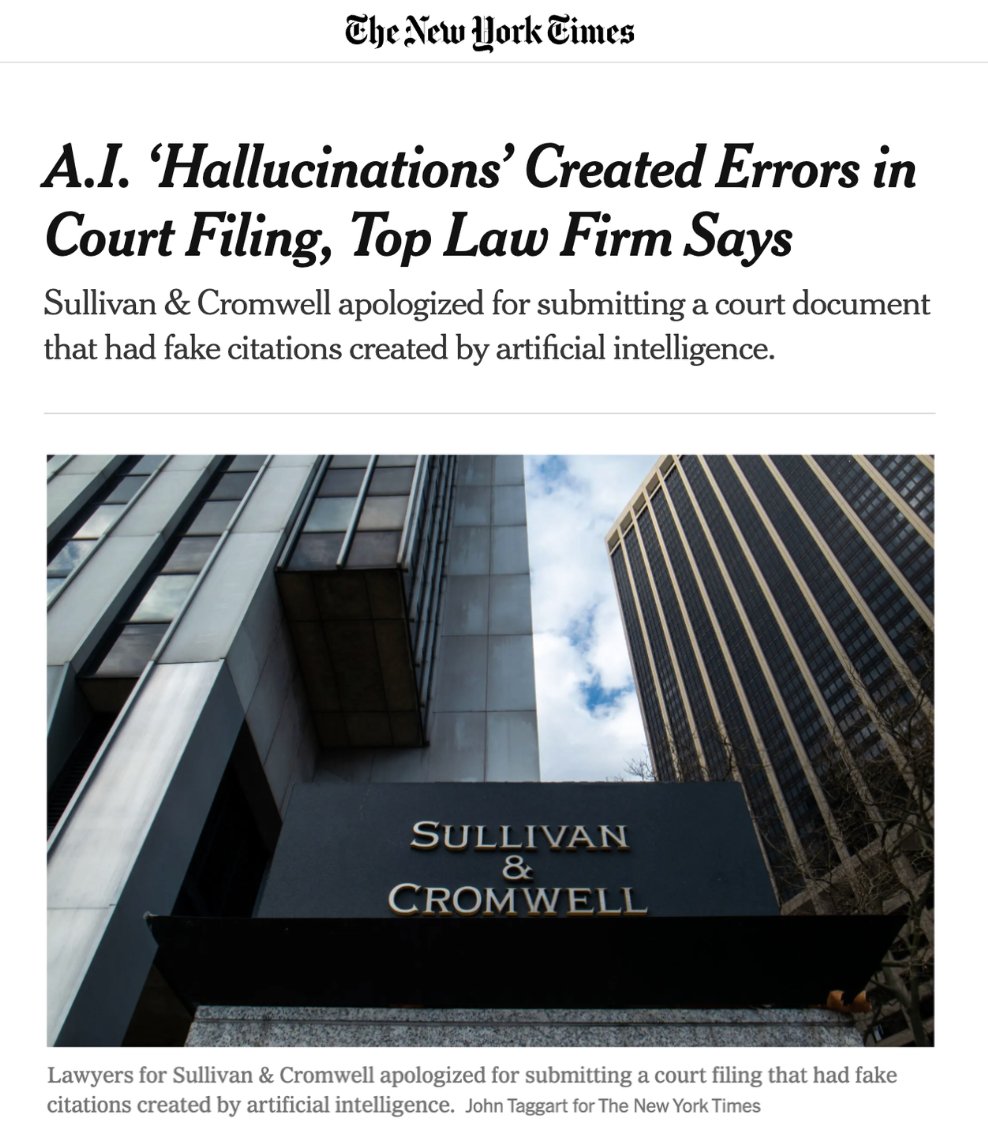
Sullivan & Cromwell just admitted to a federal judge its court filings contained AI hallucinations
The firm apologized to the federal judge as they had to submit multiple corrections focused around:
• Fictitious Case Names: The filing included names of legal cases that do not exist
• Fabricated Quotes: The document contained direct quotes that were never actually spoken or written
• Non-existent Statutes: The AI incorrectly analyzed or entirely invented provisions within the U.S. Bankruptcy Code
The primary team and secondary review all failed to catch these errors, meanwhile the firm's partners bill $2,000+ per hour
The RAND Budget Model Initiative has been developing several new tools for exploring the U.S. Tax Code including new ways of understand why complexity has been growing. You can read more about our #tax work here:
https://t.co/YWlhk3vHOU
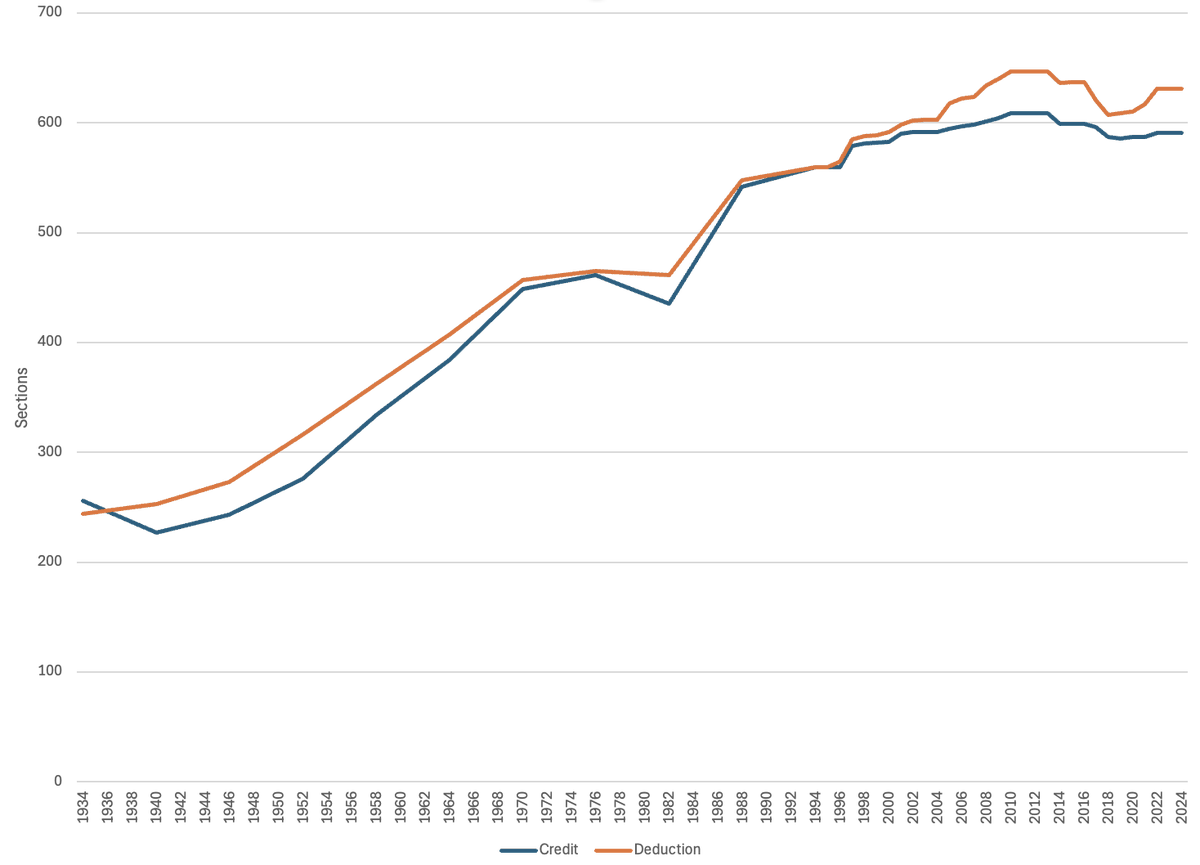
(4/) More Tax Credits and Deductions: Each year the number of tax credits/deductions increases by 3-4, though this too has slowed in recent years. (also, only about three dozen of these are for individual filers--the vast majority are for corporation, partnerships, and etc.)
(5/) Also, as your income increases, you have different types of income, and your family grows, the complexity of filing your taxes will increase. Thus, American's are likely to feel more of a burden from taxes as they age regardless of the increase in complexity.
I had a great chat on
@pitchforkeconomics
about a gloomy topic: the cost of fifty years of rising income inequality. You can read more about this research here (link fixed):
https://t.co/BCSZLwuj8s
What would your life look like with an extra $40,000 a year?
That’s what inequality has cost the bottom 90%.
This week, Nick & Goldy talk to @CarterCPrice from @RANDCorporation about the $79 trillion price of inequality.
🎧Listen here → https://t.co/NbEeHvNcsB
8/8 You can read more about this and a lot of other findings here. Now that we've built the tool, we have an ambitious research agenda applying modern analytic methods to explore #tax and fiscal policy.
https://t.co/tZDDzeYl2r
1/8 We have a new tool for tax policy resarch. RAND's tax code analysis tool uses natural language processing, machine learning, and network analysis to map the Internal Revenue Code (U.S.C. Title 26) line-by-line. You can read about it here: https://t.co/YWlhk3vHOU
Until people can trust AI to do their taxes, they shouldn’t trust it to do their jobs. That gives us a little time to prepare—but not much, writes @CarterCPrice
https://t.co/yzGfBK3EVK
@MattBruenig They almost certainly have integrated it for customer services. But when a general use system can do my taxes, why would I bother with Intuit?