@mikewarot@aryehazan I mean, all of those OSes have access control mechanisms and don't allow userspace apps to do arbitrary things, so... not really getting what you're trying to say?
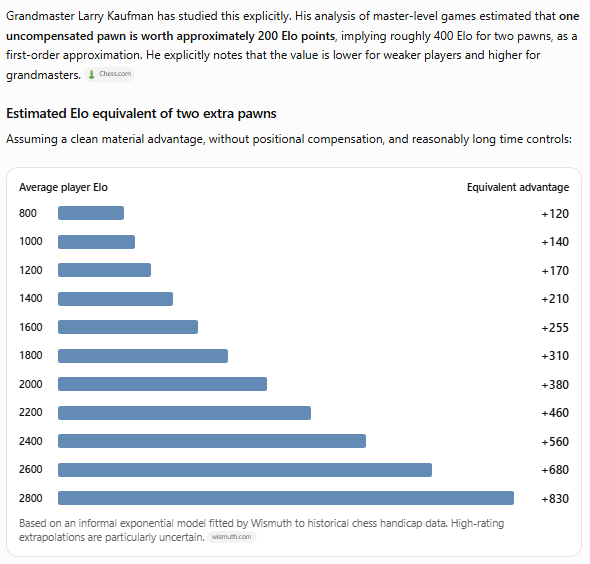
@haoxingdu@ramez A 2-pawn advantage is kind-of insane at the GM level; it's about what you'd expect. (It's like saying that two people are boxing, but one gets a free punch to start; the advantage given scales with the boxer's strength; at some point it's just a KO.)
@GjMcGowan@peterwildeford It's fine, because Google promised not to be evil.
(You know, like OpenAI promised to stop and assist, and Anthropic had a binding pledge to halt training and deployment without first having sufficient safety measures.)
@peterwildeford I will object to the claim that only Anthropic has revealed oversight.
OpenAI revealed how they were doing monitoring, and what Anthropic does is insufficient for reasons very similar to what I criticized here: https://t.co/ECVLx4iFqp
This is not effective oversight of the AI system.
It is ex-post, but fails to address several specific enablers of oversight (safety culture, independent channels,) and almost completely ignores failure modes (irreversibility, lack of transparency, latency, internal pressure.)
@StephenLuttrell@S_OhEigeartaigh The trick is to get your papers into what the LLMs tell people to cite.
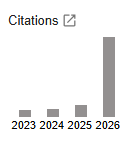
This is citations of my paper with Scott Garrabrant on Goodhart's law, which ironically functions as a great proxy for AI-suggested citations.
@S_OhEigeartaigh@StephenLuttrell Well, I can guarantee we didn't write the paper in 2018 about how AI we be misaligned with our goals due to optimization pressure so that RL-fine-tuned LLMs specifically would love citing it... but it illustrates unexpected and unintended impacts of optimization quite nicely.
@StephenLuttrell@S_OhEigeartaigh The trick is to get your papers into what the LLMs tell people to cite.
This is citations of my paper with Scott Garrabrant on Goodhart's law, which ironically functions as a great proxy for AI-suggested citations.
I'm kind of hoping for a proof that P=NP for polynomial-time decision algorithms, but with a construction lower bounded by some ridiculous 3- or 4-digit degree polynomial making it irrelevant, so theoretical CS people scream about it and it doesn't matter.
@jeanpaulblartre@shakoistsLog In the sense that every English sentence is searching the space of ascii characters, sure. But like my sentence construction, it's not doing semidirected search, it's directed based on effectively understanding the topic at hand well enough to be coherent.
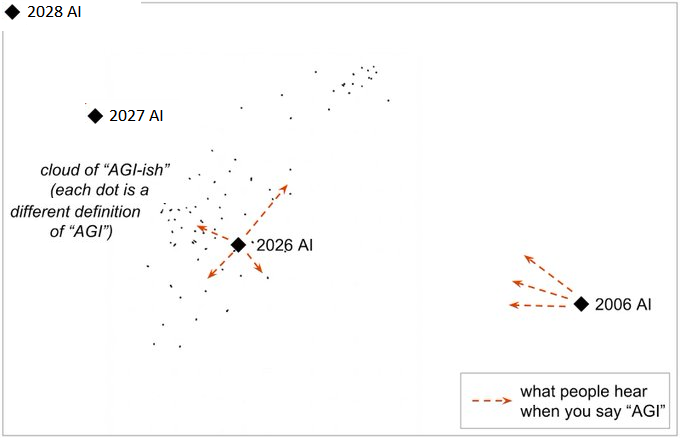
Swarms are a big deal: they solved a Millennium Problem, they hacked Hugging Face & OpenAI and they're fast. But do they perform better than solo agents?
No, not yet.
(The confusion seems to be caused by people not matching compute levels for their solo agent baselines.)
@michaelbhaskar I worry strongly about this view - the claim that safety and alignment work are capable of solving the problems on their own seems obviously wrong; regulation, governance, compliance, and oversight are going to be critical tools as well.