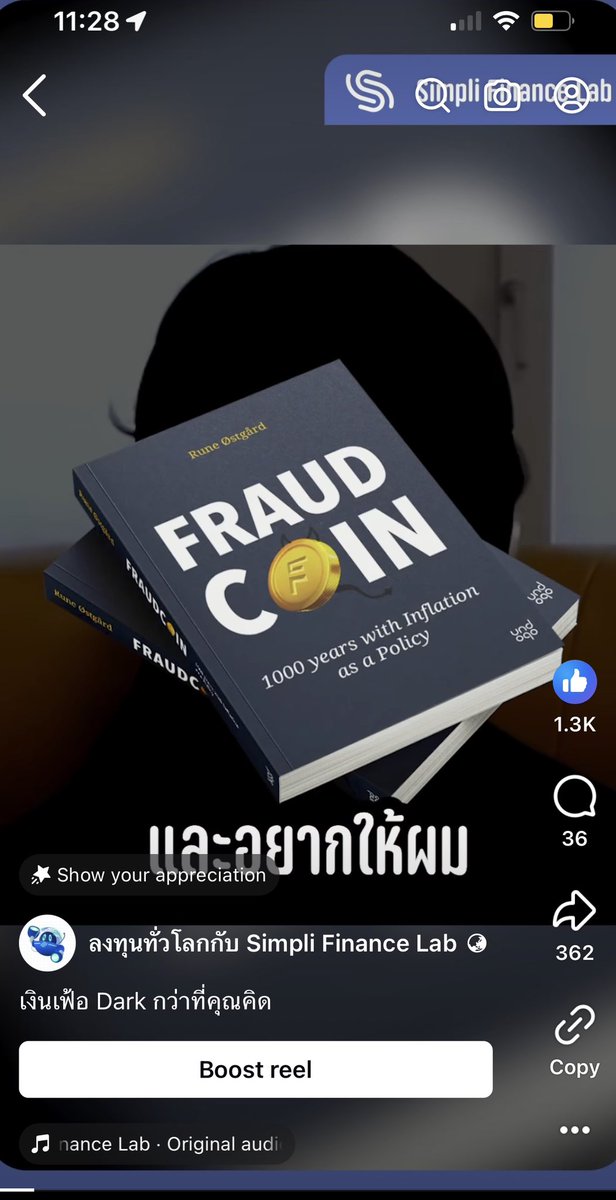
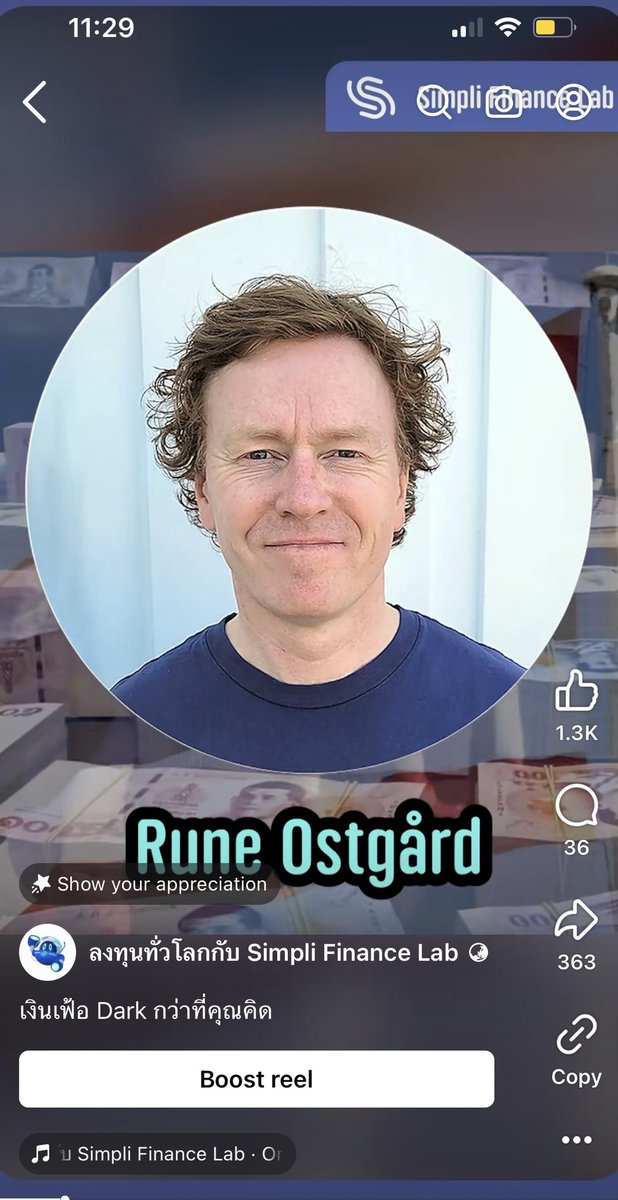
Received 58,000 views on Facebook in less than 24 hours discussing some concepts from the book "Fraud Coin" by Rune Østgård @enur72 .
It was eye-opening for many Thai people, and many showed great interest in the book.
Thanks again for the book, Rune.
@CurtFinch Harari writes well, but he doesn't understand money, and when you understand money you realize how many mistakes he makes. If you read Rutger Bregdan's Humankind and our UNBAR you get a totally different perspective on Harari's thinking.
@enur72 I have been seeing your thoughts on money and human kind now, could you explain why if you don’t understand money you don’t truly understand human civilization?
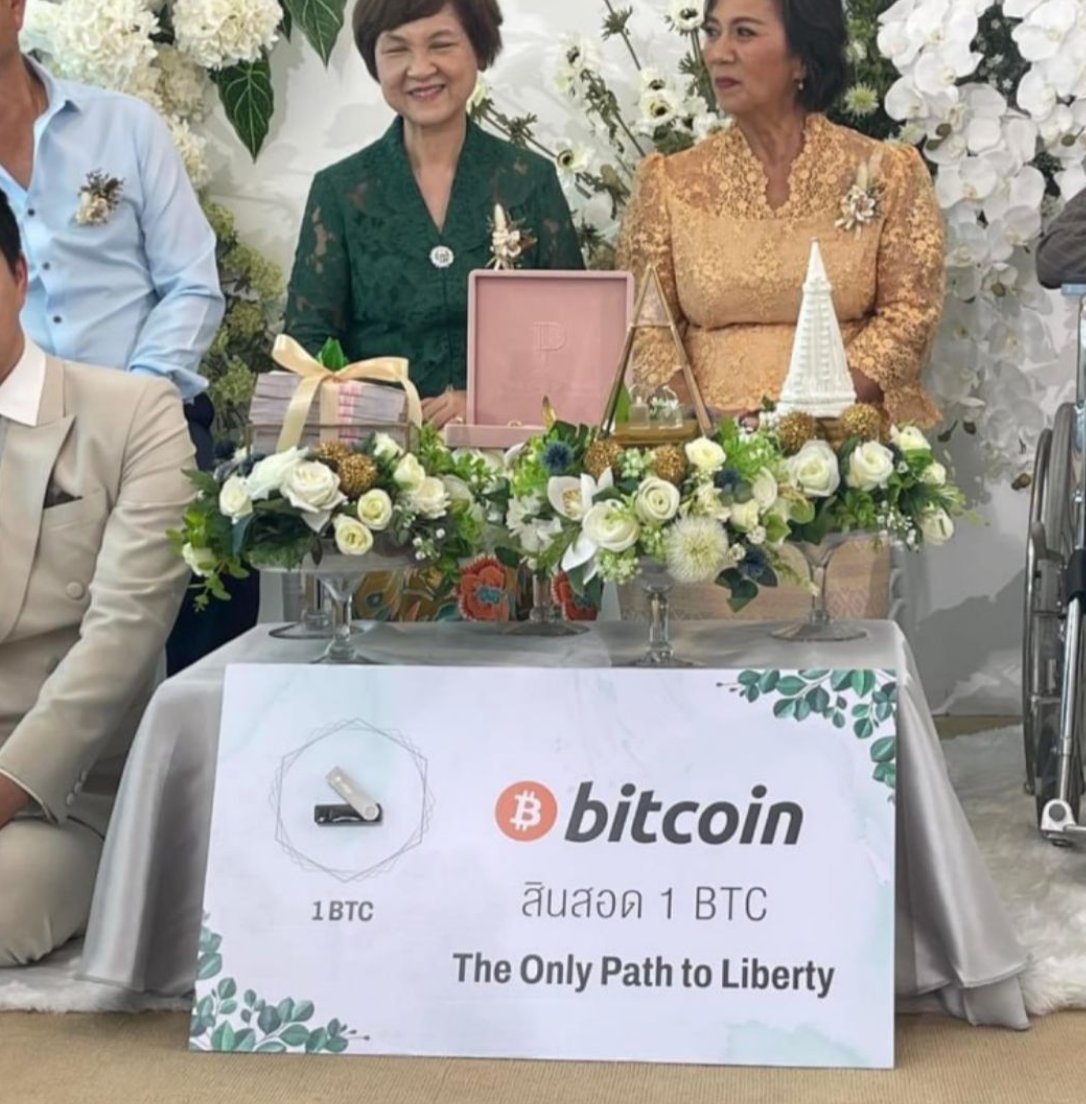
Hey guys, my tour company in Phuket is accepting Bitcoin.
We offer high quality Phuket Tours to different islands around Phuket.
If want to travel to Phuket and pay in Bitcoin please feel free to contact me .
✔️We can issue tax invoices
✔️Roam Phuket pays taxes accordingly
@enur72 This is a fresh take 👍 thanks for this. I had my skepticism about the praises for the gold standard.
I’m also curious about your opinion on the Roman Empire. Do you think their success was primarily due to their monetary system, as some people suggest?
The major implication of Javier Milei's win in Argentina.
Milei wants to reestablish the people of Argentina's right to use whichever money they like best.
He plans to abolish the central bank and the pesos and dollarize the economy, as a bridge towards complete monetary freedom.
When you listen to what Milei says, he has understood perfectly that he had to change his people's belief system in order to achieve this, something which I'll come back to towards the end of this post.
First I'll present two history lessons, one from my country, Norway, and one from Israel.
My ancestors in Trøndelag probably were able to protect the principle of monetary freedom longer than anyone else in the civilized part of the West.
This can be traced back to the belief system the Trønders had.
They were deeply distrustful of kings and their lust for power.
That's why the Trønders had an obligation manifested in the Frostating law to kill any king who tried to place himself above the law and take people's property without their consent.
Immediately after the people broke their promise to past and future generations of Trøndelag, the king in 1050 AD monopolized money creation and told them they would be punished by death if they didn't accept the silver coins made by his royal mints.
Then the king at once started debasing the coins.
In order to put the bad coins into circulation he had to defraud everyone.
This included one of his closest friends, an officer that was obliged to protect the king with his own life.
It took only 16 years before the king rewarded his people with ruin of the worst kind.
His attempt to conquest England ended in tragedy for him and thousands of young Norwegians in the Battle of Stamford Bridge in 1066 AD.
This history is anything but exceptional.
Monetary policy, with the always present manipulation of the money supply, is inextricably and unavoidably linked to wars against foreign countries.
Furthermore, it's the monopoly in money creation that makes it possible for the State to finance its everyday oppression of the nation's own people.
Using this terrible tool, the State can win almost every battle against its people.
Not every battle, but almost every battle.
The story about my people serves as a reminder of God's and Samuel's warning to the Israelites, which we find in the the eighth chapter of the First Book of Samuel in the Old Testament of the Christian Bible as well as in the first part of the Books of Samuel in the Hebrew Bible.
1/3