My new book about the history of art & technology, computer art & generative art is out now! @SpringerNature Featuring George Mallen, pioneer of creative computing since 1964, cybernetics, interactive art & much else
🙏 @StepBD, Nick Lambert & @jpbowen
https://t.co/bun0yU6Oko
Congratulations to Ben Spilling Director and @TordoffGibson Producer for “Generative” film about computer art, with @mattdesl Creative Consultant, shown this afternoon @V_and_A : Wonderful 👏
A Journey to Somewhere
by @cathcomputerart
Charles Csuri (1922-2022) was in at the birth of what became an entire movement. One of the earliest pioneers of digital art, over a career of nearly sixty years of innovations, he became known as the “father of computer art and animation”.
In the early-1960s, at a time when computers were rare, complex machines that required specialist expertise to operate, Csuri formulated a way to exploit the inherent qualities of digital technology, making art on equipment that was not originally designed for artistic purposes.
His unique style evolved within the tradition of modernism, guided by a visionary proficiency that combined his traditional fine art aesthetic with digital systems. In dialogue with the machine, Csuri expanded imagination and expression, creating possibilities for new kinds of forms, not seen before in art.
Thanks to the handful of artists of Csuri’s generation, the digital art movement gained a foothold in the artworld, inspiring subsequent generations and forging the field we now see.
It is clear from the Ordo series that Csuri trained as a traditional artist, indeed spent twenty years drawing and painting, before turning to the computer. His knowledge and respect for art history informed his style.
Studies of the work of Paul Cézanne broadened his understanding of colour, light and geometry in composition. Via the digital, Csuri was able to take Cézanne’s discarding of one-point perspective even further, by creating a three-dimensional space for his forms to float within the picture plane.
Searching for a visual structure, inventing challenges for himself, Csuri spoke about his attempts to break free of the logic, the carefully measured digital space where there is a predicable outcome, and move toward a process of discovery. Like Pablo Picasso, he aimed to embrace a future of curiosity and wonder.
The Ordo series of generative artworks combine glorious colour with painterly, ribbon-like forms. Using his own code, the artist created a special tool to make these smooth three-dimensional forms, first seen in his art in the 1990s and refined throughout the 2000s. Subtle variations in these layered structures combine with vibrant colours that pop with a feeling of intense activity and movement through interconnected lines and shapes.
Ordo also shows Csuri’s skill in exploiting the computer’s ability to light up each pixel individually and potentially display billions of strong colours. The viewer becomes a witness to the artist’s brushstrokes, a record of the artist’s hand, via code, as it moves through time and space. A celebration of the complexity and seemingly boundless depth of three-dimensional space.
At Ohio State University, using a cutting edge, real-time system from technology developed at the NASA space programme, Csuri became a crucial part of the foundation of modern computer graphics.
He recognised very early on the importance that this tech was having not only upon the types of art produced, but also upon the changing attitudes of art itself and its place within society. His work marks the beginning of a whole new genre, one that would expand the boundaries of art and as such human expression and communication in an age of increasing digitality.
Csuri had to take a leap of faith. Could this new tool be used creatively? He asked, “Where is the sense of place and fun in this universe of linear logic?” He found this freedom and fun in the software environment that he shaped over a long career.
Recognising that the art object could become many statements about the same thing, his code reflected his approach which allowed for numerous solutions to a problem. The Ordo series demonstrates well this process of iteration, which the computer facilitates, allowing the artist to explore innovations and express multiple ideas, by producing several outputs from one set of rules.
Csuri shows us a world of dynamic space, geometry, colour and light. Twentieth century modernism is redefined in an exciting and vital way.
Catherine Mason
21 September 2026
@cathcomputerarthistory has been recovering the history of computer and digital art since 2002 when she joined a research group at Birkbeck, University of London.
Her first book A Computer in the Art Room: the Origins of British Computer Arts 1950-1980 (JJG: 2008 & ebook 2021), is the first comprehensive account of the history of British computer art.
Over a long career she has worked in commercial galleries and public-sector arts organisations, adult education and exhibition curation. Today her main focus is research and writing; her latest book Creative Simulations (Springer 2024), tells the story of the early history of CAS, through George Mallen, one of the founders. She is a Visiting Research and Knowledge Exchange Fellow in the School of Computing at Goldsmiths, University of London.
https://t.co/SWGfOcfGai
I'm participating in Manifold 3.0, the staff and alumni show of the @goldcomputing@GoldsmithsUoL. The symposium on the 23rd has a really great sounding line-up. I'm on at 11.00, talking about the early history of the Computer Arts Society @computerartssoc and the Ecogame of 1970
It’s a great honor to be speaking about my work @ Goldsmiths University, London. Hosted by historian, Catherine Mason @CathComputerArt . Co-sponsored by the Computer Arts Society. @computerartssoc Tuesday 6 October 2026 @ 6pm. The presentation, will be followed by Q&A and discussion.
---
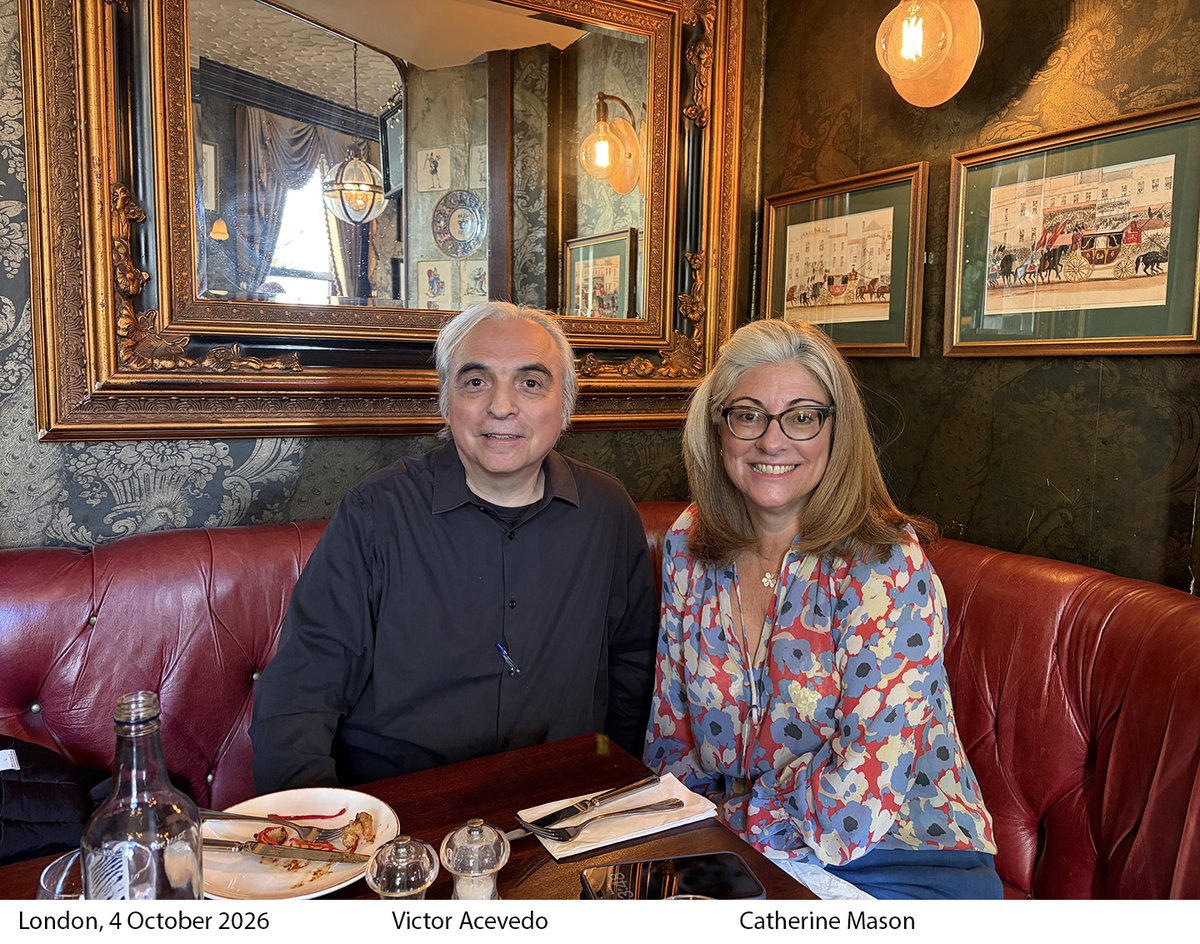
(4 October 2026) Catherine Mason: “Enjoying lunch today with Victor Acevedo ahead of our event @GoldsmithsUoL@GoldCompArts
Discussing everything from early personal computers, to Blockchain, to how to build a career in the arts. Come along next week to hear from this artist with over 40 years of experience in the digital arts.”
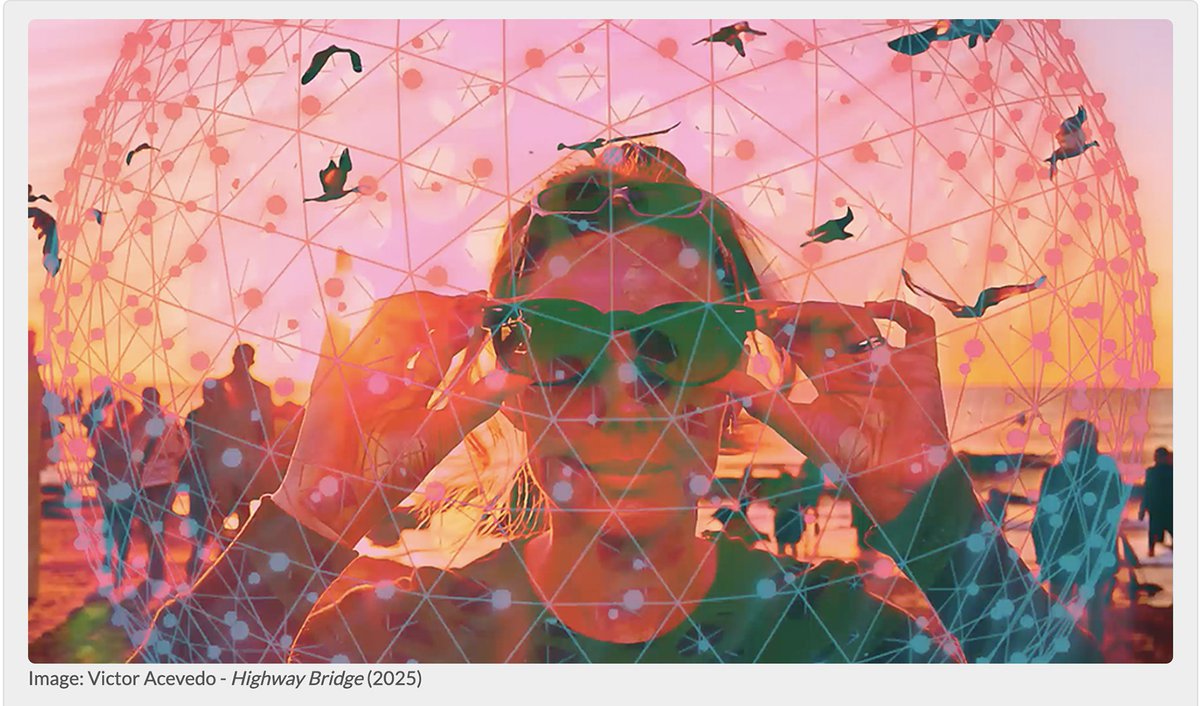
“As an early adopter of digital tools, Acevedo will consider what has changed in digital art and what challenges he sees for the future. Also chance to ask questions & meet this LA based artist.”
On Goldsmiths Campus: room 137a RHB in Richard Hoggart Building * No need to book - just turn up ! ✔️
https://t.co/laT09rHs7a
It is indeed an honor to have my upcoming artist’s talk at Goldsmiths University, London (October 6, 2026) mentioned in the News section of the Anne & Michael Spalter Digital Art Collection.
https://t.co/0hsjsJucT9
@michaelspalter@annespalter@CathComputerArt@computerartssoc
Always honoured to have my work featured here. Read my piece about Edward Ihnatowicz & the relationship to a-life & AI art: https://t.co/nWUVWDJG9a
Brought back from the limbo of early media art: Senster, Edward Ihnatowicz’s cybernetic sculpture from 1970, is one of the earliest computer-controlled robotic sculptures. Thank you to Anna Olszewska and Catherine Mason @CathComputerArt for sharing their thoughts and knowledge with us. We hope to experience Senster in person again one day.
Honoured to write the catalogue essay for Paul Brown, longtime member of @computerartssoc for his show at New Rivers Community Gallery -“Making Visible Abstract Thoughts: Paul Brown's Art as Process" https://t.co/HTCkBEbjL8
Great to see the latest issue of @the_ai_art_mag out now! My article mentions @WilliamLatham1 Christa Sommerer & Laurent Mignonneau, Paul Brown & Edward Ihnatowicz