Tigray- some important reports shared by Professor Jan Nyssen of Ghent University. He says
“A recurring sentiment among the people I spoke to was that they are exhausted by conflict in all its forms. They want to know how pragmatic, relative peace can be achieved and maintained.”
See
https://t.co/e828DDH2GC
And
https://t.co/uYF16u1aF2
And
https://t.co/aMBEf67PtB
And
https://t.co/q78WkDLeOR @kirstyjmcneill@StewartWood@martinplaut@bbcworldservice@bbclysedoucet
589 million children, more than one in five of the world's children, were living in conflict zones in 2025. This represents a 7% increase from 2024.
https://t.co/7shiYw8vJx
Coming out soon.
We already have the proofs. I think it is a super engaging book that in a simple, yet empirically rich, way deals with big topics such as climate change, inequality, and the future of capitalism.
It is composed of individual presentations by myself and Jason on respectively global inequality and climate change, and then of our fairly long (but not boring) discussion.
I can certainly see why it's NOT surprising. In the same country, there is this, too... War and its consequences rarely touch elites and almost never in the same way as this.
THE PRESIDENCY’S ANNOUNCEMENT ON THE PASSING OF FORMER DEPUTY PRESIDENT PHUMZILE MLAMBO-NGCUKA
Acting President @PaulMashatile has this evening learned with shock and sadness of the passing of former Deputy President of the Republic of South Africa, and former UN Under-Secretary-General and Executive Director of UN Women, Ms Phumzile Mlambo Ngcuka.
The Acting President will communicate further details after due consultation with the family.
The Acting President has conveyed his deepest condolences to the Mlambo-Ngcuka family on behalf of President @CyrilRamaphosa, the Government and the people of South Africa.
The family has asked for privacy at this time, whilst they deeply appreciate ongoing messages from South Africans and the global comnunity.
ISSUED BY THE PRESIDENCY OF THE REPUBLIC OF SOUTH AFRICA
NEW REPORT: Almost 1 in 4 children worldwide are now living in conflict zones, the highest number since records began in 1990. Verified incidents of denial of humanitarian access against children have increased almost 16-fold - to almost one an hour.
https://t.co/97NQcZpbcs
For COP31, I took a look at what we know about how Africa's climate is changing—and what we don't. The Sahel, for eg., is greening. Today Lake Chad has more water than it has had for decades. For many, floods are now as big a risk as drought. My latest 👇
https://t.co/ixa6NDPwVU
Disheartening to see FCDO commission great research organisations and top experts in Ethiopia to provide rolling, on-the-ground regional conflict monitoring, only to then turn to ACLED’s bird’s-eye view as an authoritative source to inform the UK’s asylum rules.
The 300,000+ Tigrayan women subjected to widespread, state-sanctioned sexual violence by these very same forces might beg to differ. Then again, why let documented atrocities get in the way of absolving genocidal entities, right?
ACLED's assessments of Tigray have consequences. UK asylum guidance just used its figures to argue that civilian violence is too low to meet the general protection threshold. People from Tigray seeking safety must then prove individual risk. 😑https://t.co/LNqhbEItpx
Ethiopia and Eritrea have amassed forces along their shared border, conflict monitors and people tied to militias in northern Ethiopia's Tigray region said, fuelling fears of outright war between the historical rivals. https://t.co/wVZbvJVe85
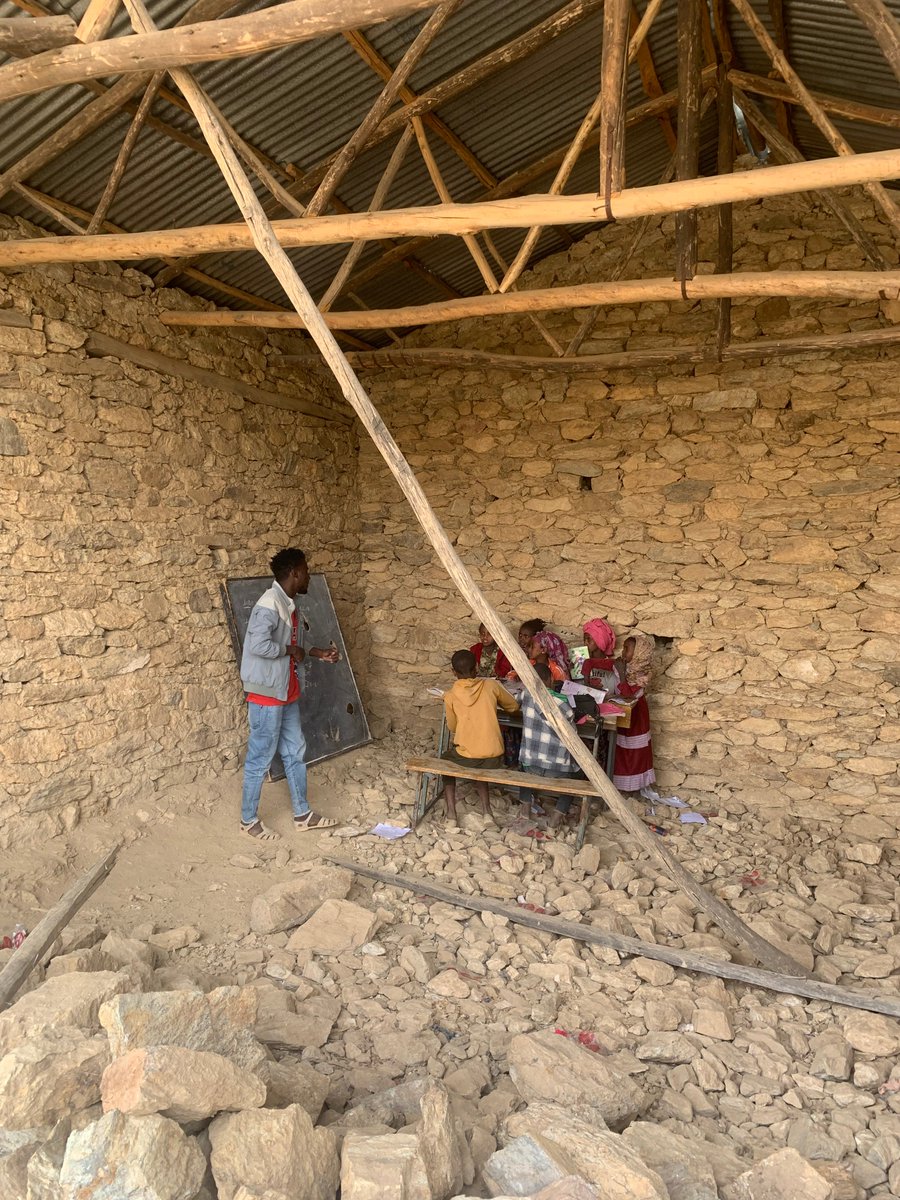
Important new research from us on distressing levels of hunger in Tigray.
1 in 4 families go days without eating. Health facilities are out of the needed supplies to treat malnourished children.
Our findings, and what needs to happen now:
"Across the region lurks the spectre of unrest, even of coups. Treason trials are the mark of paranoid regimes, increasingly on edge."
In the latest issue of @TheEconomist, on the egregious case of Tundu Lissu in Tanzania and many more 👇
https://t.co/vPlUqRyktf
Young men in Ethiopia are disappearing for weeks -- and then reappearing as conscripts in northern battlefronts near the Eritrean border, while their parents grieve.
Our report on the growing militarization of Ethiopia:
https://t.co/PBV1UapVr1
🎙️| In late September, fighting resumed in #Tigray – almost four years after the Pretoria Agreement brought the 2020-22 war to an end.
Guests discuss the renewal of conflict, risks to the wider #HornOfAfrica and possible pathways to peace on #AfricaAware: https://t.co/DVMZYPFhyx
🚨New research from Refugees International reveals alarming levels of hunger and malnutrition were prevalent in #Tigray, Ethiopia, even before the latest fighting resumed.
Renewed war threatens to push an already desperate situation into catastrophe.
https://t.co/aSdCYtsuOq
Tigray Humanitarian Snapshot Paints Grim Picture
@RefugeesIntl’s survey of 450+ households in #Tigray before renewed fighting found widespread hunger, acute child malnutrition, severe shortages of fuel & health supplies & strained humanitarian system. 1/
https://t.co/tBJQQu1hYm
Excellent new humanitarian situation report from @RefugeesIntl provides new data on rising malnutrition, health care challenges, education, and displacement where things stood right before the war resumed.
#TigrayCantWait
https://t.co/v8bkT9NS9E
@RefugeesIntl Aug–Sept survey in #Tigray#Ethiopia:
* 23% of IDP children & 32% of host children showed acute malnutrition (GAM) - an alarming malnutrition warning!
* Food aid reached only 4% of IDPs
* Health system had received no fuel by September; 250+ ambulances idle.