The federal government is the world’s largest IT customer, spending ~$2TN since 1994. In theory, this *should* give us great buying power to negotiate good deals for taxpayers, but of course that’s not what happens: in 2021, the US Department of Agriculture agreed to pay $170 million for one enterprise software, instead of $58 million for a competing one, due to perceived switching costs. In other cases, vendors have required agencies to repurchase licenses in order to migrate to the cloud. If the federal government were serious about reducing costs, it would procure government-wide licenses, just like many state governments do, which would save $750mm+ per year (likely much more). The to-do list for @DOGE continues to grow.
When the system itself is rotten to the roots, the path of the lone wolf—the outsider—becomes not just a choice, but a necessity. True honor may lie in forging a new path outside the walls of corruption, no matter the cost.
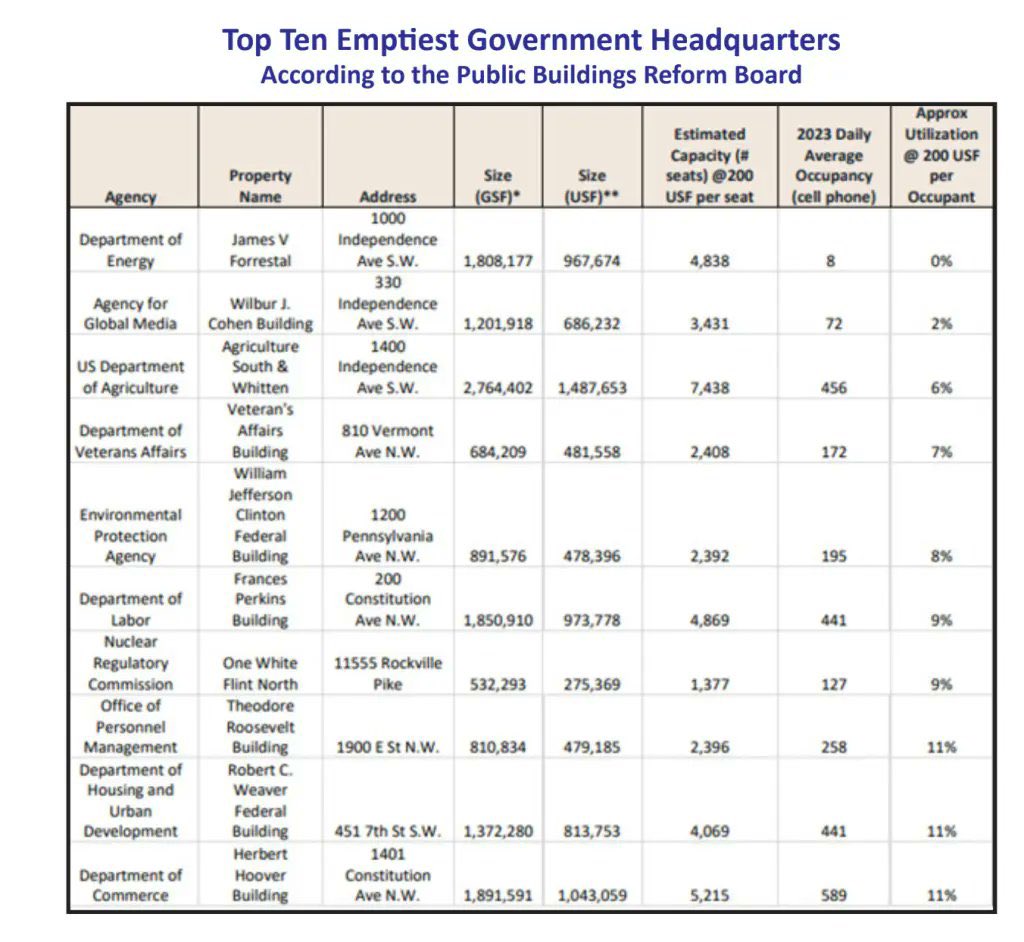
My new Delivering on Government Efficiency subcommittee will be taking a look at why only 6% of federal workers are reporting in-person on a full-time basis.
If employees in the private sector showed up to work as little as this, they’d be fired.
Why should hard-working taxpayers who go to work every day pay for lazy federal employees to stay at home??