Perpetual talker, stressed out wine drinker, in-car singer & lifelong bookworm. Critical thinking and good manners always. God-free zone! (Not a work account!)
@womanxx82@myoddballs@jk_rowling That’s a real shame, I’ve bought products from @myoddballs for my husband and son, and loved the brand. I can’t bear this garbage so I’m on the hunt for a more inclusive brand. Idiotic behaviour, they need to get some actual balls
🏴🇬🇧On a winter night in 1844, the whole street laughed at a shop with 5 things for sale.
Today 1 in 8 people on Earth belongs to what it started.
Rochdale, Lancashire, deep in the Hungry Forties. The cotton mills ran day and night and the weavers still went hungry. That year they had struck for better pay and lost. Most of them had no vote.
Even the food they could afford cheated them. Chalk in the flour. Sand in the sugar. A thumb on the scales. 🔥
They could not raise their pay. They could not cast a ballot. But no law stopped them keeping a shop.
So 28 of them, weavers and tradesmen, put their names to a list and called themselves the Equitable Pioneers. The stake was £1 a member, weeks of wages, saved in pennies through the hungry months until they had about £28 between them. Enough for the ground floor of a worn old warehouse. 31 Toad Lane.
Before they opened, a warper named Charles Howarth wrote them rules. ✍️ One member, one vote. A woman's membership equal to a man's. Full weight and honest measure. Only the purest food they could buy. And the one rule nobody had made work before: the dividend. Profits back to the shoppers, in proportion to what they spent. The customer became the owner.
They opened at 8pm on 21 December 1844, 4 days before Christmas, lit by their own candles because the gas company had refused them. The lads jeered through the window. The Pioneers weighed out their butter anyway. Full weight.
It held. A year on: 74 members, £710 through the till. In 1846 a weaver named Eliza Brierley paid in her own £1, and her vote counted the same as any man's. Parliament took another 82 years to match it.
Town after town copied the rulebook, then country after country. Today around 3 million co-operatives run on rules that began in that shop. Around 1 billion members. 1 person in every 8 alive. 🏛️
And the little shop still stands. 31 Toad Lane is a museum now.
━━━━━━━━━━━━━━
1 billion members, and hardly a soul who can name 1 of the 28.
They asked for honest weight. We owe them honest memory.
We are the home of British heroes.
There is a place for you in it.
👉 https://t.co/rih7iKwnvf 👈
Be part of us. ☝️🇬🇧
Be Proud Of Us. 🙏🇬🇧
We often disagreed but privately Ann Widdecombe never confused status with worth. She treated everyone with the same dignity whether they could do anything for her or not. That was her idea of justice. After such a terrible death, she is owed no less.
🇬🇧 THEY TOLD YOU A STORY. 🇬🇧
Colonisers. Slavers. Oppressors. And you were supposed to feel ashamed.
Not for what you done... But for WHO YOU ARE. 🇬🇧
So we tested it. Britain wrote everything down, so we opened the books. 📖
Turns out fewer than 1 man in 10 could vote in the year Britain banned the slave trade. No woman could. Your ancestors could hang for stealing a sheep, get shipped across the world for petty theft, or go down a mine at 8 years old. In Manchester, the average age of death in a labouring family was 17.
They weren't running the slave trade. They were underneath it too.
Which is what makes what happened next worth knowing.
In 1772 an enslaved man named James Somerset walked free from an English court, because English law couldn't hold a slave.
In 1791, 300,000 families just stopped buying slave sugar. No march, no riot, just a decision made at 300,000 kitchen tables.
In 1792, 519 petitions carrying 390,000 names hit Parliament, most signed by people who couldn't vote themselves.
In 1807, Britain banned the trade.
Then the slave owners sent Britain a bill for the 800,000 people they still held. 💷 £20 million. About 40% of the entire government budget at the time.
The Treasury says it wasn't paid off until 2015. So if your family paid British tax before then, they helped buy 800,000 people their freedom.
From 1808 the Royal Navy spent 60 years hunting slave ships at sea: 1,600 stopped, 150,000 people freed, and 1,600 British sailors dead, mostly of disease, buried thousands of miles from home. ⚓
In 1816 they ended two centuries of Barbary corsairs enslaving Europeans.
In 1896 a war that lasted 38 minutes ended slavery in Zanzibar. 🇹🇿
Almost every country on Earth outlaws slavery today.
That fight was paid for largely at British expense, by British hands.🇬🇧
So why haven't you heard any of this?
Because within living memory, someone rewrote the story. You got taught the crime. Not the cure.
The powerful exploited the world. They exploited their own people first. It was those people who ended slavery. 🇬🇧
━━━━━━━━━━━━━━
History got rewritten once, in living memory, by no one who was ever named or held to account.
We are ordinary people doing what ordinary people have always done. Opening the books. Refusing to look away.
This is how we fight back. Fact by fact. Story by story. Name by name.
We are the home of British heroes. There is a place for you in it.
If you can afford to support what we do: https://t.co/rih7iKwnvf
Be part of us. ☝️🇬🇧 Be Proud Of Us. 🙏🇬🇧
🇬🇧 There is a village in Orkney 🏴
It is OLDER than the PYRAMIDS.
Its stone furniture is still standing. A storm gave it back to us in 1850.
Its name is Skara Brae.
It sits on a curve of beach on Orkney. And it was built 5,000 years ago. By a people who farmed barley, kept cattle, and worked stone with the patience of a craftsman.
They had no metal.
And yet they built homes that have outlasted every empire since.
🏛️ Each home was made of stone. A hearth at the centre. A bed of stone slabs along each wall. A stone dresser facing the door. A drainage system carrying waste away from the walls.
What we would now call indoor plumbing.
5,000 years before it appeared in any English home.
Eight homes. Linked by stone passages.
They lived there for 600 years. Their children played at the doors. Their dressers carried the best of what they made.
The Grooved Ware they fired here would later be found from Orkney to the south coast.
Five centuries of one settled people.
Then the Earth changed. 🌍
The sand began to drift across the homes. A mother carried her child away from the only home she had known. The dunes closed over the village.
In 1850, a storm hit Orkney. The wind stripped the sand from the dunes. And one of the homes appeared again.
A village 5,000 years old, sitting in the open as if it had never left.
The people of Skara Brae did not vanish. They became Britons. Their descendants became the British.
And we are still building our homes around the hearth. Still arranging our shelves to face the door. Still carrying waste away from the walls.
5,000 years on, we are still living the same way they did.
🇬🇧 Civilisation did not come to Britain. Britons were already building it. And building it well.
━━━━━━━━━━━━━━
This village was buried for 4,000 years.
We nearly lost their own story.
Help us put British history where it cannot be lost again. 👇🙏
👉 https://t.co/rih7iKwnvf 👈
Be part of us. ☝️🇬🇧
Be Proud Of Us. 🙏🇬🇧
In 1858, a young doctor named John Langdon Down accepted a job that no ambitious physician wanted.
He was being sent to run the Royal Earlswood Asylum in Surrey — a place where people with intellectual disabilities were warehoused rather than cared for. The floors were filthy. The staff was brutal. Physical punishment was routine. The residents were dressed in rags, fed poorly, and treated as problems to be contained rather than people to be known.
Down was 30 years old. He could have managed the place from a distance, filed his reports, and moved on to a more prestigious posting.
Instead, he walked the wards every day. He learned his patients' names. And he saw something that apparently no one else had bothered to look for — people.
His first acts weren't medical. He fired abusive staff. He banned physical punishment entirely. He ordered proper food, clean clothes, and fresh air. Then he told his colleagues something that would have sounded almost absurd in 1858: that a doctor's primary duty was to be a friend to their patient, and that their happiness mattered as much as their health.
After years of careful, meticulous observation, Down published a landmark paper in 1866 describing a specific pattern of physical and developmental characteristics he had identified in some of his patients. His original terminology reflected the racial theories of his era and was later rightfully abandoned. But his clinical observations were so precise and so thorough that nearly a century later, the medical community honored him by naming the condition he had described. We know it today as Down syndrome.
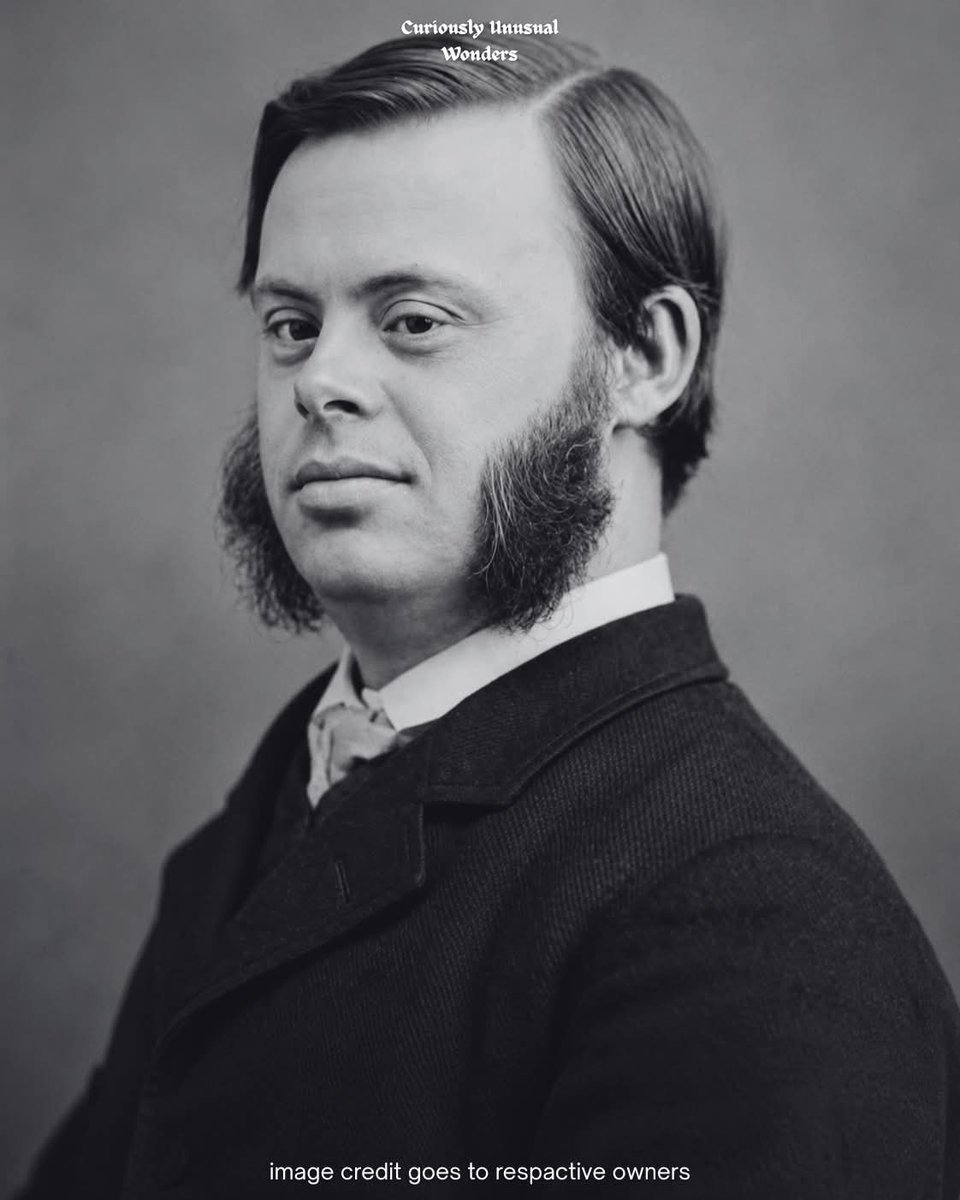
He also began photographing his patients — not as clinical specimens, but as individuals. He dressed them in their finest clothes. He gave them dignity in a frame. In an age when such people were deliberately hidden from society, that simple act of portraiture was quietly radical.
By 1868, Down had grown frustrated with the asylum's governors. When they refused to fund an exhibition of artwork created by the residents, he made a decision that would define the rest of his life. He resigned.
He and his wife Mary purchased a large home in Teddington and turned it into something the world had never quite seen before. They called it Normansfield — and it was not a hospital. It was a home.
Residents grew food in gardens Down planted himself. They learned trades. They were taught to read and write whenever possible. They were given structure, fresh air, and the revolutionary expectation that they were capable of growth.
Then, in 1879, Down built something that still stops people when they first hear about it.
A theater.
A full, proper theater — with a stage, real seating, and proper acoustics — on the grounds of a care facility for people society had written off as uneducable.
Why? Because Down believed that art, music, and performance weren't luxuries. They were necessities. They were part of what it meant to be human — and his patients, he insisted, were fully human.
Every week, residents took that stage. They performed plays. They sang. They stood in the spotlight and received applause.
For many of them, it was the first time anyone had ever clapped for them.
Normansfield flourished for over a century. Families who had been told their children had no future began seeing something they had nearly stopped believing in — progress, joy, and a life worth living. By 1876, the community was home to around 160 residents.
When Down died in 1896, his sons carried the work forward. Normansfield remained a home until 1997.
Today, the site houses the Langdon Down Museum of Learning Disability and serves as headquarters for the Down's Syndrome Association in the United Kingdom.
The theater he built in 1879 still stands. Beautifully restored. Still hosting performances more than 140 years later.
John Langdon Down advanced medical knowledge — but that may not have been his greatest contribution. What he really did was challenge a foundational assumption of his age: that some lives were worth less than others.
He proved, through daily practice and stubborn conviction, that every person has something to offer — and that the right environment, offered with patience and genuine respect, can reveal it.
The world he was born into locked its most vulnerable people away in darkness.
The world he left behind had, in some small but permanent way, begun to let the light in.
🇬🇧 Most British schoolchildren are taught about Magna Carta.
They are taught it was sealed in twelve fifteen at Runnymede.
They are taught it is the foundation of English liberty.
They are taught it is one of the most important documents in human history.
They are not taught what came next.
They are not taught about the eighty years between twelve fifteen and twelve ninety-five when ordinary Englishmen forced three successive kings to write down, for the first time in any kingdom in medieval Europe, what English law was, what English liberty was, and how an English king must govern.
They are not taught about the Charter of the Forest, which restored the right to graze, gather firewood, and live on common land, and which remained in force for seven hundred and fifty-four years.
They are not taught about the Provisions of Oxford in twelve fifty-eight, often called England's first written constitution, which placed the king under a council of fifteen and required Parliament to meet three times a year.
They are not taught about the Provisions of Westminster in twelve fifty-nine, which subjected the barons themselves to the same law they had forced upon the king.
They are not taught about Simon de Montfort, an earl born in France who died for England, who summoned the first Parliament in English history to include ordinary commoners alongside the great lords.
They are not taught about the Statute of Marlborough in twelve sixty-seven, which is the oldest piece of statute law in the United Kingdom still in force today. ⚖️
Seven hundred and fifty-nine years old.
If you've ever taken a debt to court in England, you've used it. 🏠 If you've ever rented a home, you've been protected by it. 👑 If a creditor can't lawfully drag your possessions into the street to settle what you owe, that's because of a law signed seven hundred and fifty-nine years ago.
They are not taught about the Model Parliament of twelve ninety-five, summoned by Edward the First, which became the shape of every English Parliament since.
Eighty years. Three successive kings. The first written constitution in any kingdom in medieval Europe.
It was not given to them. It was not handed down from God or king or Pope.
✍️ It was written. By Englishmen. For England.
🇬🇧 The British write their own history. They always have.
This one needed more than a thread. The full story is in our video, watch it below 👇
Help us remember who we are. Help us remember every British achievement. 👇🙏
👉 https://t.co/rih7iKwnvf 👈
Be part of us. ☝️🇬🇧
Be Proud Of Us. 🙏🇬🇧
@luxemiaa I ate a Snickers bar belonging to my husband years ago. He mentions it all the time. He tells other people about it. He says I stole his chocolate, and he’d been looking forward to it and tried to shame me! He will never let it go! 🙄