“Three weeks ago, voters handed Republicans a resounding midterm defeat fueled by anger over prices. The White House has apparently decided the voters were wrong, proposing new Section 301 tariffs on more than a dozen economies.” – Cato’s @cpgrabow on the new tariff proposal.
Open trade and fiscal restraint serve Americans under any administration. After years of bipartisan protectionism and deficit spending, lawmakers may be ready to step back, especially on trade, says Cato's @scottlincicome.
With the Trump admin preparing new Section 301 tariffs on "structural excess capacity" in foreign countries, here are our April 2026 comments to @USTradeRep on what a legitimate SEC analysis would require:
https://t.co/55Q4AAErQA
(Safe bet they didn't do this.)
Free trade is one of the most direct ways to lower costs. Voters gave a clear mandate to cut tariffs and end the Iran war, and Democrats seem likely to listen, though they may also expand Medicaid, says Cato's @scottlincicome.
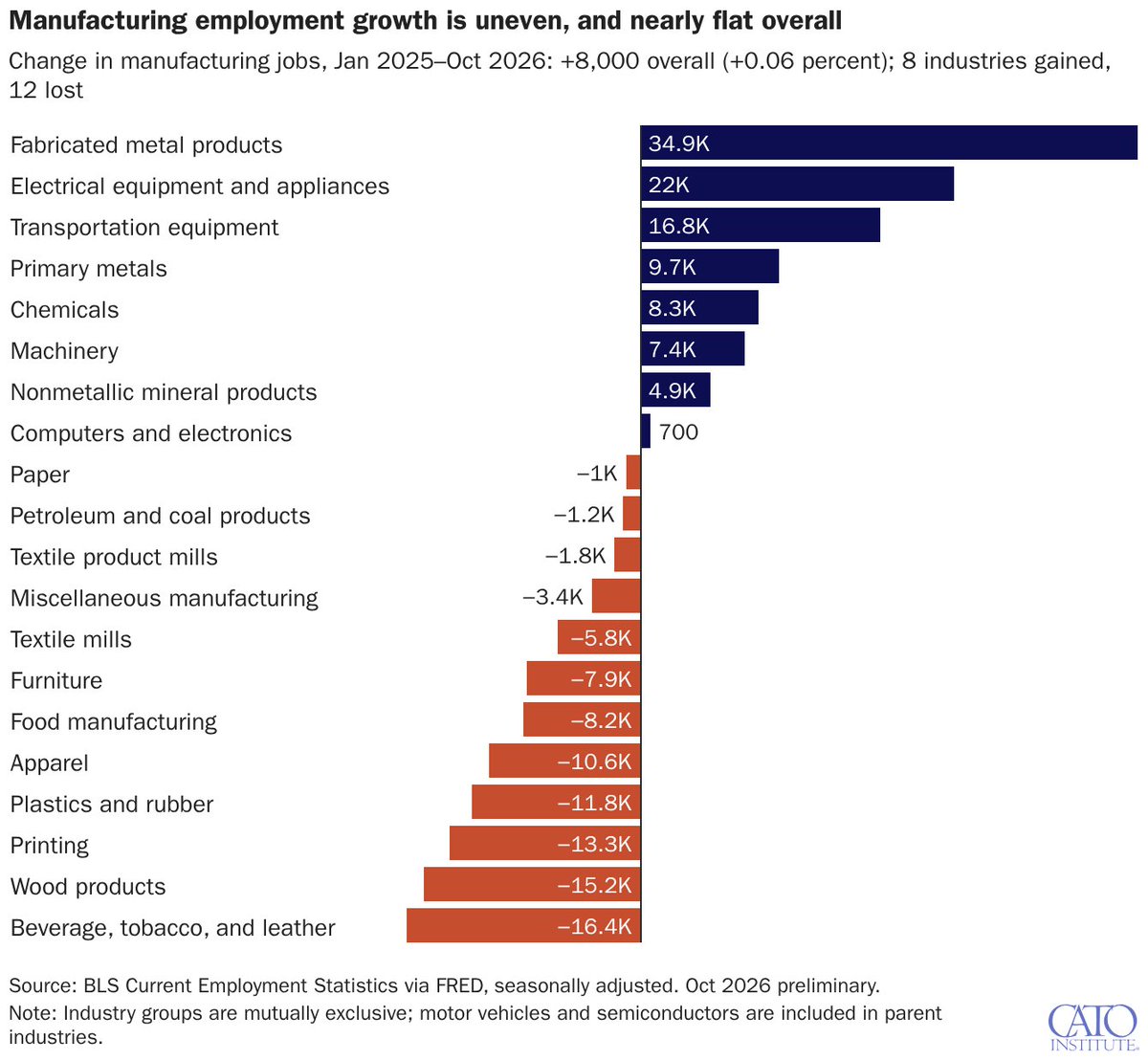
Tariffs are taxes on the imported parts and materials factories need. Since January 2025, manufacturing has added a net 8,000 jobs, and 12 of 20 industries lost workers. Congress can end the trade war, writes Cato's @KyleLHandley.
https://t.co/1TX8Ks4yjy
Although Democrats condemn President Trump’s tariffs for raising prices, they also support protectionism. As Cato's James Bacchus notes, steel tariffs raise costs for US manufacturers, making cars and appliances more expensive.
https://t.co/k036VVZHf9
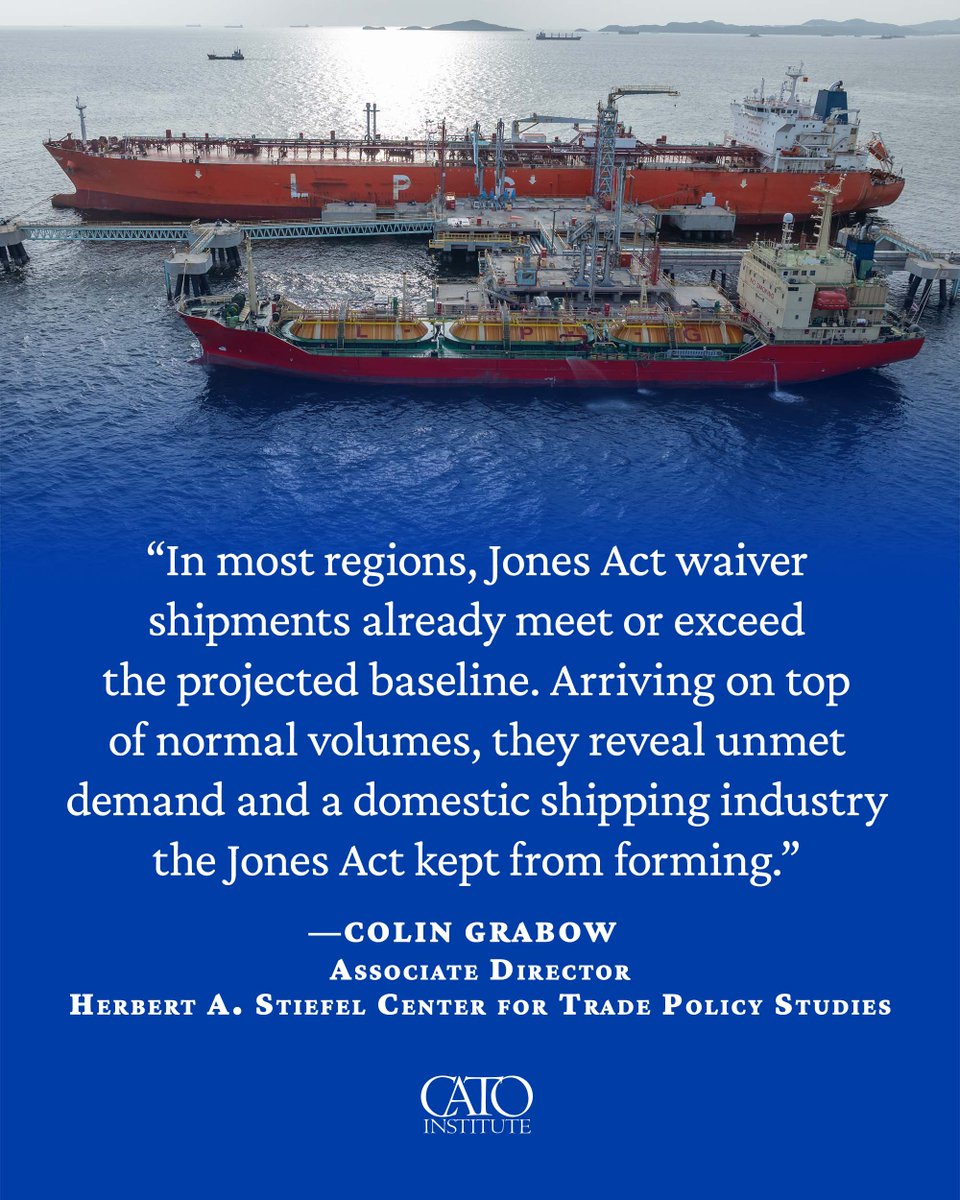
In eight months, Jones Act waiver fuel shipments have broken previous annual records to Puerto Rico and the West Coast.
The waiver has revealed unmet demand, and domestic commerce the Jones Act has suppressed, says Cato’s @cpgrabow.
https://t.co/0ZMH7zufYf
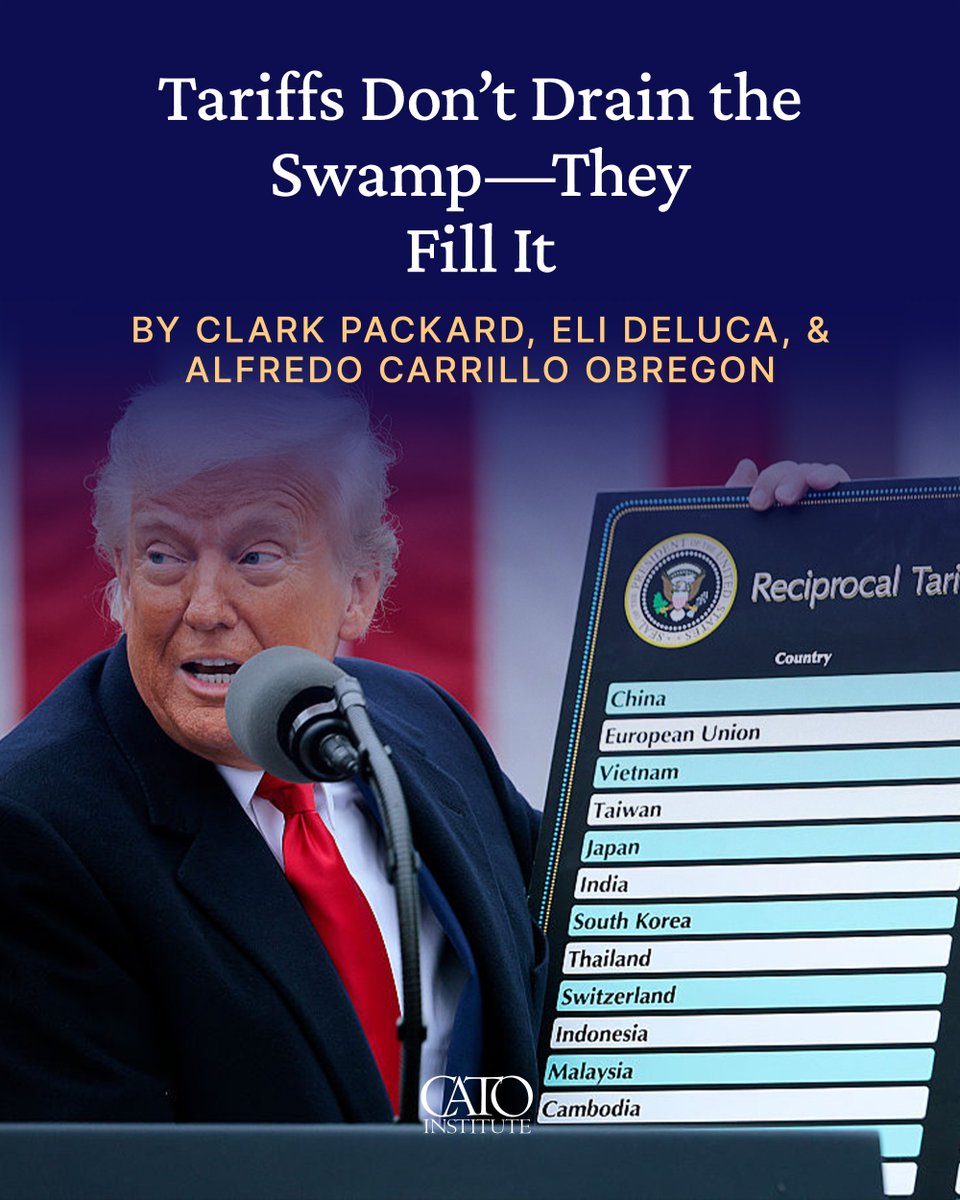
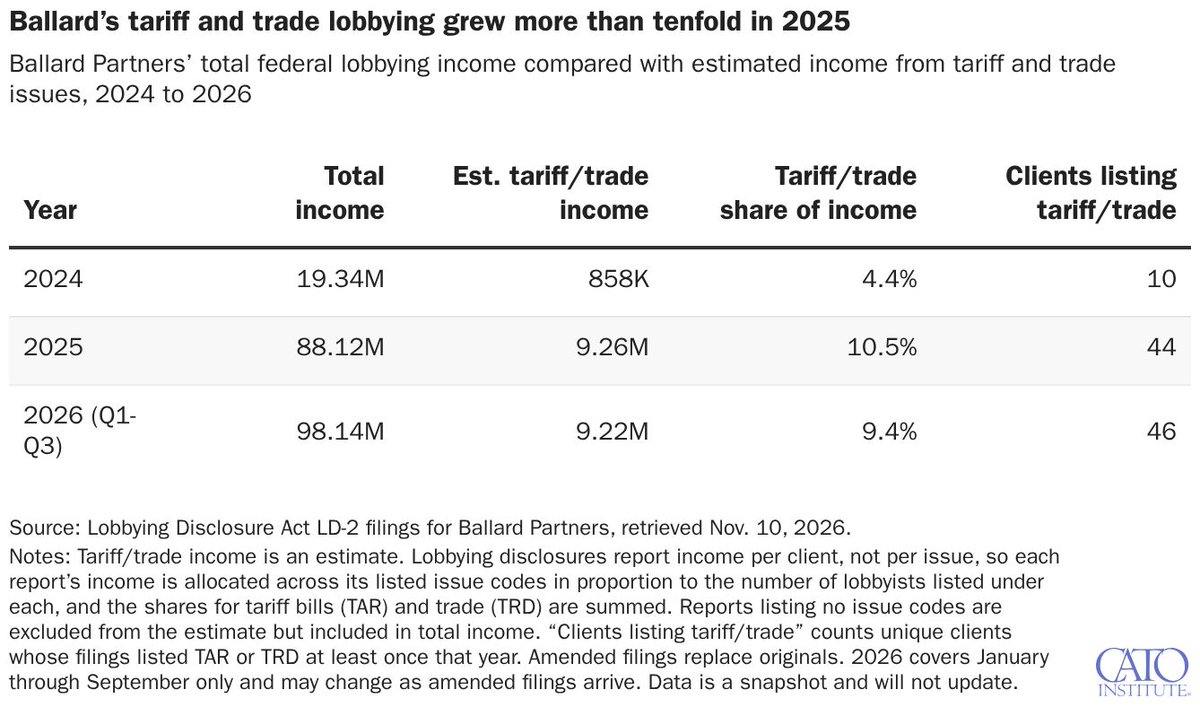
President Trump promised to drain the swamp. His tariffs are filling it. As Cato’s @clark_packard, Eli DeLuca, and Alfredo Carrillo Obregon report, tariffs reward connected businesses, enrich lobbyists, and strangle competition.
https://t.co/hJyUQunWsK
Democrats are poised to wield power again, not just make speeches, it is time for them to recognize the economic harms of tariffs and return to their longstanding, principled support for freer trade in a more open economy.
James Bacchus writes: https://t.co/H7zjVjTlQ1
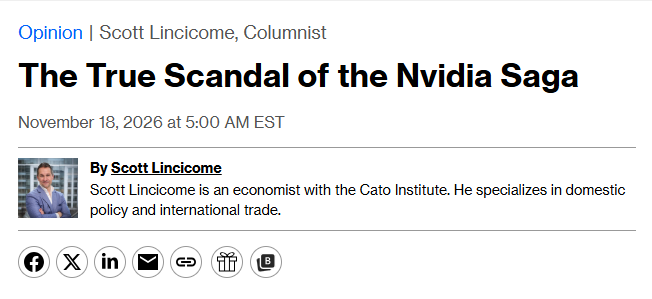
🧵 My new @opinion column examines another, less-discussed scandal surrounding Nvidia: the US government's cut of AI chip sales to China.
The scheme raises serious conflicts & questions - AND it's not the only corporatist Trump policy that does.
🎁: https://t.co/7yNzv1yFyq /1
The trade war has more in common with the hot war in Iran than its defenders will admit. Both have featured repeated escalation and de-escalation, grand announcements of impending victory, and uncertainty about what comes next.
@KyleLHandley writes: https://t.co/j8wIFKtlVf
The Jones Act waiver’s renewal keeps open more efficient and less costly options for Americans to obtain fuel and fertilizer, but they should not have to rely on temporary fixes.
Congress should overhaul or repeal the law, argues Cato’s @cpgrabow.
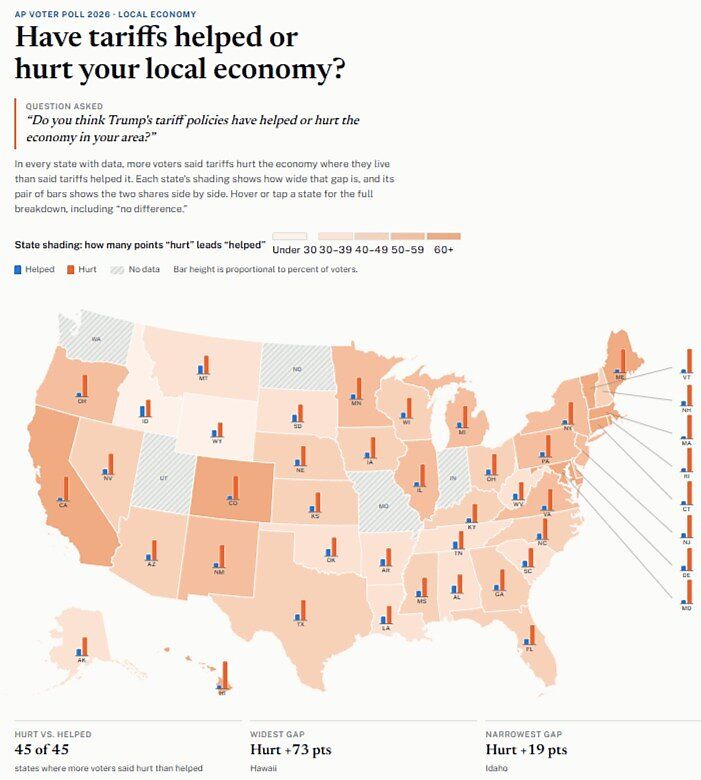
The administration’s weakness on the economy started with Trump’s tariffs, with voter disapproval evident in both last week’s exit polls and numerous surveys dating back to last spring.
@scottlincicome writes: https://t.co/UTjFfoxDUV
In 2016, then-candidate Trump routinely promised to “drain the swamp.” The administration’s tariff policies are filling it ever higher. A rules-based exclusion process would help somewhat, but the problem is the discretion itself.
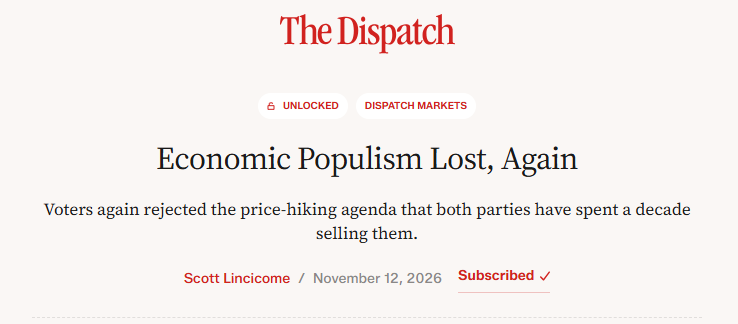
My latest for @thedispatch looks at arguably the biggest midterm loser: Trump's economic populism (esp. tariffs).
It's actually the 3rd election in a ROW in which affordability-obsessed US voters have seen populism's rhetoric/results & said "NOPE."
https://t.co/m6XANvD27X (🎁)
@ScottLincicome discusses the NVIDIA investigation and Congress’s potential efforts to tighten chip export controls on @BloombergTV's @bsurveillance
https://t.co/D07hzCG3BO
Voters sent a clear message: the tariff status quo is unacceptable.
Democrats won the tariff argument, now they need to act on it. Cato’s @clark_packard explains what the new Congress should do.
https://t.co/yCsEo42Lb2