In an age where we assume everything is online, archives remind us that much of our knowledge and history still requires active preservation.
On #InternationalArchivesDay, listen to Professor Zoë Druick of @sfuCMNS explain why archives remain essential to preserving our collective memory: https://t.co/EPzrEfBiob
CFP: "Translating Sociological Research involving Children & Young People into Societal Impact."
For a hybrid symposium on 25 August.
Early-career researchers & PhD students are invited to submit abstracts by 30 July.
https://t.co/rC4JbvHvwb
Call for conference papers and panels on "Youth Agency and Activism in an Age of Precarity."
Abstracts are due by 30 June.
The conference will take place on 7-8 September online and at the University of Tokyo Komaba Campus (Japan).
https://t.co/bMTBTOjwpt
The world is facing a global housing crisis, with 2.8 billion people lacking access to adequate housing.
Next week’s World Urban Forum will bring together leaders, community voices, civil society & more to shape the future of cities.
https://t.co/srIq0arm9c #WUF13
Fear is a normal part of growing up, but kids can learn to face fears step by step. “What to Do When Fear Interferes: A Kid’s Guide to Overcoming Phobias,” published by Magination Press, gives kids practical tools to help fears feel smaller. Learn more: https://t.co/yD0rI6uvlS
El Péndulo de Foucault instalado en el Panteón de París es uno de los experimentos científicos más famosos de la historia, diseñado para demostrar la rotación de la Tierra de forma visual y directa.
En 1851 el físico francés Léon Foucault realizó la primera demostración pública en el Panteón bajo el mandato de Napoleón III. Eligió este edificio por su gran altura, necesaria para que el péndulo oscilara durante mucho tiempo sin detenerse.
La instalación que vemos en este video grabado en el Panteón es una reproducción activa. El péndulo original utilizado por Foucault en 1851 se conserva y se exhibe en el Museo de Artes y Oficios (Musée des Arts et Métiers) de París.
Video grabado con fines educativos.
What if ethnography were not just written, but drawn?
This piece explores illustration as a form of “translation” in anthropology, and capturing what words often miss in lived experience.
A fresh take on research, creativity, and meaning-making.
https://t.co/eRBMu87ZNK
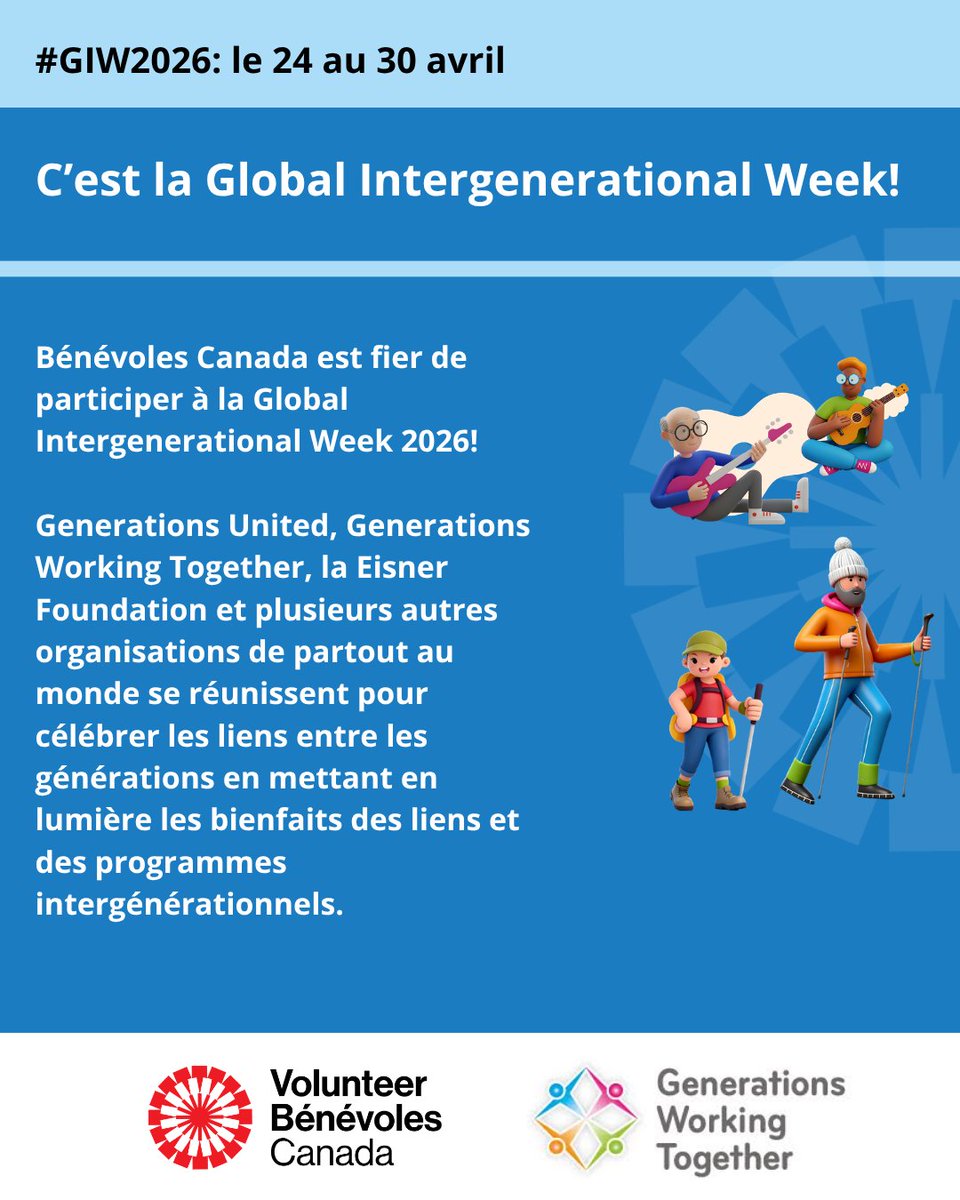
La Global Intergenerational Week 2026 a lieu du 24 au 30 avril et les personnes, les groupes communautaires, les gouvernements et les organisations non gouvernementales sont invité·e·s à célébrer les liens intergénérationnels.
Comment allez-vous souligner la Global Intergenerational Week?
Si vous organisez un événement intergénérationnel (et aussi si vous organisez souvent ce genre d’événements), ajoutez votre célébration à un mouvement mondial en remplissant ce formulaire pour faire part de vos plans:
https://t.co/twVHRF0bW0
@GensUnited@GenerationsWT
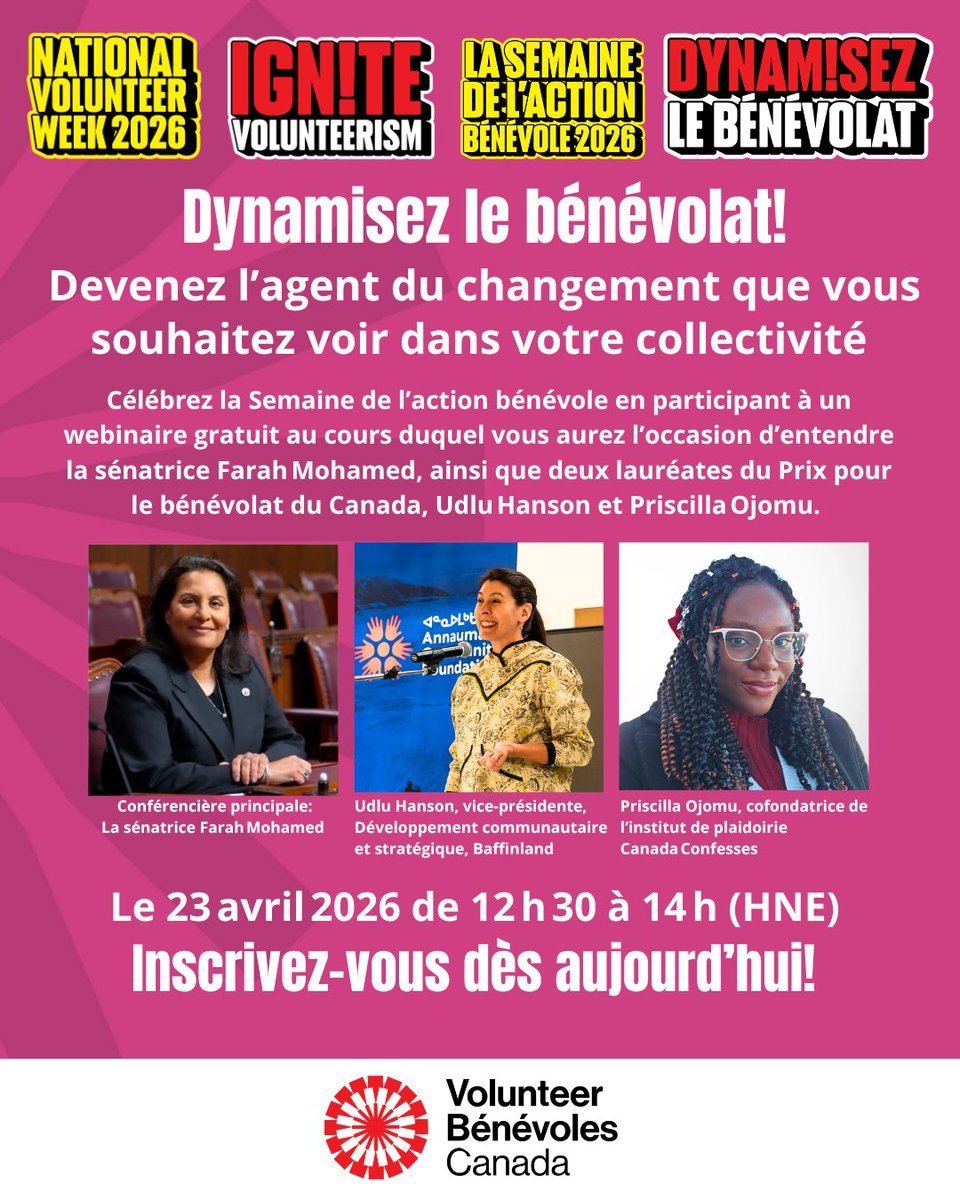
Soyez des nôtres le 23 avril à l’occasion de notre webinaire sur la Semaine de l’action bénévole 2026! Outre la sénatrice Mohamed, Udlu Hanson & Priscilla Ojomu partageront avec nous leur expérience en tant que l’inclusion & des besoins les plus pressants de leurs communautés.
Inscrivez-vous ici: https://t.co/2gnaP9Ri1F #SAB2026 #DynamisezLeBenevolat
📢 Call for proposals!
UNICEF is seeking long-term service providers for consultancy services in education.
Apply by 8 May 2026: https://t.co/L3jW4xu5fP
National Volunteer Week 2026 is coming on April 19-25!
Visit https://t.co/UatTnddL9V for National Volunteer Week 2026 resources!
#NVW2026#IgniteVolunteerism#IVY2026
-
La Semaine de l’action bénévole est à nos portes-- le 19 au 25 avril!
Visitez https://t.co/UatTnddL9V pour obtenir plus de ressources pour la Semaine de l’action bénévoles!
#SAB2026 #DynamisezLeBenevolat #IVY2026
Soyez des nôtres le 23 avril à l’occasion de notre webinaire sur la Semaine de l’action bénévole 2026! Outre la sénatrice Mohamed, Udlu Hanson & Priscilla Ojomu partageront avec nous leur expérience en tant que l’inclusion & des besoins les plus pressants de leurs communautés.
Inscrivez-vous ici: https://t.co/2gnaP9Ri1F #SAB2026
#DynamisezLeBenevolat
What can anthropology learn from creative writing? This piece explores how storytelling, structure, and voice can do analytical work, inviting readers to not just understand ethnographic insight, but to experience it.
Read the full article at: https://t.co/my2S62rhKz
📢 An excellent resource for teaching & research!
We've updated and expanded our list of movies.
It now includes detailed information on 154 movies dealing with social, political & legal issues concerning children:
https://t.co/ur7lfnLkGD
Who is AI built for, and who gets left out? At an APA 2025 Main Stage session, Dr. Anthony Estreet, CEO of National Association of Social Workers, challenges us to think beyond innovation and ask deeper questions about data, representation, and trust.
It’s Brain Awareness Week! 🧠
This week, we're excited to celebrate the incredible complexity of the human brain and to highlight why it's so important to deepen our understanding of it.
To that end, we are pleased to share Neurotorium’s interactive 3D Brain Atlas, created in collaboration with Professor Martin Fredensborg Rath (Denmark).
Our 3D Brain Atlas offers,
• A 360° view of the human brain
• Detailed visualization of cortical and subcortical structures
• Concise, expert-written descriptions of selected regions
• High-resolution downloadable images for educational use
Follow the link to explore and learn more about the human brain: https://t.co/UNH5WjPdnp