Mapping self-response rates & hard-to-count communities for a fair & accurate 2020 Census. Project of the Center for Urban Research at the CUNY Graduate Center.
Today America's #2020Census self-response rate rose to 23.6%! Everyone can follow their community's progress (or state, city, or county) at https://t.co/xxLok3W1qO Check back to see the 2020 progress bar fill in as rates are published daily. Try to meet & beat your 2010 rate!
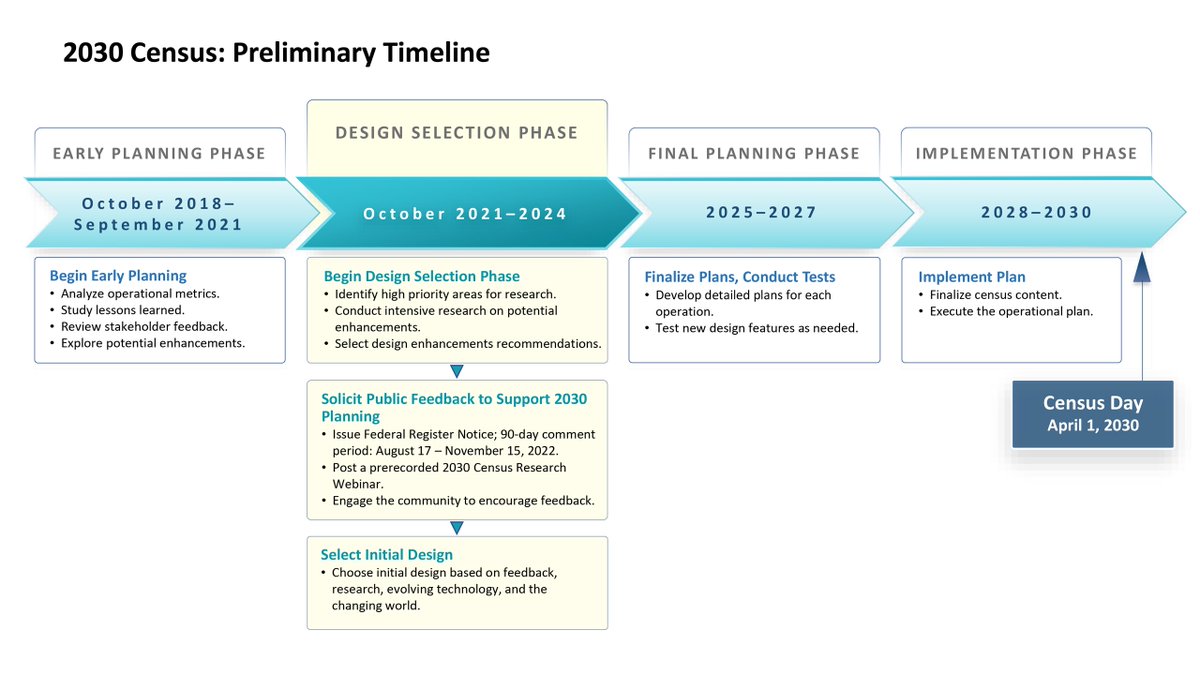
🚨ATTN🚨 The next decennial census is almost around the corner. Stakeholder groups in New York are thinking ahead, and have launched https://t.co/4egZOdLV4r as your go-to hub for all things related to Census 2030! 🙌🏼 Check it out! #NYCounts2030
BIG NEWS! @zcqian and I are editing @RussellSageFdn#RSFJournal on U.S. Census 2020: Continuity and Change. Submit your abstract by 11/16/22!! The full call is here: https://t.co/u3vUIGkoOg
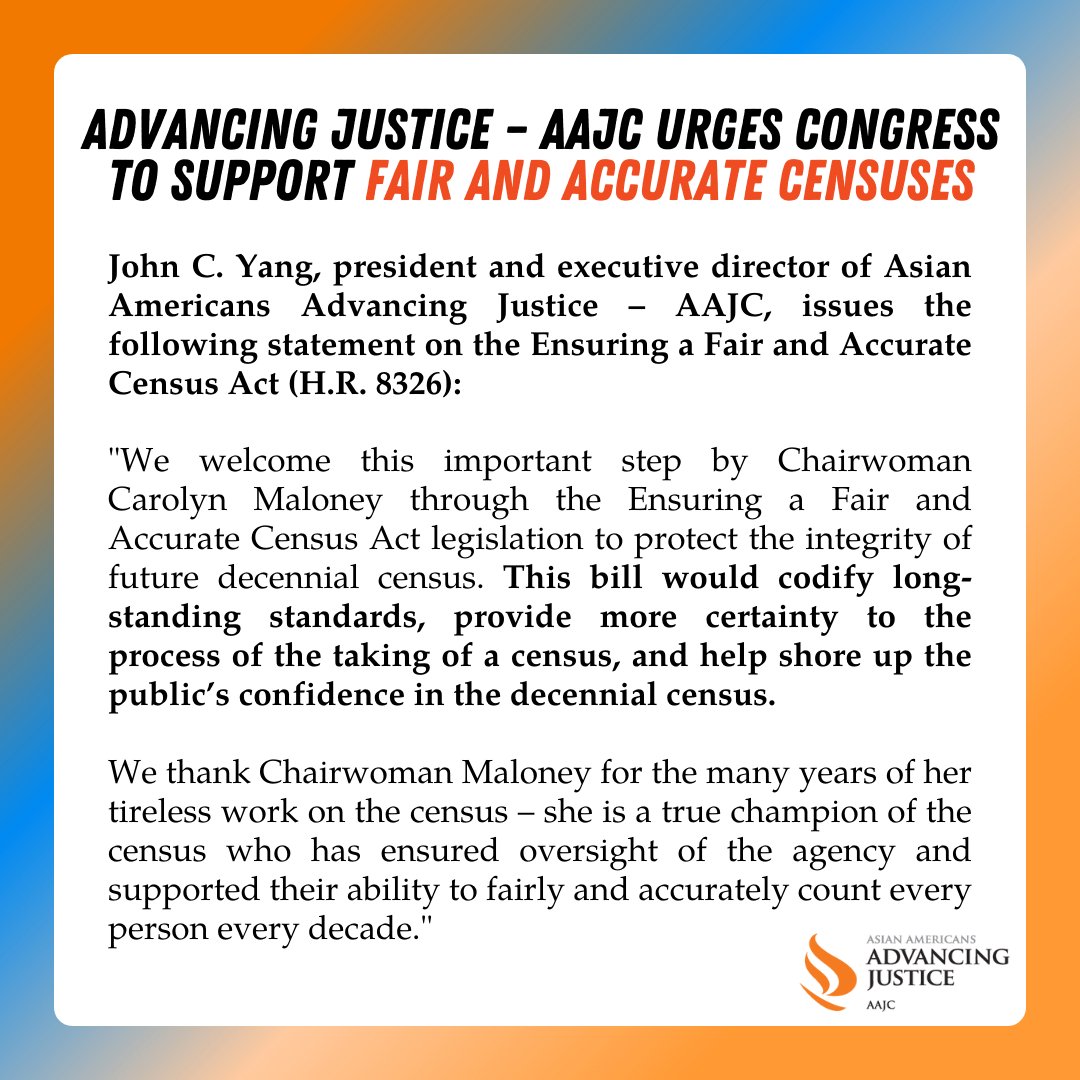
NEW: The House passed the Ensuring a Fair and Accurate Census Act – an important step toward necessary Census Bureau reforms to help eliminate the possibility of inappropriate political interference in the census.
We thank Chair @RepMaloney for her tireless work on this issue.
In 2020, we saw unprecedented efforts to interfere in the decennial Census by the previous Administration.
The Ensuring a Fair and Accurate Census Act is an important step to protect the Census from being politically exploited. We call on Congress to address this urgent issue.
We’ve helped secure important wins like fair redistricting maps, $15 minimum wage, and funding for affordable housing!👏🏾Read more about our impact here:
https://t.co/KFUEG0fwLS
On this newsy day of census county population estimates, don't forget that the great https://t.co/zhIDlqTSia has incorporated previously released 2016-2020 American Community Survey files into its easy-to-use site: https://t.co/J4BZFfQect
Today, the @uscensusbureau released the results of the Post Enumeration Survey, which offer a first glimpse into the accuracy of the 2020 Count. Learn more: (in English) https://t.co/5BeJ0QG3yC | (in Spanish) https://t.co/bebZNuH2qc
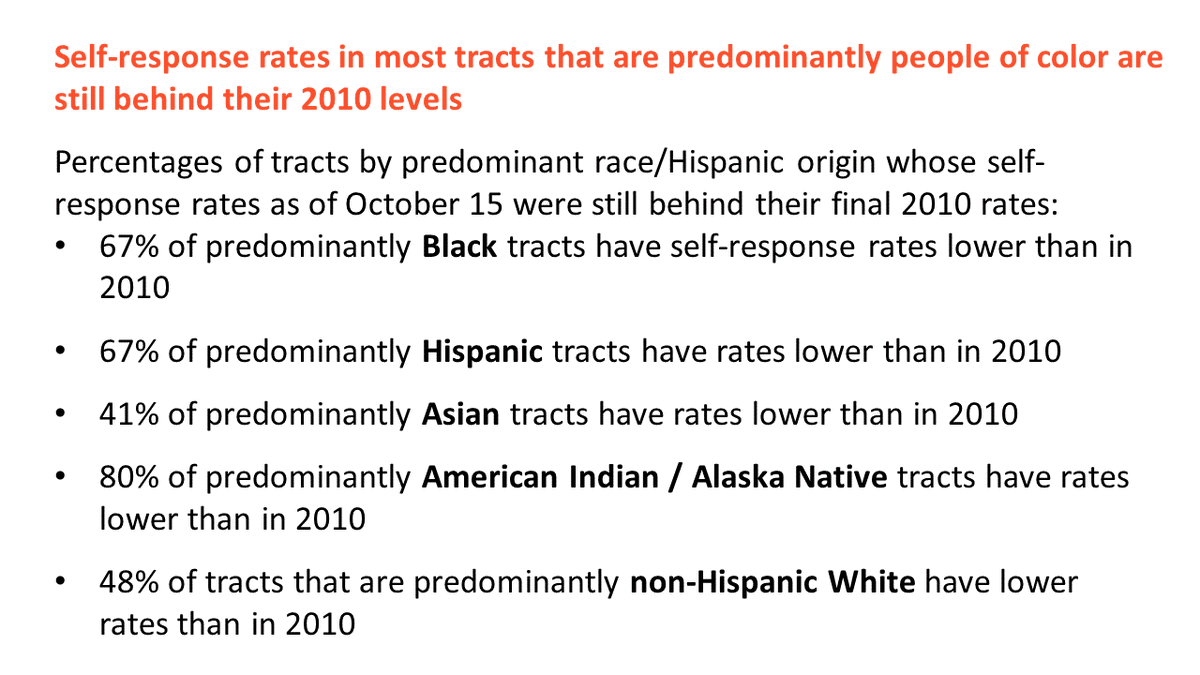
Some context for today's @uscensusbureau news re #2020Census undercounts. In Oct. 2020 we noted that self-response rates in communities of color tended to be much lower in 2020 than 2010. See https://t.co/korZ0g8ttN & slides below. Self-response is key indicator of data quality.
Good overview; helpful thread on what to think about when the Census Bureau publishes its national assessment on Thursday of any 2020 Census over/undercount.
NEW: Census Bureau's National Advisory Committee on Racial, Ethnic & Other Populations has put out recommendations on how the bureau should talk about the differential privacy protections it's applying to 2020 census redistricting data & more detailed data
https://t.co/p9gUuGFBcV
Powerful critique of Differential Privacy applied to 2020 Census data https://t.co/ptq089FRMs via @binarybits Risk of "re-identification" w/o DP? "Someone who produces a reconstructed database that’s 38% accurate hasn’t identified anyone’s census responses—they’re just guessing."
Join us Wed, 2/23 @ 7:30p for "The Future of Multiracial America" - RESERVE: https://t.co/ycPBekkQUi Feat. @albamoore1, Jenifer Bratter of @RiceUniversity, @luriefavors, @mcpli & @mousam. What do changing demographics from #Census2020 mean for society?
The @uscensusbureau will release new results March 10 from two important 2020 census data quality indicators, preceded by a March 3 webinar to explain what it's going to release https://t.co/ZPyx6mXipG
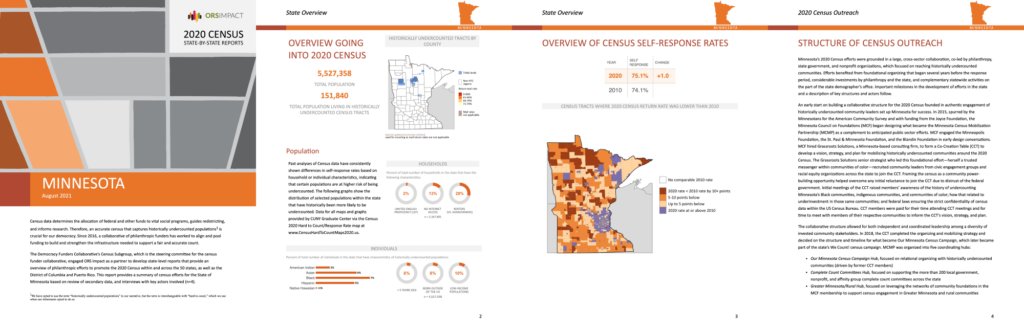
Together with @tvroylandt and @charliejhadley , we worked with @orsimpact to produce reports on outreach efforts during the 2020 Census. The 52 reports show what was done in each state to ensure all people were counted as part of the Census. https://t.co/11cmb5HKWj
Tracts where 25% or more households have no internet (2014-2018)
- from Hard to Count 2020, Mapping Response Rates for a Fair and Accurate 2020 Census [CUNY Mapping]
https://t.co/ezZMl7qPOa


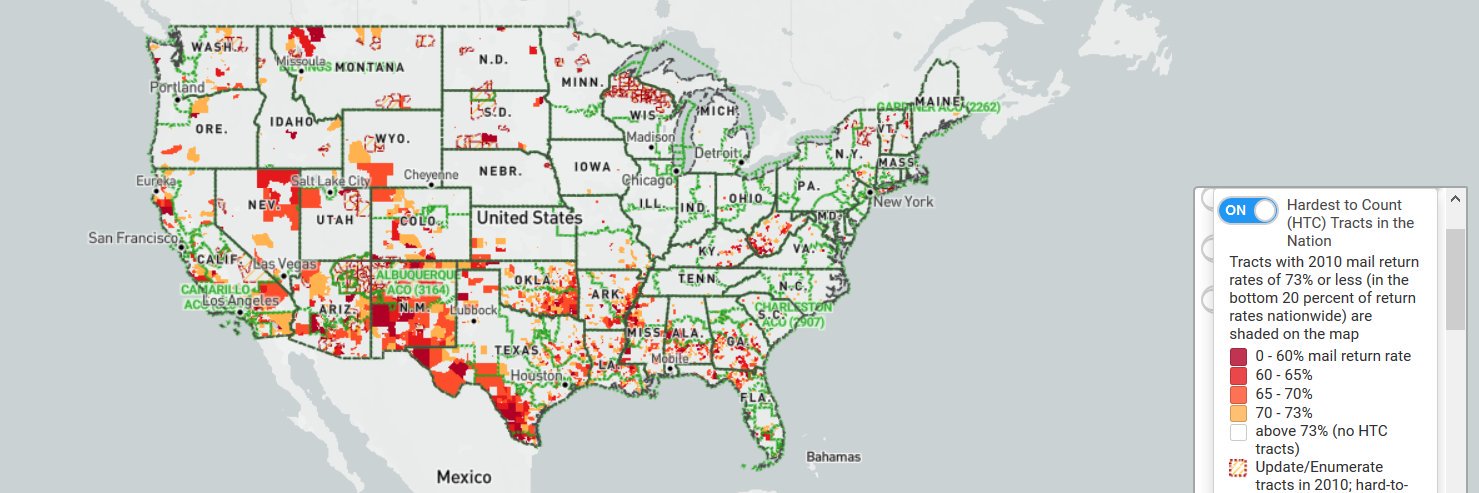



![cityresearch's tweet photo. Tracts where 25% or more households have no internet (2014-2018)
- from Hard to Count 2020, Mapping Response Rates for a Fair and Accurate 2020 Census [CUNY Mapping]
https://t.co/ezZMl7qPOa https://t.co/ZUX7Ev6vfP](https://pbs.twimg.com/media/FD10UCoWQAknP2e.jpg)


