پروین شاکر
بس اے بہار کے سُورج ! بڑھا یہ قہر کا رَنگ
جلا گئی ہَے تِری دُھوپ میرے شہر کا رَنگ
شِجر کو سبز قبا دیکھ کر یہ اُلجھن ہَے
کہاں پہ رنگِ نمو ہَے، کہاں پہ زہر کا رَنگ
کنارِ جُوئے رَواں جب سے قتل گاہ بنی !
ہجُوم اُمڈنے لگا، دیکھنے کو نہر کا رَنگ
ابھی تو مَیں نے سمندر میں ناؤ ڈالی تھی
یہ کَیا ہُوا کہ بدلنے لگا ہَے لہر کا رَنگ
یہ احتجاج بجا ہے کہ تیز تھی بارش
یہ ماننا ہَے کہ کچّا تھا اَپنے شَہر کا رَنگ
گِلہ ہی کَیا ہَے اگر وُہ بھی سبز چشم ہُوا
طبیعتوں پہ تو چڑھتا رہا ہَے ، دہر کا رَنگ
وُہ آج بھی مُجھے سوتے میں ڈَسنے آئے گا
وُہ جانتا ہے کہ کِھلتا ہے مّجھ پہ زہر کا رَنگ
اُترنے پائے گا قوسِ قزح کا تھام کے ہاتھ
سوادِ حرف میں کب عشقِ بے سپہر کا رَنگ
(پروین شاکر)
USA, Chicago: Shaykh Hammad Mustafa al-Madani al-Qadri addressed the opening conference of his USA tour: “The Sīrah and Modern Times.”
Shaykh Hammad Mustafa Qadri delivered his keynote lecture on why the Sīrah should be studied and what lessons can be learnt in the 21st century.
Shaykh Hammad Mustafa Qadri highlighted that the life of the Holy Prophet ﷺ is the living embodiment of the Qur’an and the most complete model for all of humanity. By studying his blessed character and example, we gain enduring guidance on faith, morality, leadership, and success in both this life and the Hereafter.
At the age of twelve, he ﷺ travelled to Syria on his first journey outside Arabia. It was a formative experience in the life of the one destined to transform the world. Such early moments contributed to the development of his wisdom, integrity, and leadership, qualities that would later shape history.
He emphasised that the Sīrah of the Holy Prophet ﷺ is not merely a record of past events. It is rather a living guide for every generation. In a world still searching for meaning, mercy, and direction, his example remains the most complete model of faith, character, and compassion.
The gathering was attended by Mawlana Shaykh Syed Imaduddin Quadri al-Jeelani, Mawlana Shaykh Syed Najmuddin al-Jeelani (Co-Chairman of the American Islamic Society), Dr. Wasim Zuberi (President MQI USA), Syed Ali Abbas Bukhari (President MQI UK), Adnan Sohail (Global Director of Minhaj Welfare Foundation), Dr Abdullah al-Qadri, Ali Malik (General Secretary MYL Canada), Imam Mohammed El-Farooqui, along with various distinguished members of the Islamic Society of Chicago and prominent community figures.
#ShaykhHammadMustafa #HMQ #ShaykhHammadQadri #ChicagoEvents #IslamicReminder #USA #TheSirahAndModernTimes #MQI #SirahTour #USAEvents
Blood donation is one of the highest expressions of compassion, generosity, and selflessness. Saving a single life represents a profound service to humanity. The strength of any society lies in the willingness of its people to support and care for one another. Acts of humanitarian service help foster solidarity, kindness, and a sense of shared responsibility. By looking beyond our own needs and extending a helping hand to others, we can contribute to building a society founded upon empathy, human dignity, and mutual care.
#WBDD #WorldBloodDonorDay #BloodDonation #DonateBlood #GiveBloodSaveLife #SaveLives #HumanityFirst
الحمدللہ! 7,35,000 خاندانوں تک قربانی کا گوشت پہنچایا گیا۔
آپ کی سخاوت نے ہزاروں مستحق خاندانوں کے چہروں پر خوشیاں بکھیریں۔ شکریہ کہ آپ نے یہ ممکن بنایا۔
🔗 https://t.co/UxBjoMkXBn
#MWF#Qurbani#Pakistan#HelpFeed#EidAlAdha
Nottingham, UK: Scholars’ Q&A Session Held with His Eminence Shaykh-ul-Islam Dr Muhammad Tahir-ul-Qadri
A special scholars’ Q&A session was held in Nottingham with His Eminence Shaykh-ul-Islam Dr Muhammad Tahir-ul-Qadri. The gathering was hosted by Pir Syed Lakhte Hassanain, Founder and Chairman of Muslim Hands International, with introductory remarks delivered by Dr Musharraf Hussain, CEO of the Karimia Institute, and Pir Niaz ul Hassan sahib of Sultan Bahu trust, were also on stage.
The gathering brought together hundreds of respected Ulama-e-Kiraam, scholars, Imams, Mashayikh and community representatives from across the UK for a detailed and wide-ranging scholarly exchange. Due to the significant number of scholars present, it would be unfair to mention only a few names while omitting many others who also honoured the gathering with their attendance.
His Eminence Shaykh-ul-Islam responded directly to questions raised by the scholars in attendance, covering important matters relating to Islamic theology, jurisprudence, interfaith engagement, prayer timings, scholarly etiquette, Muslim youth in the West and the preservation of Islamic knowledge. The subject matter of the session was therefore shaped by the questions presented, allowing Shaykh-ul-Islam to address contemporary concerns with depth, evidence and scholarly clarity.
At the outset, His Eminence Shaykh-ul-Islam reflected on the responsibility of scholars to address questions with knowledge, adab and sincerity. Shaykh-ul-Islam reminded those present that matters of religion must not be reduced to social media disputes or public argumentation, and that sincere questions from scholars deserve time, depth and evidence-based responses.
Ahl-e-Kitab and the Jurisprudential Distinction
One of the early questions concerned the status of Jews and Christians as Ahl-e-Kitab and the meaning of referring to them as “believers” in certain contexts.
Shaykh-ul-Islam explained that after the finality of the Prophethood of the Holy Prophet ﷺ, those who do not accept Islam are not believers in the Islamic, theological sense. However, Shaykh-ul-Islam clarified the important Hanafi jurisprudential distinction between different categories of non-Muslims.
Citing the positions of Imam Abu Hanifa, Imam Abu Mansur al-Maturidi and the Hanafi jurists, Shaykh-ul-Islam explained that Jews and Christians are treated as Ahl-e-Kitab because they claim belief in a divinely revealed book, even though distortion and theological deviation later occurred. Shaykh-ul-Islam contrasted this with other traditions that do not make such a claim to a revealed scripture.
Shaykh-ul-Islam referred to major works including Al-Hidayah by Imam al-Marghinani, Bada’i al-Sana’i by Imam al-Kasani, Tabyin al-Haqa’iq by Imam al-Zayla‘i, Al-Bahr al-Ra’iq by Ibn Nujaym and other classical texts to explain why the Hanafi school permits the slaughter of Ahl-e-Kitab while distinguishing it from non-Ahl-e-Kitab slaughter.
Shaykh-ul-Islam clarified that when such communities are called “believers” in English, this does not mean believers in the Islamic sense of faith in Allah, His Messenger ﷺ and the Qur’an. Rather, it refers only to their claim of belief in a heavenly scripture.
Christmas, Easter and Muslim Participation
Shaykh-ul-Islam also addressed the question of Muslim participation in Christmas-related gatherings. Shaykh-ul-Islam referred to his detailed work Islam and the People of the Book and explained the need to distinguish between the birth of Sayyiduna Isa عليه السلام and beliefs connected to crucifixion and resurrection.
Shaykh-ul-Islam stated that Muslims cannot participate in Easter observances where the underlying belief contradicts the Qur’anic account of Sayyiduna Isa عليه السلام. However, regarding Christmas, Shaykh-ul-Islam explained that Muslims and Christians both affirm the miraculous birth of Sayyiduna Isa عليه السلام, though Muslims reject any false creed attached to him.
Shaykh-ul-Islam clarified that cake-cutting itself is not prohibited, as Muslims commonly cut cakes at birthdays, weddings and other permissible occasions. Shaykh-ul-Islam explained that, where the intention is to honour the birth of Sayyiduna Isa عليه السلام, without affirming false creed and without involvement in haram acts, participation may be permissible.
Shaykh-ul-Islam further stated that any gathering containing haram elements, regardless of the occasion, should be avoided.
Interfaith Dialogue and the Prophetic Method
A major theme of the session was the Qur’anic and Prophetic approach to interfaith dialogue. Shaykh-ul-Islam explained the three levels of da‘wah mentioned in the Qur’an: wisdom, beautiful advice and dialogue in the best manner.
Shaykh-ul-Islam reminded the scholars that effective da‘wah begins by identifying areas of common ground rather than beginning with confrontation. Referring to Qur’anic examples, Shaykh-ul-Islam explained that even the polytheists of Makkah acknowledged Allah as the Creator of the heavens and the earth, despite their shirk. The role of the da‘i is to begin from this remaining point of recognition and gradually guide hearts towards Tawheed.
Shaykh-ul-Islam also cited the Prophetic example of honouring the Torah by placing it on a pillow, despite the distortion that had entered later texts. Shaykh-ul-Islam explained that the Prophet ﷺ honoured the original revelation from Allah while remaining clear about theological differences.
Shaykh-ul-Islam also referred to reports found in works of seerah, tafsir and dalail literature concerning the delegation of Najran Christians being permitted to perform their prayer in Masjid al-Nabawi. Shaykh-ul-Islam explained that this reflected the breadth, mercy and wisdom of the Prophetic method in dialogue.
Titles of the Rightly-Guided Caliphs and Adab in Disagreement
The session also addressed contemporary discussions around titles such as Siddiq Akbar, Farooq-e-Azam and related honorifics.
Shaykh-ul-Islam explained that the title Siddiq for Sayyiduna Abu Bakr رضي الله عنه is established through the Prophetic tradition, particularly in relation to the Mi‘raj. The addition of Akbar is an honourific used by the Ummah over many centuries. Similarly, the title Farooq for Sayyiduna Umar رضي الله عنه is rooted in Prophetic meanings, while Azam is an honorific expression of reverence.
Shaykh-ul-Islam explained that such titles should be understood with balance and adab, without turning shared words of honour into sources of dispute. The Qur’an itself uses terms such as siddiq for Prophets and the righteous, and the Ummah has long used honourific titles to express rank, love and reverence.
Shaykh-ul-Islam strongly discouraged creating public controversy over such matters, especially on social media, and urged scholars to maintain the method of the Companions, the Ahlul Bayt, the Imams and the Sufiya.
Khilafat-e-Rashidah and Spiritual Wilayah
Another important question concerned the relationship between the outward Caliphate of the Khulafa-e-Rashidun and the spiritual authority of Mawla Ali رضي الله عنه.
Shaykh-ul-Islam explained that Khilafat-e-Rashidah was the Caliphate through which the religion was established and protected outwardly. It included the preservation, implementation and defence of Islam in the public and communal order.
Shaykh-ul-Islam explained that the outward does not exclude the inward. Just as the outward acts of salah contain inner remembrance, humility and munajat, the outward Caliphate also contained spiritual reality within it.
Regarding Ghadir Khumm, Shaykh-ul-Islam explained that the Prophet ﷺ conferred spiritual authority and wilayah upon Mawla Ali رضي الله عنه, opening the door through which the chains of spirituality and tasawwuf continued in the Ummah. Shaykh-ul-Islam emphasised that the outward Caliphate and spiritual wilayah are complementary realities, not contradictory ones.
Isha Prayer Timings in the UK and Northern Regions
Shaykh-ul-Islam also addressed the issue of Isha timings in parts of the UK and Europe during extended summer days, when twilight does not fully disappear.
Shaykh-ul-Islam explained that the obligation of prayer is established by time, while signs such as shadow length and twilight are indicators used to identify time. The absence or persistence of a sign does not remove the obligation of the prayer itself.
Shaykh-ul-Islam stated that it is not possible for Islam to impose five daily prayers and then render them impossible for people in certain regions for months at a time. In such cases, time must be calculated proportionally.
Referring to the hadith in Sahih Muslim concerning the time of Dajjal, where one day will be like a year, Shaykh-ul-Islam explained that the Prophet ﷺ instructed the Companions to distribute prayers proportionally. This establishes the principle for regions where normal signs are absent or unclear.
Shaykh-ul-Islam further explained that in polar regions, where the sun may not rise or set for months, the principle of the nearest comparable region is applied. Similarly, where twilight does not disappear, Isha time should be determined through calculated proportional division of the night.
Muslim Youth in the West and the Challenge of Social Media
Shaykh-ul-Islam spoke with concern about Muslim communities in the West importing sectarian disputes from their countries of origin while failing to address the real challenges facing children and young people born in Europe.
Shaykh-ul-Islam warned that social media is spreading atheism, secularism, moral confusion and intra-Muslim hostility. Shaykh-ul-Islam urged scholars and community leaders to focus on the actual needs of young people: faith, identity, sound knowledge, adab, belonging and spiritual confidence.
Shaykh-ul-Islam gave several examples from the lives of the Companions showing how legitimate differences of opinion were handled with respect. These included differences between Sayyidah A’ishah رضي الله عنها and Ibn Abbas رضي الله عنهما on whether the Prophet ﷺ saw Allah on the night of Mi‘raj, differences over how the Companions understood the command to pray Asr at Banu Qurayzah and other examples from hadith and seerah.
Shaykh-ul-Islam explained that the Prophet ﷺ honoured sincere interpretive difference and did not turn such matters into hostility. Shaykh-ul-Islam urged scholars to revive this Prophetic culture of adab, tolerance and mutual respect.
Shaykh-ul-Islam also reminded the audience that saying “I do not know” is part of knowledge. Referring to the practice of the Companions and Imams, including Imam Malik رضي الله عنه, Shaykh-ul-Islam explained that scholars of the past would often refrain from answering when they did not know, rather than speaking carelessly.
Shaykh-ul-Islam strongly cautioned against careless fatwas, public takfir and turning speculative matters into definitive issues. Shaykh-ul-Islam stated that the path of the Sufiya was not to declare Muslims as disbelievers, but to reform, guide and unite hearts.
Shaykh-ul-Islam urged scholars and speakers to avoid using social media for views, controversy and monetisation, and instead restore religious discourse based on sincerity, humility, knowledge and service.
Upcoming Scholarly Publications and Major Works
Towards the end of the session, Shaykh-ul-Islam also gave an update on several major scholarly works being prepared for publication for the benefit of the Ummah.
Shaykh-ul-Islam shared that three tafseers are planned for publication before the coming Ramadan. These include a Tarbawi Tafseer, focusing on the moral, spiritual, intellectual and social upbringing of the believer through every verse of the Qur’an; an Ijmali Tafseer, offering concise summaries of groups of verses; and an Arabic Matni Tafseer, described as a significant scholarly contribution at the text level.
Shaykh-ul-Islam also mentioned a further multi-method, verse-by-verse tafseer to follow after these works.
On Hadith scholarship, Shaykh-ul-Islam referred to his extensive Hadith collection, which began as seven volumes and has now expanded significantly. Shaykh-ul-Islam also mentioned an independent work on the principles and sciences of Hadith, intended to cover the field in Arabic, Urdu and English.
A major scholarly finding discussed was Shaykh-ul-Islam’s long-term research into the narrations of Mawla Ali رضي الله عنه. Shaykh-ul-Islam explained that while many standard works mention approximately 500 narrations from Mawla Ali رضي الله عنه, Shaykh-ul-Islam spent more than a decade researching reliable Ahl-e-Sunnah Hadith sources and identified around 12,000 narrations attributed to him. This collection has now been completed and is being reorganised into subject-based chapters to make it more beneficial for scholars and readers.
Shaykh-ul-Islam also referred to work being compiled on the contributions of 150 major Islamic scholars regarding the Ahlul Bayt, describing these efforts as part of a wider scholarly inheritance for the Ummah.
Final Reflections
The session was a rare and deeply beneficial gathering of scholarly clarification, spiritual counsel and intellectual direction. Shaykh-ul-Islam addressed complex and sensitive issues with extensive references to Qur’an, Hadith, classical scholarship, jurisprudence, seerah and the conduct of the Companions.
A central message throughout the gathering was that knowledge must be joined with adab, scholarship must serve unity and religious leadership must guide people towards Allah Almighty with wisdom, mercy and humility.
The session concluded with a powerful reminder that the scholars of the Ummah carry a responsibility to protect faith, preserve sound knowledge, guide the next generation and revive the Prophetic method of mercy, respect and sincere service.
#ShaykhUlIslam #DrTahirulQadri #MQI #MinhajulQuran #IslamicScholarship #AhlulBayt #Nottingham #UKMuslims #UK #Sufi #Scholars
Thank you to everyone who joined our Charity Family Fun Day!
It was wonderful to see so many families come together and make the day so special.
Follow our social media for updates on upcoming events.
https://t.co/EdkMxFqScB
#MWF#FamilyFunDay#DaneshouseCommunityCentre
Respect for older persons is a defining characteristic of a civilized and compassionate society. Islam places great emphasis on honoring parents and elders and regards their care and service as a source of virtue and blessing. Despite rapid social change, it remains essential to preserve the values that strengthen family and community life. The dignity, well-being, and protection of older people should be recognized as a fundamental social responsibility, supported through both awareness and meaningful action.
#WorldElderAbuseAwarenessDay #ElderAbuseAwareness #RespectElders #ProtectOurElders #ElderRights #HumanDignity #CareForElders #WEAAD
Admissions Open – Pharm.D | Fall 2026
Build your future in one of the most respected and rapidly growing healthcare professions.
The Doctor of Pharmacy (Pharm.D) program at Minhaj University Lahore equips students with the knowledge, practical skills, and professional training required for careers in pharmaceutical industries, hospitals, clinical settings, research, and healthcare management.
Apply Online: https://t.co/8AQjdPzxZ4
For information and guidance, WhatsApp: 03111181685
Admissions Helpline: 03111222685
#PharmD #AdmissionsOpen #Fall2026 #MinhajUniversityLahore #HealthcareEducation #FuturePharmacist #ARealPathToExcellence #Admissions2026 #GrowGlobal
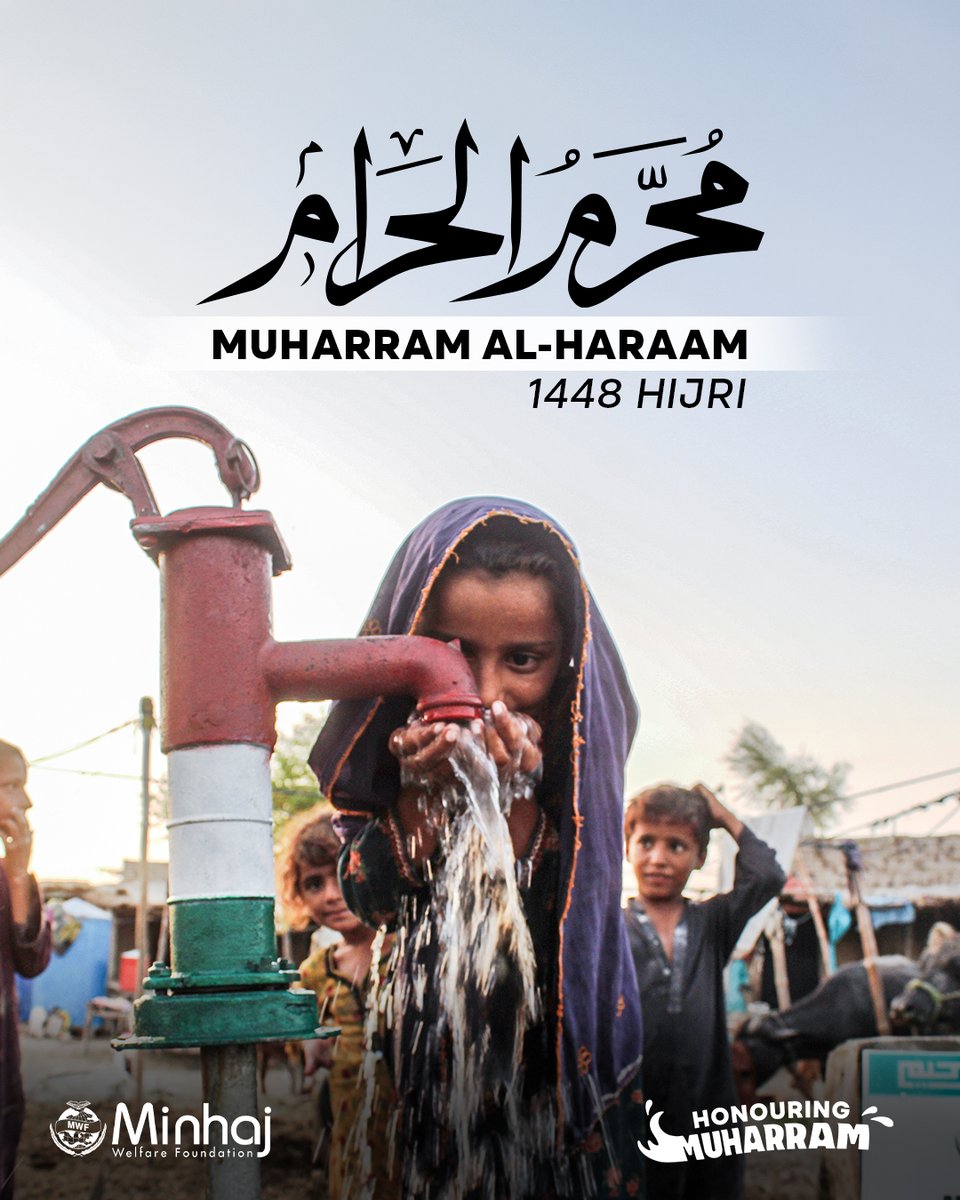
💧 This Muharram, remember the thirst of Karbala.
🚰 Help provide clean water to communities in need and honour the legacy of Imam Hussain (AS).
💰 Donate today.
🔗 https://t.co/swXQzxz0QV
#MWF#WaterForAll#Muharram#CleanWater
نیوجرسی (New Jersey) میں روح پرور اجتماع!
معروف نوجوان سکالر شیخ حماد مصطفیٰ المدنی القادری 19 جون 2026 کو نیو جرسی میں“The Sirah & Modern Times” کے عنوان سے منعقدہ کانفرنس سے خطاب کریں گے۔
اس فکری و روحانی کانفرنس میں حضور نبی اکرم ﷺ کی سیرتِ طیبہ کی روشنی میں نوجوان نسل، خاندان اور معاشرے کو درپیش جدید چیلنجز پر گفتگو ہوگی، ایمان، شعور، کردار سازی اور فکری راہنمائی کے اہم پہلوؤں کو اجاگر کیا جائے گا۔
اپنے اہلِ خانہ اور دوستوں کے ہمراہ اس بابرکت اور فکر انگیز اجتماع میں ضرور شرکت کریں۔
رجسٹریشن کے لیے QR Code اسکین کریں یا ڈسکرپشن میں موجود لنک پر کلک کریں۔
https://t.co/W8IgHpM2hK
#TheSirahAndModernTimes #SouthJersey #NewJerseyMuslims #IslamicEvent #HMQ #ShaykhHammadQadri
Personalising identity through fingerprints
Chapter: Scientific Realities
Section: Biological Development of the Human Body
بَلٰى قٰدِرِیْنَ عَلٰۤی اَنْ نُّسَوِّیَ بَنَانَهٗ .
(al-Qiyāmah , 75: 4)
https://t.co/JHURLEDwPo
#quranicencyclopedia#minhajislamicencyclopedia
CALL FOR PAPERS | 9th International Conference on World Religions (ICWR-2026)
Conference Theme: Healing A Wounded World: Religious Responsibility, Solidarity and Action
📅 24–25 October 2026
📍 Minhaj University Lahore, Pakistan
The 9th International Conference on World Religions (ICWR-2026) invites scholars, researchers, practitioners, policymakers, and postgraduate students to contribute original research exploring how religious traditions, institutions, and lived experiences can respond to contemporary global challenges and help shape a more just, peaceful, and resilient future.
The conference welcomes interdisciplinary, comparative, and practice-oriented research on a wide range of themes, including religious responsibility in times of crisis, social inclusion, interfaith collaboration, women and youth as agents of change, ecological stewardship, digital technology and sacred spaces, and religious approaches to addressing social inequalities.
Selected papers will be considered for publication in:
* South Asian Journal of Religions & Philosophy (HEC Approved)
* Conference Proceedings
📅 Abstract Submission Deadline: 04 August 2026
🔗 For conference details, guidelines, registration, and paper submission:
https://t.co/H2rh5A8fCx
Join leading scholars and researchers from around the world in advancing meaningful dialogue and actionable solutions for healing our shared world.
#ICWR2026 #CallForPapers #WorldReligions #ReligiousStudies #InterfaithDialogue #ResearchConference #AcademicResearch #SocialInclusion #PeaceStudies #ReligiousResponsibility #MinhajUniversityLahore #HigherEducation #ScholarlyResearch
بشیر بدر کی غزل
کچھ تو مجبوریاں رہی ہوں گی
یوں کوئی بے وفا نہیں ہوتا
گفتگو ان سے روز ہوتی ہے
مدتوں سامنا نہیں ہوتا
جی بہت چاہتا ہے سچ بولیں
کیا کریں حوصلہ نہیں ہوتا
رات کا انتظار کون کرے
آج کل دن میں کیا نہیں ہوتا
بشیر بدر (مرحوم)
Your Qurbani is reaching families across India, delivered with care, dignity, and compassion.
For many, it brings much-needed relief and the joy of sharing a special Eid meal with loved ones.
🔗 https://t.co/EdkMxFqScB
#MWF#Qurbani#India#HelpFeed#EidAlAdha
USA, Texas: Shaykh Hammad Mustafa al-Madani al-Qadri arrives in Dallas, Texas, ahead of the The Sīrah & Modern Times conference.
Register here for the “The Sīrah & Modern Times” conferences: https://t.co/W8IgHpM2hK
#ShaykhHammadQadri #TheSirahAndModernTimes #MQI #Dallas#USA #MinhajulQuran #HMQ
کمال ضبط کو خود بھی تو آزماؤں گی
میں اپنے ہاتھ سے اس کی دلہن سجاؤں گی
سپرد کر کے اسے چاندنی کے ہاتھوں میں
میں اپنے گھر کے اندھیروں کو لوٹ آؤں گی
بدن کے کرب کو وہ بھی سمجھ نہ پائے گا
میں دل میں روؤں گی آنکھوں میں مسکراؤں گی
وہ کیا گیا کہ رفاقت کے سارے لطف گئے
میں کس سے روٹھ سکوں گی کسے مناؤں گی
اب اس کا فن تو کسی اور سے ہوا منسوب
میں کس کی نظم اکیلے میں گنگناؤں گی
وہ ایک رشتۂ بے نام بھی نہیں لیکن
میں اب بھی اس کے اشاروں پہ سر جھکاؤں گی
بچھا دیا تھا گلابوں کے ساتھ اپنا وجود
وہ۔ سو کے اٹھے تو خوابوں کی راکھ اٹھاؤں گی
سماعتوں میں گھنے جنگلوں کی سانسیں ہیں
میں اب کبھی تری آواز سن نہ پاؤں گی
جواز ڈھونڈ رہا تھا نئی محبت کا
وہ ۔کہہ رہا تھا کہ میں اس کو بھول جاؤں گی
پروین شاکر