I just applied for the @TheAgentFirm whitelist using code CDP-772-ZQT
Invited by @0xyuura
5,280 AI agents on @Enter_Elysium. Apply here:
https://t.co/sWJRUt5tJj
@Rausyan1995 When I read an audit report, I skip the summary and go to the Centralization Risks section. That is where auditors list how the team can steal funds. If that section is three pages long, I close the tab. They tell you the truth if you look in the right place.
@Rausyan1995 I think the timeline is too aggressive. The math verification part might work, but the legal liability of an autonomous agent managing fifty million dollars will stall adoption. Protocols will keep a human co-signer just to have someone to sue if it breaks.
@suhuweb3@GenLayer@GenLayerFDN One thing I really like about this concept is that disagreement is treated as something useful rather than something the system should hide.
@Wisnu100802@RialoHQ Consistent builder activity is a stronger signal than temporary hype. Real ecosystems grow through participation, not just announcements.
@Bas_Basterx Selective disclosure is an important step toward making digital identity more practical. Privacy shouldn’t come at the cost of compliance.
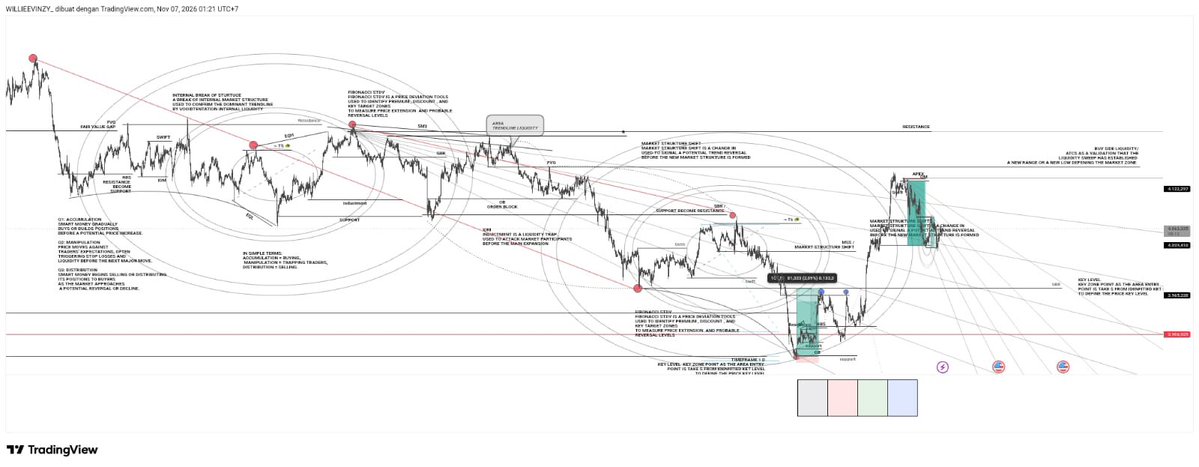
@0xVoid10_@RTM_Community Gold movements around NFP always test a trader’s patience. Understanding liquidity and waiting for confirmation is where the real edge comes from. gacorrrr🔥🥳
A court is only as honest as it is expensive to fake.
while (verdict_pending) {
validator.locks(GEN);
judge(case);
split(fee, 90, 10);
}
@GenLayer anyone can spin up a thousand AI judges, so if ruling cost nothing, one person could fill the court with their own. Locking GEN before a vote changes that math. A validator needs its own 42,000 GEN, its own infrastructure, and a place in the top 1,543, and its weight grows with the square root of stake, so doubling a stake adds about 41% weight, not double weight.
Users pay in GEN for execution, escrowed up front, with unused slots refunded. From each fee, 90% goes to validators on the majority side and 10% to developers of the contract. DeepThought takes 10% of the validators share, so it grows only when the network is actually used.
Losing a vote costs a validator its fee. Proven fraud is priced differently: leaders are slashed 5% and other signers 1%. An honest mistake and cheating do not cost the same, and that is the point of the lock.
If an appeal fails, the next jury is larger, so taking over an outcome gets harder the more you try. That is why a stake is not a ticket. It is the cost of being wrong.
One GEN fee does not disappear into the protocol. It is routed, in full, to four places:
fee -> stakers: 70%
fee -> validators: 15%
fee -> developers: 10%
fee -> DeepThought DAO: 5%
@GenLayer users pay that fee in GEN to get a verdict. Validators lock GEN before they can judge a case, so a seat is not free. Developers earn their share only when their contracts are actually used. The DeepThought DAO share is planned, AI governed, and funded only from fees.
GEN is not a reward for paying. It is the payment itself, and the routing above is how that payment reaches the stakers, the node runners, the builders, and the DAO.
Pay for a verdict, and the fee shows its work.
The Countdown To Fungo Genesis Is Almost Over
On November 5, 2026 will launch its Genesis NFT mint with a unique approach to fair distribution, powered by Zama Fully Homomorphic Encryption (FHE) technology
Instead of a traditional public sale @FungoLabs introduces an encrypted bidding system designed to protect bidders strategies and keep their offers private
The Sale Will Feature Two Stages:
→ 500 Genesis NFT available through a free mint for whitelist holders
→ 2,500 Genesis NFT offered through an encrypted sealed bid auction
→ Bids are placed in cZAMA, allowing participants to choose their preferred price and NFT quantity
The interesting part? Your bid price and quantity remain encrypted while the auction is open, so other participants cannot see your bidding strategy
How The Auction Works
Fungo uses a sealed bid mechanism to determine the final NFT price
Here Is How The Process Works:
• Participants submit their bids in cZAMA
• Once the auction closes, all bids are revealed and ranked from highest to lowest
• The lowest winning bid that fills the 2,500 NFT allocation determines the final sale price
• Every successful bidder pays the same final price, with any excess cZAMA refunded
Who Gets The NFT:
1. The allocation depends on how your bid compares to the final sale price
2. Bids above the final price receive their full requested NFT quantity
3. Bids exactly at the final price share the remaining NFT allocation proportionally (pro rata)
4. Bids below the final price receive no NFT, and their cZAMA is refunded
This mechanism creates a structured distribution process where the final price is determined by actual demand
Understanding The Example
Lets say the final sale price is 10,000 cZAMA per NFT↷
⇢ Bidder A offers 15,000 cZAMA for 3 NFTs. They receive all 3, pay 30,000 cZAMA, and get 15,000 cZAMA refunded
⇢ Bidder B offers 10,000 cZAMA for 2 NFTs. They receive a proportional share of the remaining allocation
⇢ Bidder C offers 8,000 cZAMA for 1 NFT. They receive no NFT and get their 8,000 cZAMA refunded
These figures are illustrative examples to help explain how the auction works
Important Things to Know
Before participating, there are a few important details worth understanding:
- All bids are binding and cannot be withdrawn
- Each bid includes a small, non refundable fee for encrypted bidding
- If total demand remains below 2,500 NFTs, everyone purchases at the lowest bid price
- All Genesis NFTs are minted sealed, giving holders control over who can see their contents
- Understanding these rules is essential before placing a bid
A New Era Of Private NFT Minting
Fungo Genesis brings together NFT ownership and privacy focused technology in a different kind of mint experience
With Zama FHE technology, bidders can participate without exposing their strategies during the auction. Its an interesting step toward making onchain participation more private while maintaining a transparent distribution process. Mark November 5, 2026, and follow for official dates, times, and further announcements
Privacy, Fair Distribution, And A New Way To Mint