If you bought the S&P in late 2024 betting on 8-10% returns, you're about to lose a decade of your financial life.
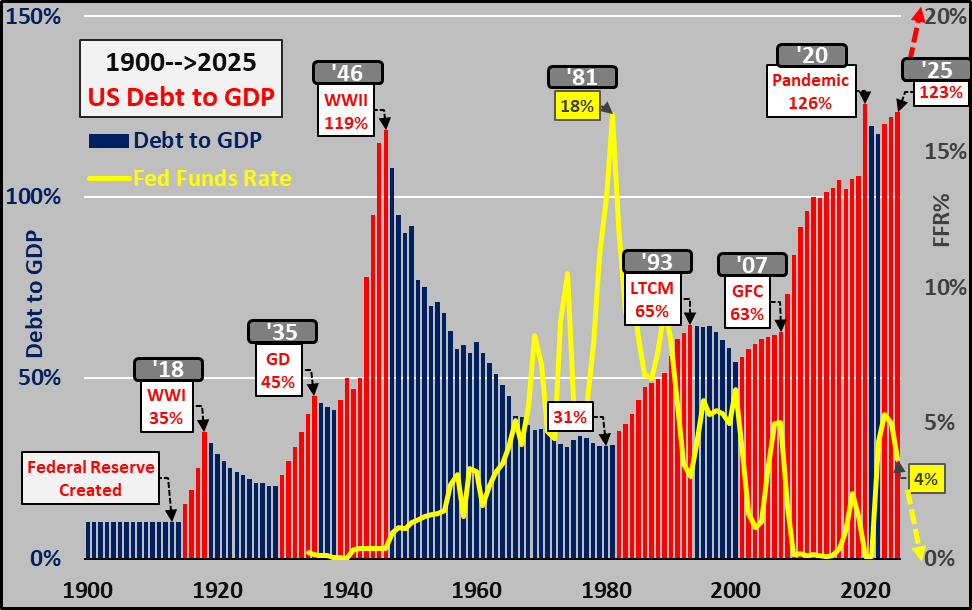
Billionaire investor Howard Marks on the JP Morgan chart everyone's ignoring:
At the end of 2024, the S&P was at a P/E of 23. Historically, every single time the market hits a P/E of 23, the next 10 years returned between 2% and -2% annualized.
NO exceptions.
What this means: if you invested $100K at the end of 2024, by 2034 you'll have between $82K and $122K.
Best case (2% annualized): you barely beat inflation
Worst case (-2% annualized): you lose 18% of your money
Either way, high-yield savings beats your "aggressive" portfolio
This isn't a bearish prediction. It's a historical certainty based on the price you chose to pay.
@thesamparr@ShaanVP
You check your Apple Watch in the morning. Sleep score: 62. You decide it's going to be a foggy day. And then it is.
A 2014 Colorado College study suggests the score itself causes the fog.
164 people walked into a lab. Researchers hooked them up to fake EEG equipment and told them the readout would show their REM percentage from the night before. Then they fabricated a number. Half the room was told 28.7%. Half was told 16.2%. The machine wasn't measuring anything.
Participants took four cognitive tests. The Paced Auditory Serial Addition Test, where you add numbers spoken at increasing speed and hold your last sum in working memory while computing the next. And the Controlled Oral Word Association Task, where you generate as many words as you can starting with a single letter under time pressure. Both are gold-standard measures of attention and executive function used in clinical neurology.
The 28.7% group outperformed the 16.2% group on both. Significantly. How rested participants actually felt that morning predicted nothing.
The mechanism is mindset priming an executive resource. When you believe you slept well, you allocate cognitive effort more aggressively. You don't conserve. You don't pre-disengage. Belief about the resource changes how you spend it.
Two control conditions ruled out demand characteristics. Participants weren't trying harder because they thought they should. Real measurable cognitive performance shifted with the number on the readout.
The Apple Watch sleep score. The Oura ring readiness number. The morning ritual of checking either one is taxing the resource you're about to need.
The performance gap from a fabricated REM percentage was larger than the gap from how rested participants actually felt. The number was louder than the night.
NEW: The CIA used a secret tool called "Ghost Murmur" that uses AI to find heartbeats to rescue the U.S. airman who was stranded in Iran, according to the New York Post.
The secret technology was allegedly used for the first time in the field, according to the Post.
"The secret technology uses long-range quantum magnetometry to find the electromagnetic fingerprint of a human heartbeat and pairs the data with artificial intelligence software to isolate the signature from background noise," the Post reported.
"It’s like hearing a voice in a stadium, except the stadium is a thousand square miles of desert," the source said.
"In the right conditions, if your heart is beating, we will find you."
"The name is deliberate. ‘Murmur’ is a clinical term for a heart rhythm. ‘Ghost’ refers to finding someone who, for all practical purposes, has disappeared..."
"Advances in a field known as quantum magnetometry, specifically sensors built around microscopic defects in synthetic diamonds, have apparently made it possible to detect these signals at dramatically greater distances."
CIA Director John Ratcliffe appeared to hint at this technology on Monday, saying the CIA possessed "unique capabilities" but said he couldn't "tell you everything that you want to know."
President Trump also revealed during the press conference that the CIA spotted the officer from about "40 miles away."
Insane.
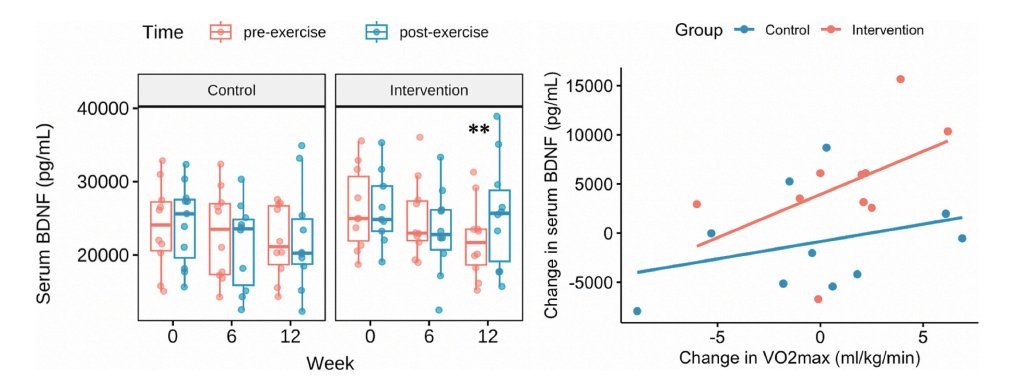
When you get fitter, you release more BDNF after exercise.
Improvements in VO₂ max after 12 weeks of training were associated with greater changes in post-exercise BDNF levels (even though resting BDNF didn't change). And the more VO₂ max improved, the higher BDNF rose after exercise.
Post-exercise BDNF was also associated with changes in prefrontal cortex activity during cognitively demanding tasks.
This illustrates a neat relationship between aerobic fitness, BDNF, and cognitive function!
The view from Apollo chief economist Torsten Slok:
“Markets are overreacting to what will likely be a 4- to 6-week period of volatility, which will ultimately result in 50 years of stability in oil markets, supply chains and geopolitics.”
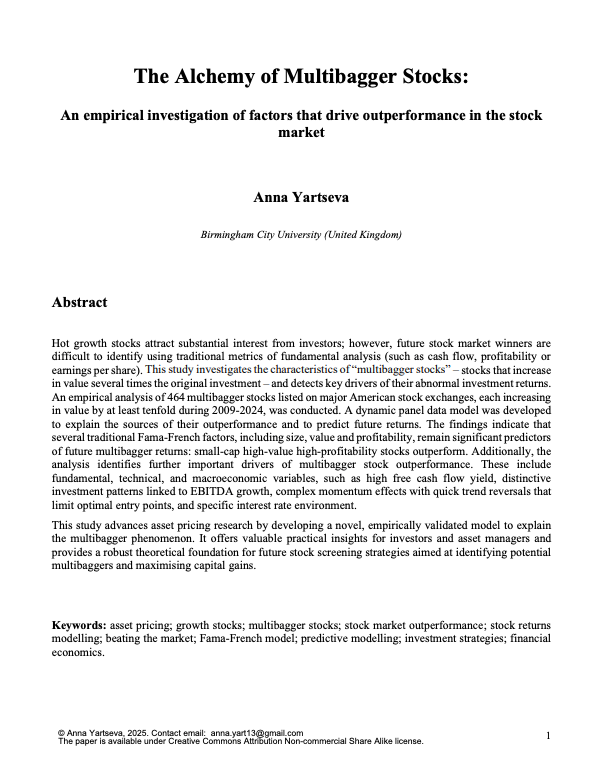
The secret of hedge funds is revealed in a 41-page PDF:
This paper analyzed 464 stocks that 10X-ed over a 24-year period.
Here are the best factors that drive outperformance: (number 3 is the best 🧵)
A foreign government attempted to invest over $100 million into one of David Sinclair's age-reversal companies.
The US government BLOCKED it.
The reason? They classified the technology as too dangerous to fall into foreign hands.
Sinclair sits on the board of the company. He confirmed the investment was killed because the US government believed a foreign power would gain too much access to age-reversal research.
When asked if it was China, his response: "I won't say more. It's sensitive."
But here's what he DID say:
Governments around the world are watching this technology closely. Not just for healthcare. The US government has identified what Sinclair calls "so-called super soldier potential" in age-reversal tech.
He also said the winner of this race won't just gain economic advantage. There will be "potential for radical change in the pharmaceutical industry, in healthcare" and dramatic social change.
Sinclair believes the technology is very powerful and that society should start preparing now.
Because as he put it: "It's not an if. It's a when."
David Sinclair is at SynBioBeta this year - discussing the science of slowing and reversing aging.
Link for tickets below.
— @davidasinclair