.
LIST OF COINS FOR 2027 BULLRUN 🐂
1. $TAO — Leader in decentralized machine learning. Rewards compute power for AI training. Highest moonshot potential imo! Current Market Cap: ~$2.0B
2. $RENDER — Decentralized GPU network for AI computation and rendering. Perfect synergy with the AI explosion. This one’s going to fly hard imo! Current Market Cap: ~$810M
3. $HYPE (Hyperliquid) — Decentralized perpetuals exchange already printing serious revenue. Will explode when volume returns! Current Market Cap: ~$15B
4. $FET (Artificial Superintelligence Alliance) — Main AI agents and decentralized intelligence network. Core AI powerhouse! Current Market Cap: ~$365M
5. $SUI — Fast-rising high-performance Layer 1 for DeFi and gaming. Strong momentum and room to run! Current Market Cap: ~$2.95B
6. $INJ — Specialized L1 for decentralized finance and derivatives. Trading narrative king! Current Market Cap: ~$490M
7. $ONDO — Leading RWA platform tokenizing treasuries and real finance. Institutional money incoming! Current Market Cap: ~$1.62B
8. $SOL — High-performance L1 with the strongest ecosystem and devs. Battle-tested beast! Current Market Cap: ~$44.5B
9. $NEAR — High-performance Layer 1 with strong AI focus and user-friendly tools. Solid foundation! Current Market Cap: ~$2.5B
10. $LINK — The top oracle network, essential for DeFi and RWAs. Infrastructure that never sleeps! Current Market Cap: ~$5.9B
I’ve spent days carefully working on this list, and I hope it will be useful for you! 🙏
This lineup covers AI, DePIN, high-performance L1s, DeFi, and RWAs — exactly what will lead the next bull market!
Stay disciplined, stack these during the dip, and get ready for life-changing gains in 2027. The bear is temporary — the bull is coming! 🐂💰
Which one are you most bullish on or already stacking? Drop your thoughts below! 👇
.
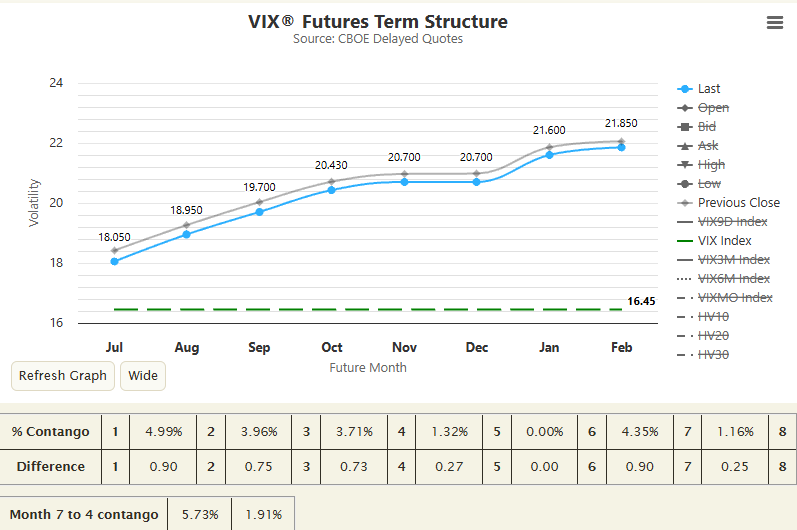
$VIX futures curve continues to remain in contango. It’s important to remember that low vol induces lower vol (clustering).
The VIX is one of the more unique asset classes where it experiences volatility clustering. This just means that vol isn’t randomly distributed. Put simply, when markets are calm or turbulent, that period will tend to persist for some time. So for example a VIX reading at ~16 will tend to stay around that range for a period of time. It’s statistically a better trade to short low volatility than it is to long it as counterintuitive as it may sound. Earlier on in my career, I can't even tell you how many times I got so excited to buy vol <15 only to get steamrolled thereafter.
You can look at an extreme example of clustering effects with a year like 2017 where VIX was sub 17 for over a year and realized vol came down to a 4 handle. That would mean $SPX was only moving an average of roughly 0.25% a day. To calculate this: you can take the square root of the trading days in a year (252) and you get 15.87% but we’ll typically round up to 16 for simplicity. Then divide realized vol (4) by 16 to get 0.25%.
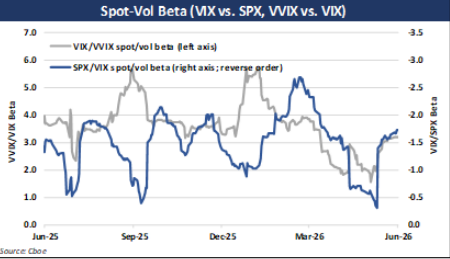
The one concept that’s a bit more challenging for folks to comprehend is the effects when vol is elevated. Yes it’s very common knowledge that the VIX is mean reverting, but when it’s elevated it will tend to remain elevated for a bit. Clustering effects do however on average last longer to the downside because of that mean reversing tendency, given it’s under normal spot/vol correlations. That just means when SPX goes higher, “normal” spot/vol corr will see vol (VIX) go lower as well. Equity markets inherently have skew where the most likely moves are to the upside so this is all partly why clustering will last longer to the downside.
Back to the upside effects. So when you see a VIX at say 35, the most likely next move is for it to print 40 than it would be to print 25. This is why you’ll see many vol participants talking about buying a VIX at 35 even after it’s come up from say 20. The clustering effects work both ways and that's the important concept to remember.
Looking at our current environment, we haven’t seen VIX print over 23 since April and it’s been floating around this 15 range for the last few weeks. This is exactly another example of what volatility clustering is. We currently see VIX futures sitting in Contango which means that prices further out in time (months) are higher prices than its current spot price (VIX) and front month price. This is why since SPX topped on June 2nd, it’s pulled back 400pts, but VIX in that same time is only up 0.5pts.
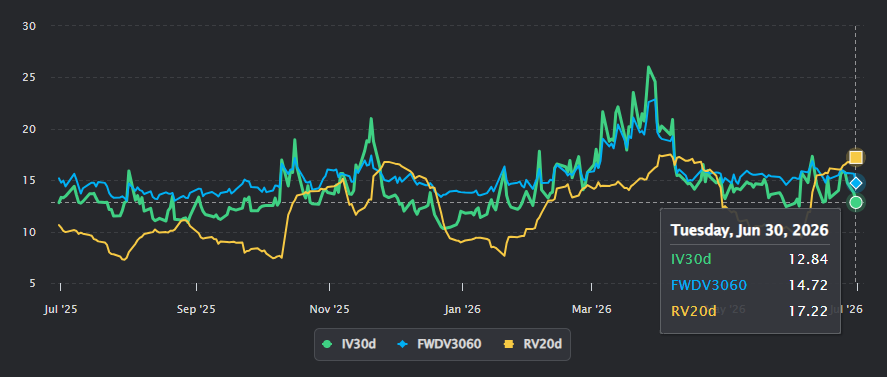
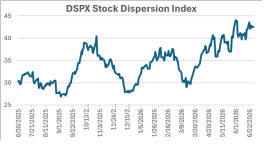
What’s rather interesting here is the variance risk premium (IV-RV) which sits at -5pts which is quite large. We’ll typically see that large of a negative reading after steep and quick SPX drawdowns. The bias with this setup is to on average decay vols further with lower close-close realized vol to bring the basis back into the mean. The other but less likely option is to see implied vols rise into realized vol but with /VX sitting in contango there isn’t much to say of that right now. If you look at COR1M (implied correlations 1 month) it’s at a 5 handle which is also historically very low, so this means single stock vol is moving into new highs with lots of dispersion. It makes sense to see this when skew is steep (currently at 30th %ile) so participants just bid upside convexity like every other pullback the last year.
You have to really zoom out in time to see any sort of “slight” worry and that is for midterm elections. This midterm vol is hanging at 20 right now with an ever so slight backwardation between Nov-Dec at 0.1pts. I’ve written some posts on how dispersion and vol behaves around elections and the TL;DR is that within the 30 trading days sampled, vol peaks 3 TDs before the election and normalizes thereafter. Anyways, there’s lots of opportunities across the landscape right now as we head into the typical summer trading lull months. So we'll have to stay tuned to see if it ends up being quiet or not. Cheers!
Jaylen Brown is a 76er today, because the owner of the Boston Celtics doesn't really own the Boston Celtics. This is the latest depressing example of Private Equity controlling sports