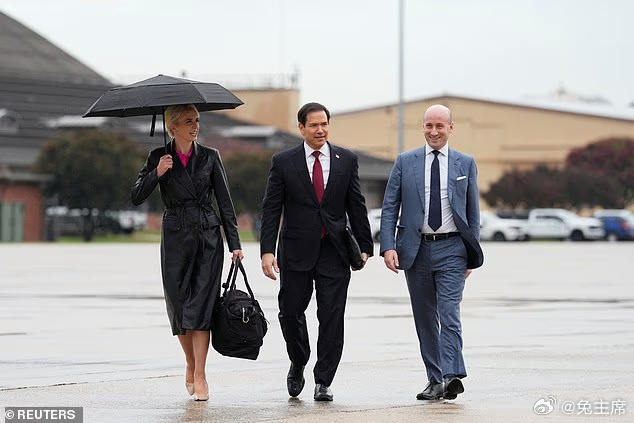
every Chinese could be a spy, or is presumed to be a spy ("until proven otherwise). this is just witch hunting, purge & mccarthyism.
https://t.co/ePPVhufLWw
you purge your own citizen from senior position and say it is China' plan, how ridiculous. would india do this to sundar pichai, or Israel to sam altman ?
From @WSJopinion: Jensen Huang’s resignation from Nvidia was necessary, but it also does regrettable harm to the company and America’s AI industry. Maybe that was China’s plan.
https://t.co/nk61J98Jxz
1) The shrewd calculus behind the targeting of Jensen Huang lies in how he sits at the intersection of anti-China, anti-Trump, anti-big tech , and backlash against AI. Such an overlap is rare to find, and you have Jensen Huang, who suddenly and naturally became the lowest common denominator uniting anti-China, anti-Trump, anti-tech-capital and anti-AI camps.
2) And once again, anti-China politics weaves America’s disparate political causes together.
3) Jensen Huang's greatest failing, or his “original sin”, is that he occupies such a pivotal role in US's technology and economy, while being an ethnic Chinese with deep, tangled ties to China.
Keep the witch hunt going, 'Murica. Don’t stop!
On the Jensen Huang Affair
By the United States’ own framing and imagination, any Chinese national, and any ethnic Chinese with connections to mainland China, can be branded a “spy.” A charge can always be manufactured if the accuser is set on conviction. This is a societal overreach, one aimed at China as a civilizational state with 1.4bn population.
The Jensen Huang affair is genuine insofar as the extramarital relationship is concerned. He plainly made a mistake. Ms Alice Huang, for her part, is simply a businesswoman who meticulously documents her life on social media, curates and flaunts a lifestyle, and acts out of commercial self-interest. In tech circles, she functions largely as a broker and intermediary, trading on her network of contacts and personal ties.
Anyone who understands the business and grasp the bigger picture knows she could never be a "spy". It doesn't work like this. The accusation strikes Chinese observers as absurd on its face.
And at its root, this episode is an internal purge within America’s tech sector amid US–China great-power rivalry, a textbook "witch hunt". Its real target is ethnic Chinese people: every ethnic Chinese who maintains ties to mainland China, whether they are from mainland China, Hong Kong, Taiwan, Singapore, Malaysia, the United States, or the global Chinese community. The Chinese people are subjected to unprecedented levels of scrutiny and blame due to their national origin. Comparable conduct by others draws no suspicion at all. Elon Musk openly praises China, Tim Cook travels to China regularly, and Mark Zuckerberg and Larry Ellison are married to ethnic Chinese women. Jensen Huang, however, is held to a separate standard. A romantic relationship with a Chinese national alone marks him for this witch-hunting.
This is McCarthyism all over again, echoing the 1950s. Back then, large numbers of Jewish nuclear scientists were singled out for heightened scrutiny, and even political persecution, over their tangled links to left-wing politics, socialist movements, and Soviet and Russian diaspora communities. The only shift today is that AI and semiconductors have taken the place of nuclear technology, and ethnic Chinese have replaced Jewish people as the target group.
NVIDIA is too important to be headed by an ethnic Chinese. This is "nationals security issue".
This, of course, is racist in its nature.
What is being pursued only inflicts harm on the United States itself, and does nothing to hurt its rival (China).
China watches this spectacle unfolding in America much as one would follow a soap opera.
Finally, the last thing China wants is the outcome Jensen Huang is lobbying for: that China grows reliant on American AI chips.
Rubio speaks like a President.
He looks like a President.
He thinks like a President.
He acts like a President.
He has the integrity of a great President.
He is absolutely everything that JD Vance will never be.
Why did J.D. Vance say he “could not stand Trump” and call Trump “America’s Hitler,” yet still choose to endorse him and serve as his vice president? Because he judged the political gains outweighed the costs.
Why did J.D. Vance wait until after the Republicans’ crushing defeat in the midterms to voice his long-held opposition to the war with Iran? Why did he not make this position public earlier? Why did he come out with it immediately after the midterm loss instead of waiting longer? Because he calculated that releasing it at this moment carried greater political gains than costs.
Why did J.D. Vance remain inside the Trump administration and refuse to resign as vice president even after openly criticizing Trump? Reason is straightforward, his political career is still short and junior, and every extra year in office builds his experience. He also fears retaliation from Trump. He wants to keep leveraging his White House platform to build his own network of allies within the party. Put simply, he believes staying on delivers more political gains than costs.
J.D. Vance is a pure political opportunist.
He stands to lose everything for this. Trump will brand him a traitor and attack him. The MAGA base will dismiss him as hypocritical, dishonest and opportunistic. His political rivals will keep hammering his deep ties to Trump, while pointing to his record as an opportunist. Political donors will shun him, after all, few establishment people will want to bankroll his populist agenda.
He may end up regretting his remarks after the 2026 midterms, in which he came out "too early" to criticize the war with Iran and called for a reset of ties with Israel.
The political costs for him, may well end up exceeding the gains.
The market had long priced in a Republican defeat in the midterms.
The market had long understood where Democrats stood on the AI industry.
Over the past few weeks, the market had even anticipated that Republicans would lose both chambers of Congress in the midterms. The data on Polymarket could not have been clearer. And the market had pre-adjusted for this outcome, partially baking those expectations into stock prices.
Even so, the market underestimated the scale of the Republican defeat and the Democrats’ landslide victory - not just in the Congress, but also at state governor level.
That is why the market is adjusting violently. If you believe valuations for the US AI sector differ in a world with Trump versus one without him, what the market is doing now, is stripping out at minimum the entire “Trump premium.”
This process is brutal, marked by panic and a stampede for the exits.
In 1980, Jimmy Carter lost the presidential election over the Iran hostage crisis.
In 2026, the Republican Party lost the midterm elections because of Trump’s war with Iran. Moreover, members of Trump’s cabinet, such as J.D. Vance and Marco Rubio are likely to lose the 2028 presidential election for this very reason, should they choose to run.
Take away: don't meddle with Iran.
History is full of irony.
In the 1980 election, Ronald Reagan, riding the fallout from the Iran crisis, launched the modern American conservative revolution. Its influence persists to this day and helped to shape Trump’s political movement.
In the 2026 midterm elections, the war with Iran brought an effective end to this contemporary American conservative revolution - MAGA.
The Iran war may even burst the AI bubble.
This Middle East country has been shaping American history, in a very distinctive way.
Of course one may extend this observation to include another Middle East country - Israel.
JD Vance is the "Khrushchev lurking beside Trump" . (note: Trump as Stalin)
He is merely using pollsters and America First opinion leaders as mouthpieces to voice views he has long held - his positions on Israel, the Middle East, among others (including Ukraine).
If necessary, he will have to repudiate Trump altogether (at earlier stage of his political life, he called Trump America's Hitler)
He now understands that staying hidden any longer carries too great a risk, and it will sink his political future. He has to reveal his true allegiance ahead of time.
People have no idea what’s coming to our country and how bad things will be for everyone in America.
You get what you vote for.
Have you seen this lunacy? @elonmusk
The four points raised by Mr JD Vance boil down to the same core issue, all traceable to the Iran War.
Here is the logic. By failing to uphold America First, the US allowed Israel to shape its foreign policy, dragged itself into the Middle East, and launched the war against Iran. And waging that war inherently violated the principle and interest of America First. The inflation and cost-of-living pressures voters face, are all consequences of the Iran war.
And at the root, the debate circles back to America First.
The obvious question follows. Is America First not the foundational pillar of Trump’s MAGA movement, in the first place? Where did things break down?
The answer lies with Israel and the Israel lobby. Apart from Mr Elon Musk, Mr Trump’s largest donors come from pro‑Israel lobbying groups (all public information), and Israeli interests have dominated American foreign policy.
Hence the solution being: only a clear break from Israel could make America First viable again.
JD Vance’s remarks draw attention because the arguments he advances, are the very positions long championed by "America First" figures (as opposed to the more Trumpian label of "MAGA") who previously split publicly with Trump, including Tucker Carlson, MTG and Thomas Massie. Trump once dismissed and derided their views, insisting that he had the exclusive authority to define what America First means.
Put simply, JD Vance is distancing himself from Trump. He seeks to redefine "America First", return the movement to its original mission and value, and attempt to seize the leadership of the MAGA course and America First coalition. And it is important to note that this version of America First explicitly rules out Israeli influence and stands independent of Trump.
This separation from Israel also means this Republican platform will no longer receive generous funding from pro‑Israel lobbying groups. Where will he raise money instead? From tech‑right who back AI and data center projects? You need (a lot of) money to fund elections. Now that remains unclear.
Still, JD Vance understands clearly that inaction now will sink his political career.
It remains to be seen how Trump will respond to this defiant separation from Vance. Will he tolerate it, or even quietly encourage it? Or will he fight back, just waiting for the right moment? Let's see.
One of the things the data analysts on our side obsessed over was "composition"—whether the electorate looked close enough to 2024 for Republicans to win. And despite polls that showed a Democrat blowout, the data kept on telling us the same story: in some states turnout was merely OK, in other states it was downright amazing, and in no state was it catastrophic. There was a genuine sense of optimism on our team: our people were showing up.
So, I asked the smartest data guy I know, does that mean we're going to shock the world? "No," he told me. "We might do better than the polls suggest. But the data is telling us that a lot of Trump/Vance 2024 voters are pissed and planning to vote for the other guys. Our voters are turning out, but they may not vote for us."
Well, that looks prophetic now. Our voters did show up. In Florida, for example, the electorate was 9 points more Republican than Democrat, just a couple points worse than 2024. Undoubtedly there were places we could have done better on turnout. But the main problem is not turnout. The main problem is that many people who voted for Trump/Vance in 2024 voted for Democrats in 2026.
There will be a lot of infighting and arguing over what happened and why that is. One of the pollsters I really respect told me that our economic messaging wasn’t sharp enough down the stretch. I’m sure that’s true.
But the real reason we lost is obvious to almost everyone.
Another pollster—one of the smartest people I know in politics, told me yesterday we’d lose the generic ballot by 13 points. I felt negative going into Tuesday, but even I was shocked by this. In his polling, he saw that a lot of Trump 2024 voters were angry and planning to vote for Democrats. He asked those voters who had abandoned us what would cause them to come back on our team. The top four answers, accounting for nearly all of the responses were:
1) End the war
2) Focus on cost of living/inflation
3) Put America First
4) Change our relationship to Israel
Our voters showed up. And the above four reasons are why many of them voted for Democrats. This is according to a pollster who nailed the results. While many spent Monday attacking Rachel Campos Duffy for calling for a diplomatic resolution to the conflict, it turns out her political advice was sound. (She’s also a great person.)
In the next few months, there's going to be a lot of gaslighting. Expect to hear any number of establishment politicians say the solution to our woes is amnesty. I'm open to the idea that we should change enforcement—by focusing more on businesses that hire illegal labor, for instance. But anyone pushing amnesty is lying to you.
The reason we lost is the war. The president himself said so last night.
If you'd like to argue it was worth it, that losing the Senate for the next 6 years was worth it, then do so. Argue it was a worthwhile cost to pay. Agree or disagree, that's at least honest.
But everyone knows why we lost. And any honest conversation about where we go from here must start there.
I remain hopeful about our country. To the people who are pissed off and want to say, “I told you so”: you’re right, you did tell us so. Take that energy into electing Republicans who share your worldview. To the people who are just pissed at the results, you should be. Let’s take that anger and get back to the work of saving our country.
The 2026 midterm elections make it abundantly clear that Trump is now the BIGGEST LIABILITY for the Republican Party and the conservative movement. Anyone with political aspirations who ties themselves to Trump, will face defeat. It is obvious that the Republican Party’s next priority is figuring out how to decouple from this dominant figure and transition smoothly to the post‑Trump era.
A peaceful separation would be the ideal outcome. Yet the process could also end in bitter infighting and an open rupture, as seen with America First figures such as Tucker Carlson, MTG and Thomas Massie, who broke away from the MAGA camp after the Esptein affairs and Iran war.
The heaviest burden in this transition will undoubtedly fall on prospective 2028 presidential contenders including JD Vance and Marco Rubio, who will face many, many difficult and painful choices in the next two years - in fact, a couple of months from now.
To those who want to understand China from outside.
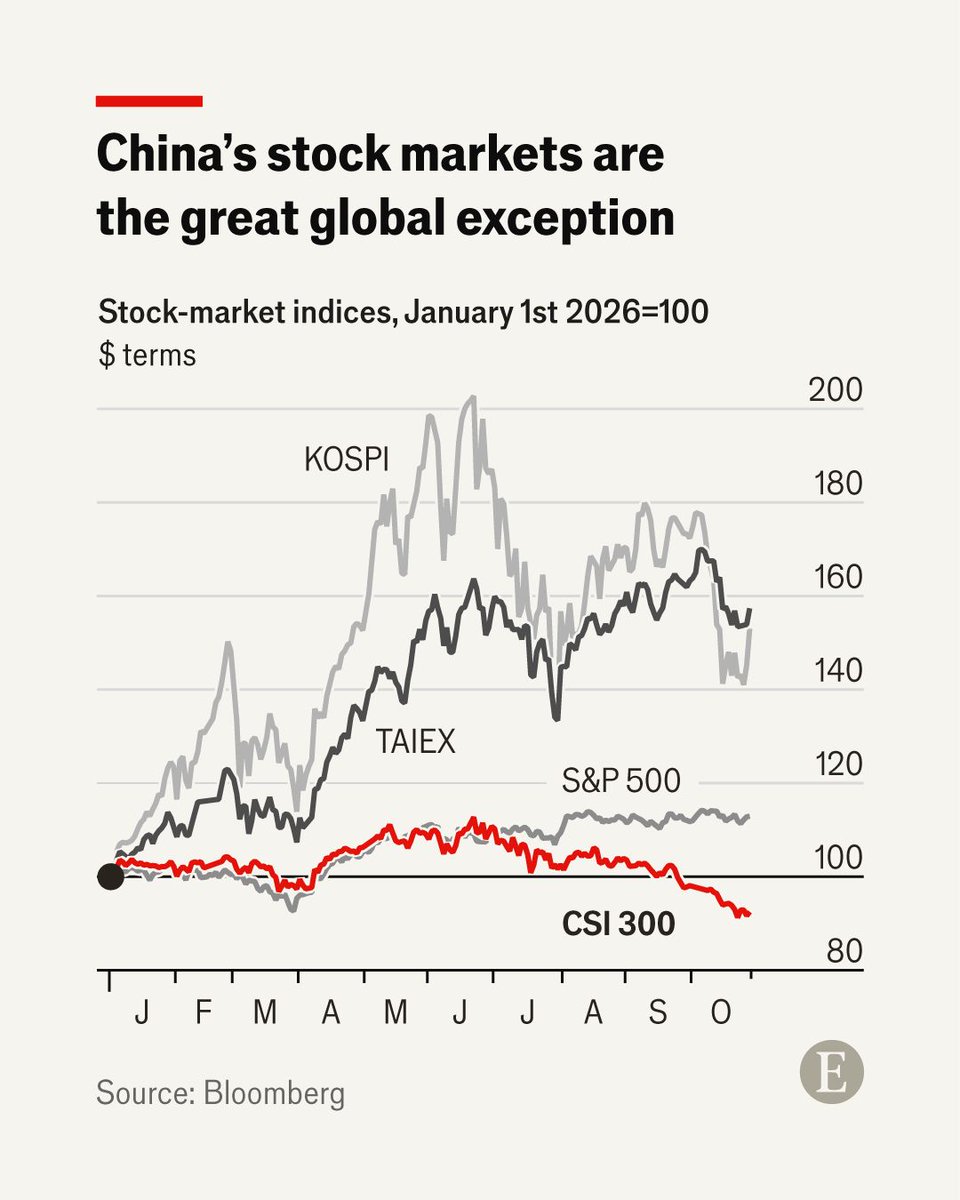
Many people now say that China’s industrial development is so strong that the future seems to belong to China. Yet the stock market remains weak and investors have little confidence. What does this suggest?
In fact, China has two choices.
The first is to completely lift all capital controls and fully link China’s currency and capital markets with those overseas. Global capital would flood in and gather - especially capital seeking to hedge against risks from the United States, whether geopolitical, geo-economic, or related to technology and industry. The benefit would be that capital markets would be activated, the stock market would rise, and capital could support China’s industrial development. The downside would be that China’s control and dominance over the money market and the financial system would be weakened, making the country more fragile. In other words, financial sovereignty would be reduced. And if a bubble were to burst, the consequences would be very severe.
The second is to keep the existing capital controls for the sake of safety. This would limit the inflow of global capital and prevent it from gathering. The result, of course, would be that the stock market performs poorly and is unlikely to reach or even approach the level of the American market. At the same time, the technology industry and its investors would be unable to enjoy the premium and upside that freer capital brings, which would to some extent slow the development of these industries. The benefit, however, is that capital controls would help China maintain financial and monetary sovereignty and minimise external risks as much as possible. These advantages would become clear if a bubble were to burst.
What choice will China make?
If one were to conduct a hypothetical “survey” of Chinese officials - those responsible for the relevant industries, sectors and functions, or anyone in the government system who can put themselves in the position of such officials and reason about their policy considerations - one would most likely find that an overwhelming majority would choose the SECOND option.
This reveals a safety-oriented, bottom-line mentality in which avoiding systemic risk is the overriding priority. It is the risk preference of the Chinese system and its decision-makers. The outcome is that some upside is ”sacrificed“, but large downside is also avoided. When the stock market is rising strongly, these characteristics remain hidden. But once a global financial shock occurs, they become apparent.
Hence, the primary vehicle for supporting industries is not global capital market, but a domestic financial market combining domestic commercial banks and domestic stock market. Beijing has sufficient influence over market participants, and it can guard against risks to the greatest extent while supporting industrial development.
The pessimism in Chinese finance is spilling from tech-heavy stock-market benchmarks into broader indices. In the middle of an AI boom, why are the country’s investors so bearish? https://t.co/dauLHVsDJB
To those who want to understand China from outside.
Many people now say that China’s industrial development is so strong that the future seems to belong to China. Yet the stock market remains weak and investors have little confidence. What does this suggest?
In fact, China has two choices.
The first is to completely lift all capital controls and fully link China’s currency and capital markets with those overseas. Global capital would flood in and gather - especially capital seeking to hedge against risks from the United States, whether geopolitical, geo-economic, or related to technology and industry. The benefit would be that capital markets would be activated, the stock market would rise, and capital could support China’s industrial development. The downside would be that China’s control and dominance over the money market and the financial system would be weakened, making the country more fragile. In other words, financial sovereignty would be reduced. And if a bubble were to burst, the consequences would be very severe.
The second is to keep the existing capital controls for the sake of safety. This would limit the inflow of global capital and prevent it from gathering. The result, of course, would be that the stock market performs poorly and is unlikely to reach or even approach the level of the American market. At the same time, the technology industry and its investors would be unable to enjoy the premium and upside that freer capital brings, which would to some extent slow the development of these industries. The benefit, however, is that capital controls would help China maintain financial and monetary sovereignty and minimise external risks as much as possible. These advantages would become clear if a bubble were to burst.
What choice will China make?
If one were to conduct a hypothetical “survey” of Chinese officials - those responsible for the relevant industries, sectors and functions, or anyone in the government system who can put themselves in the position of such officials and reason about their policy considerations - one would most likely find that an overwhelming majority would choose the SECOND option.
This reveals a safety-oriented, bottom-line mentality in which avoiding systemic risk is the overriding priority. It is the risk preference of the Chinese system and its decision-makers. The outcome is that some upside is ”sacrificed“, but large downside is also avoided. When the stock market is rising strongly, these characteristics remain hidden. But once a global financial shock occurs, they become apparent.
Hence, the primary vehicle for supporting industries is not global capital market, but a domestic financial market combining commercial banks and the stock market. Beijing has sufficient influence over market participants, and it can guard against risks to the greatest extent while supporting industrial development.