The teacher chose the shyest student in the class to draw a piece of paper, and if it was blank, the whole class would get a free lesson to play.
But all the papers were blank, and she did this to help him socialize and alleviate his shyness.
https://t.co/RPBfqBXRGO
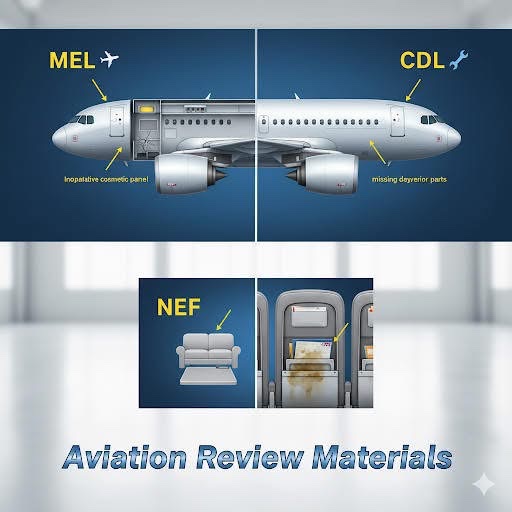
MEL, CDL, & NEF: Essential Aviation Distinctions
In the world of aviation, precision and safety are paramount. Understanding the differences between MEL (Minimum Equipment List), CDL (Configuration Deviation List), and NEF (Non-Essential Furnishings) is crucial for compliant and safe aircraft operations.
• MEL (Minimum Equipment List):
Addresses inoperative internal systems or equipment that can be deferred while the aircraft still operates safely.
Example: A non-critical cockpit instrument, an inoperative lavatory light, or a cabin entertainment system component.
• CDL (Configuration Deviation List):
Pertains to missing or damaged external parts of the aircraft that deviate from its approved type design.
→ Operations are permitted, but often come with specific limitations, such as performance restrictions or drag penalties.
• Example: A missing aerodynamic fairing, a panel, or a cosmetic cover on the exterior.
• The CDL is an Appendix included in the Aircraft Flight Manual (AFM) and is approved by the Type Certificate holder's Regulator (e.g., EASA, FAA, or ANAC).
• NEF (Non-Essential Furnishings):
→ Refers to long-term interior furnishings or equipment that are non-essential for flight safety and operation. These are items that can be deferred for extended periods.
→ Often jokingly referred to as "Never Ever Fixed" due to their low priority in maintenance
deferrals.
Example: A broken tray table, a cosmetic trim piece in the cabin, or a non-functional reading light that isn't part of a required system.
V All three lists (MEL, CDL, and NEF) are critical tools, approved by aviation authorities, that strictly define acceptable conditions for flight without compromising airworthiness and safety.
* Knowing these differences is vital for pilots,maintenance engineers, and ground crews to ensure compliance, operational efficiency, and, most importantly, the continued safety of flight.
📸 by fb/Aviation Review Materials
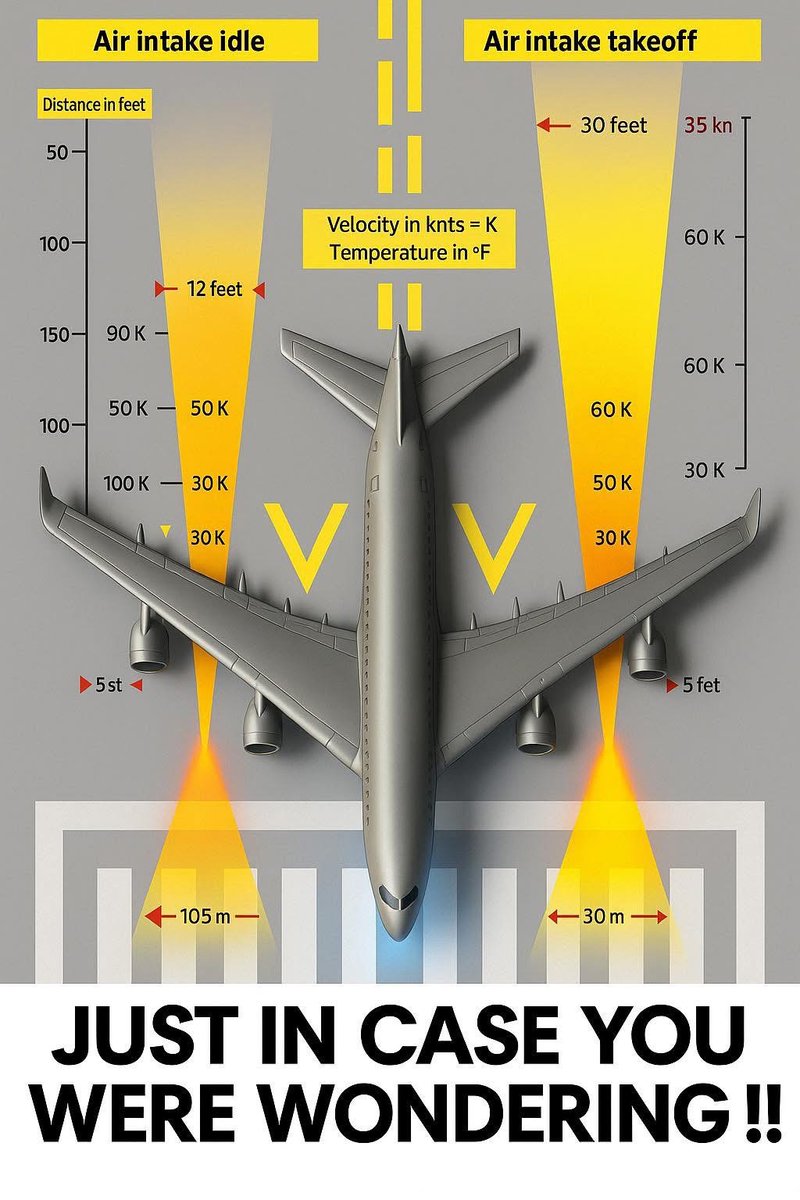
✈️🔥 **JET ENGINE SAFETY ZONES — KNOW BEFORE YOU APPROACH!** 🛑💨
Ever wondered **how powerful** a jet engine’s air intake and exhaust really are? This visual breaks it down so you’ll *never* underestimate them again.
🔹 **Air Intake Idle** – Still dangerous! Suction can reach 12 feet away.
🔹 **Air Intake Takeoff** – At full power, intake extends to 30 feet with high velocity.
🔹 **Exhaust Blast** – At idle, it can knock you off your feet. At takeoff? It’s a hurricane of heat & speed up to hundreds of feet back! 🌡💨
⚠️ **Why it matters:**
Ground crews, airport workers, and even spotters need to respect these distances to avoid injury or worse.
📸 Next time you’re near an aircraft, remember these zones. Safety first, selfies later. 😉
📸 by fb/aviation world
🔧✈️ Today we are performing a boroscope inspection on the High Pressure Turbine (HPT) blades and nozzles, combustion chamber and fuel nozzles. In this video I explain what we see when we have to enter the engine with a boroscope. I hope this video is informative for you!
📸 by ig/nextgenerationmechanic
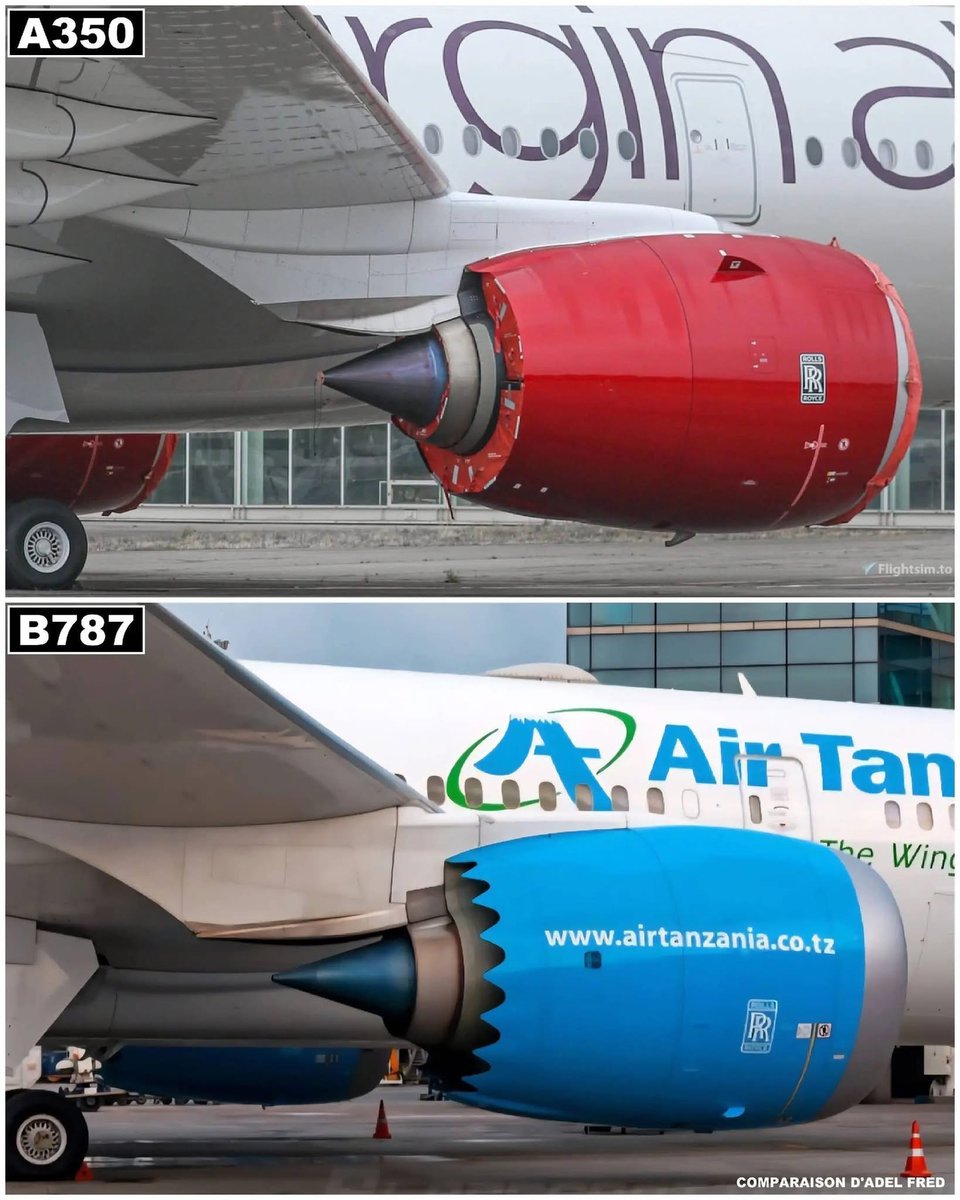
A350 vs B787 — Engine Power Face-Off 🔥
The Airbus A350 draws its strength from the Rolls-Royce Trent XWB, the most efficient large jet engine currently in service, delivering up to 97,000 lbs of thrust while maintaining remarkable quietness and long-range fuel efficiency.
The Boeing 787 Dreamliner offers flexibility with two advanced engine options — the Rolls-Royce Trent 1000 or the General Electric GEnx. Both are engineered for top-tier fuel efficiency, reduced emissions, and quieter operation, producing up to 76,000 lbs of thrust.
“Whenever she gets upset and tries to argue, I stay quiet. And whenever I'm upset and try to argue, she stays quiet."
[Manaqib al-Imam Ahmad of Ibn al-Jawzi]
Engine Fuel System – From Tank to Thrust ⛽✈️
This diagram shows the journey of fuel in a gas turbine engine:
1️⃣ Fuel Tank & Booster Pumps – Supply fuel under pressure to prevent cavitation.
2️⃣ LP Pump – Low-pressure pump moves fuel toward filters & heaters.
3️⃣ Cooler/Heater – Manages fuel temperature and prevents icing.
4️⃣ HP Pump – Increases fuel pressure for precise delivery.
5️⃣ Filters – Remove contaminants before fuel reaches the FCU.
6️⃣ FCU (Fuel Control Unit) – The brain of fuel delivery, adjusting flow based on throttle input and engine demands.
7️⃣ Fuel Spray Nozzles – Deliver finely atomized fuel into the combustion chamber.
8️⃣ Thermocouples & Sensors – Monitor parameters like EGT, fuel flow, and pressures for optimal performance.
🔴 Safety features include LP/HP shut-off valves and drain valves for shutdown procedures.
📸 by fb/atpl questionbank