Re: “Students appreciated having their arguments…tested rather than just validated”…people who recognize the sycophantic GPT-ification of modern discourse may appreciate that push-back can be a gift.
🗣️ Universities must be places where students learn constructive disagreement, not hide from it.
Stanford’s HxA Chapter is using a new formula to make this happen:
@HdxAcademy This unbundling trend will induce not only exits of the non-conforming intellectual but also the choices that non-conforming or entrepreneurial types make about where to attend. Alternative credentials are the big hurdle.
@CoughsOnWombats Grok:”Yes, this pattern is a reasonably accurate reference for the situation unfolding with arXiv (and broader academic preprint/publishing dynamics) regarding AI-generated content. 
It captures a classic “Tragedy of the Commons” or competitive degradation dynamic…”
“Builders have always had the last word over commentators. Always. Because in the end, what remains is what has been built, and nothing of what has been deconstructed.
So today I deconstruct deconstruction. And tomorrow I build.”
A brilliant explanation of the sources of wokeism and the foundation behind most of the West’s challenges in recent years.
A very important read.
I would never have found this post except for @X’s auto-translation feature. The original post in French.
@JamesWHankins1 Yes, families want more choices, and the option to combine classical learning with a wider range of majors (and football) would appeal to many students. I hope things go well at U of F / Hamilton.
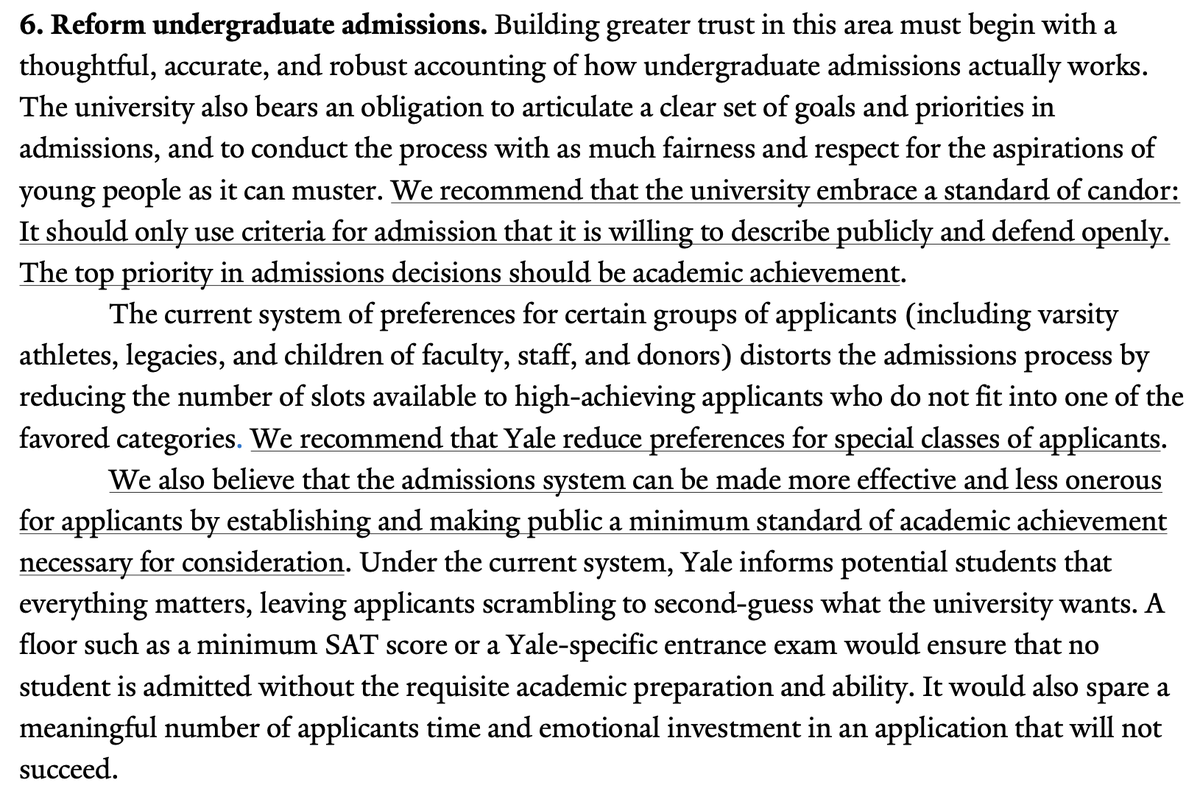
Yes, please. Making academic achievement the top priority for admissions and publishing a minimum standard would enhance trust in the admissions process. If top colleges did this, ratings algorithms would adapt to put less emphasis on yield rates.
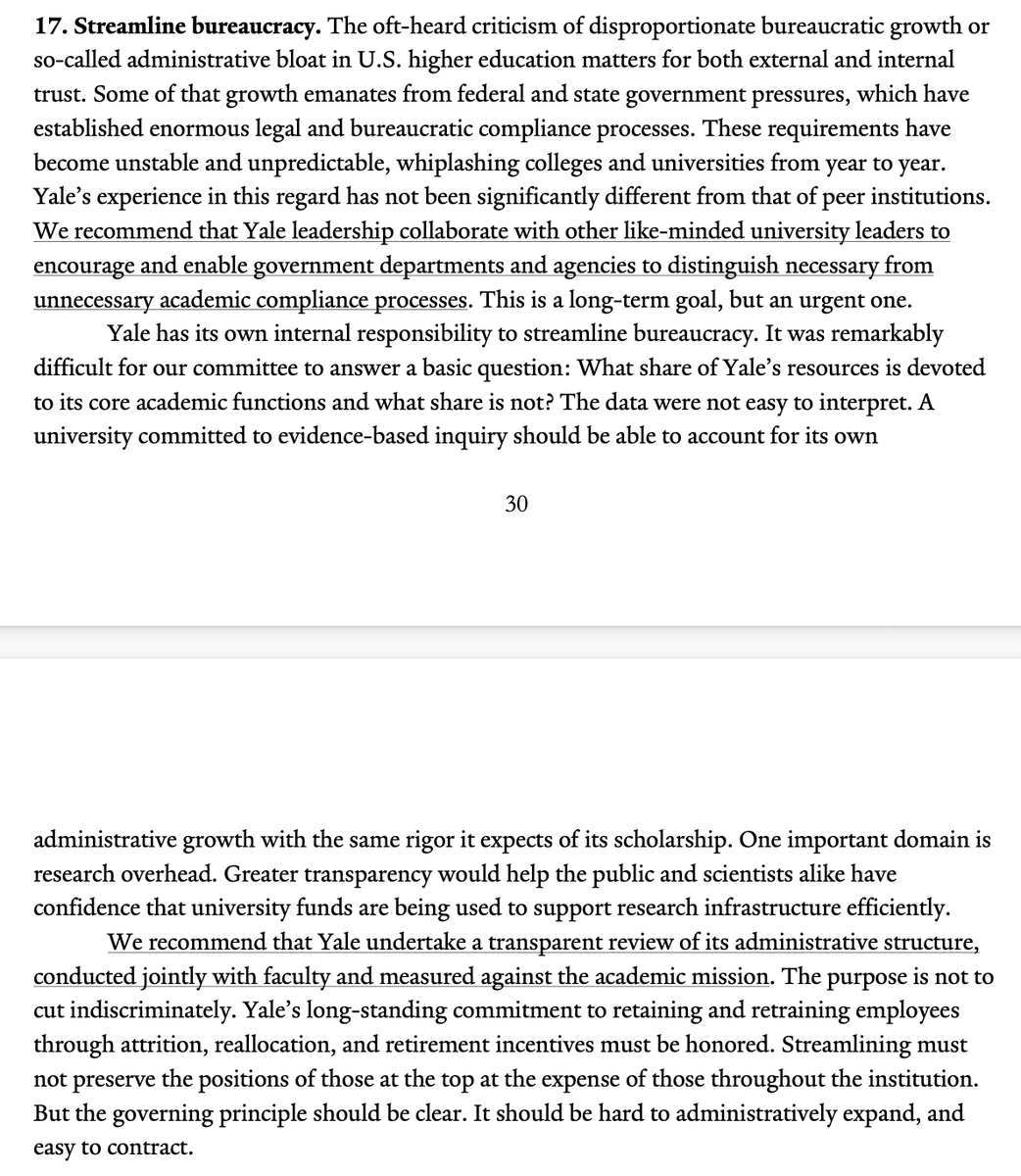
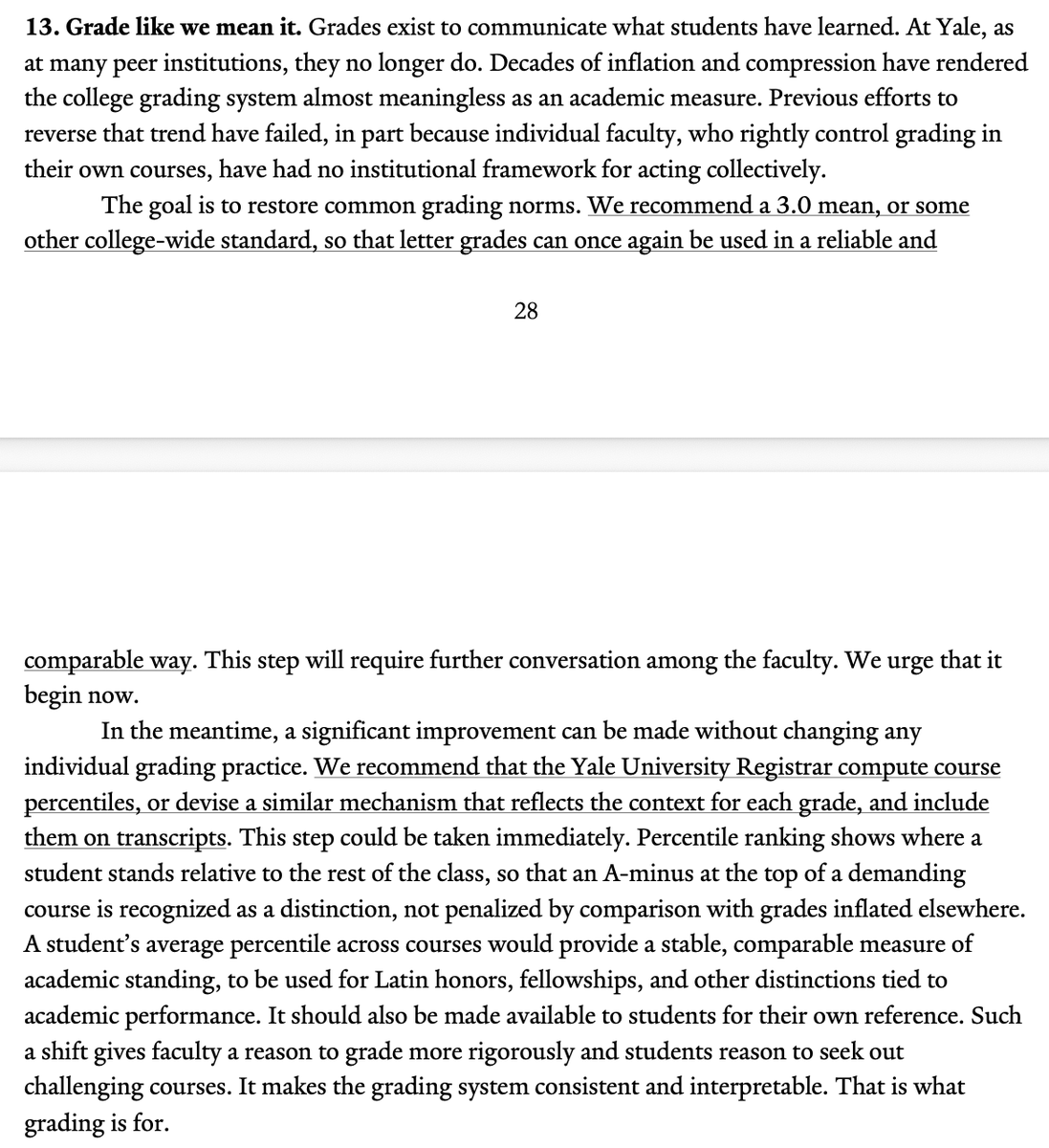
This Report of the Yale Committee on Trust in Higher Education is well-worth reading in full. I hope my colleagues will take these recommendations seriously https://t.co/Tf58xMtWoY
When hearing contrasting messaging from different representatives of a University, it can help to consider their different incentives. Someone who wants to boost numbers of applications will say different things to students than someone concerned about yield, and the President has a much wider audience.
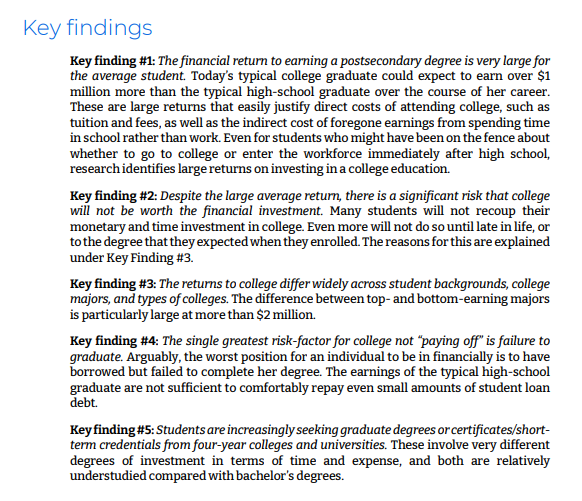
Thanks for this excellent and important work. I appreciate that the ROI comparisons for college vs. no-college integrate geography. While beyond scope here, in the future it would be nice to see geographically-dependent Cost of Living factored into comparisons of ROI by major at different colleges.
@johnarnold Greed rationalizes corruption. After engaging a lot of young men interested in finance, instead of supporting an investment mindset, Robinhood is corrupting it by promoting self-destructive habits.
@PrestonCooper93 Yep. “Unintended consequences”…easily anticipated…incentives to get students to enroll without concern for impact on student, and often family, finances.