Food delivery has become one of the leading causes of industrial accidents in Korea. Our new study uncovers how AI-driven management pressures riders into fast, high-stakes deliveries, compromising traffic safety and reshaping cities. @FraukeBehrendt https://t.co/hQBOw7idf2
New from @ChangHanbit and @FraukeBehrendt:
Algorithmic bosses force food delivery workers in Seoul to choose: risk your life or lose your job.
“I end up speeding and violating traffic regulations since clients are watching my location through GPS.”
@urbgeog Our study contributes to debates on platform and AI urbanism by highlighting how profit-driven algorithms reshape worker autonomy, and traffic safety. We hope it sparks further conversation on the costs of algorithmic management in mobile experiences in cities
@TUe_TIS
Food delivery has become one of the leading causes of industrial accidents in Korea. Our new study uncovers how AI-driven management pressures riders into fast, high-stakes deliveries, compromising traffic safety and reshaping cities. @FraukeBehrendt https://t.co/hQBOw7idf2
Our analysis of 175 newspaper articles (2014–2022) shows that AI acts less like a tool and more like a “boss,” compelling riders to prioritize speed over safety. Riders feel pressured to take risks, often leading to unsafe practices and traffic violations. @urbgeog
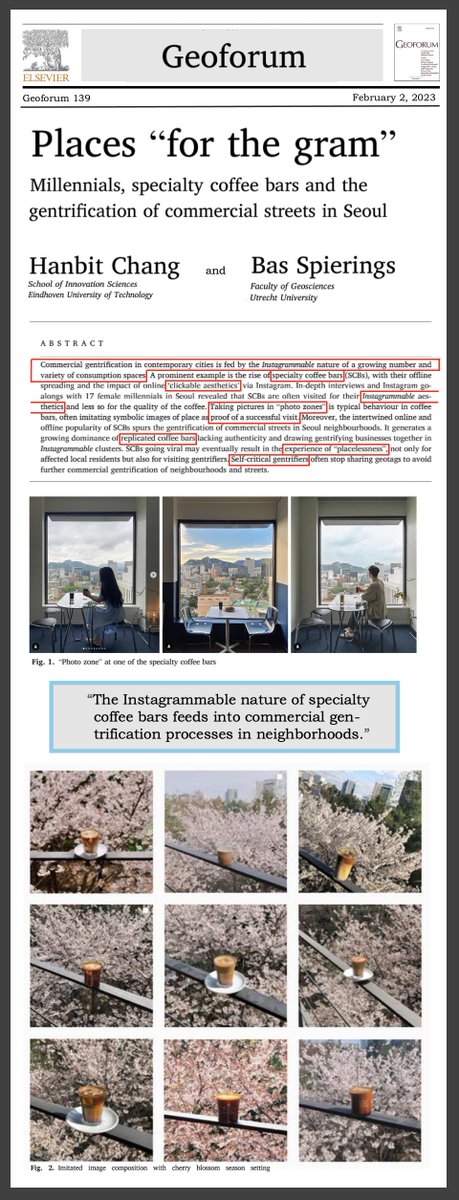
When life imitates Instagram, where are you? It may be hard to tell. @ChangHanbit and Bas Spierings explore the Instagrammable experience and gentrifying effects of Seoul’s specialty coffee bars.
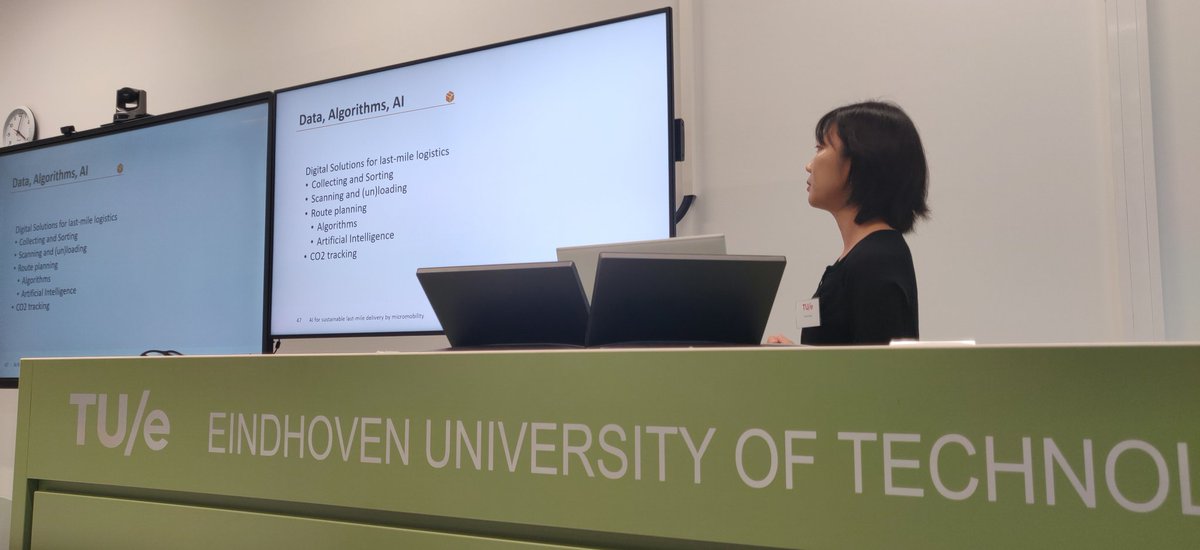
At #AAG2024 I presented how the introduction of light electric vehicles for parcel deliveries in the city center can change the streetscape and socio-spatial interaction. The working paper will be presented at Turku #NESS2024 in June!
Tomorrow I present my preliminary findings at #AAG2024 about using light electric vehicles for parcel delivery in Dutch city centers. Looking forward to the inspiring discussion at #mobilitytransition session! 🌈🌴
Tomorrow I present my preliminary findings at #AAG2024 about using light electric vehicles for parcel delivery in Dutch city centers. Looking forward to the inspiring discussion at #mobilitytransition session! 🌈🌴
19. Will finish off this thread sometime in the future, but for now will add a new article on cafes and coffee in Korea! From @mingthingz @FeliciaIstad and me, 'Standing out and fitting in: Korean coffee entrepreneurs’ strategies for survival'
https://t.co/Kr1UUKICV5
@MichaelChesnut2 Thank you for sharing! I also enjoyed your archive of linguistic landscape in Korea. It was (and still is) interesting for me to see how all those coffee places even without signs get popular through Instagram!
@AJuseyo Hi, thank you for reading and sharing your thoughts. I couldn't discuss everything but it is true that this cafe-hopping is very gendered and aspirational labor, as shown in many studies on social media and specifically Instagram. Still hope you enjoy coffee experiences in Seoul!
It's finally out! Happy to share my first publication studying the role of Instagram in commercial gentrification in Seoul with Dr. Bas Spierings @UUGeo@SGPL_UU The paper is now available online in Geoforum @ElsGeogPlan #digitalgeographies
https://t.co/haXMIeoBvQ
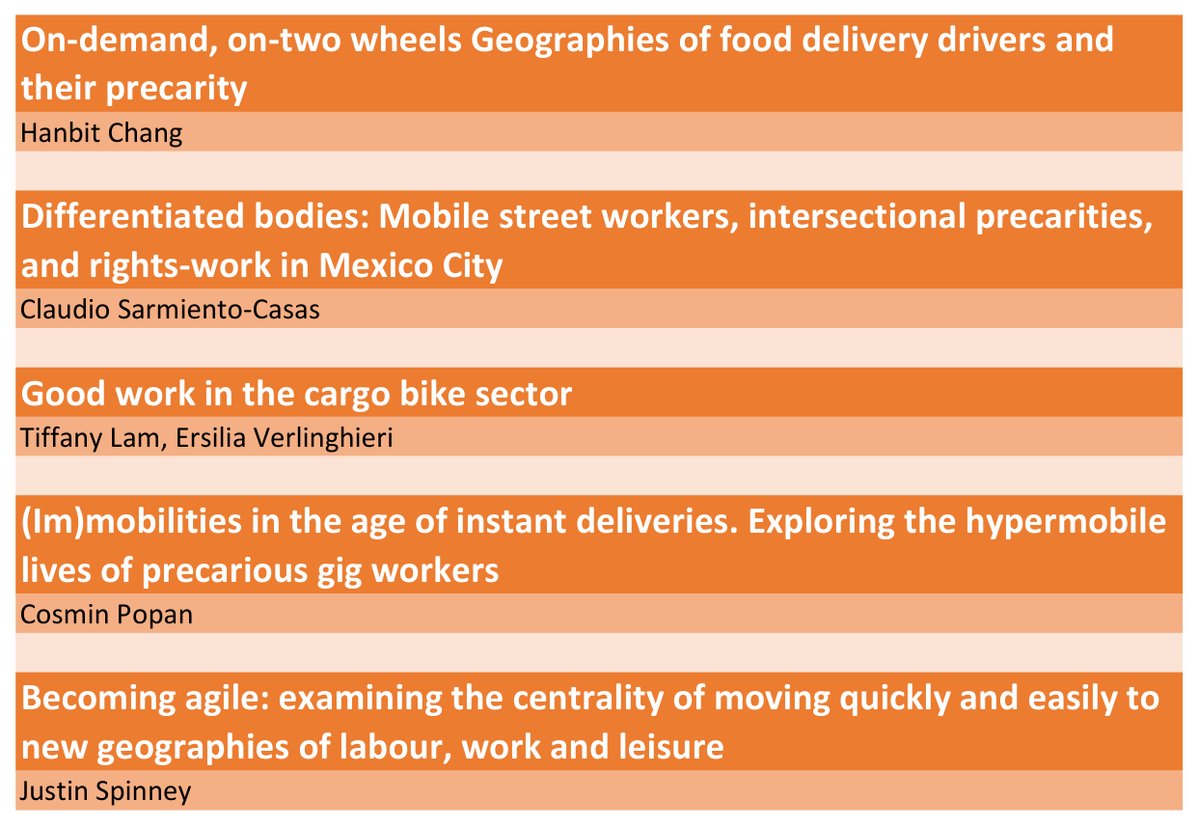
Our final session of #RGS2022 continues the theme of: Recovering geographies of labour and mobility in platformised delivery work. The session starts at 16:50 in 1.10 Henry Daysh and online. #TGRG#RGS2022
I am excited to present my working paper "On-demand, on-two wheels; Geographies of food delivery drivers and their precarity" at @GCEG_Dublin2022 this Friday. Looking forward to it! #GCEG2022