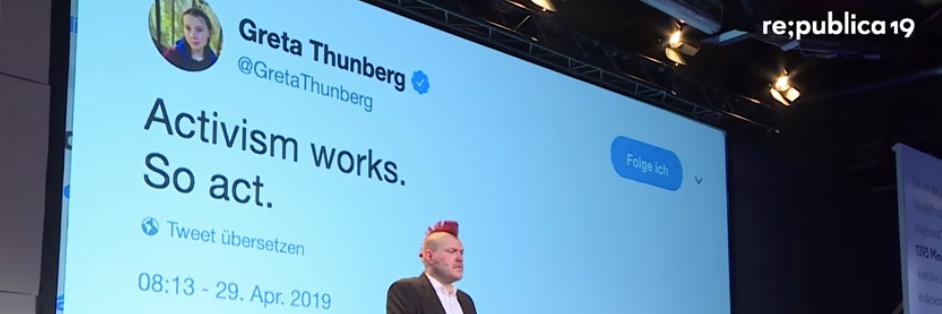
The arc of the moral universe is long, but it bends towards justice. Except it doesn’t bend on its own—it bends because we pull it in the direction of justice. What keeps me hopeful during times like these is being surrounded by people who are doing just that.
The Beyhive buzzed, and the queen listened. After fans voiced frustration over the pit sections being farther back than expected on opening night, concertgoers are now reporting that the Cowboy Carter Tour pits have been moved closer to the stage.
One fan even launched a petition calling for the change, which gained traction on Reddit and TikTok. You can check it out at https://t.co/blWmrvcT6y.
Thanks to these TikTok content creators: @ concertin4k @ duncanrednikcam @ jamesallen96_
@ beysus.christ @ naomigamerfox @ adhdwhileblack @ sgdois @ cheyyyeennne @ thevampire31
#cowboycarter #beyonce #cowboycartertour #buckinhoneypit #sweethoneypit #bey #beyhive #blueivy #tour #beyoncetour #celebrity #popculture #entertainment #concert #country
JETZT REICHTS: Der Philosoph Omri Boehm sollte die Rede auf der Gedenkfeier zum 80sten Jahrestag der Befreiung Buchenwalds halten. Doch die israelische Regierung hat so starken Druck ausgeübt, dass Boehm ausgeladen wurde. Ich habe eine Petition gestartet: https://t.co/Vuh7pBueyJ
To illustrate just how nonsensically these tariffs were calculated, take the example of Lesotho, one of the poorest countries in Africa with just $2.4 billion in annual GDP, which is being struck with a 50% tariff rate under the Trump plan, the highest rate among all countries on the list.
Why? Does Lesotho apply extortionate tariffs on U.S. products and the U.S. is merely being "reciprocal" here? Not at all, despite what Trump is saying, it's NOT the way these tariffs are defined.
As a matter of fact Lesotho, as a member of the Southern African Customs Union (SACU), applies the common external tariff structure established by this regional trade bloc.
Which means it applies the same tariffs on U.S. products as South Africa does, as well as the 3 other members of the bloc: Namibia, Eswatini and Botswana.
So since the tariffs charged by these 5 countries on U.S. products are exactly the same, they must all be struck with a 50% tariff rate by the U.S., right? Not at all: South Africa is getting 30%, Namibia 21%, Botswana 37% and Eswatini just 10%, the lowest rate possible among all countries.
So what gives? Again, the way these tariffs are calculated has absolutely zero relationship with actual tariffs imposed by these countries on U.S. products. Instead, they appear to be simply derived from trade deficit calculations.
Looking at Lesotho specifically, every year the U.S. imports approximately $236 million in goods from Lesotho (primarily diamonds, textiles and apparel) while exporting only about $7 million worth of goods to Lesotho (https://t.co/uHvem6nH2o).
Why do they export so little? Again this is an extremely poor country where 56.2% of the population lives with less than $3.65 a day (https://t.co/GEho8xFjAp), i.e. $1,300 a year. They simply can't afford U.S. products, no-one is going to buy an iPhone or a Tesla on that sort of income...
The way the tariffs are ACTUALLY calculated appears to be based on a simplistic and economically senseless formula: you take the trade deficit the U.S. has with a country, divide it by that country's exports to the U.S and declare this - falsely - "the tariff they charge on the U.S."
And then as Trump did in his speech last night, you magnanimously declare that you'll only "reciprocate" by charging half that "tariff" on them.
As such, for Lesotho, the calculation goes like this: ($236M - $7M)/$235M = 97%. That's the "tariff" Lesotho is deemed to charge this U.S. and half of that, i.e. roughly 50% is what the U.S. "reciprocates" with.
It's extremely easy to see why this makes no sense at all.
First of all, there's nothing Lesotho can do about it: they can't change tariffs they allegedly charge the U.S. to reduce the tariff rate the U.S. "reciprocates" with because, again, it's NOT based on any tariff that they charge.
Similarly they can't do much about reducing the trade deficit they have with the U.S. because, again, they simply don't have enough money to buy U.S. products.
Also the main rational Trump gave for the tariffs is to get production back to the U.S., to "bring manufacturing back". 47.3% of Lesotho's exports are diamonds: how do you bring the "manufacturing" of that "back to the U.S."? Anyone can see it makes just about zero sense.
The Lesotho example exposes the fundamental economic incoherence of these tariffs. Rather than addressing actual trade barriers, they punish countries based on trade deficits that arise from structural economic realities. All the more countries like Lesotho which pose zero competitive threat to American industry.
Worse yet, these tariffs will likely make these structural realities even worse: the U.S. is Lesotho's second most important export destination so it's a fair bet that applying 50% tariffs on their products will make people in Lesotho even poorer, and therefore even LESS able to afford U.S. products.
But perhaps the most unfair and detrimental aspect of all this is that these tariffs represent a complete reversal of longstanding U.S. development policy, and therefore a betrayal of countries - like Lesotho - who chose to follow U.S. advice in the past.
For decades the U.S. has used preferential trade access to encourage economic development in the world's poorest nations, recognizing that trade, not just aid, could get them out of poverty and ultimately put them in a position where they too could afford iPhones or Tesla.
They're now effectively penalizing countries for following previous U.S. policy, a lesson which I bet they won't forget anytime soon.
So all in all the irony is painful: in the name of fighting unfair trade, America has just demonstrated what truly unfair trade looks like.
This isn't something designed to address genuine trade issues, but simply a mechanism based on arbitrary math to punish countries for the affront of selling more to the United States than they buy.
.@Hind_Gaza last year: "From where are AP, Reuters, getting their footage? They're getting it from us.. but journalists in Gaza have zero protection"
The lack of solidarity shown to journalists in Gaza by most of their colleagues in the west has been shameful
A group of settlers just lynched Hamdan Ballal, co director of our film no other land. They beat him and he has injuries in his head and stomach, bleeding. Soldiers invaded the ambulance he called, and took him. No sign of him since.
I'm standing with Karam, Hamdan's 7 year old son, near the blood of Hamdan's in his house, after settlers lynched him. Hamdan, co-director of our film No Other Land, is still missing after soldiers abducted him, injured and bleeding. This is how they erase Masafer Yatta.
WAKE UP, People.
Today, Palestine is a REVEALER of the system we live in. Not long ago, European Jews were genocided in 'civilized' Europe, under everyone's eyes: they were "unseen", and not many seemed to care. Today, millions of people "see" and are trying to stop Israel's genocide - protesting, seeking accountability - invoking the very legal framework that was crafted after the Holocaust to ensure "never again". But, from the US to Europe, they are either ignored or harshly punished.
Far too many states are enabling the genocide of the Palestinians, while turning also repressive toward their own citizens. This is both revolting and scary. We must stop it now.
18 months of this holocaust. Our leaders still support it.
“When I was in Gaza, I felt like it was the prelude to the end of humanity,” heroic doctor Tanya Hassan told UN.
Don’t you feel it, too? I cannot see a way back from what we’ve allowed to happen.