We’re upfront about upfront costs.
No complicated programs, just 0% financing and simple savings so you can make your dollar work harder. Visit https://t.co/4mOT5xTLUN or contact your Channel SeedPro for complete terms.
Harvest keeps rolling along. According to the USDA, 44% of corn has been harvested in South Dakota as of October 26. Thirty-nine percent is in good to excellent condition.
#Harvest2026
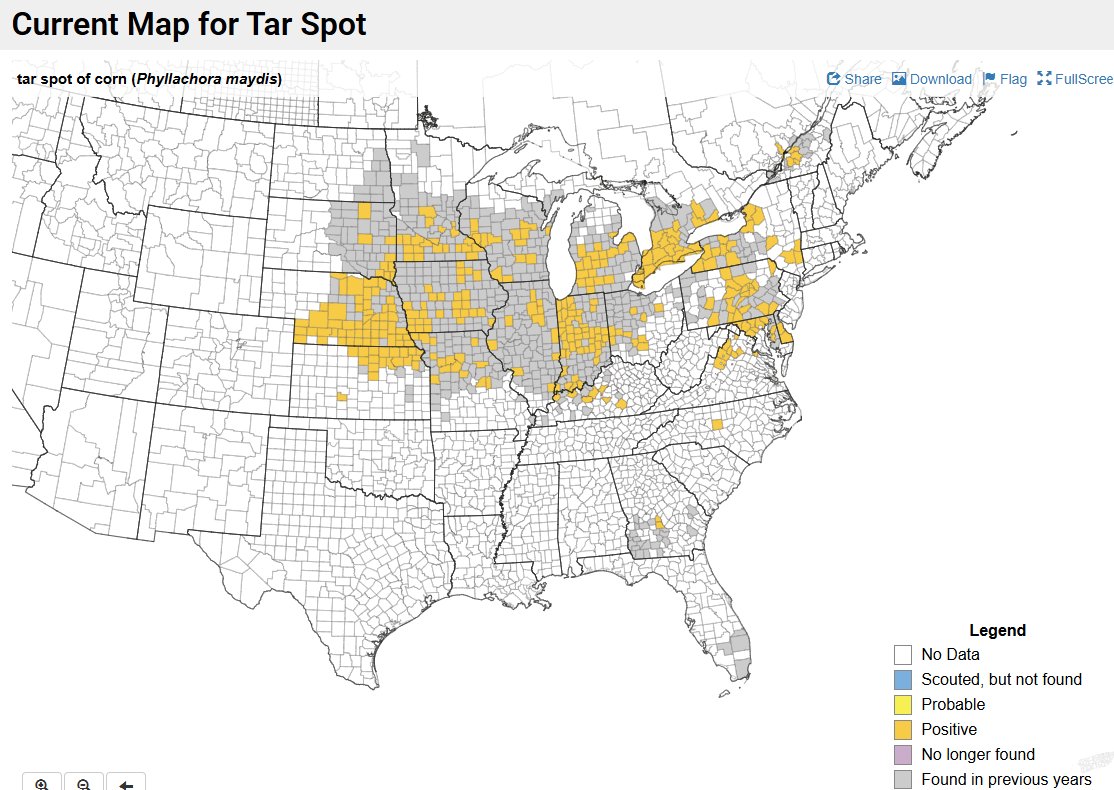
Tar Spot (TS) positive counties in SD in 2026. TS overwinters in crop residue & is a threat to yield and standability year after year if conditions favor an early onset. Budget a fungicide application should TS get an early start in your crop #DelaroComplete
Southern Rust positive counties in SD for 2026. Than makes 3 years in a row for a disease that only survives on living plant material. If we see SR in 2027 having a fungicide app plan in place can prevent yield loss and standability that can occur with SR. #DelaroComplete
Know some creative students who enjoy regenerative agriculture and would like to win some money? Tell them about our 2027 Student Soil Health Video and Essay Contests! Learn more at https://t.co/M5OA9xVfXj
The latest episode of the Soil Strategies podcast features a discussion with author and soil scientist Jon Stika about restoring soil function, challenging conventional thinking, and what it might take to change the future of agriculture! Listen at https://t.co/maXT1Ufkk9
According to the USDA, 29% of corn has been harvested in South Dakota as of October 19. Thirty-five percent is in good to excellent condition.
#Harvest2026
Your yield data is only as good as your calibration. See how to set up your combine and yield monitor for accurate numbers all harvest long: https://t.co/B2mvOLSZxR
#Harvest26#CombineHarvest
What’s next from Bayer Crop Science? Brian Naber joins #AroundTheFarm to talk Preceon Short Stature Corn, FieldView Advisor, farmer profitability and what’s ahead for the 2027 season.
Watch the full episode ⬇️ https://t.co/7kbtGqbhzy
Yield Analysis Annotated Diagrams
View the key areas of Yield Analysis using these annotated diagrams. Yield analysis by operation or field.
https://t.co/LHrCS99b8e
It's been a tough couple of weeks for corn, and the grain markets are at a bit of a deciding point.
In this week's #ProfitPlanning recap, @TheTedSpread covers what two back to back bearish USDA reports mean for the balance sheet and what producers should be watching as attention shifts to South American weather.
With a lot still up in the air, don't miss Ted's weekly Profit Planning newsletter here! https://t.co/5U52FfsnuQ
#GrainMarket #Harvest26
As harvest results come in, a larger, balanced data set can help growers better evaluate product performance before drawing conclusions. Learn more about a balanced approach here 👉🏻 https://t.co/N99c2NO7xD
#Harvest26
According to the USDA, 15% of corn has been harvested in South Dakota as of October 11. Thirty-five percent is in good to excellent condition.
#Harvest2026
Through 4-H, students gain hands-on experience, leadership opportunities and the confidence to take what they’ve learned into whatever comes next. We’re proud to celebrate the students who are Beyond Ready for their next chapter.
Learn more here: https://t.co/hod7vOJGqn
Happy #NationalFarmersDay! 🚜 Thank you to everyone who shows up for the land, the crop and the community, no matter the season. We're all in with you! #AllInAllSeason
Your plant has a sensor for ethylene, the hormone that drives ripening and stress response. Researchers found that sensor doesn't work without a copper atom sitting in it.
And that's just one of copper's jobs. It helps move energy through photosynthesis, it helps build the lignin that keeps stems standing, and it keeps pollen fertile so you actually set grain.
When copper runs short you see pale plants, twisted dead leaf tips in wheat, and in bad cases heads that don't fill. Copper doesn't move much in the plant, so new growth shows it first.
Where do we see it? Organic soils hold copper tighter than any other micro, so high-OM ground, sands and high-pH spots are the ones to watch.
Here's the catch: this is a nutrient I have seen nearly 0 responses to by applying it on its own. Have you had luck? One exception for me is on wheat.
Next up: molybdenum.
#NextLevelAg #Agronomy365 #The5Percent #copper #agronomy
Staggering maturities to capture more yield.
How many people do it and how big of maturity gaps do you use? We used to start with our 0.8 maturities and move to a 2.6 ish. Last few years we haven’t been focused on getting wheat in so we quit doing it.
This year it would have paid well. Seems every field is 7.5-9.