Dear @TacoBell,
I ordered a Chicken Power Bowl with extra black beans. The black beans showed up. The chicken apparently called in sick
For nearly $11, I received a spoonful of rice, some beans, and a broken heart. Then I tried to complain and couldn't even find a phone number
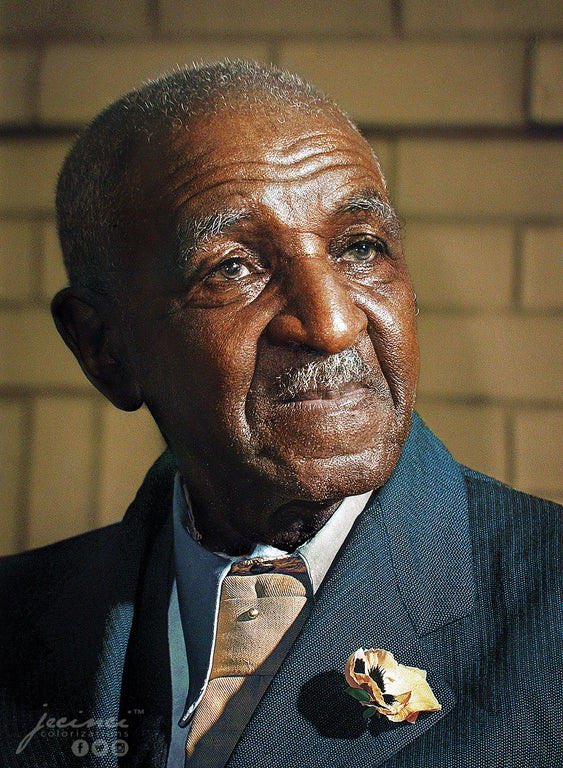
George Washington Carver died on this day in 1943.
He overcame slavery to achieve fame as a scientist, botanist and educator. He invented over 300 uses for peanuts and he’s responsible for much more.
He's credited for the idea of crop rotation to improve soil health.
The youngest Morgan Freeman has ever been Morgan Freeman had his breakthrough role in 1987’s Street Smart, he was 50 years old. It earned him an Academy Award nomination.
“It took many years of vomiting up all the filth I'd been taught about myself, and half-believed, before I was able to walk on the Earth as though I had a right to be here." —James Baldwin
The horrors of concentration camps in Kenya by the British Colonial Rule.
They were sites for random executions and some tortured to death for rebelling against the colonial rule. According to KHCR, over 90k were executed and maimed.
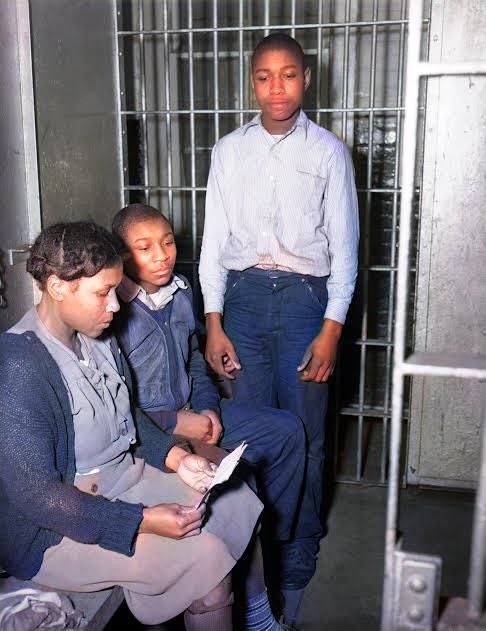
Rosa Ingram and her teen sons were sentenced to death in 1948 after they murdered a white neighbor who attempted to sexually assault their mother.
Thanks to civil rights activists the story gained national press. They were later released on parole for being "model prisoners."
—In 1948 Rosa Lee Ingram, a sharecropper and widowed Mother of four boys, was the center of one of the most-explosive capital punishment cases in history. In 1948 in a one-day trial, Ingram and two of her teenage boys were sentenced to die by electric chair, after an altercation with a White landowner in the state of Georgia.
On November 4, 1947, the landowner reportedly confronted Ingram and three of her sons over livestock entering his land near the small town of Ellaville. John Stratford was armed with a shotgun and pocket knife when he went to have his word with Ingram. Three of Ingram’s boys overheard their mother yelling then rushed over to her armed with farm instruments. Later, the 64-year-old man was found dead by way of blows to the head according to the investigation.
In several accounts and most notably in author Janus Adams‘ “Sister Days: 365 Inspired Moments in African-American Women’s History,” it was said that Stratford struck Ingram in the head with the butt of his rifle after threatening to shoot her mules that allegedly invaded his cornfield. Other historical accounts state that according to later testimony, though, Stratford threatened Ingram with sexual assault before striking her.
Either way, Ingram and her sons, Wallace, 16, and Sammy, 14, were all convicted by an all-White jury to death; Charles, 17, was at the scene but not charged due to lack of evidence.
Although there was an investigation at the scene of the murder, it has been suggested that many who responded to the incident were not officially mandated to do so. As a result, civil rights activists from NAACP branches around the nation leaped in to action to assist Ingram and her boys.
Court-appointed White lawyer S. Hawkins Dykes was aided by the the Civil Rights Congress (CRC) and their fund-raising efforts. Although this move caused some tension with the NAACP, Ingram and her sons were able to get an appeal and their sentences were reduced to life in prison.
National Committee to Free the Ingram Family, led by Mary Church Terrell, was instrumental in continuing to fight on behalf of the Ingram family and worked alongside the CRC and NAACP to ensure their freedom. Working across class and color lines, the case was a rallying cry for women activists and attracted the attention of the media in the North.
These organizations worked tirelessly to keep Ingram’s case alive in the minds of the public, even appealing to President Harry Truman to intervene at one point.
Finally in 1959, the Ingrams were granted parole and released.
The case placed a highlight on the racist and divisive Jim Crow laws of the South and also galvanized African-American women to participate in civil rights activism.
Ms. Ingram lived in Atlanta from the time of her release in prison until her passing in 1980.
🖋️if you love our content, please consider supporting our page on https://t.co/MkzBtV9AwG (follow the ko-fi page too for weekly posts roundup)
—Margaret and Matilda Roumania Peters were African American tennis stars from the late 1930s through the early 1950s. As young girls, they could often be seen playing at a park across from their home in Georgetown. They were nicknamed “Pete” and “Repeat” for their doubles playing skills and last name.
—While still in high school, the Peters sisters attracted the attention of a tennis coach from Tuskegee Institute, Cleve Abbott, who offered each of them a four-year scholarship. Margaret, feeling uneasy about travelling so far away from home, deferred for a year until Matilda graduated from high school. The Peters sisters arrived at Tuskegee in 1937.
—In college, both sisters played basketball and tennis but they were best known for their doubles play in tennis and were exceptionally good at moves such as “slice serve” and “chop shots,” and had incredibly strong backhands. While in college they played in the American Tennis Association, ATA, tournaments. The ATA is the African American tennis league that still exists today. They both graduated from Tuskegee in 1941 with degrees in physical education.
—After college, they both continued to play amateur tennis in the ATA. Since they were amateurs, they had to pay for their own equipment, entry fees, and travel expenses. They won 14 doubles tennis titles between 1938 and 1941 and between 1944 and 1953. They gained some fame and played for celebrities, British royalty, and practiced with actors such as Gene Kelly. The Peters sisters were inducted into the Tuskegee Hall of Fame in 1977.
—Despite their skill, they were never permitted to test themselves against the great white doubles players of the time. By the time the walls of segregation in tennis started falling, the Peters sisters were past their prime and were never able to compete in racially integrated matches.
Margaret moved to New York City, New York for a short time after graduating from Tuskegee and received a master’s degree in physical education from New York University. She returned to Washington D.C. and worked as a special education teacher. She earned a second master’s degree in special education from Coppin State College in Baltimore, Maryland. Margaret never married or had children. She died in Washington on November 3, 2004.
Matilda played singles as well as doubles with her sister. She won national singles titles from the ATA in 1944 and 1946. Like her sister, Matilda went on to receive her master’s degree in physical education from NYU after graduating from Tuskegee. She married James Walker in 1957. Together, they had two children: a daughter named Frances Della and a son named James George. Matilda taught at Howard University in the 1950’s and then the Washington Public School System from 1964 to 1981. She also taught tennis to underprivileged children through the District of Columbia Department of Recreation. On May 16, 2003, Matilda died from pneumonia.
🖋️if you love our content, please consider supporting our page on https://t.co/MkzBtV9AwG (follow the ko-fi page too for weekly posts roundup)
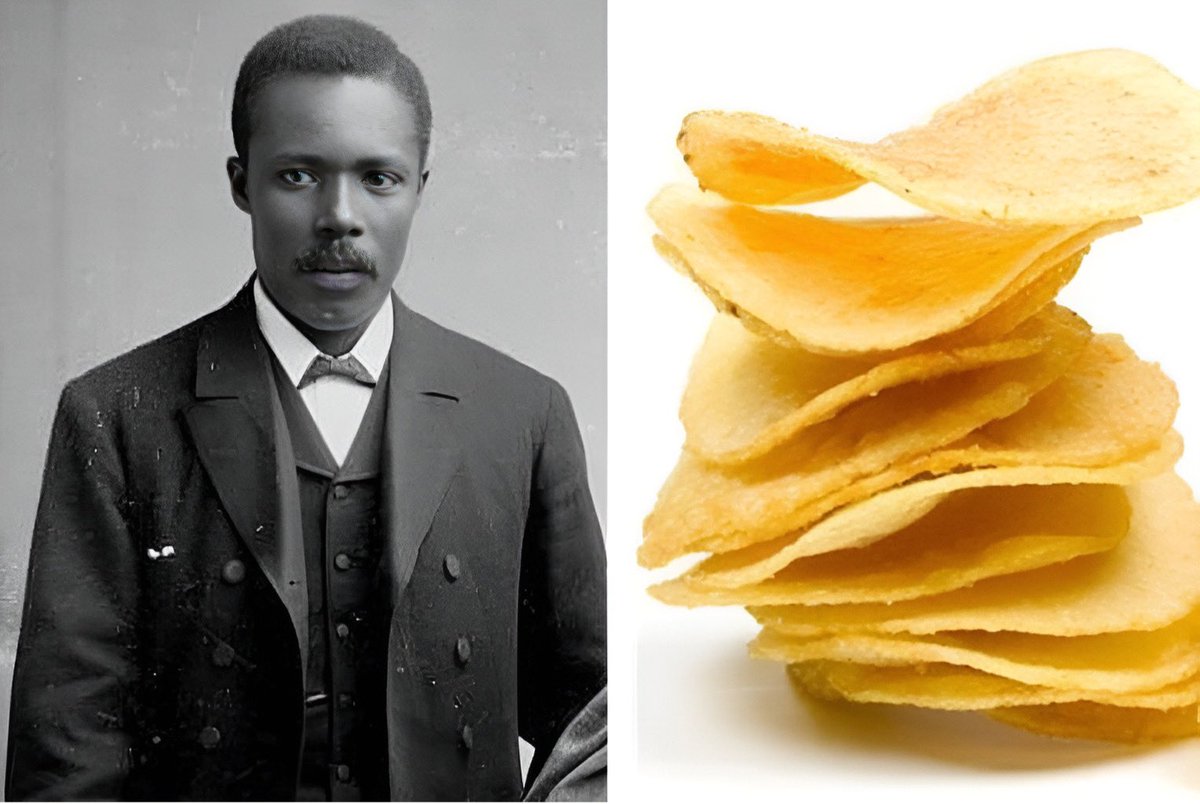
George Crum invented the Potato chips. Thanks to him, our mindless television watching became a bit more delicious.
—The potato chip was invented in 1853 by George Crum. Crum was a black American chef at the Moon Lake Lodge resort in Saratoga Springs, New York, USA. French fries were popular at the restaurant, and one day a diner complained that the fries were too thick. Although Crum made a thinner batch, the customer was still unsatisfied. Crum finally made fries that were too thin to eat with a fork, hoping to annoy the extremely fussy customer. The customer, surprisingly enough, was happy – and potato chips were invented!
Crum’s chips were originally called Saratoga Chips and potato crunches. They were soon packaged and sold in New England – Crum later opened his own restaurant.
William Tappendon manufactured and marketed the chips in Cleveland, Ohio, in 1895. In the 1920s, a salesman named Herman Lay sold potato chips to the southern USA (selling the chips from the trunk of his car). In 1926, Laura Scudder (who owned a potato chip factory in Monterey Park, California) invented a wax paper potato chip bag to keep the chips fresh and crunchy. With further technology, innovation, and a countless number of variations and flavors, potato chips have only grown in popularity over the years!
🖋️if you love our content, please consider supporting our page on https://t.co/MkzBtV9AwG (follow the ko-fi page too for weekly posts roundup)
On this day in 1904, with $1.50 and faith in a living God, Dr. Mary McLeod Bethune established the Daytona Normal and Industrial Institute for Negro Girls, now known as Bethune-Cookman University in Daytona Beach, Florida.
Mary Jane McLeod Bethune was a educator, stateswoman, philanthropist, humanitarian, womanist and civil rights activist.
She was known as "The First Lady of The Struggle" because of her commitment to gain better lives for African Americans.
CAREER & ACTIVISM:
Bethune founded the National Council for Negro Women in 1935, established the organization's flagship journal Aframerican Women's Journal and resided as president or leader for myriad African American women's organizations including
She is well known for starting a private school for African-American students in Daytona Beach, Florida; it later continued to develop as Bethune-Cookman University.
Bethune was the sole African American woman officially a part of the US delegation that created the United Nations charter.
For her lifetime of activism, she was deemed "acknowledged First Lady of Negro America" by Ebony magazine in July 1949 and was known by the Black Press as the "Female Booker T. Washington".
May 18, 1955: In Daytona Beach, FL, Mary Jane McLeod died of a heart attack. She was 79.
🖋️if you love our content, please consider supporting our page on https://t.co/16fHyPFENu (follow the ko-fi page too for weekly posts roundup)