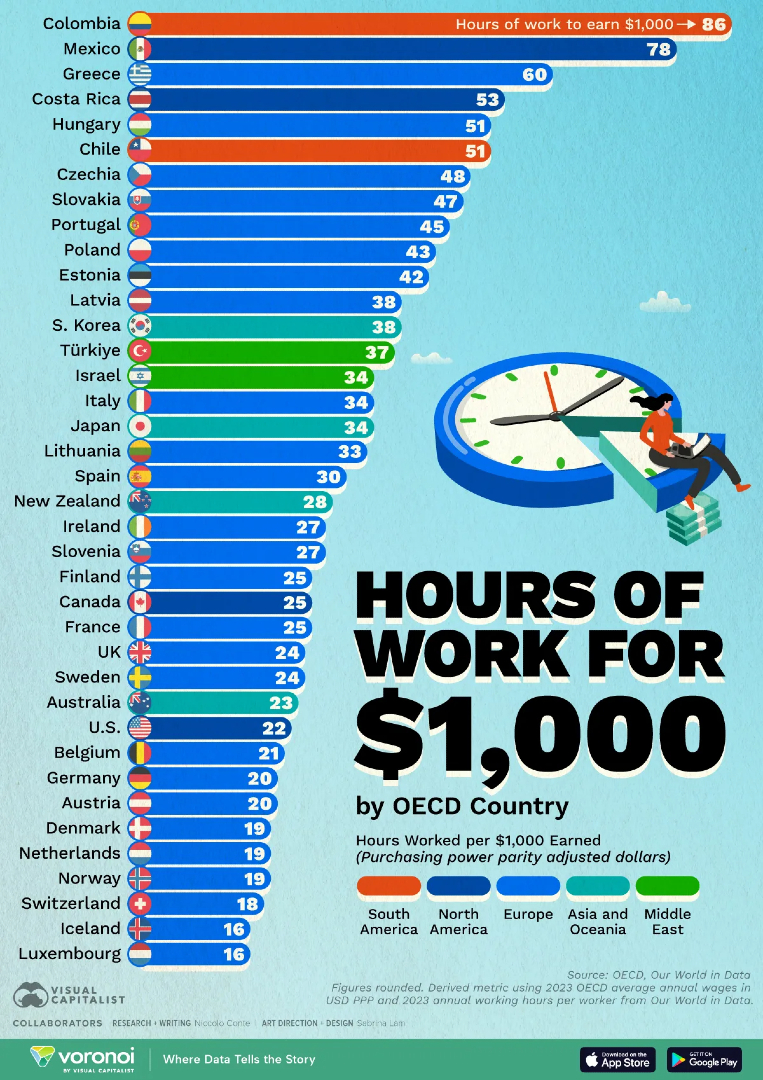
In 1984, left wing economists declared the death of New Zeeland farming when free market reformers scrapped their system of agricultural subsidies and trade protections. But instead of collapsing, the market adapted – and prospered. Stripped of government aid and freed from stifling regulations, farmers innovated rapidly, reduced waste, shifted away from unprofitable products. Heavy reliance on sheep and wool was replaced by highly profitable and diversified dairy operations, viticulture, and horticulture. The reforms turned New Zealand into one of the most hyper-efficient, competitive, and profitable agricultural exporters in the world. The sheep population more than halved, from 70 to 30 million, while productivity jumped by 170%.
Contrast that with the European Union’s Common Agricultural Policy (CAP), a EUR 60bn policy which amounts to a massive distortion of the free market, replacing competitive dynamics with heavy-handed state interventionism. A vast subsidy system and protective tariff walls stifle innovation, misallocate resources, and harm consumers.
Perversely, subsidies are linked to land ownership and is completely disconnected from production of agricultural produce. Instead of responding to authentic consumer demand, farmers are incentivized to meet bureaucratic criteria such as Crop Rotation Requirements to secure government funding.
The system has delayed necessary structural modernization. In a free market, inefficient farms would consolidate or adapt; under the CAP, public money keeps uncompetitive operations afloat. An average EU farm generates between $19 and $28 of output per hour of labour compared to New Zeeland’s $45 to $60 per hour. While the Kiwi agricultural sector prospers, the EU is stuck with a system that forces taxpayers to subsidize their own artificially inflated grocery bills.
Before the 1950s, clover was a STANDARD component of American lawns.
Seed mixes included it on purpose.
Then broadleaf herbicides were invented.
They killed clover along with "weeds." So the chemical companies rebranded clover as a weed — to sell more herbicide.
That's it. That's the whole story.
Clover is not a weed. It's the future of your lawn.
White Dutch clover (Trifolium repens):
Self-fertilizing — fixes nitrogen from the air into the soil. No fertilizer needed. EVER.
…and it feeds the grass around it for free.
Drought-resistant — stays green when grass goes brown.
Bee paradise — constant blooms from May to frost.
Chokes out weeds — dense growth shades out weed seeds.
No mowing needed (stays 4-6 inches) — or mow monthly.
Soft underfoot — kids love it.
Costs $5-10 to overseed 1,000 sq ft.
How to add clover to your existing lawn:
Overseed in spring or fall.
Scatter seed (2 oz per 1,000 sq ft).
Water lightly for 2 weeks. Done.
Stop using broadleaf herbicides (they kill clover).
Stop fertilizing (clover makes its own).
Mow at 3-4 inches.
The lawn industry told you clover was a weed so they could sell you chemicals.
Take your lawn back.
Copper wire has run the world for over a century. The era that replaces it is starting right now, and it might be the most important infrastructure shift of the decade.
Here is the simple version of what is happening.
Inside an AI data center, thousands of chips have to talk to each other constantly. For a hundred years machines did this the same way, by sending electricity down copper wires. That always worked. Until AI.
The chips now move so much data so fast that copper physically cannot keep up. Push electricity that hard down a wire and it turns into heat, the signal falls apart, and it can barely cross a single rack before it dies.
So the entire industry is ripping out the copper and replacing it with light. Instead of electricity down a wire, data travels as pulses of light through glass fiber. Light runs cooler, travels farther, and carries vastly more information.
In a world where power and heat are the limits on how much AI you can build, switching to light is not a preference. It is the only way forward.
What makes this generational rather than just another upgrade is the staircase the whole industry is now climbing.
It went from 400G to 800G, the workhorse today, already shipping in the tens of millions.
Now it is climbing to 1.6T, double the bandwidth in the same space, with NVIDIA's newest systems needing over 160 of these per single rack.
Next comes 3.2T, doubling it again.
And what used to be a five year upgrade cycle has collapsed to one or two years. These generations are not replacing each other one at a time. 800G, 1.6T, and 3.2T are ramping on top of one another all at once.
Now the size of the prize. The optical transceiver market sat around $15 billion in 2025 and is heading toward $36 billion by 2033, with some forecasts for the AI portion alone reaching far higher.
The silicon photonics piece inside it grows from under $1 billion to over $6 billion by 2030. This is a market doubling and then doubling again, driven by a buildout that has barely started.
What does it actually mean? It means every company that makes the lasers, the chips, and the modules that turn electricity into light gets paid on every step up that staircase, for years.
$AAOI makes its own lasers in-house, the exact bottleneck part the whole industry is fighting over.
$CRDO makes the chips that keep these blazing fast connections clean and reliable.
$LITE and $COHR are the photonics giants supplying the lasers and transceivers everyone depends on.
$MRVL and $AVGO build the custom silicon at the center of it all.
Copper carried the last hundred years. Light carries the next hundred. And the wiring is being torn out and replaced right now.
Scientists have identified a reversal of the long-standing Flynn effect—the roughly 200-year trend of rising average intelligence (measured via IQ and cognitive tests) across generations.
For the first time in modern recorded history, Generation Z (born roughly 1997–2012) shows lower performance than previous generations in key cognitive domains, including attention, memory, literacy, numeracy, executive function, problem-solving, and general IQ—despite spending more years in formal education than ever before.
Neuroscientist and educator Dr. Jared Cooney Horvath, PhD, MEd, testified before the U.S. Senate Committee on Commerce, Science, and Transportation on January 15, 2026, highlighting this shift. In his written testimony, he stated that cognitive development in children across much of the developed world has stalled or reversed over the past two decades, with declines evident in international assessments (e.g., PISA, TIMSS) and other large-scale data starting around the mid-2000s and accelerating post-2010.
Horvath attributes the primary driver not to reduced schooling, but to the widespread integration of digital screens and educational technology (EdTech) in classrooms. He argues that human brains evolved for deep, focused learning through face-to-face interaction and sustained attention, not fragmented skimming or constant task-switching encouraged by devices.
Key points from his testimony include:
- Teens now spend over half their waking hours on screens, with significant portions in school involving computers or tablets—often leading to off-task behavior and shallower processing.
- Evidence from meta-analyses and national/international studies shows a consistent pattern: higher classroom screen exposure correlates with weaker outcomes in reading, math, science, and higher-order reasoning.
- Digital tools may aid narrow, repetitive skill practice in controlled settings, but in core academic contexts, they tend to reduce depth of understanding, retention, and critical thinking.
Horvath describes this as a "structural mismatch" between human cognition and how digital platforms are designed (to capture and fragment attention), warning that unchecked EdTech adoption risks long-term harm to workforce skills, innovation, and societal reasoning.
[Horvath, J. C. (2026). Written testimony before the U.S. Senate Committee on Commerce, Science, and Transportation. U.S. Senate]
The machine used to print the world's most advanced computer chips weighs 180 tons and is about the size of a school bus. Moving one takes 40 shipping containers, 20 trucks, and 3 Boeing 747 cargo planes. Even then it does nothing until an ASML team flies in, rebuilds it from roughly 100,000 parts, and stays on site for the rest of the machine's life to keep it running.
This is the object US officials suspect may have slipped into China. ASML's answer was close to a logistics lecture. The company says it knows the exact location of every one of these machines it has ever built, 314 of them running worldwide right now, and that none sit in China. It also says the machines stay connected to ASML. If one loses its signal or gets moved, ASML can see it, and a buyer cannot quietly unplug one and haul it somewhere else.
The hardware is almost impossible to fake or hide. One company on earth makes it. The mirrors inside come from Zeiss and are the most precise objects ever built. Blown up to the size of Germany, the tallest bump on one would be a tenth of a millimeter. To create its light, the machine fires a powerful laser at drops of molten tin 50,000 times a second, heating each drop to roughly 200,000 degrees, almost 40 times hotter than the surface of the sun.
So far no public proof of an actual machine in China has appeared, and ASML flatly denies it. A single one costs about $200 million, and the newest version closer to $380 million. It might be one of the only machines on earth that is too complicated to steal.
A “Canadian well” is an underground pipe system that uses the earth’s stable temperature (about 8–15°C) to pre-condition air. In winter, it warms incoming air, and in summer, it cools it.
Imagine being able to make stone translucent.
Giovanni Strazza possessed that extraordinarily rare skill. His bust of the Virgin Mary, executed in flawless Carrara marble, is one of the most impressive feats by any sculptor.
Strazza's "wet drapery" technique continued the legacy of previous Italian sculptors like Giuseppe Sanmartino, who produced mind-bending veils from marble a century earlier — the famous "Veiled Christ" is a canonical example.
The tradition also dates back to much earlier sculptors known for carving intricate folds, in particular Renaissance artists like Michelangelo and ancient masters from Greece's Hellenistic period.
But in the mid-19th century, Strazza took the technique to its extreme. The subtle layered effect he achieved allows the viewer to easily discern Mary's facial features from the delicate veil, and at the same time creates the illusion of total weightlessness.
How he created something so soft and fluid from solid stone, using only basic hand tools, is a mystery.
In 2014, Elon "gave away" Tesla's secrets to BMW.
Everyone thought he was crazy.
But this "act of charity" was actually the most ruthless move in corporate history.
Here's why BMW never saw it coming: 🧵
🚨 AMERICA JUST BUILT THE WORLD’S MOST POWERFUL METAL 3D PRINTER AND IT’S ABOUT TO MASS-PRODUCE ROCKETS AND MISSILES.
Divergent Technologies has unveiled the Monolith One, a giant industrial metal printer standing over 8 meters tall and armed with 12 high-powered lasers delivering a combined 24 kilowatts of energy.
Unlike typical 3D printers used for prototypes, this machine is built for serious, high-volume production. It can print large, complex aerospace and defense parts in aluminum, titanium, steel, and nickel alloys and it roughly doubles the output of current systems.
Why this matters:
• Divergent plans to install 64 more of these machines in a massive new 430,000 sq ft factory in Long Beach, California
• Once running, the facility aims to produce tens of thousands of munition airframes per year plus hundreds of thousands of critical metal components
• It slashes manufacturing time from months down to weeks or even days
• The company already supplies major players like Lockheed Martin and RTX
The deeper implication:
This isn’t just another 3D printer. It represents a shift toward software-defined, on-demand manufacturing at industrial scale for mission-critical hardware. As defense and aerospace demand skyrockets, traditional supply chains are too slow.
Systems like Monolith One could become a cornerstone of faster, more resilient domestic production especially for complex structures that are difficult or impossible to make conventionally.
We’re watching the industrialization of additive manufacturing in real time.
How do you think large-scale 3D printing will change aerospace and defense manufacturing over the next decade?
Follow for more frontier manufacturing and defense technology.
How does concrete cure underwater, and how did the ancient Romans use this technique to construct harbors?
Modern concrete crumbles in decades when exposed to seawater. Yet, Roman harbors built 2,000 years ago actually get stronger the longer they sit underwater.
To understand why, we first have to realize that concrete doesn't harden by "drying out" in the air. Instead, it cures through a chemical reaction known as hydration. When cement is mixed with water, the two ingredients react to form microscopic crystals of calcium silicate hydrate. These crystals grow and interlock, binding sand and gravel into a solid mass. Because this process actively consumes water, concrete can cure perfectly well underwater, provided the cement is not washed away by currents before the chemical bonds have time to form.
The ancient Romans intuitively understood this chemistry and leveraged it to engineer some of the most resilient marine infrastructure the world has ever seen. Their massive harbors, breakwaters, and piers remain intact today, long outlasting our modern equivalents.
Their secret lay in a unique recipe based on volcanic ash. Roman builders sourced a specific type of ash from the Bay of Naples, known as pozzolana. To build harbor foundations, builders would construct massive wooden caissons—watertight retaining structures—and sink them into the sea. Into these forms, they packed a mixture of quicklime, pozzolana, and chunks of volcanic rock (tuff).
When seawater flooded into the mixture, it triggered a spectacular chemical event. The water reacted with the quicklime and volcanic ash in a highly exothermic pozzolanic reaction. The intense heat and alkaline environment caused the volcanic glass in the ash to dissolve. In its place, rare minerals like tobermorite and phillipsite began to crystallize.
This is where Roman marine concrete diverges from modern Portland cement. Modern concrete often deteriorates when exposed to seawater because saltwater corrodes the steel reinforcements hidden inside. Roman concrete lacked steel rebar. Instead, the continuous percolation of seawater through the concrete actively fortified the material over the centuries. The seawater continually reacted with the volcanic ash, growing new interlocking crystals that filled micro-cracks before they could spread.
By embracing the marine environment rather than fighting it, Roman architects turned the ocean into a vital ingredient. The seawater fundamentally altered the molecular structure of their concrete, transforming it from a simple building material into an artificial rock capable of withstanding millennia of crashing waves.
#archaeohistories
A man in 1835 was digging a duck pond and accidentally uncovered a 70-foot tunnel made of 2,000 sq ft of mosaic made from 4.6 million shells (mussels, cockles, whelks, limpets, oysters, scallops).
It's the Shell Grotto in Margate, Kent, England.
An English surgeon in Glasgow beat a killer nobody could see. 🏴🇬🇧
Today, every safe operation on earth begins the way he insisted.
In 1865, 16 deaths in 35 operations was a good surgeon's record. The knife was not the killer. The ward was. Doctors called it hospitalism, and nobody knew the cause.
Joseph Lister went looking for an enemy nobody could see. Reading the French chemist Pasteur, he learned that rot was the work of living things, germs, and that if they entered a wound, the deaths made sense. He needed a weapon. Carlisle was cleaning its sewage with carbolic acid. If it could clean a sewer, he reasoned, it could clean a wound.
August 1865, Glasgow Royal Infirmary. An 11-year-old boy, run over by a cart, his leg broken open, the kind of wound the ward always won. Lister set the bone and dressed it with carbolic. 6 weeks later, the boy walked out.
So it became the rule. Clean hands. Clean tools. Clean dressings. The grand men of medicine laughed at invisible germs. Lister had kept count. Before carbolic, 16 of his 35 amputation patients died. After it, 6 of 40.
You can laugh at a theory. Nobody laughs at a ledger.
Britain's victories are often like that. Quiet, and counted. We put the names back, free, for anyone who wants them.
If you can afford to, help us teach thousands their own history:
https://t.co/rih7iKwnvf
Be part of us. ☝️🇬🇧
Be Proud Of Us. 🙏🇬🇧
A groundbreaking medical study revealed that aging may be transmitted through the bloodstream via a protein called HMGB1. When researchers blocked this protein in animal tests, they observed remarkable results: damaged tissues began to repair themselves, and some age-related decline was reversed.
This discovery suggests that aging is not simply an inevitable process of cell breakdown but may be influenced by specific molecular signals. If these signals can be controlled, aging could be slowed — or even partially reversed.
Such treatments could revolutionize medicine, offering new ways to fight diseases like Alzheimer’s, arthritis, and organ failure, all of which are tied to aging. However, researchers caution that human trials are still far away.
The study fuels hope that one day aging itself might be treated as a medical condition, reshaping human health and longevity.
For the first time in more than a decade, Walmart is no longer America's biggest company by revenue 📊
This visualization, created in partnership with @TerzoHQ, tracks the biggest U.S. companies by revenue from 2024 to 2026, highlighting Amazon's rise to the top of the rankings.
https://t.co/NFvBNCk2N3 #ter02








![Rainmaker1973's tweet photo. Scientists have identified a reversal of the long-standing Flynn effect—the roughly 200-year trend of rising average intelligence (measured via IQ and cognitive tests) across generations.
For the first time in modern recorded history, Generation Z (born roughly 1997–2012) shows lower performance than previous generations in key cognitive domains, including attention, memory, literacy, numeracy, executive function, problem-solving, and general IQ—despite spending more years in formal education than ever before.
Neuroscientist and educator Dr. Jared Cooney Horvath, PhD, MEd, testified before the U.S. Senate Committee on Commerce, Science, and Transportation on January 15, 2026, highlighting this shift. In his written testimony, he stated that cognitive development in children across much of the developed world has stalled or reversed over the past two decades, with declines evident in international assessments (e.g., PISA, TIMSS) and other large-scale data starting around the mid-2000s and accelerating post-2010.
Horvath attributes the primary driver not to reduced schooling, but to the widespread integration of digital screens and educational technology (EdTech) in classrooms. He argues that human brains evolved for deep, focused learning through face-to-face interaction and sustained attention, not fragmented skimming or constant task-switching encouraged by devices.
Key points from his testimony include:
- Teens now spend over half their waking hours on screens, with significant portions in school involving computers or tablets—often leading to off-task behavior and shallower processing.
- Evidence from meta-analyses and national/international studies shows a consistent pattern: higher classroom screen exposure correlates with weaker outcomes in reading, math, science, and higher-order reasoning.
- Digital tools may aid narrow, repetitive skill practice in controlled settings, but in core academic contexts, they tend to reduce depth of understanding, retention, and critical thinking.
Horvath describes this as a "structural mismatch" between human cognition and how digital platforms are designed (to capture and fragment attention), warning that unchecked EdTech adoption risks long-term harm to workforce skills, innovation, and societal reasoning.
[Horvath, J. C. (2026). Written testimony before the U.S. Senate Committee on Commerce, Science, and Transportation. U.S. Senate]](https://pbs.twimg.com/media/HLLnJasWIAAXKMy.jpg)