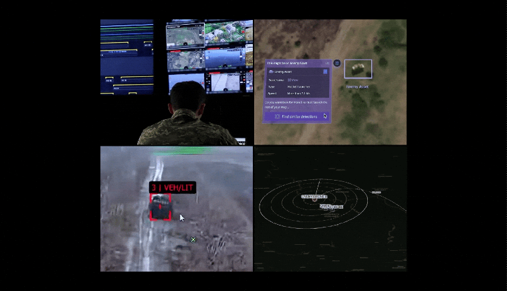
AI is transforming warfare by expanding target capacity, but it introduces grave risks of misidentification, ethical dilemmas, and accountability gaps.| Alison Killing, @johnthornhillft, @charles_clover, @digitalcampbell & @fabrice_deprez write via @FT
https://t.co/D73Cl6LQns
Britain’s power problem
The UK’s hard and soft power have hit post-war lows, hit by budget constraints, Brexit and Trump’s bid to remake the global order
My Big Read in the @FT with @charles_clover
https://t.co/jfHFA19XmT
@spiceykam I’m a reporter for the Financial Times. Would you have a moment to chat? just curious about something you posted on moneysavingexpert. I’m [email protected]
FLASHBACK: 'In April 1975, shortly before Saigon fell, a US Army Colonel told a North Vietnamese Army (NVA) officer in Hanoi, "You know you never beat us on the battlefield." The officer replied, "That may be so, but it is also irrelevant". This dialogue highlighted the strategic, not tactical, failure of the US in Vietnam.'
#IranWar
A little line in Politico that says a lot about how quickly the world has changed
“Current advice from [European] Council is that no electronics are taken to the US or China,” said a senior EU official. “When this isn't possible, electronics that are brought back must be wiped”
@lrozen 3 weeks in and they're already pivoting to Robert McNamera-esque metrics for the same reason McNamera did - achieving any strategic goals is actually impossible
@chrisschmitz hi I write for the FT, wanted to interview you about radar if you have time? Can you email me [email protected] or follow and I’ll dm you?
The President of the United States might refuse to meet with the Chinese unless they demonstrate and deploy more expeditionary naval power is … definitely a new one.
If the war ended tonight, its lessons remain unclear. It could normalize intermittent strikes, push Iran to accelerate a nuclear breakout, leave Israel to continue the campaign alone, or shift the conflict toward Lebanon. The end state will still be undefined.
The campaign was launched without a real exit strategy, resting on a fundamentally flawed assumption that Iran would collapse under pressure. That assumption was wrong.
The deeper problem now is that there is no clear mechanism allowing off-ramp. Unless the administration decides to stop the escalation, and even that doesn’t guarantee Iran will do the same—both sides are trapped in a strategic limbo that increasingly resembles a war of attrition.
US and Israel rushed to eliminate Khamenei, but the operation itself moved forward without a coherent strategy, built on the mistaken belief that the regime would simply capitulate.
One Ukrainian official described the discussions with the Pentagon as a “sensitive” topic. “However, it is obvious that there is a surge in interest in the Ukrainian drone interceptors, which can intercept the Shahed for a very low cost.” A local industry figure said any sales of Ukrainian systems, even those made outside the country, would have to be in co-ordination with Kyiv.
w/ @charles_clover
https://t.co/ix6HWfmfPS
Iran’s Strategic Objective: Internal Stability, External Cost Imposition
Over the past 24 hours, it has become increasingly clear that Iran’s leadership is prioritizing one objective above all else: projecting internal stability while imposing costs externally.
Domestically, the regime has moved quickly to signal continuity. The appointment of an interim governing framework, coordinated messaging by senior officials in Iranian media, and visible deployment of Basij and IRGC forces across major urban centers all serve a single purpose — deterrence of mass mobilization. The regime understands that its most acute vulnerability is internal fragmentation, not battlefield losses.
At the same time, Iran continues its military response against Israel in a calibrated manner. The effort appears sustained but more qualitative than quantitative — focused on maintaining pressure without exhausting strategic reserves. Parallel actions targeting Gulf states indicate an effort to regionalize the cost structure of the conflict.
The potential entry — or deeper engagement — of Hezbollah and possibly the Houthis would significantly expand escalation boundaries. Such involvement would both increase pressure for de-escalation internationally and raise the economic and security costs for Israel and Gulf states. This aligns with Tehran’s longstanding doctrine of expanding the geographic scope of confrontation in order to dilute direct pressure on the Iranian homeland.
Public messaging from Tehran continues to reject negotiations at this stage. The regime appears to be betting less on battlefield reversal and more on political fatigue — particularly within the United States and among Gulf partners. The underlying assumption seems to be that external actors will seek to cap the conflict before it evolves into an existential threat to regime survival.
At present, there are no clear signs of systemic collapse inside Iran. Decision-making structures remain functional. Security institutions are operating cohesively. It is also worth recalling a structural reality: revolutions are rarely engineered from the outside, particularly in the absence of a cohesive and organized internal opposition. There is little evidence that such an opposition has suddenly materialized.
Iran’s strategy, therefore, appears straightforward: stabilize internally, escalate selectively, raise the economic and geopolitical price of continued confrontation, and wait for external pressure to shift the calculus in Washington and among regional actors.
If that assessment proves correct, Israel and the United States could face a difficult outcome — a costly campaign that ends short of its strategic objectives on nuclear rollback, missile constraints, or regime transformation.
The conflict is increasingly less about immediate military exchanges and more about endurance, political cohesion, and escalation management.
Therefore, there is a growing need to clarify the End State (what is winning means?)— Publicly or Privately since Operational success cannot substitute for strategic clarity. If regime change is the implicit objective, policymakers must assess whether available tools realistically support that outcome. If the true objective is deterrence restoration or capability degradation, messaging and escalation management should reflect that narrower scope. Ambiguity may preserve flexibility, but prolonged ambiguity increases escalation risk. In parallel it is essential to prevent a War of Attrition while Protecting Coalition Cohesion — Especially with Gulf Partners.
#IsraelIranConflict