As we’re working @GruyereSpace to enhance our guidance algorithms, I’m testing a trajectory generation algorithm based on constrained optimization on Epsilon 🚀
Ascent is accomplished w/ the old guidance and the new one activates to get back to the pad.
Onboard footage below ⬇️
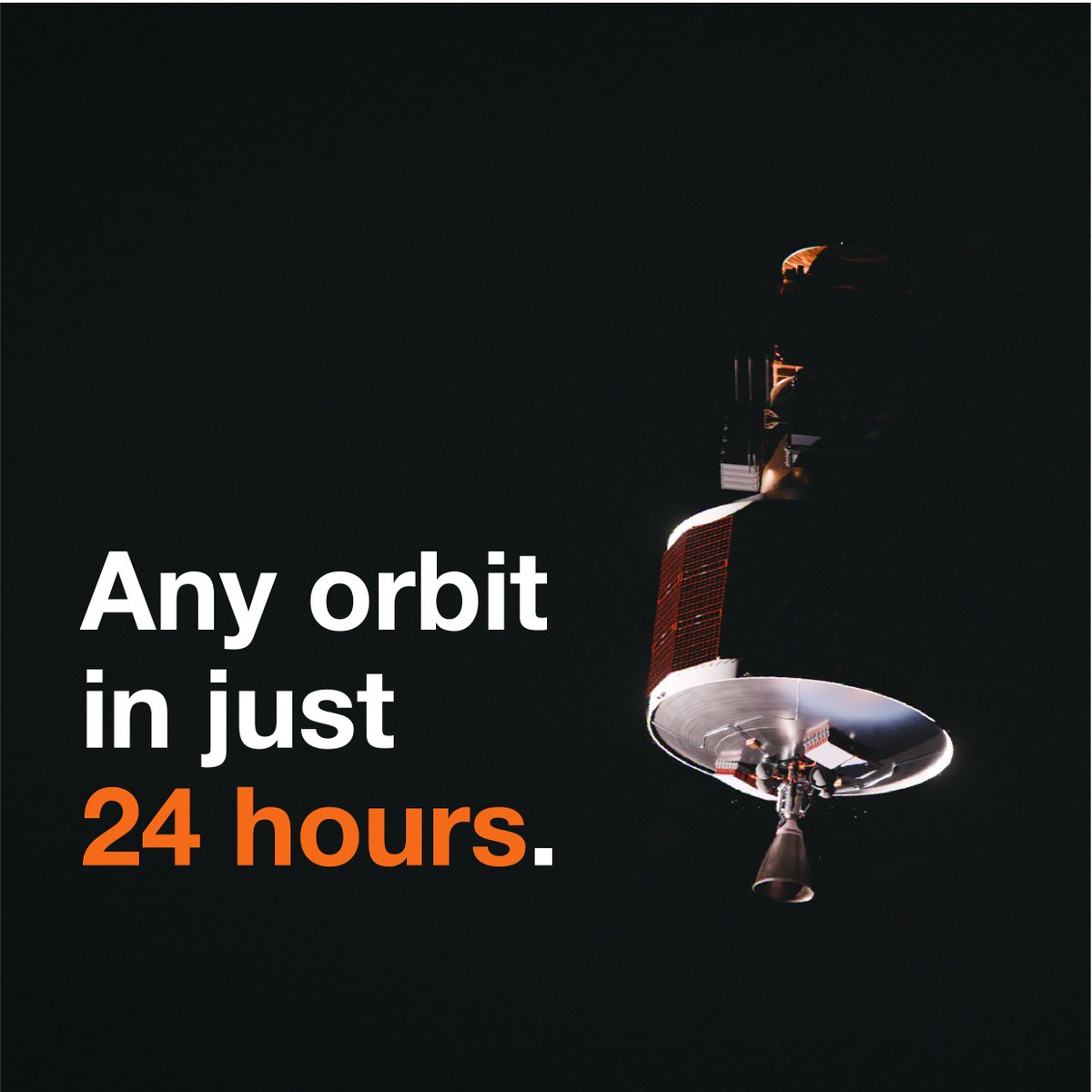
We just raised $40M to fix space logistics 🚀 Getting satellites to final orbit still takes 6–12 months. We're building orbital transfer vehicles to do it in under24h. We are building logistics backbone of the space economy. More in @Bloomberg@Siftedeu 👇
New test site ! 🇨🇭🏔️ Located in the heart of the Swiss Alps, we’ll soon begin testing LYOBA’s main engine at the former Chavalon thermal power plant in Valais. First campaigns start this summer. More updates soon as we bring the first stand online.
@lysandrou_ Great! I was curious if you were going to throw H-infinity at it! Yeah LQRs and PIDs are great, and whatever works! Just don’t be as lazy as we initially were at Gruyère Space Program and neglect sloshing in when tuning the controllers 😅 that doesn’t work too well 😂
@mcrs987 Do you know how the buoy are held in place? Are they just anchored to the bottom? If that’s the case, is it enough to keep them in the place accurately enough? Like I’m thinking about how with a few km of chain, it might drift by hundreds of meter on the surface with currents 🤔
@brickmack@okthisisnagy@SpaceConcordia It’s 9x Rutherford on the first stage though, so just shy of 200kN. I think 40kN might not be quite enough to get to orbit, at least for the first stage
We successfully tested our #H2O2 catalyst assembly! We validated both decomposition performance and our small scale test stand. Plume is mostly water vapor and oxygen, so barely visible, but we got the expected chamber pressure and temperature! Next up: testing other variants! 🔥
We’re developing Europe’s first heavy-class #kickstage: POYA 🚀
Delivering 4+ tons of #payload to GEO and beyond, we cut commissioning time from over 6 months to just 24 hours and extend mission lifespans by saving #satellite propellant. 🛰️
Stay tuned to learn more about POYA!
@DjJex@TechSpatiales Généralement plus de 300 bars, ça peut aller jusqu’à 500-700 bars si ce sont des sphères (ceux en questions sont des cylindres allongés, donc peut-être un peu moins).
@BJoshyy@TroastedHam If I remember correctly, the dry mass is around 275T and the thrust of the 13 Raptor engines is 29MN, so the max G it can physically experience during the landing burn is 10-11Gs (probably closer to 9-10Gs when you account for the landing and residual propellants).
@mcrs987 It's rolling quite a bit when the webcast switches to the closeup. I think it's unlikely to "just" be a controller tuning issue, these kind of things rarely happen thanks to simulation (but some unaccounted phenomena in the simulation like sloshing can also cause this behavior).