Between Trump and Tehran: Why #Oman's neutrality is under strain
Many thanks to @CharlieCHoyle and his colleagues at @The_NewArab for publishing my latest article, featuring quotes from @abaabood, Hamed S. Al Ghaithi, and Joseph A. Kéchichian.
https://t.co/P3wlBO81Kc
When the latest ceasefire in Lebanon was announced in mid-April, some hoped that - unlike all others before it - this time it might finally lead to peace.
But within hours, Israel and Iran-backed Hezbollah resumed trading attacks, and any hopes of a swift truce evaporated. Over a month later, the ceasefire exists in name only, and Lebanon’s “seat at the table” looks increasingly shaky.
@AlexMAstley reports from Beirut 🔗 link in replies
While recent RSF defections expose the internal turmoil within the group, SAF's decision to grant them amnesty and reward them also carries risks.
My latest on #Sudan for @The_NewArab
https://t.co/022vyRFIvm
Analysis: As US-Iran diplomacy hangs in the balance, Lebanon risks becoming collateral damage in a bargain shaped by outside powers
@AlexMAstley's latest from Beirut for @The_NewArab, with insights from @BeirutCalling@isalamey@paul_salem
https://t.co/rqIi3kXRe1
Palestine was in no way a desert, nor were its people primitive nomads. While these illusions were propagated to make the Zionist project more palatable to Jews in Europe and beyond, Zionist thinkers were well aware that there was an indigenous population.
https://t.co/ehx2isqgmL
Israeli forces have seized Beaufort Castle - also known as Qalaat al-Chqeef - in southern Lebanon, making the deepest ground incursion into the country in 26 years as troops encircled the city of Nabatieh.
Israel also issued more than 10 forced displacement orders in the last 24 hours, including one this morning where they demanded all residents south of the Zahrani River to “evacuate” ahead of further Israeli strikes across the region.
Taybeh, the last remaining all-Christian village in the West Bank, dating to the 5th century, is fighting for its survival amid growing settler violence and expanding settlements
@jess_buxbaum's in-depth report from Taybeh for @The_NewArab
https://t.co/kkFgjZJTmZ
Closer ties between Israel and Somaliland are fuelling fears that the Horn of Africa could be drawn deeper into a Red Sea power struggle
@FaisalAHAli's dispatch from Mogadishu for @The_NewArab's Analysis Desk
https://t.co/ERN7nmUniH
I told @The_NewArab that “Trump’s obsession with Obama, his jealousy and relentless Obama-bashing has led him to depict JCPOA as the worst deal ever, whereas today he’s far from having obtained even 10 % of the concessions that Obama had obtained.” https://t.co/9pVkFWJTO3
“Obviously we can criticise the JCPOA because there was no “linkage” to the proxies or the ballistic missiles dossiers,” Bitar added.
“But when it came to the nuclear file, it was rock solid, and even members of the Israeli military and security establishment acknowledged that it prevented Iran from getting nuclear weapons. So, this entire war…comes from the original sin: Trump’s unilateral decision to tear up the JCPOA in 2018.”
(…)
Understanding the current crisis requires taking stock of the first Trump administration’s decision to unilaterally pull the US out of the JCPOA in May 2018.
That reckless move fundamentally reshaped the trajectory of relations between Washington and Tehran while dismantling a framework that severely limited and reversed Tehran’s activities in exchange for sanctions relief.
“The truth is that Trump’s obsession with Barack Obama - his jealousy, his relentless need to engage in Obama-bashing - has led him to depict JCPOA as the worst deal ever, whereas today he’s far from having obtained even ten percent of the concessions that Obama had obtained in 2015,” explained Dr Karim Emile Bitar, a lecturer in Middle East Studies at Sciences Po Paris, in an interview with The New Arab.
Under the JCPOA, Iran dramatically reduced its enriched uranium stockpile, capped enrichment levels, reduced the number of centrifuges, and accepted intrusive international inspections, noted Dr Bitar, who added that even many Israeli security officials privately acknowledged that such restrictions had delayed Iran’s path toward a nuclear weapon.
“So far, I do not see any major Iranian concessions on the nuclear dossier.”
(…)
Israel is unlikely to scale back military operationsagainst Hezbollah and may instead intensify pressure to preserve deterrence and constrain Iran’s influence after any agreement.
“If Washington and Tehran reach a diplomatic agreement, [the Israelis] will not take it gladly. They will first try to torpedo the agreement, and then, if Trump insists on signing a deal with the Iranians, the Israelis will try to make sure that it does not include Lebanon. They have already managed to get [Secretary of State] Marco Rubio to say that Israel will reserve the right to defend itself, the usual formula,” said Dr Bitar.
“But we all know that Israel has an elastic and extraordinarily extensive definition of this right to defend itself. So, Lebanon could be the key victim because it’s unlikely that we will see a ceasefire in Lebanon, and it’s even more unlikely that Israel will put an end to this new invasion and this occupation that is growing day after day, and they are bombing way beyond the so-called yellow zone,” he added.”
By @GiorgioCafiero in @The_NewArab
Is Iran trying to turn its de facto grip on the Strait of Hormuz into permanent control via a toll system?
Why a standoff over the waterway could scupper talks
@DarioSabaghi for @The_NewArab’s Analysis Desk, w/ @andreas_krieg@MahmoudianArman@ImRalby
https://t.co/gbYPeLVE8P
Have you noticed how the Israeli embassy in Tbilisi reacts to Georgia’s every single basic diplomacy act towards Iran? This is not accidental. I have written how Israel intervenes in Georgia’s symbolic domain of sovereignty in foreign policy.
https://t.co/mFOMqdvgWI
The Horn of Africa is entering dangerous territory as Ethiopia and Eritrea's domestic conflicts risk becoming entangled in Sudan's war
@matnashed's latest for @The_NewArab's Analysis Desk, with insights from @KholoodKhair@MikeWoldemariam@alanboswell
https://t.co/OiYDotknFs
Despite progress in the US-Iran negotiations, it remains unclear how control of the Strait of Hormuz will be resolved.
My latest for @The_NewArab, with comments from @andreas_krieg, @ImRalby, and @MahmoudianArman.
Edited by @CharlieCHoyle.
https://t.co/xeoxvJ7vNT
Striking view from US officials on the growing tension between US and Israel (per @John_Hudson): “Israel is not capable of fighting and winning wars on its own, but nobody actually knows this, because they never see the back end.”
🇮🇶 🇹🇷 🇰🇷 New analysis for @The_NewArab : how the recent Iran war is reshaping Iraq’s approach to air defence and military procurement.
The piece examines Baghdad’s attempt to rebuild a layered air defence architecture combining South Korean KM-SAM II systems with Turkish counter-drone platforms — and what this says about the growing importance of drones, saturation warfare, and cost-effective interception in modern conflicts.
Many thanks to @CharlieCHoyle for the editing and revision, and to @pauliddon and @FreddyKhoueiry for their valuable insights throughout the process.
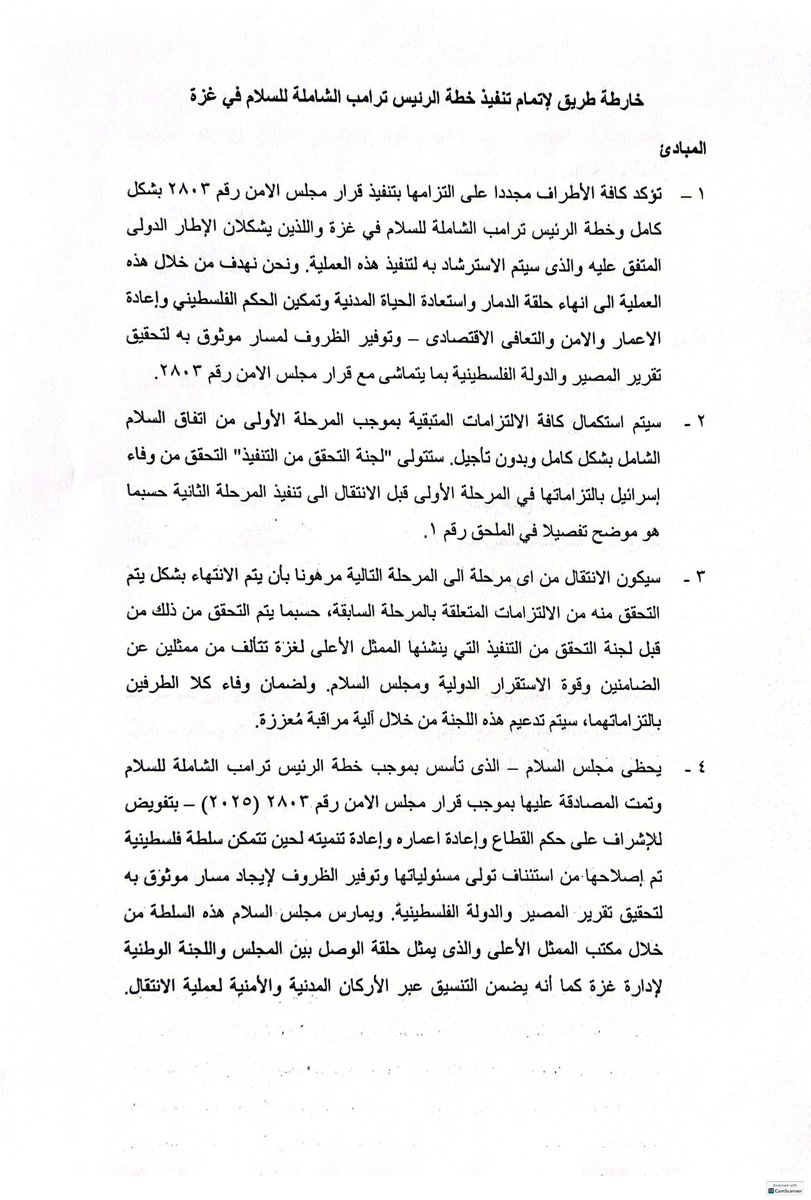
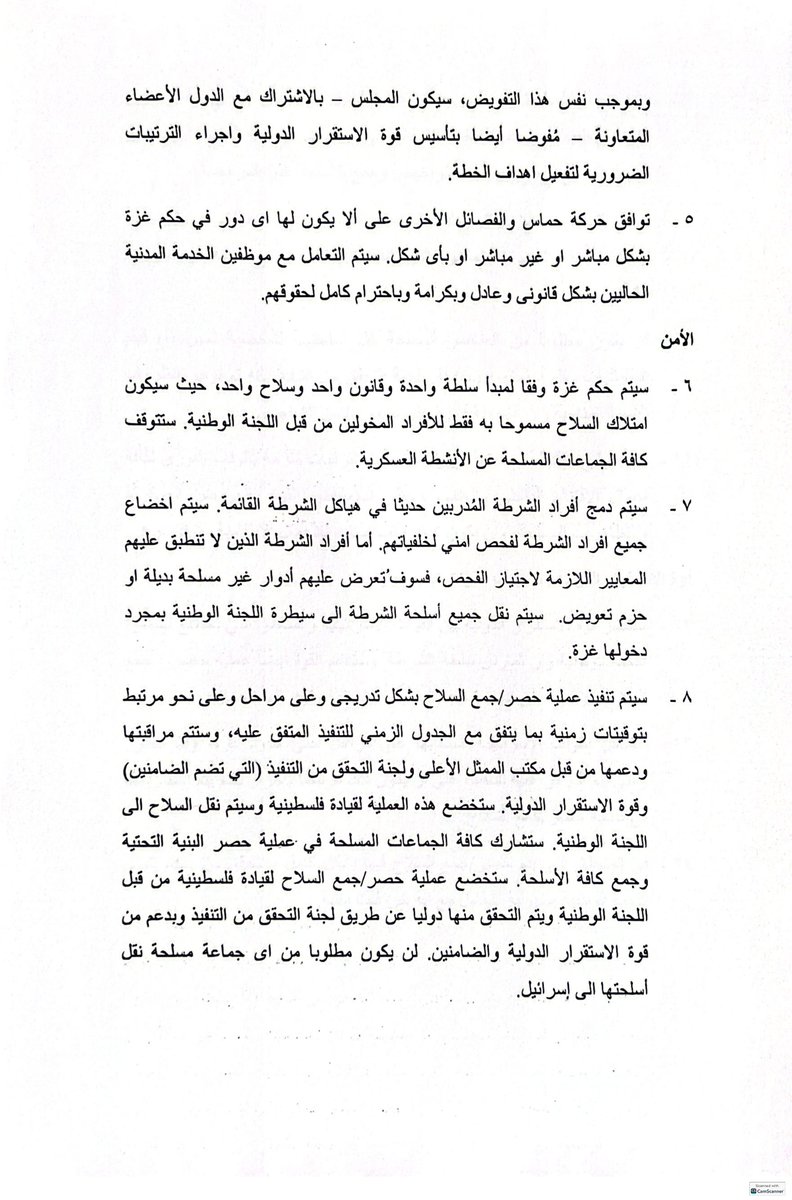
🚨Exclusive: I'm revealing the full text of Mladenov's Gaza plan
Palestinians are asked to hand over all "heavy weapons" including rifles & Ak-47s, destroy all tunnels & militant infrastructure within 90 days BEFORE any Israeli withdrawal or reconstruction, & trust that Israel would fulfil its side of the bargain AFTER Gaza becomes fully defenceless
Israel never fulfilled any of its obligations under phase 1 of that deal, so why would anyone trust they'd live up to phase 2, especially once the weapons (Gaza's only leverage) are gone?!?
From day 91-250, an international verification commission would go door to door to ensure Gaza is fully weaponless, Israel would only withdraw from & allow reconstruction in areas that have been fully verified to be 100% weaponless.
During that period, Palestinian factions & individuals would hand over all remaining weapons, including personal ones, except for personal firearms that would be "licensed" by NCAG (which Mladenov is in charge of).
Israel gets to keep 18% of Gaza (the enclave's most fertile agricultural lands) indefinitely, even after all weapons & militias in Gaza are gone
Election campaign ad in Israel: "we turned Gaza back to the stone age," followed by a counter of how many people the candidate murdered.
This ad is from 2019, bragging about the destruction of Gaza 9 years before October 7.
The candidate is opposition leader Benny Gantz.