Excited to share our new preprint in collaboration with Paul Cohen's lab at Rockefeller University and Ken Loh's lab at Yale University! We introduce TurboID-TMT for cell type-specific proximity labeling to profile organ secretomes and ER-resident proteomes in vivo.
Excited to share our new preprint in collaboration with Paul Cohen's lab at Rockefeller University and Ken Loh's lab at Yale University! We introduce TurboID-TMT for cell type-specific proximity labeling to profile organ secretomes and ER-resident proteomes in vivo.
I’m very excited to share that our paper describing the cellular origin of pathological angiogenesis in EAE/MS and the role of VEGF-A signaling is now available online @NatureNeuro
https://t.co/N3he6prPM2
Very excited to share our new @biorxivpreprint! Big thanks to all the co-authors who contributed to this story on Covalent targeting of splicing in T cells! @Sculpturatus, Hiro, Nathalie, @chardw98 @teezhangg @xzhang85 Read more below!
Did you know that if your faucet leaks just two drops a minute, you can lose over a gallon of water a week? 🤔
Now imagine if those two drops are two students and our faucet is one of the ~1,500 US institutions that awards PhDs. 🚱
1/ 🧵
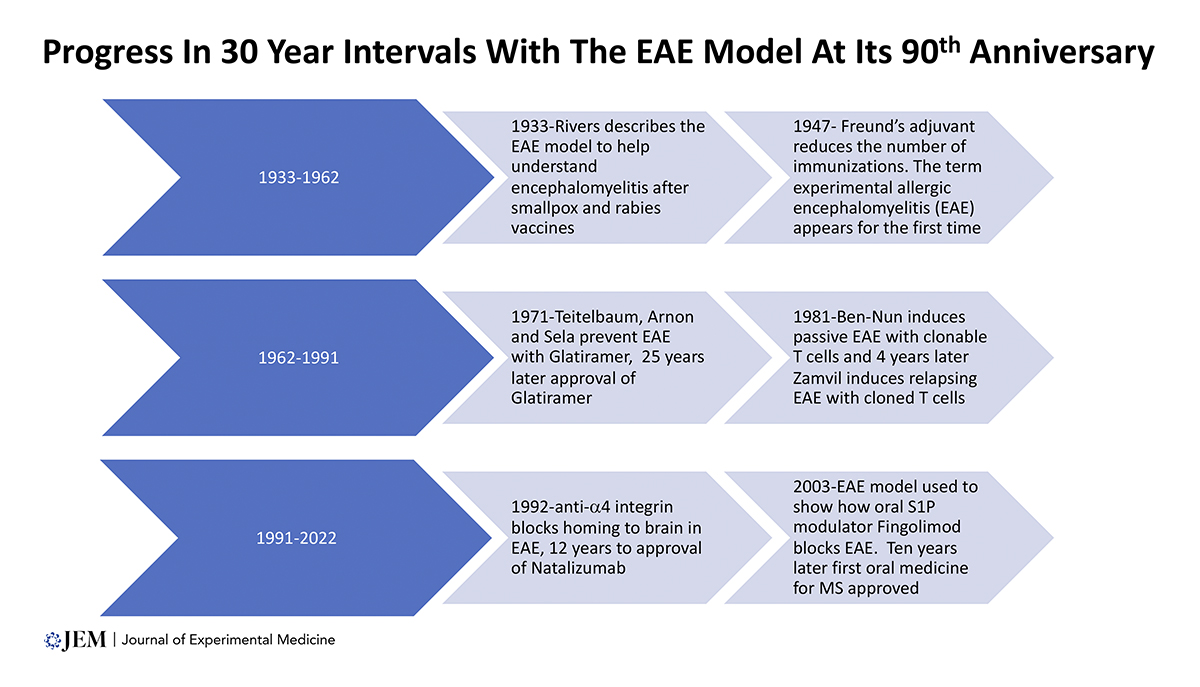
Experimental encephalomyelitis (#EAE) is 90! 🥳 In honour of this milestone Laurence Steinman, Roberto Patarca, and William Haseltine (@WmHaseltine) have covered the history, and future, of this valuable model 👉 https://t.co/5sfMOpZq3R
📣A #MERSCOPE Platform preprint about bacteria infection! @Columbia researchers used #MERSCOPE to study the impact of Group A Streptococcus (GAS) infection during encephalitis. #MERFISH enabled them to see changes in #GeneExpression.
Read it https://t.co/ZN47DcBLvE
#BrainWeek
@JiangHe_PhD Thank you @JiangHe_PhD! The fabulous @TravisFaust2 and @Viole_DL generated the MERFISH data showing that “Streptococcus-responsive” microglia are enriched in the outer layer of the olfactory bulb (where they are closest to infiltrating T cells)!
My first (nonsensical) thought, when @DAgalliu sent me this link, was that somehow I’d been scooped!? 🫣🤪 So very proud of this paper and grateful to the incredible co-authors who helped make it happen
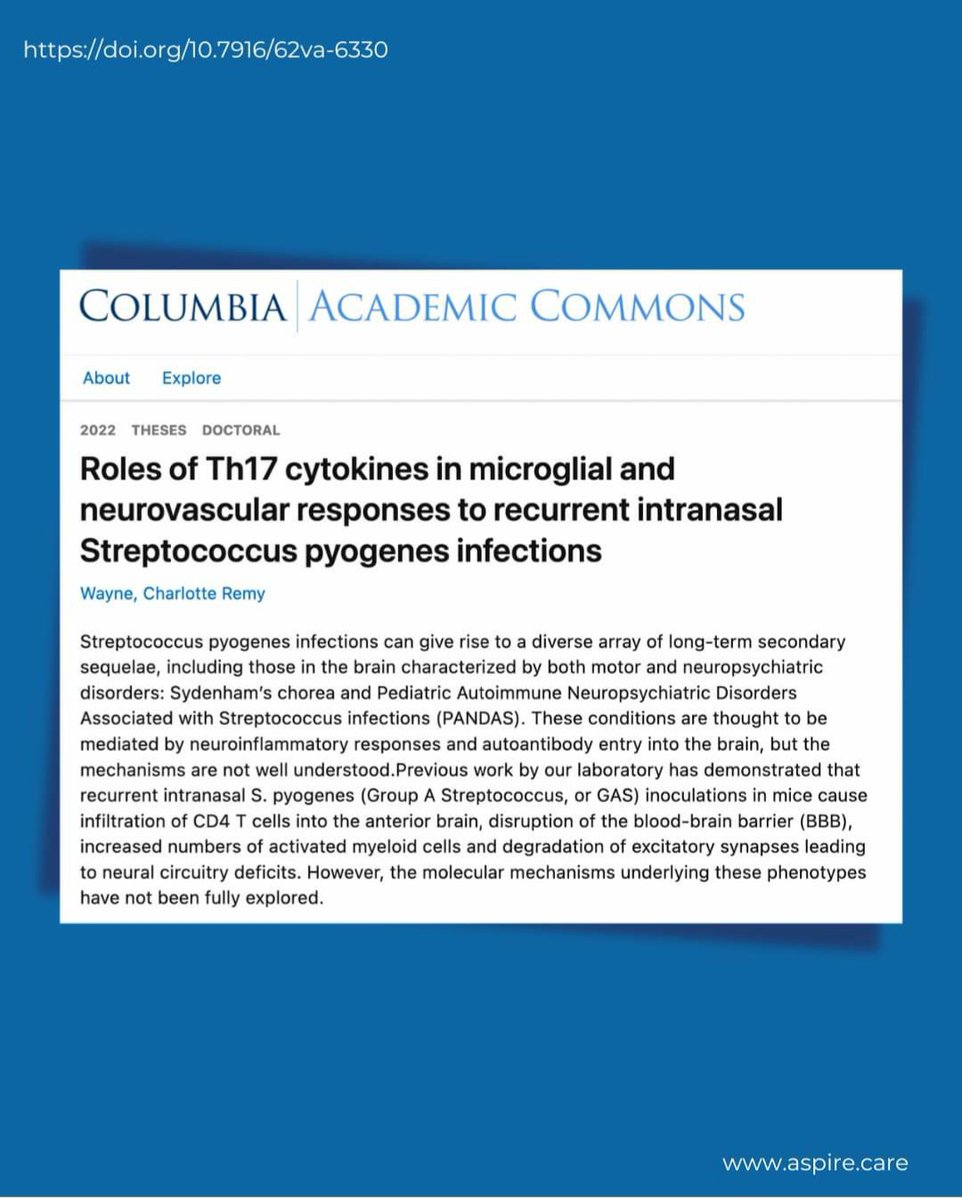
Finally the beautiful work of @CharlotteRWayne is online “Distinct Th17 effector cytokines differentially promote microglial and blood-brain barrier inflammatory responses during post-infectious encephalitis” | #pandas#ocd#encephalitis https://t.co/iGeM7deLry
I don’t think that’s the case only in the aging brain. My former student, the amazing @charlotterwayne has found that microglia are spatially activated in proximity to T cells in post-infectious autoinflammatory encephalitis. #PANDAS
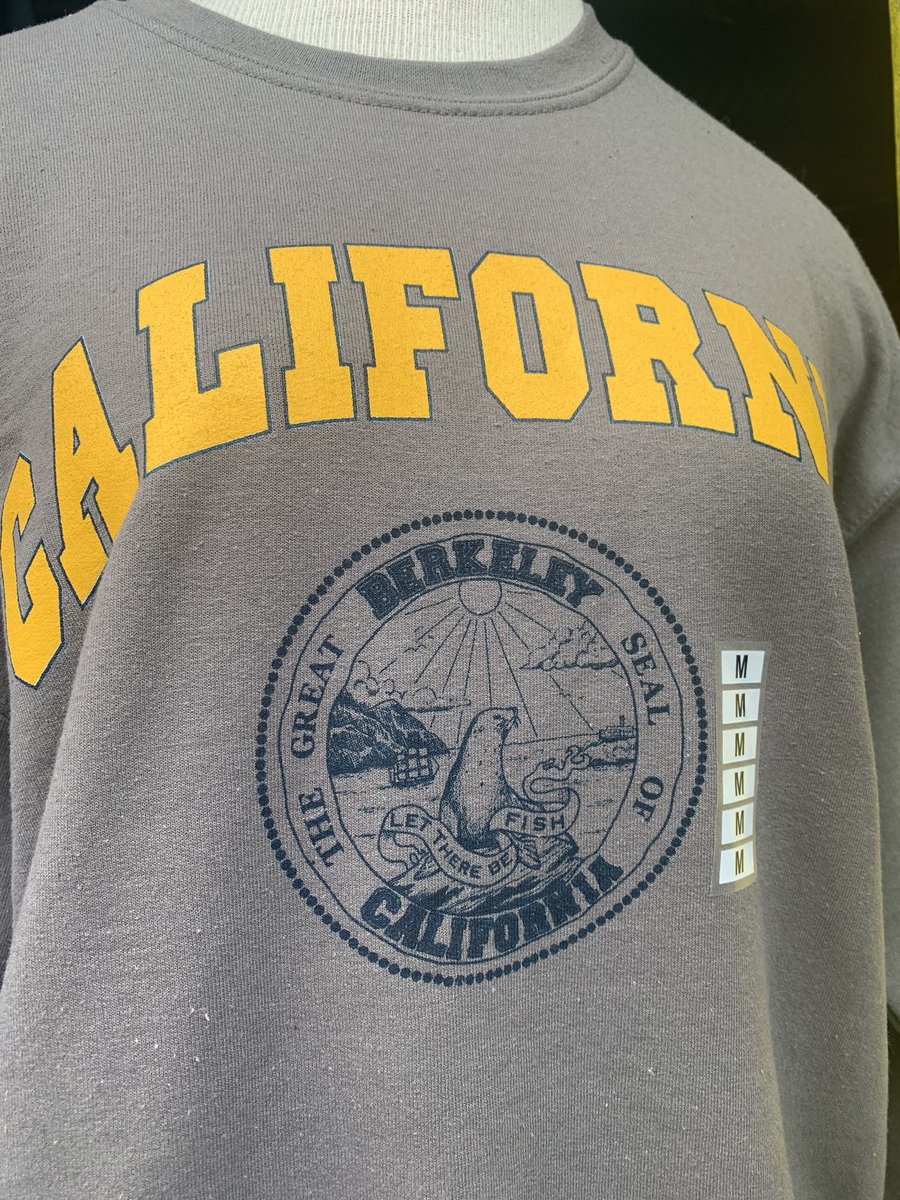
Absolutely in love with this entirely fictitious Great Seal of Berkeley, found on a sweater at Bear Basics. I move that we use this to replace the actual seal of the city, which is somehow worse 🦭🦭
🚨Data Release Alert!🚨
https://t.co/LiL8kKe0Ug
I'm happy to announce in coordination with @thammondglia the creation and release of "pseudo"-objects from his seminal paper on microglia scRNA-seq (https://t.co/Gi5PMl8e9U).
A short 🧵👇
1/n
#OpenScience#scRNAseq#microglia
@samuel_marsh@thammondglia This is fantastic and the kind of actual data availability that should be standard by now! Raw data on GEO isn’t enough to be helpful in the vast majority of cases.
Congratulations @Rishi_CUIMC! Your paper has major implications not only for NVU maturation in CNS development, but also for cSVDs characterized by loss of mural cells and vBM proteins. Wnt/b-catenin plays a critical role in mural cells for secretion and deposition of LAMA2.