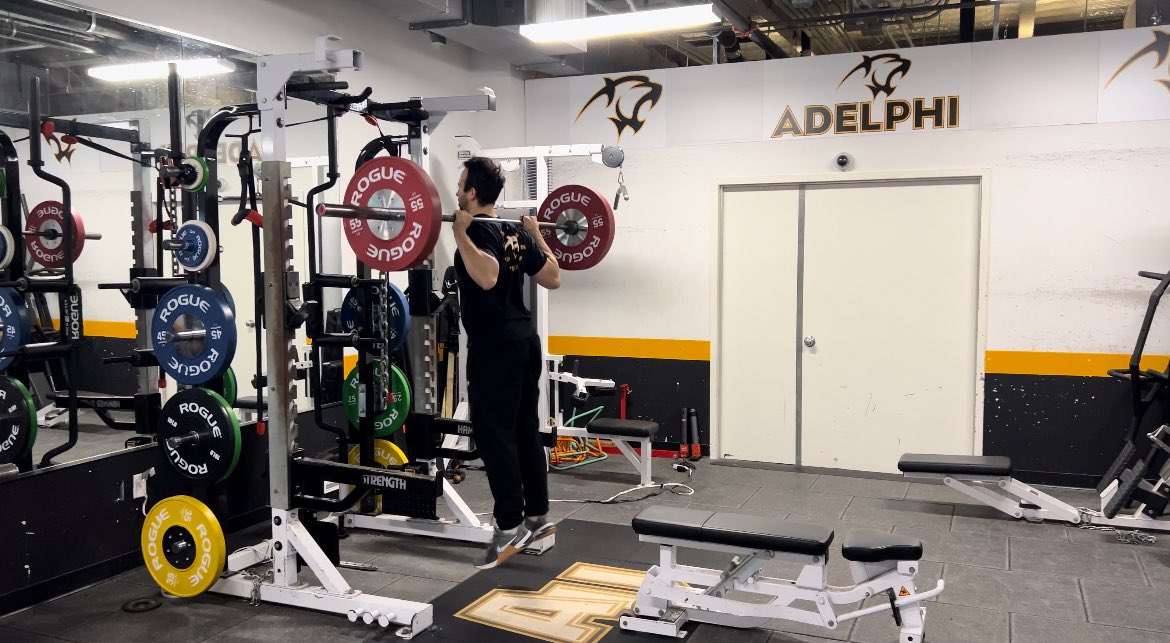
🚨 Participants wanted for my MSc dissertation at Sheffield Hallam University!
Looking for:
✅ 18-35
✅ 1+ years lifting
✅ Back squat ≥1.5× BW (male) or ≥1.3× BW (female)
DM me if you’re interested!
#SportScience#StrengthAndConditioning#MScResearch
Top Ten Drills for Sprinters
Strike Drill
Modified Drum
Deon’s or SLB from a run
Prancing B Skip
Classic Fast Leg
Basic High Knee
Floating Sprints
Hammer Bursts
Ghost Shift (no wickets)
Assisted Slingshots
All of this is USATF 2-3 stuff from late 1990s and is the cream.
Do you need to jump far to run fast?
Or
Run fast to jump far?
When I was a dumber coach, I told this kid he needed to broad jump >3.30m to be an elite sprinter.
He couldn’t get past 3.10m after 12 weeks of using it extensively across our training.
6weeks later he ran 9.96 over the 100m and it made me think twice about indicators of performance.
6 years later …
We haven’t been broad jumping at all this year but today reece decides to pop out a few jumps for novelty sake and POW jumps 3.30m, in his first set, then shrugs his shoulders and moves on.
Bonderchuck has beautiful bible “Transfer of training” and I honestly had this by my bed for a number of years. It carves a clear line in the sand between average / good / and great indicators of performance and I used to live by it.
Yet we have learnt and witnessed training partners and competitors jump further than 3.45m and not break 10.15 👀… so does it even matter?
Do you need to jump far to run fast?
Or
Run fast to jump far?
@coachrgrubbs@McInnesWatson@VALDPerformance@jb_morin@SportsmithHQ@DanielBove @reeceprescod
New FREE paper in which we compare #hamstring fascicle behavior and muscle forces between the Nordic hamstring exercise, Roman chair and deadlift
https://t.co/XAz6cniwEr
More info, images & videos in thread ⬇️
@kenneth_meijer@BeBiomech @SamVanRossom @NMS_UM @HumanMoveSci_UM
People want to find their passion.
But you don’t find it, you create it.
And you create by getting good at something.
And to get good at stuff, you start by doing something you suck at.
Then, you get good.
Then, you like it.
Then, people ask you how you found your passion.
Answer: By starting when you sucked and not giving up.
DON’T TRUST THE PROCESS!
I haven’t worked with a 100m sprinter in over three years, but now @reeceprescod has dragged me out of retirement so I am back on track.
He has come home full of wisdom after experiencing various training systems around the world, maturing physically , mentally and professionally as an athlete.
Something that has been centre of our discussions has been the strange but commonly used phrase….
“Trust the process”. 🤮
Coaches repeat this all the time but ignore that trust is EARNT not just given.
The audacious thought that athletes should just follow a program and “believe” is ridiculous. In fact many coaches are offended by athletes questioning the process (fragile ego).
When you dig down, many coaches don’t really trust their own process. They HOPE performance will improve but couldn’t bank on it. Maybe that’s why their athletes doubts can fracture their self esteem.
If you can’t trust your own process, why should your athlete?
If you got this far please answer this… how do you build trust with your athletes?
Joined LinkedIn recently, hoping to start developing professional relationships and network through it. #coaching#performance#performancesport#S&C https://t.co/CVaIZIOrLc