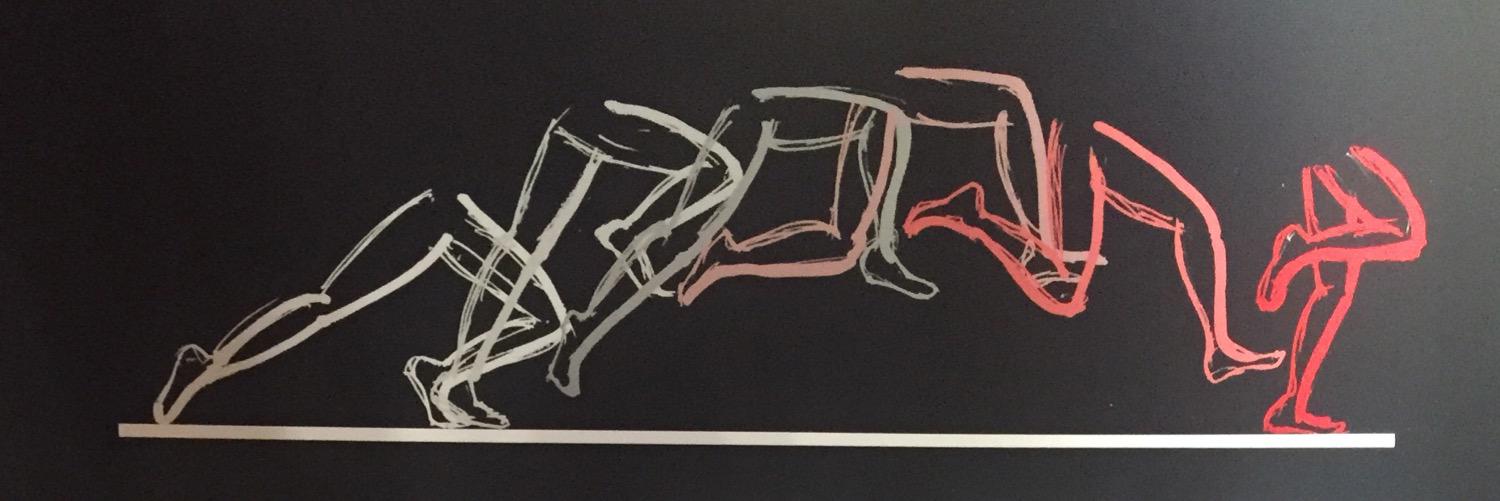
To sprint you must “whip from the hip” or “Attack down from above” like @JohnPryorRugby says.
When you “attack” you increase negative foot speed or “grab velocity” @spikesonly
Grab velocity reduces ground time , which is critical to running faster.
@KenClarkSpeed@Dr_Weyand
Some interesting comments from Arne Slot yesterday on how Liverpool are managing the load of their younger players.
According to the Howden Injury Index, under 21 players have consistently recorded the most severe injuries in recent seasons - meaning they spend more time sidelined per injury than any other age group.
In the Premier League specifically, the average time missed per injury for under 21s has risen by around 187% compared to three years earlier.
The report suggests this is as a result of increased physical demands on players.
With 19 year old Jayden Danns’ issues with stress fractures as a perfect example, Liverpool have adjusted how they’re handling other promising younger players like Rio Ngumoha.
Slot explained that this includes giving Rio two off pitch days per week to help manage his overall load - reducing cumulative demands while still allowing him to adapt and develop physically.
Might explain why we haven’t seen more of the 17 year old, despite how promising he has looked.
Good to see clubs adapting with a more calculated approach to player load, rather than repeating mistakes.
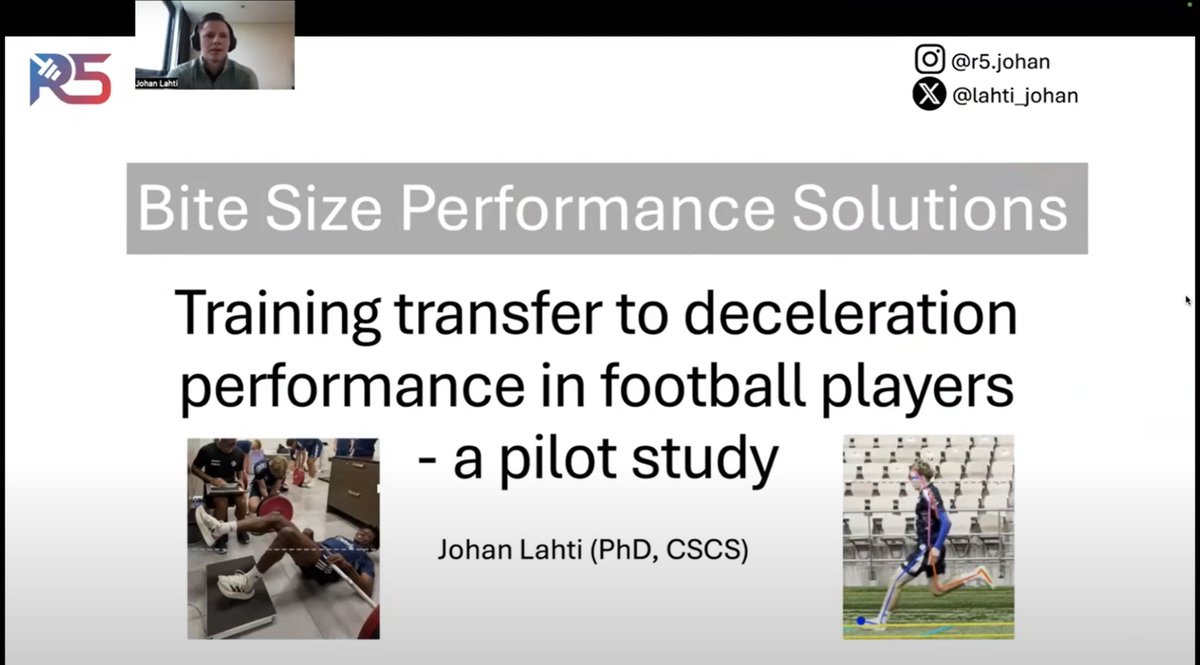
Great presentation from @lahti_johan ...
Training Transfer to Enhanced Deceleration Performance ⚽️
✔️ Hip Extensor Strength
➕
✔️ 10/5 RSI Contact Time
🟰 Greater DECELERATION Ability
Check it out here on @alex_natera Bitesize Solution #16... 👇
https://t.co/VJVA1HlEIc
GPS data is a decision-support tool. Combined with video, especially in a rehab sense, it’s even more effective.
Alone, it’s objective information, without the ‘what’ and the ‘why’ - it doesn’t and shouldn’t replace coaching intuition/skill.
How do kids get better at coaching footballers when the main frame of reference is gps.
So much reference to GPS metrics that rarely paint a rich picture of context.
Even worse it’s used to set “limits” on rehab.
If your rehab is “constrained” by what the player does in a game , you will inevitably under prepare.
After this and after training on the grass.
I think this is part of the players individual session prior to the “green room”. Where they ramp up intensity with explosive accel/decel work.
Take a look deeper into the work they have been doing, I think you will find it relatively impressive for the football world.
I do. 🫡
A balance diet is always a good thing. Time to focus on physical, time to focus on technical, time to focus on tactical and perception action.
Whole part whole learning is a simple way to learn most things.
Balancing physical literacy and confidence in your gas and breaks with calibration in open field reacting and performing under pressure is king.
Those killing cod training in favour of live drills and vice verser seem to not be seeing the forest amongst the trees.
Shit man nothing changes lol.
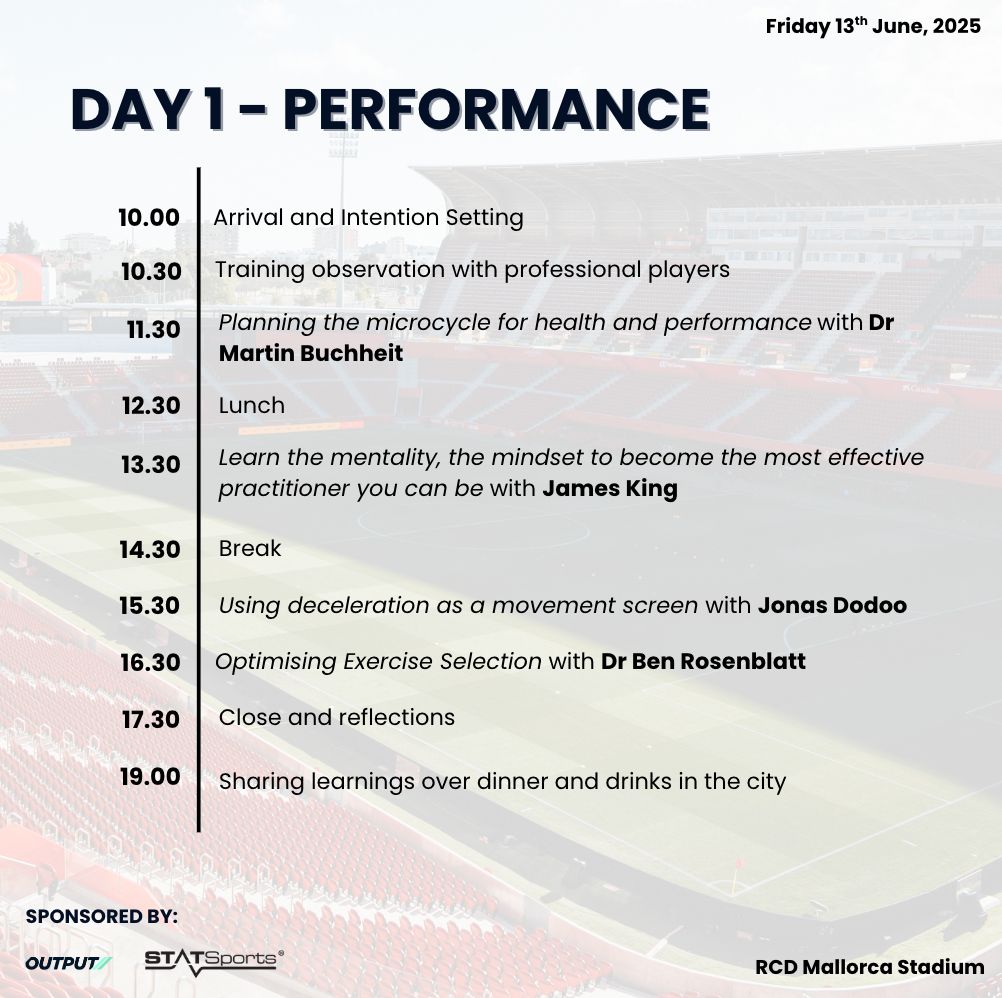
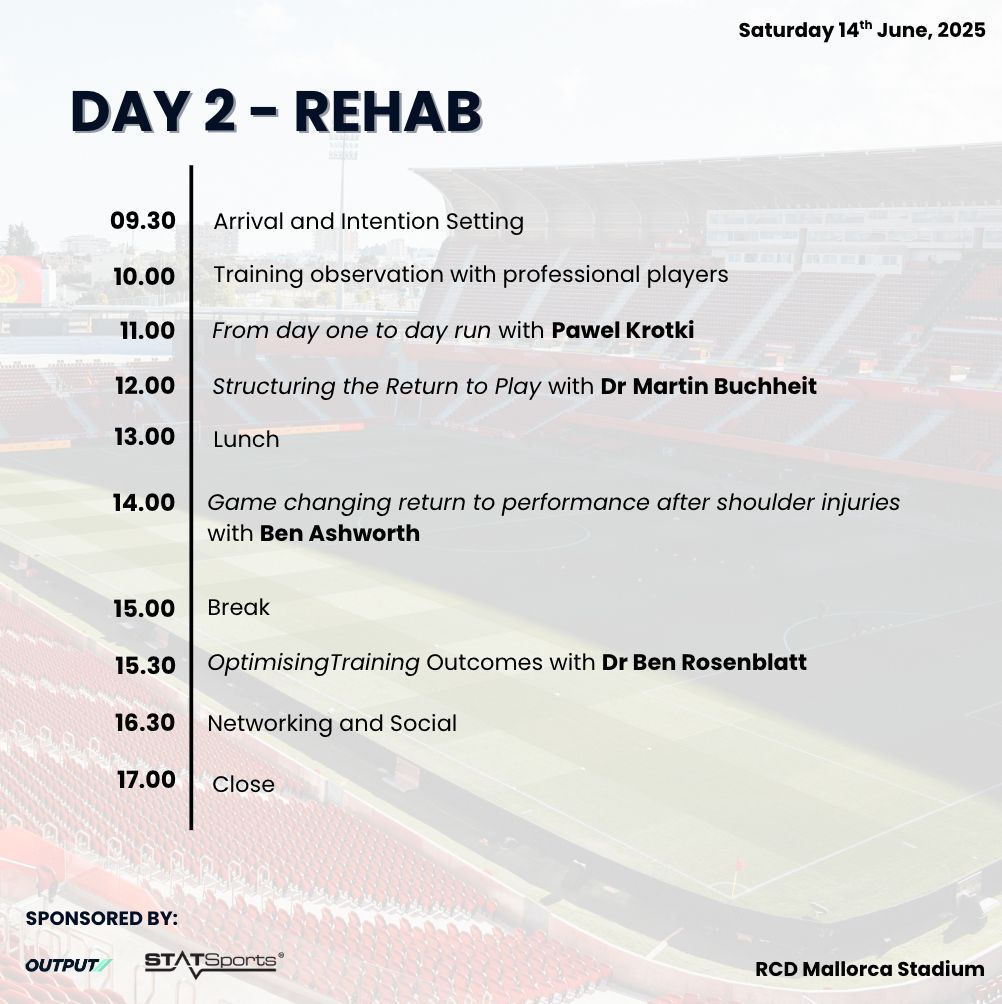
MALLORCA SUMMIT 🗣️ "I've spent the last four, five years measuring, analysing, assessing and intervening with professional players." @EatSleepTrain_@Speed_Works_
Remaining tickets 🎟️
https://t.co/y8oNCU2inN
Sponsored by:
@statsports | @outputsports
MALLORCA SUMMIT 🗣️ Just under a month to go. We have delegates from the UK, Germany, Spain and Israel attending.
Day 1: Performance Focus
Day 2: Rehab Focus
Limited to 30 delegates:
https://t.co/y8oNCU2inN
Sponsored by:
@statsports | @outputsports
@BrendanThompsn Step velocity - can the left leg contribute just as much as the right.
Range between the thighs at toe off and touch down. Is thigh flexion adequate relative to thigh extension.
This season’s been special. 🙌
From CPD workshops around the country 🧳 to deep-dive mentorship calls every week 💻 —
I’ve had the privilege of meeting coaches who want more!
More clarity. 🔍
More challenge. 🧠
More connection. 🤝
Every conversation reminded me: the best coaches don’t just coach — they reflect, evolve, and stay hungry.
SUCCESS LEAVES CLUES. 🧩
That’s what our mentorship is built for. An environment to sharpen your eye 👁️, pressure test your ideas ⚙️, and create confidence in your coaching 🚀.
If you’ve been to a workshop, joined a call, or even just followed from a distance — thank you. 🙏
For those ready for the next step... you know where to find us. 💬
Mentorship changed everything for me.
Not just what I knew -
But how I coached,
How I communicated.
Most coaches don’t need more content
They need feedback and a system they trust.
That’s why we built this.
🚨 Registration is open for 2 weeks.
Head to our Instagram for more..
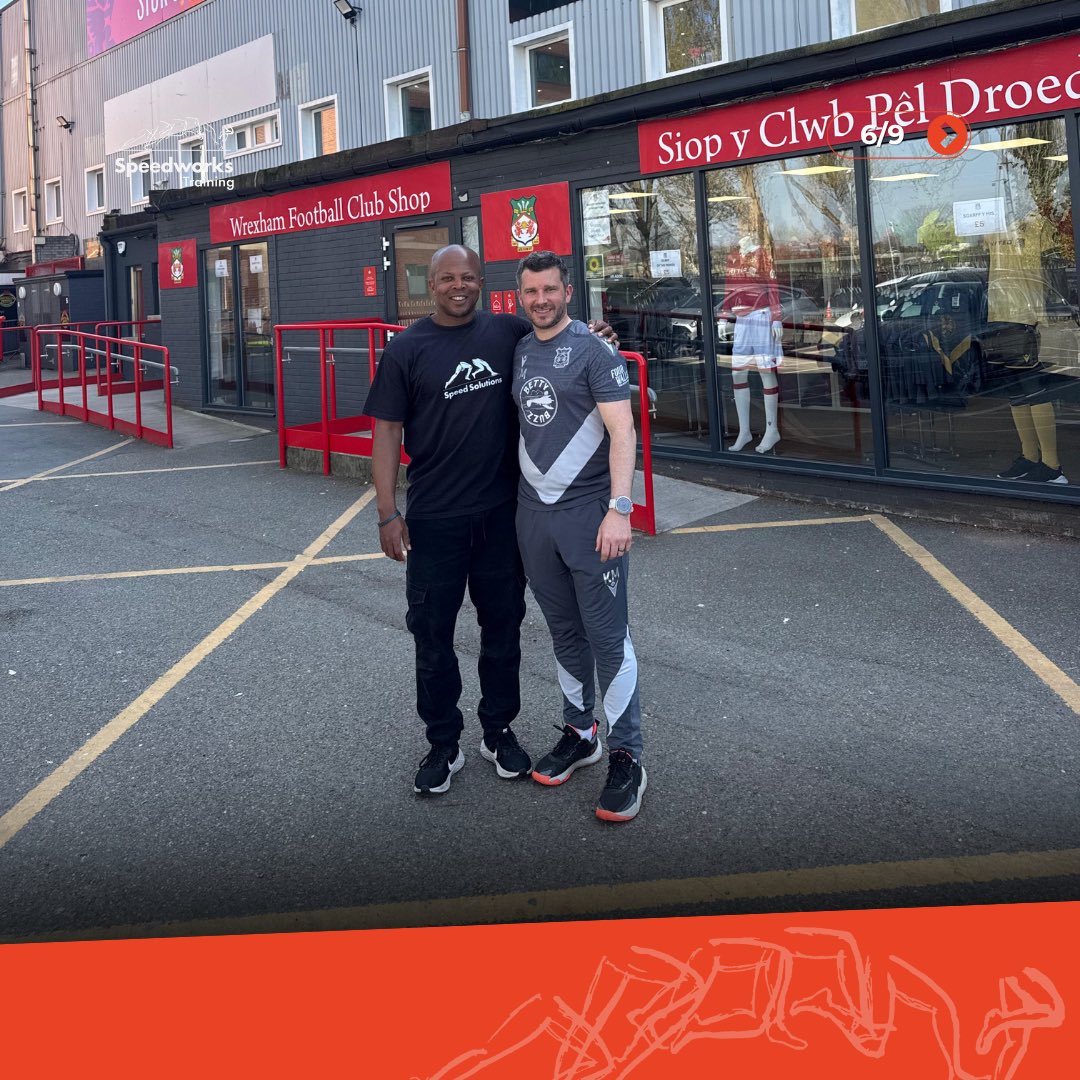
👤 Olympic coach, movement specialist, and mentor to the mentors – breaks down his mission and the reason Speedworks exists.
From elite sprinters to world-class rugby and football teams, Jonas has helped thousands build speed, robustness, and real-world coaching systems. 💪🏾
😏Secrets of deceleration assessment… it’s not about the turn.🙋🏽♂️
For 15 years I have studied great coaches.
A common thread has been that they all use intense actions as movement screens. Thus they have a great coaching eye.
❓Why intense actions?
🙋🏽♂️Analysis of sprinting, stoping , turning , hopping, jumping, cutting, backwards running opens a diagnostic window to assess how athletes create pretension and share load across their system. @PfaffSC has made this clear
🏥Be it for rehab (physios are coaches in my world) or for explosive sports. It’s the same screen, but through different lenses 🧐🤓
👀What are they looking at?
💡The same thing as you.
👀What do they SEE?
🤔Well that’s a different story.
@DHMov has set the scene for what metrics matter and @TomDosSantos91 has re-clarified the shapes that are safe vs effective for deceleration and COD.
↩️When you watch a 180 degree turn, all the focus is on the turn. Turning and being perturbed at speed is the ultimate speed ability for team sports and also a moment of tragedy for knees and hamstrings.
To assess turning efficiency we use @vuemotion to measure the shapes , velocities , decelerations and movement efficiency of team sports players. We create PSR reports to simplify the metrics and make it actionable for our clients across professional leagues.
⚽️🏀🏈🥎🎾🏉
📝The plant step is important but is highly impacted by the previous 1-5 steps.
🦘Just like in the Olympics. A good take off in the long jump is the result of the preceding 4-5 “steering steps”. This applies to any jumping when we are converting horizontal to vertical momentum…
❓Does it continue to happen in Braking, COD and agility…
💡These penultimate steps are critical for steering , and are how we constantly adjust our locomaotion.
📝@FransBoschBook has made it clear, efficient execution of intense actions are characterised by optimal limb SWITCH and the associated reflexive postures of hip lock.
🤔What movement preference can be observed in the penultimate, antipenultimate, preantipenultimate , propreantipenultimate steps during an intense deceleration?
🤔What clues can you get about a players triple flexion ability? Do they share the load?
🤔How do they coordinate co contractions around hip and knee? Can they sit to create leverage?
🤔 What do asymmetries say about physical qualities and player confidence?
🧪When assessing deceleration for team sports we recognise the 15-0-5 for its maximal intensities but we utilise the 10-0-5 more often because we can get more reps and teaching moments out of it.
Needless to say we love @mart1buch new paper on the topic.
https://t.co/EqsLn5D4SV
Key Highlights:
🔹 Effective Pressing: Crucial for disrupting opponents and regaining possession, enhancing offensive opportunities.
🔹 Injury Risks: Pressing increases injury risks, particularly ACL injuries.
🔹 Realistic Training: We compared the 15-0-5 change of direction test with actual match-pressing actions to enhance testing and training realism.
🔹 Peak Speeds: Similar peak speeds in 15-0-5 and match-pressing actions validate the 15-0-5 as a practical tool for assessing and training pressing demands.
🔹 Future Directions (1): Incorporate variability in speed, angle of change in direction and deceleration demands, along with perception-action challenges for better simulation of game conditions.
🔹 Future Directions (2): Motorized sprint resistance devices can enhance assessment and training, providing valuable data for player development and injury prevention.
#Football #SportsScience #Research #Training #InjuryPrevention #PerformanceOptimization #EliteAthletes