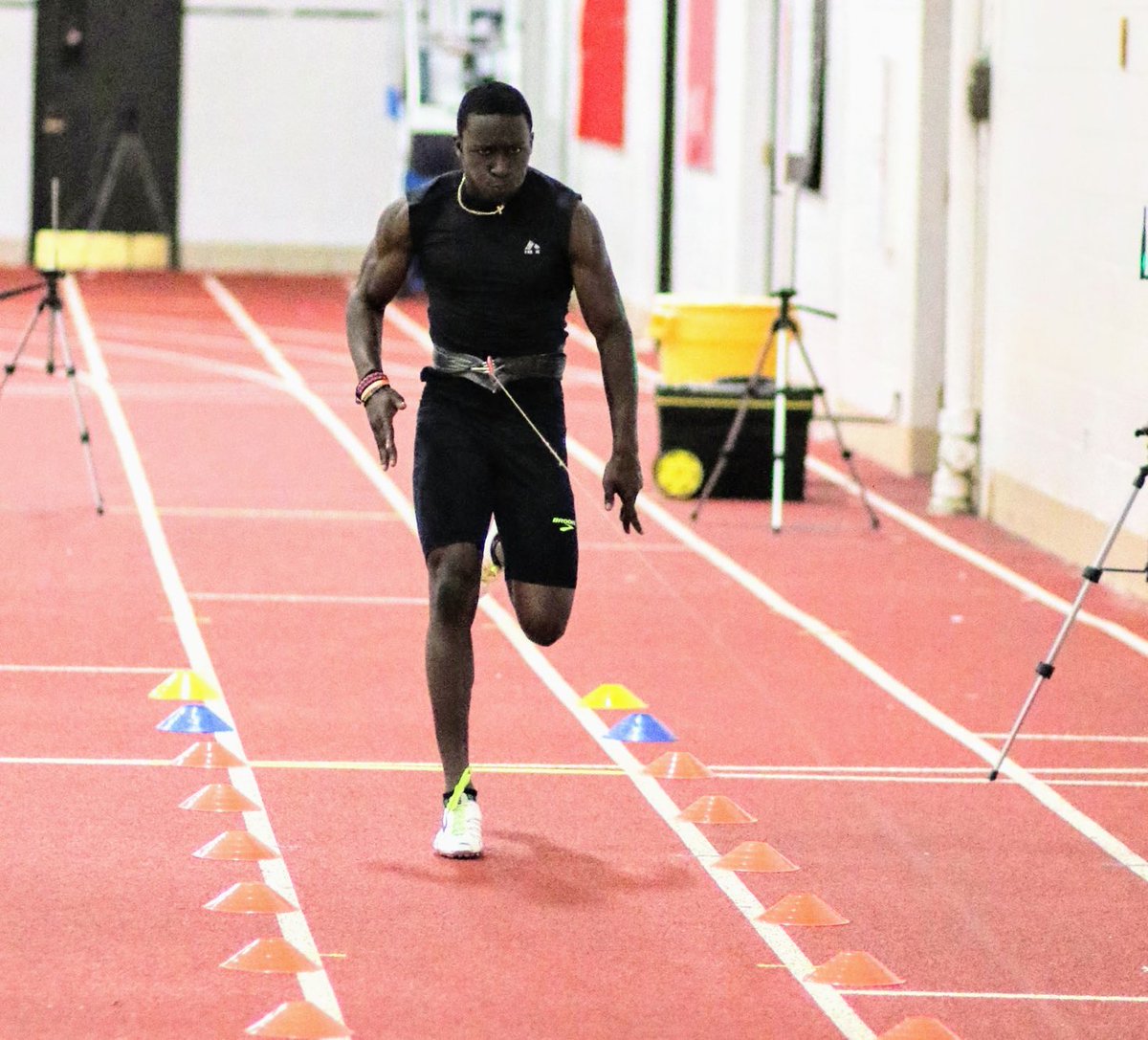
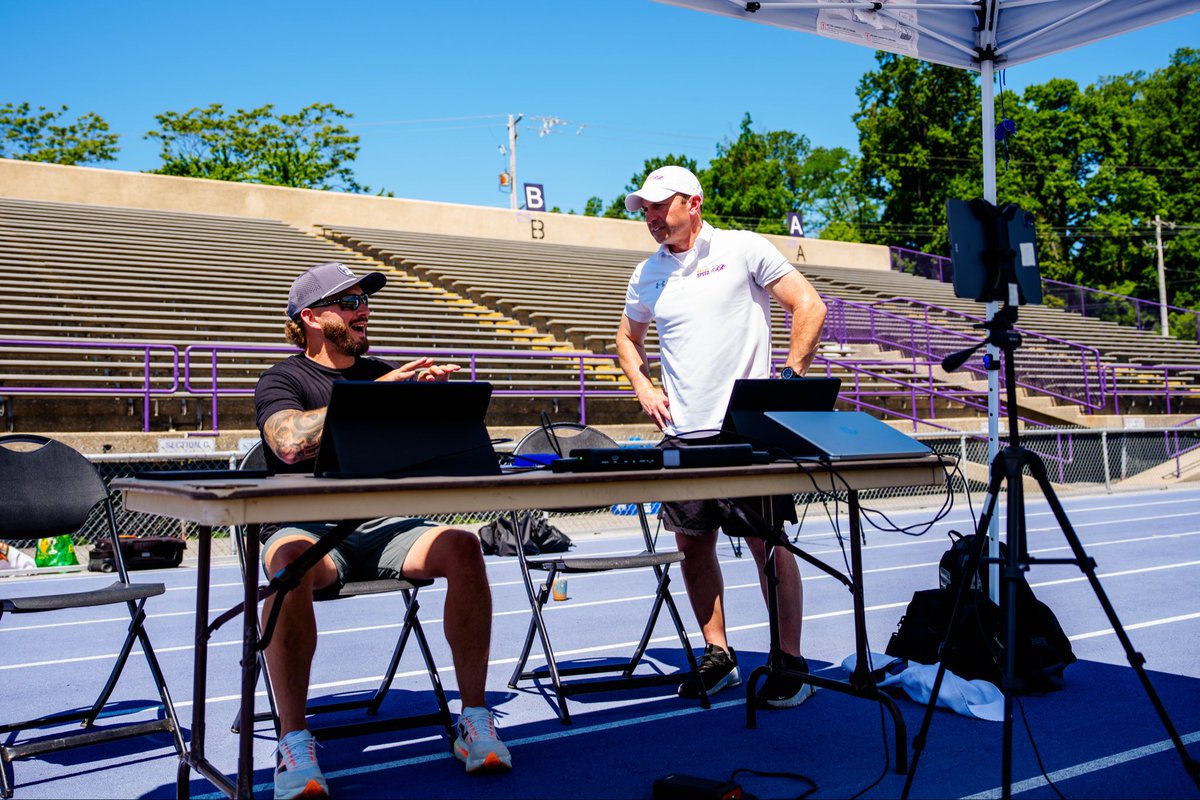
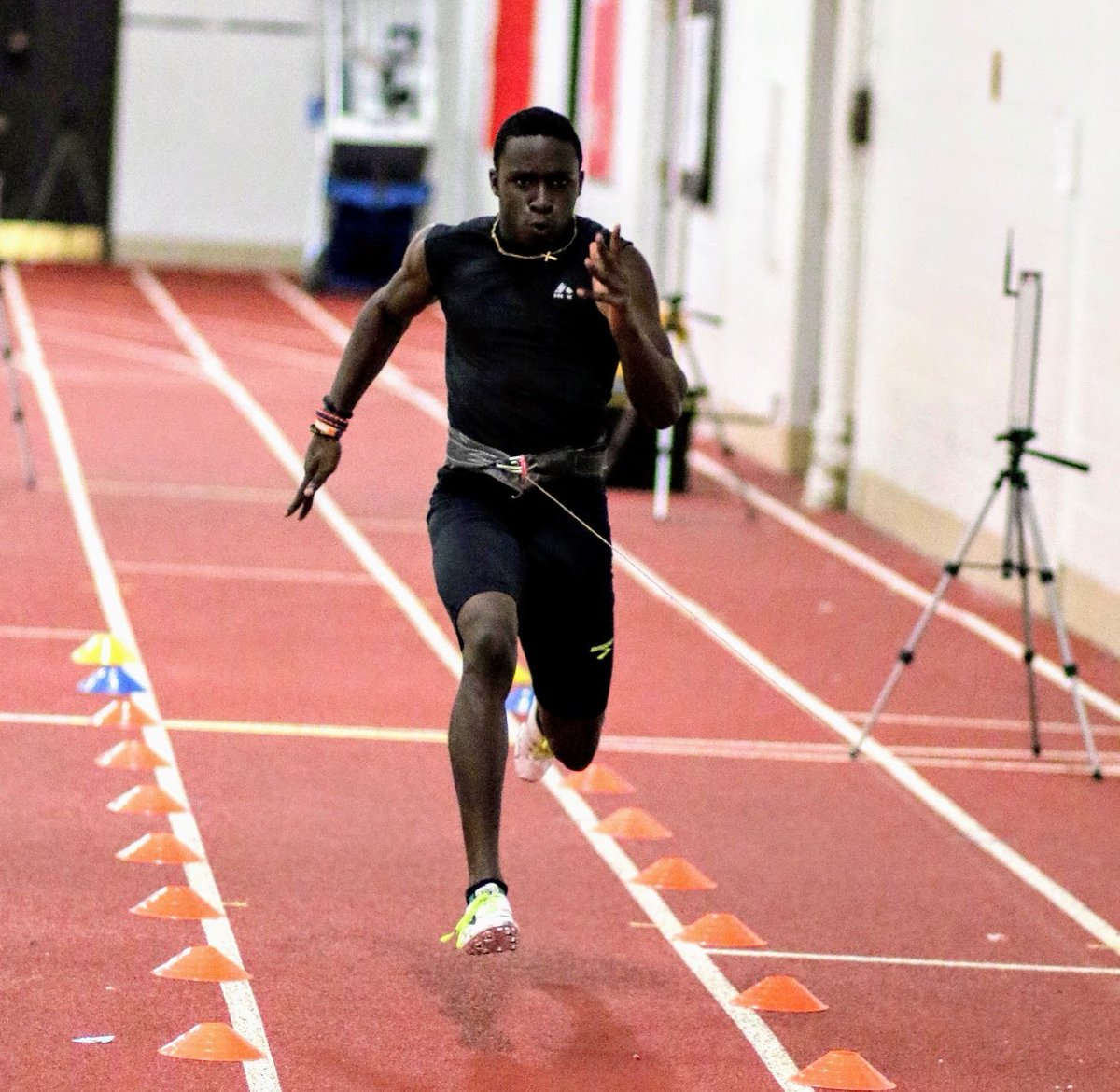
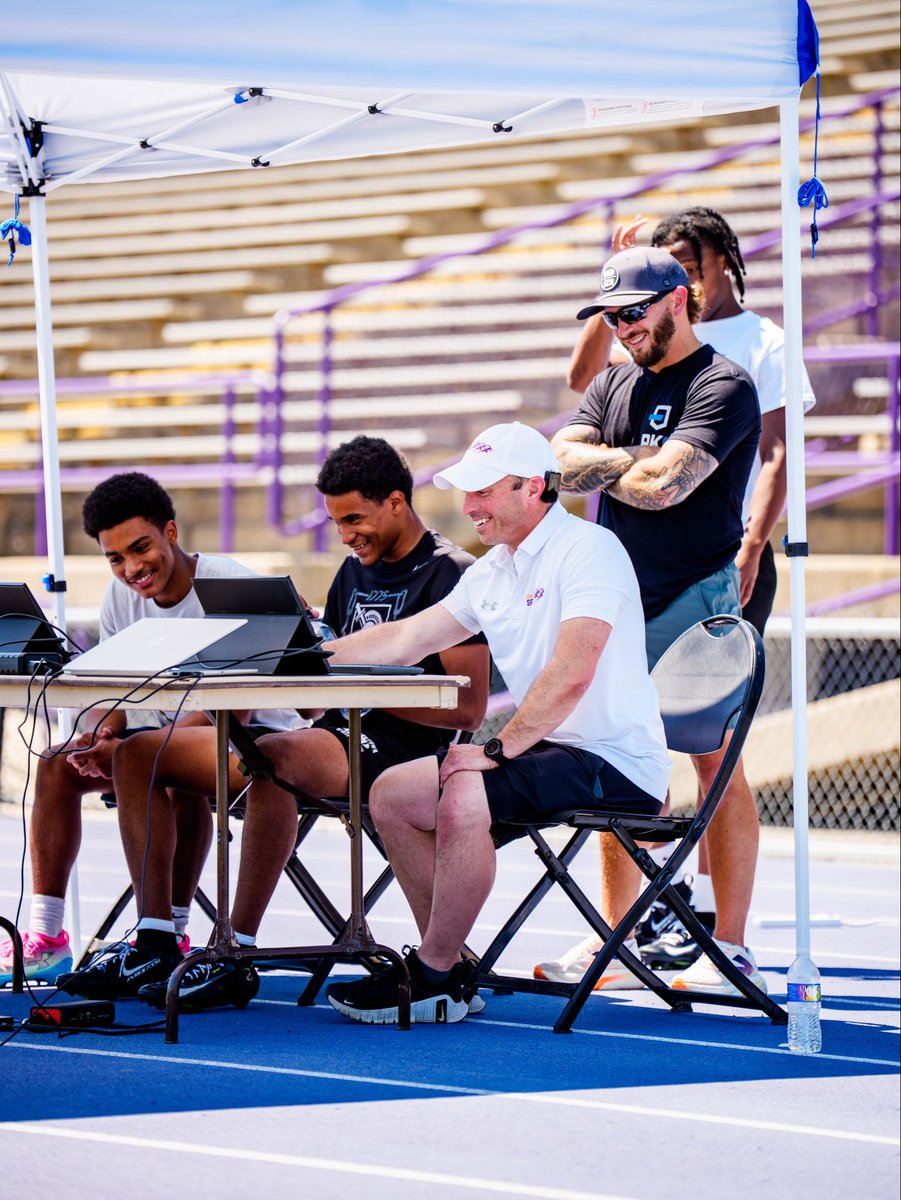
New article for @SportsmithHQ detailing some of the work from our 🏈 sprint project. How do considerations of monitoring & developing acceleration change for different playing positions? @jb_morin@KenClarkSpeed
https://t.co/ioYaKSYKFe
Fantastic paper by @KenClarkSpeed https://t.co/e1L6VJnrpU that emphasizes there are many ways to solve the acceleration problem, there is no single "perfect" strategy or a single "ideal" technique, even at the very elite level. https://t.co/8A26D2xxGF
Fantastic paper by @KenClarkSpeed https://t.co/e1L6VJnrpU that emphasizes there are many ways to solve the acceleration problem, there is no single "perfect" strategy or a single "ideal" technique, even at the very elite level. https://t.co/8A26D2xxGF
Yesterday, @KenClarkSpeed published a new paper analyzing 0-10m acceleration in 24 elite American sprinters (51 Olympic/World Championship medals combined).
Today, here's one coaching takeaway:
Don't coach 30 athletes every rep.
Pick ONE technical focus.
Watch FIVE athletes.
Coach that detail.
Repeat.
He also explains why longer contact distances in team sport athletes aren't automatically a flaw.
Click below for the full podcast with him:
https://t.co/hdjvZgeSIn
Click below for his new research:
https://t.co/5IuKIS9PwU
For practitioners working with competitive sprinters, results in this article provide robust normative group mean practice data at the highest level of T&F, while simultaneously illustrating the variety of kinematic strategies that can be employed to achieve elite performance.
For practitioners working with competitive sprinters, results in this article provide robust normative group mean practice data at the highest level of T&F, while simultaneously illustrating the variety of kinematic strategies that can be employed to achieve elite performance.
Excited to announce our latest publication examining initial acceleration in elite Americans sprinters, published in Sports Biomechanics.
This sample of athletes included male sprinters with a group mean 100m PR < 9.9s and female sprinters with a group mean 100m PR < 10.9s!
Excited to announce our latest publication examining initial acceleration in elite Americans sprinters, published in Sports Biomechanics.
This sample of athletes included male sprinters with a group mean 100m PR < 9.9s and female sprinters with a group mean 100m PR < 10.9s!
https://t.co/ElpCmRKVGZ
Got some great work in with @KenClarkSpeed and @paulkenny_speed It was great to see my form compared to college and professional track and football athletes. Excited to keep working and getting better!
Big shout out to @paulkenny_speed and @KenClarkSpeed For helping me level up to the 💨 21MPH club! All official here no technical malfunctions this is Dr APPROVED!
🚨NEW STUDY - Pre-PRINT🚨
Sprint running (max and submax speed) is a great plyometric stimulus🏃🏻🦵: direct comparison of ground reaction force-time w/ classical plyometric tasks.
Read our new study (Pre-print) by @CriFubiani et al. here & send feedback🙏:
https://t.co/twxq7wynXT
Training the Browns in the Spring and the Jags in the summer.
Coach Clark is the best in the business and we are so lucky to have him part of our program!!
@KenClarkSpeed
Why did we create the Speed Science Institute?
Listen to our Co-founder @les7spellman explain what the Speed Science Institute will accomplish, under the leadership of @KenClarkSpeed and Peter Ruppe and how it will impact coaches and athletes.
Learn more⬇️
It’s here.
Introducing the Speed Science Institute, our governing body for how we develop, interpret, and teach coaches to use performance data.
Founding members:
@KenClarkSpeed, Executive Speed Scientist
Peter Ruppe, Executive Director
Learn more⬇️
language around this comes from the work of researchers like Weyand & Clark, who have done a lot to explore both the drivers of speed and the mechanisms that help explain them.
And like all science, this is an ongoing process. We refine the model, keep learning, and keep
organize the skill at high speed.
Force matters a lot, but it doesn’t exist in isolation.
Limb repositioning speed matters because it sets up the strike. Read @kenclarkspeed work on “whip from the hip.”
What happens during the collision is essential as well…
A lot of the