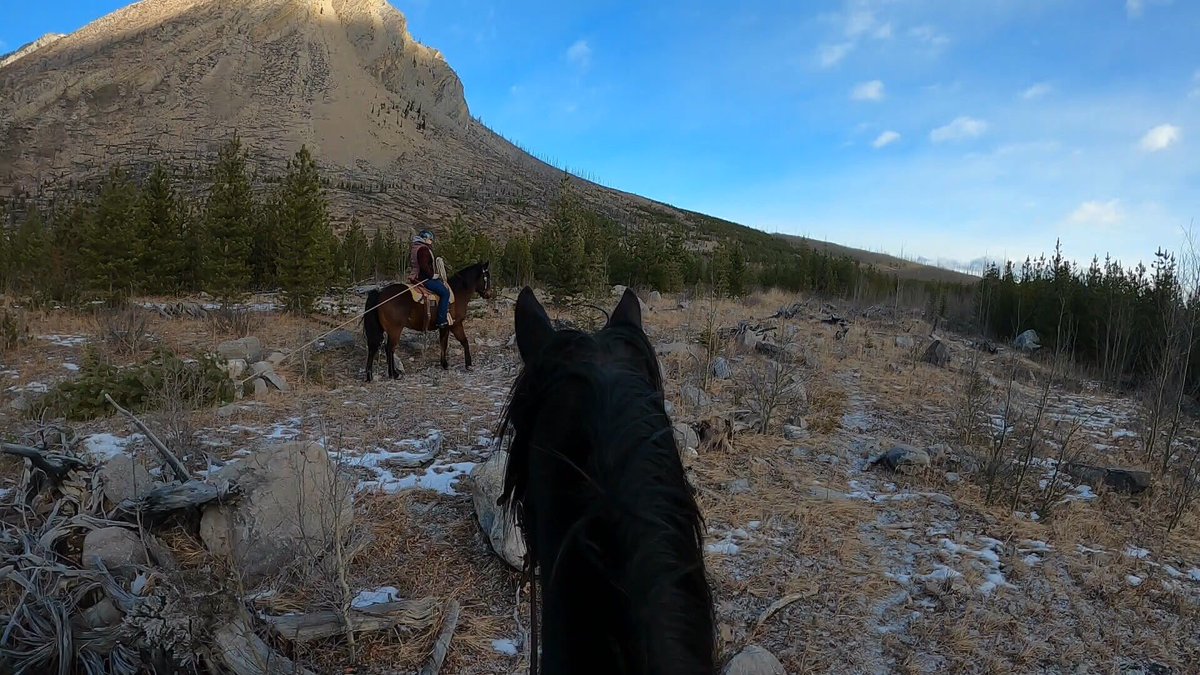
I was just watching clips from The Ghost and The Darkness which in the 90s was considered a second tier late summer adventure movie but now with its gorgeous location shooting, smooth camera work and confident movie star performances feels better than anything released in 2026.
For those unaware,
Canada has the resources and talent to be one of the wealthiest countries in the world, while leading in safety and in clean, responsible extraction and processing
We just chose not to. Our leaders focused on ideological identity politics while consolidating long-term, nearly unchecked and soon to be unquestionable power
You could live in one of the most well-off countries on earth. Instead, people keep voting for policies that make everyone poorer so they can feel like they’re doing something good. They convince themselves they’re virtuous while their neighbours and family struggle more and more by every metric—of which they also struggle with
People are literally dying from what has been voted for, in many different ways
We don’t have to live like this. There is no downside to building wealth here, putting country first, and prospering. We are literally in the only plausible downside, which is voted for every single time ...of which there is literally no upside. People are literally voting for the downside and the downside only. Everything is backwards
Everyone repeats that the U-boats nearly starved Britain out of the war. Spend an afternoon with the import figures and that story falls apart, though what replaces it is stranger and a lot more interesting.
Before the war Britain was landing well over 50 million tons of cargo a year. In 1942, the worst twelve months of the entire campaign, it landed under 23 million. That is a collapse of more than half. Nobody starved. Average calorie intake barely moved, and the poorest fifth of the country was eating better in 1943 than it had in 1938, because rationing handed out food by coupon instead of by price. Britain plowed up millions of acres of pasture, roughly doubled what it grew at home, and quietly stopped importing the things that take up the most hull space for the least nutrition. Animal feed, for one. You do not ship grain across an ocean to feed a pig when you can ship the calories straight to a person.
So the food side was solvable, and the Admiralty knew it. The frightening columns on the ledger were oil, steel, rubber, bauxite and timber, and the fuel figures did get genuinely ugly. British stocks hit their lowest point of the war in the first months of 1943.
Now the part almost nobody mentions. The weapon itself was wrong for the job. A Type VII was not a submarine in the way we picture one. It was a surface torpedo boat that could duck underwater for a while. Submerged it made about seven knots and could hold that for roughly an hour before the batteries were finished. A fast convoy did nine. Which means a hidden U-boat could not chase anything. It had to run on the surface, at night, in the open, to get ahead of a convoy and set up a shot, and it carried only fourteen torpedoes to show for the whole patrol. Every countermeasure that eventually broke the U-boat arm, radar, the Leigh Light, aircraft, direction finding, was aimed at that surfaced boat in the dark.
Then there was arithmetic. Patrick Blackett's operational research people worked out that losses to a convoy depended mostly on how many escorts were screening it, not on how many merchant ships were inside it. Double the ships in a convoy and the perimeter the escorts have to guard barely grows. Bigger convoys meant proportionally fewer sinkings. The shortage that mattered was never merchant hulls. It was escorts and long range aircraft, and the mid-Atlantic air gap was finally closed by a few dozen Liberators.
The real window was 1940, and Dönitz could not exploit it. Germany started the war with 57 U-boats, of which about 26 could reach the Atlantic, and through the Happy Time he often had only eight to twelve boats on patrol at any one time. That handful did terrible damage against unescorted ships and green crews. By the time he finally had the 300 submarines he had been demanding since before the war, the other side had centimetric radar, escort carriers, hunter killer groups and Ultra reading his signals. In the first twenty days of March 1943 it still looked close enough that the Naval Staff later admitted the Germans had never come nearer to cutting the link between the New World and the Old. Convoys HX229 and SC122 lost 22 ships for one U-boat. Ten weeks later, in May, Dönitz lost more than 40 boats in a single month and pulled his fleet out of the North Atlantic.
The whole campaign cost the U-boat arm around 30,000 dead out of roughly 40,000 who served in it. Almost three in four men. No other branch of any service in that war was hollowed out like that.
Churchill wrote afterward that the U-boat peril was the only thing that really frightened him. It is worth being precise about what he was frightened of. Not bread queues. He was frightened of a slow bleed that would keep American divisions, tanks and aviation fuel from piling up in England, because without that stockpile there is no invasion in 1944, and the war grinds on for years longer in the east.
The U-boats were never going to starve Britain. They came closer to stealing D-Day.
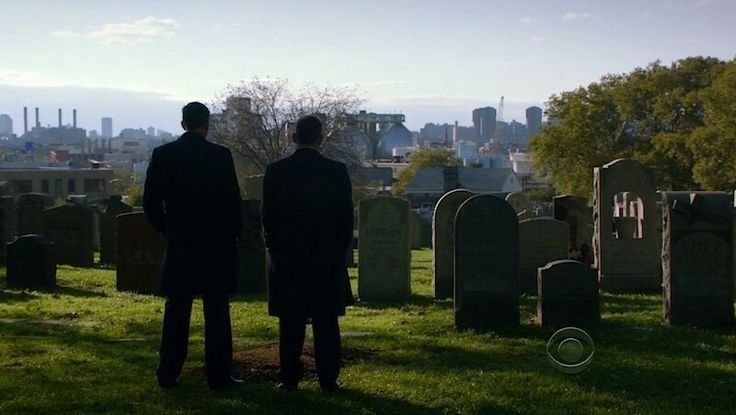
Jonathan Nolan is a visionary. 15 years ago, he gave us Person of Interest. A show that predicted the real dangers of AI and mass surveillance long before reality caught up. Easily one of TV’s most underrated masterpieces. Forever grateful for this phenomenal series.
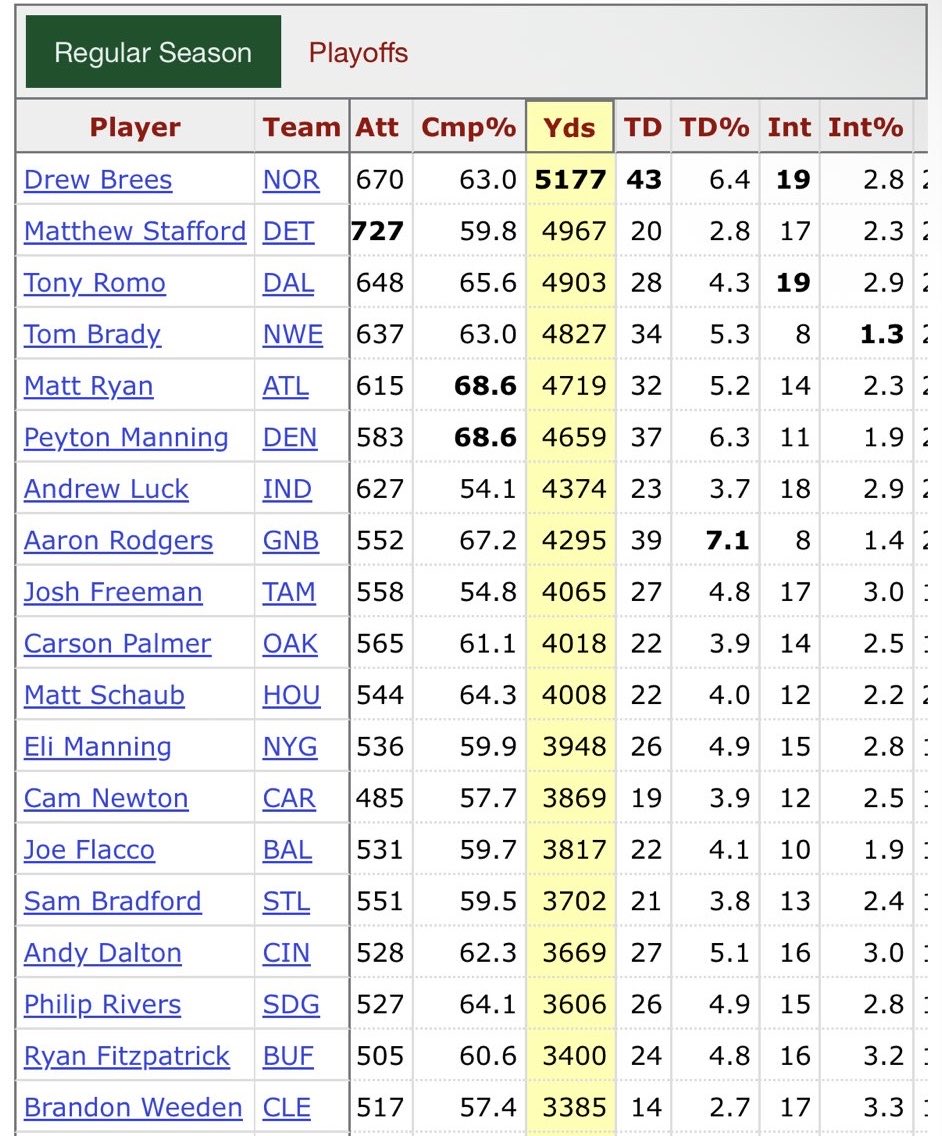
-Brady Manning Rodgers in their prime
-no choreographed Tik-Tok dances
-Kam Chancellor decleating people 100MPH
-corn-fed white boys wrecking people on Special Teams
-Matt Ryan vs Drew Brees twice a year
-Roethlisberger Polamalu Heath Miller vs Ray Lewis Ed Reed Ray Rice twice a year
-Luke Kuechly being Superman
-Joe Buck and Troy Aikman on FOX
The golden age.
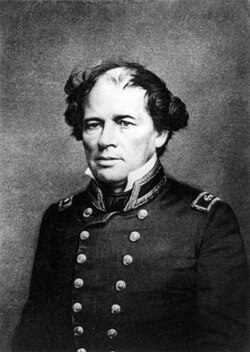
1/x In the 1840s, a lame American naval officer, grounded at a desk in Washington, cut weeks off the world's ocean voyages without inventing a single machine. His raw material: a warehouse of logbooks nobody had ever read. Matthew Fontaine Maury, Pathfinder of the Seas. A 🧵
People are soooo arrogant about the Middle Ages. “The 13th century people were dumb because they didn’t have calculus”. Excuse me, they built cathedrals that have lasted a thousand years using technology we have actually lost today. What Thomas Aquinas and Dante and Robert Bacon did in on lifetime, 100 academics today don’t accomplish in their careers. They discovered the concept of the speed of light and lens refraction and translated the Ancient Greek and Roman manuscripts. They wrote the Magna Carta, Beowulf and the Divine Comedy. They formed the very foundation upon which western civilization and modern knowledge was built. It’s foolish to look back at the shoulders you stand on and disparage them for being lower down than you.
I’m tired of all these college football blowouts. And the ridiculous conference realignment.
Simple solution: make college football like European soccer.
Make 1 super league of 25 teams. Then smaller leagues where teams can get promoted and relegated
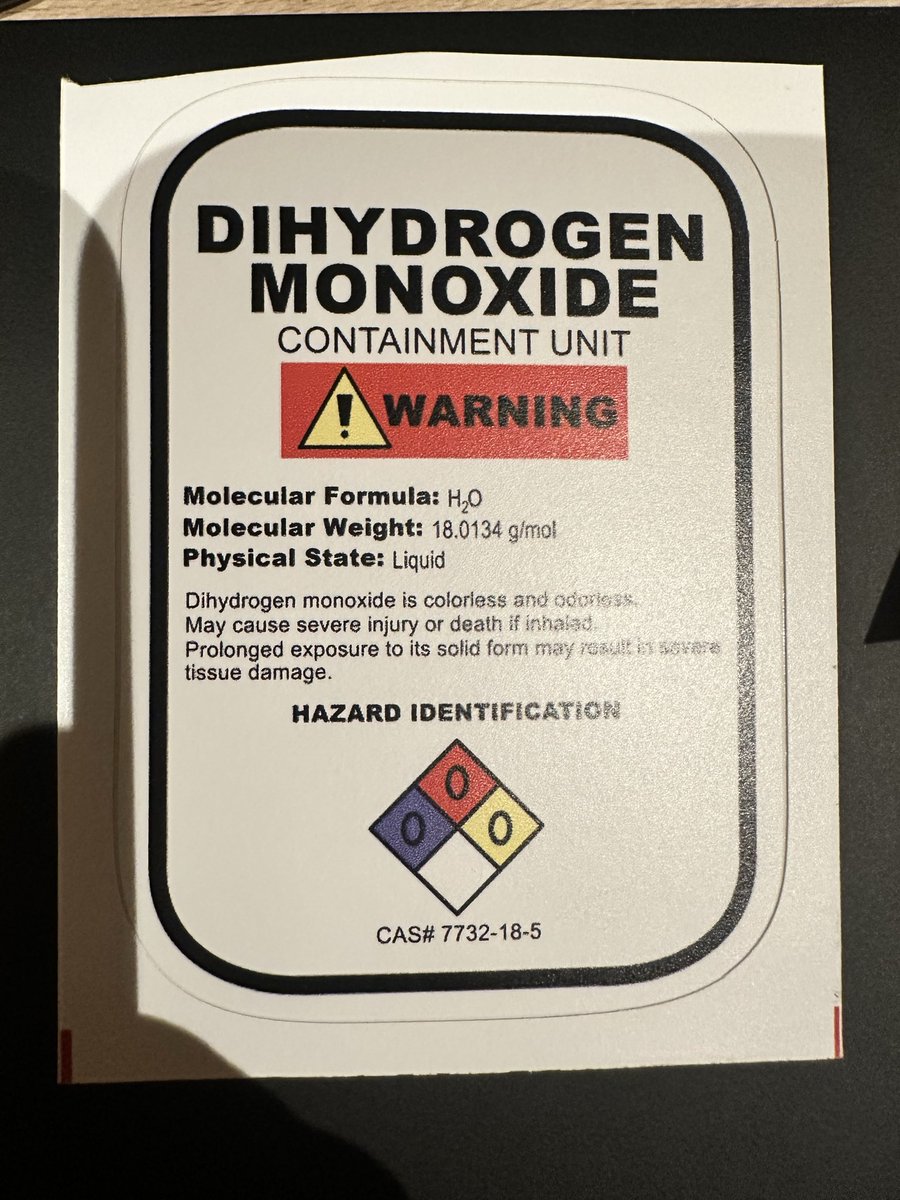
A friend gave me this today.
Colorless. Odorless.
Can cause death if inhaled.
Prolonged exposure to its solid form can cause tissue damage.
And a perfect reminder that you can make almost anything sound terrifying.