It was predicted a long time before. I know it's not what you want to here, but the real reason is that AI is VERY profitable. The only criteria for calling bond "junk" is high yield. Well, the yield is high simply because they can afford it, their ROI will be much much higher. And guess what, with AI companies proposing such high yield bonds, all over bonds will need to grow too. Be prepared for all bonds to become junk bonds or die
@oguzerkan Meta's model is not SOTA even compared to publicly released models of OpenAI and Anthropic (and it's not even close to their internal models). OpenAI and Anthropic are growing like crazy, market values that. If anything they are still conservatively valued
@ronjonbSaaS@elonmusk@RealNickMugalli How the fuck was it correct? Musk would never ever post a positive tweet about Micron if we wanted to keep it down
@obntsdtd@PaulMclo@ChudThomist The first graph seems to be misleading BS. It says "Curve is schematic — no published cell means", so it's just straight up made up. Original research only found b=0.113 correlation between amount of partners and extreme misogyny, not this monotonically growing curve
@isaaclimb@AlexanderTw33ts@alexandr_wang How does increasing market efficiency make world a worse place? The only think I disapprove here is asking AI to lowball real sellers
There is not enough statistical evidence to support that this is not random luck. For example, if you check 2008-2021 instead of 2012-2025, January barely outperforms SP500 and now November is the best. There doesn't seem to be stable in time strategy that you can start using for the future
@ren_stocks It doesn't work, it's a cherry picked luckiest trajectory out of a random family, no reason to expect it to work in the future well
https://t.co/EdEDAbo4V8
@financenewsguy It's luck. If this strategy worked well, you could do it any month of the year (for example buying each 1st of March based on performance since previous 1st of March). But it doesn't work. There are 12 possibilities when to buy, and that tweet chooses luckiest of them all
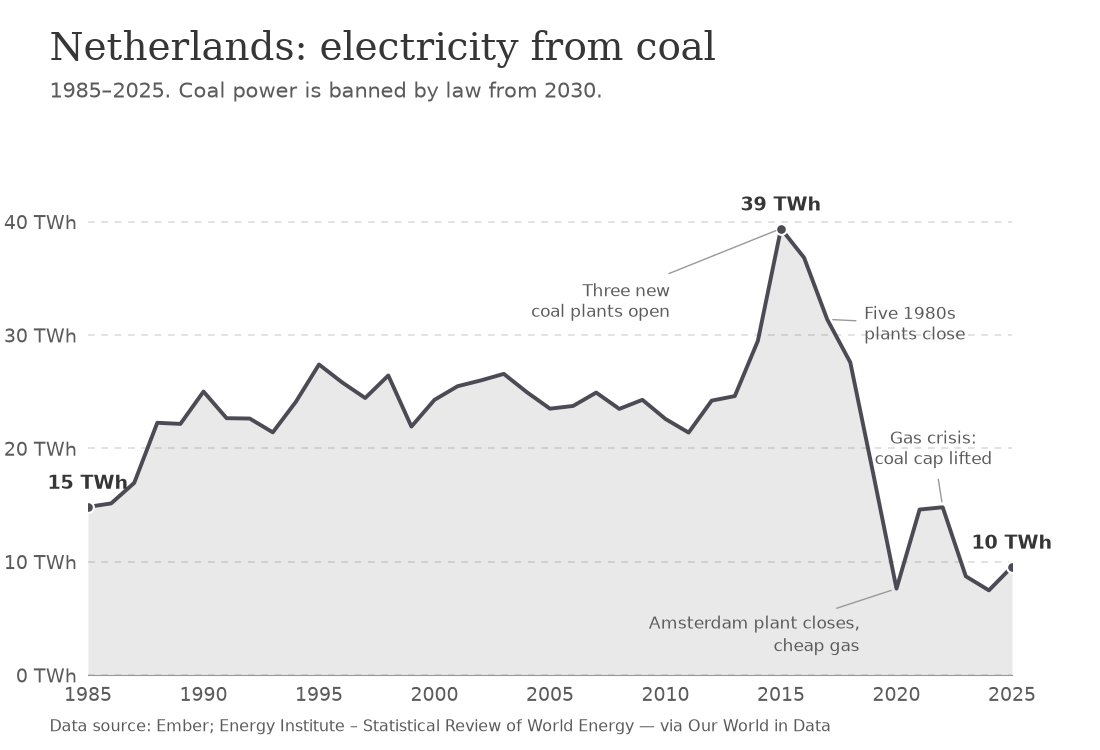
@WJ0076@PVersteeg1@DrEliDavid Where did I say anything about Netherlands coal power lol? And no, if you look at the long term data, coal power is clearly decreasing ("more than all of 2024" is already a low base)
Let's say there are two groups of campers. Group of 3 burn 6 and group of 17 burn 17.
If those 3 and 17 are working as organized groups with a single leader who you can arrest and stop the whole group from burning the forest, then your higher priority should be targeting group of 17 people first. Which would be example of what I called non-per-capita policy
If those 3 and 17 are independent campers (i.e. if you catch one of 17, the rest 16 are still burning trees), then your highest priority should be targeting group of 3 people first. Which would be example of what I called per-capita policy
Translating this to China.
* In cases when you believe that higher emissions of China are a result of it's centralized government doing wrong, irresponsible, dumb, etc decisions that are affecting the behavior of the whole China -- then changing behavior of China government should be highest priority if we want to reduce emissions (if we are choosing highest priority government whose behavior we want to influence).
* In cases when you believe that higher emissions of China are a result of life of it's whole population: people's habits, equipment of business, existing infrastructure, etc, which needs to be modified to ALL people there, then your highest priority target should be country with highest per capita emissions. I'd argue that emissions are usually more related to latter, than former, you can't really change them that much without the whole population doing something for it, or paying price.
It's worth noting that per-capita policies and generally more fair to people. Let's say we are following your logic that absolute numbers is the only thing that matters. Okay, so we are choosing China as a biggest country, and forcing every Chinese person to reduce their emissions 10x. Now average Chinese people are forced to emit 10x times less CO2 than average European people.
Imagine now that China was split into 100 smaller countries, and the simultaneously the whole European Union got merged into single country. Well, now the biggest emissions country is this new European Union one! And now European people are forced to emit 10x less than people of those small Chinese states, because we are targeting country with biggest absolute number. But that clearly doesn't make sense, right? It's arbitrary. Mother Nature doesn't care how we split those territories into countries. But suddenly the choice of how we split is very important for our priorities and policy-making if we are looking at absolute numbers. If you are instead targeting per capita emissions, your policy will be indifferent to how you split territories into countries, and each person, no matter where they live, no matter population density, no matter country size, will be given the absolutely same expectations (of how much emissions are tied to them specifically)
@Sky_Lab24@DrEliDavid I'd say it'd be worth it if it was the only way. In reality the best in my opinion would be to focus on investments into direct CO2 extraction instead of trying to achieve zero emissions
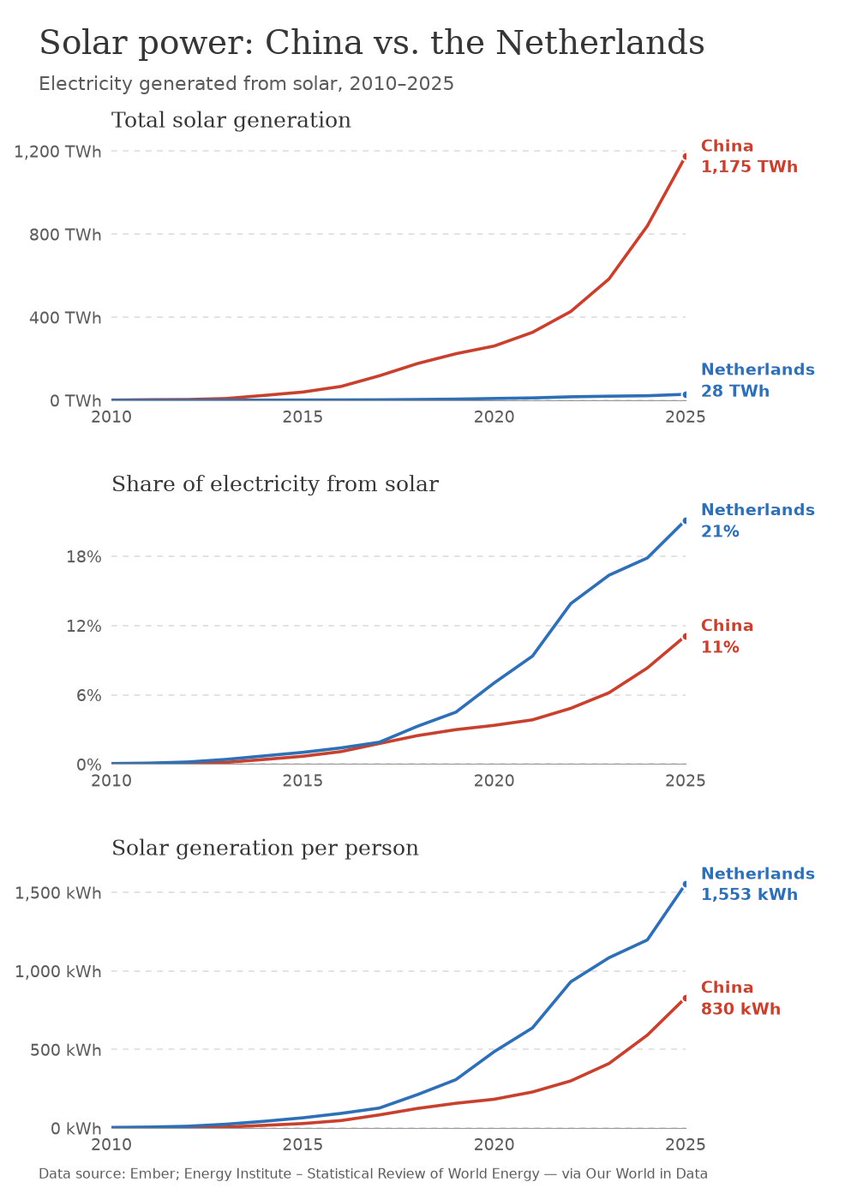
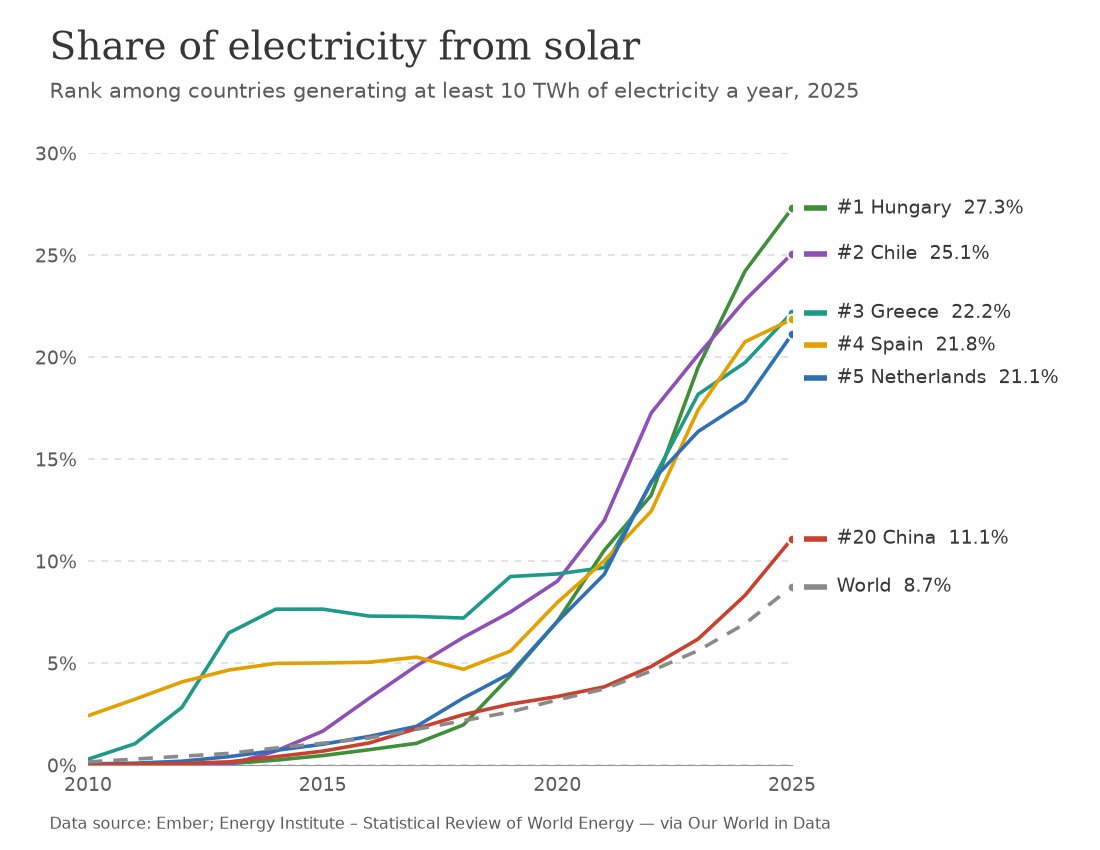
@FGroeliker@DrEliDavid Well, you chose a tough comparison, Netherlands are top-5 in the world by solar power share. China is doing well with solar, but Netherlands are doing great too!
Emissions per capita is a metric of how well people of a certain country are able to live, produce goods, work, consume, growing economy etc while balancing that with minimizing emissions
Let's say your household suddenly decides to start emitting 1000x more CO2 with justification that "China emits million times more anyway, atmosphere only cares about absolute emissions". Is that statement correct? Well, yes, obviously. And so what? If we want to decrease emissions, in this hypothetical people from household are highest priority people to start decreasing their emissions, because you are doing disproportionally worse than Chinese people.
That's what per capira measures. How good are the policies and measures of certain country/region/etc for minimizing emissions. Everyone need to be improving their policies and decreasing their per capita emissions. Those with highest per capita emissions are those doing the worst and those who need to implement better policies (which are almost always per-capita by nature) with highest priority