Executive Director of Eat Breathe Thrive, a nonprofit serving people with eating disorders. Engaged in research & policy on risks AD laws pose to our community
People with eating disorders would qualify as terminally ill under this bill, as written.
For those who want a quick summary of our research, here are the key points I did not have time to cover today. 🧵👇
Voluntarily stopping eating and drinking (VSED), which is what the clause you are citing addresses, is not the same thing as anorexia nervosa.
Anorexia nervosa is a mental disorder, not a voluntary decision to stop eating and drinking. People with anorexia do not typically cease intake of fluids. The illness involves distorted beliefs, compulsive behaviours, and impaired decision-making - it's not a simple choice to stop food and water.
This clause offers no protection to people with eating disorders.
I appreciate where you’re coming from, Sophie. It seems we may differ on the weight that should be given to evidence from other jurisdictions, particularly those with similar laws restricting assisted death to people with terminal illnesses. I think Parliament would be unwise to disregard evidence from places where these laws have been in operation for many years.
While you may view the deaths of women with eating disorders under such laws as hypothetical, they do not feel hypothetical to those of us who work in this field and have seen people with eating disorders described as incurable and even “terminal”, including by courts in this country.
The Lords recognised this risk and passed amendments intended to address it. I find it difficult to understand why Parliament would knowingly proceed with this Bill after acknowledging that people with eating disorders could fall within its definition of terminally ill.
@sophieRblake That’s what was said in Oregon, Colorado, and California too. Yet women with eating disorders in those states have been diagnosed with “terminal anorexia” and prescribed lethal medication under laws intended for the terminally ill.
The Lords passed amendments to address this risk. It is difficult to understand why Parliament would knowingly proceed with a bill that puts vulnerable young people at risk.
https://t.co/JCiNywhIys
My piece for @LBC on the fatuity of attempting to revive the assisted death bill through the Parliament Act, even after some of its strongest supporters acknowledged that it would place people with eating disorders at risk.
The @UKHouseofLords is discussing safeguards for patients with anorexia & other eating disorders.
@Tanni_GT says that since October 2024, the bill sponsors have deflected, obfuscated & ignored evidence from @rcpsych, @ChelseaRoff et al
She cites an interview on @BBCNewsnight:
@nmdacosta I recall @vicderbyshire pressing Lord Falconer on this point, to which he responded unequivocally that eating disorder charities were mistaken in arguing that greater protections are needed for people with eating disorders.
Today I questioned the Secretary of State for Health and Social Care on palliative care following a recent report which shows that care is in crisis.
Whatever your view on the Terminally Ill Adults (End of Life) Bill. I hope everyone agrees it should be safe. I’m concerned he couldn’t guarantee the bills safety or that people wouldn’t be compelled to take the decision to have an early death due to a lack of palliative care provision.
This list is pretty extraordinary.
With all the new days in committee, announced today, will we see the Bill’s sponsor and proponents finally take these concerns seriously? Will they now consider, in good faith, the numerous amendments designed to improve safety?
Delighted that our paper addressing the false dichotomy between autonomy and preservation of life in anorexia nervosa has been accepted by the International Journal of Law and Psychiatry.
We hope that it will help patients, clinicians and lawyers to navigate difficult decisions.
@AgnesAyton@DrOliverLewis@rcpsychEDFac Excellent conference, and an honour to present with each of you. Grateful for all the work the college is doing to improve treatment and support for people with eating disorders and their families.
Very grateful to @DrOliverLewis@ChelseaRoff and Prof Eric van Furth to contribute to the @rcpsychEDFac conference discussion on ethical and legal issues - including assisted dying that can affect people with eating disorders.
@igrantubc Similar in Oregon, where “voluntarily stopping eating and drinking” has been promoted and used as a “bridge” for individuals who are not terminally ill to become eligible for assisted death through malnutrition and dehydration (which have been described as terminal diseases)
1 / If you want to understand why experts, charities, and families are so concerned about the #AssistedDyingBill, look at how anorexia has been handled throughout this debate.
Here are four moments tell the story.
@ChelseaRoff The Canadian Association of MAiD Assessors and Providers promotes declining nutrition as a way to make death reasonably foreseeable so as to qualify someone for MAiD without any waiting period. Apparently even a settled intention to decline nutrition makes death foreseeable.
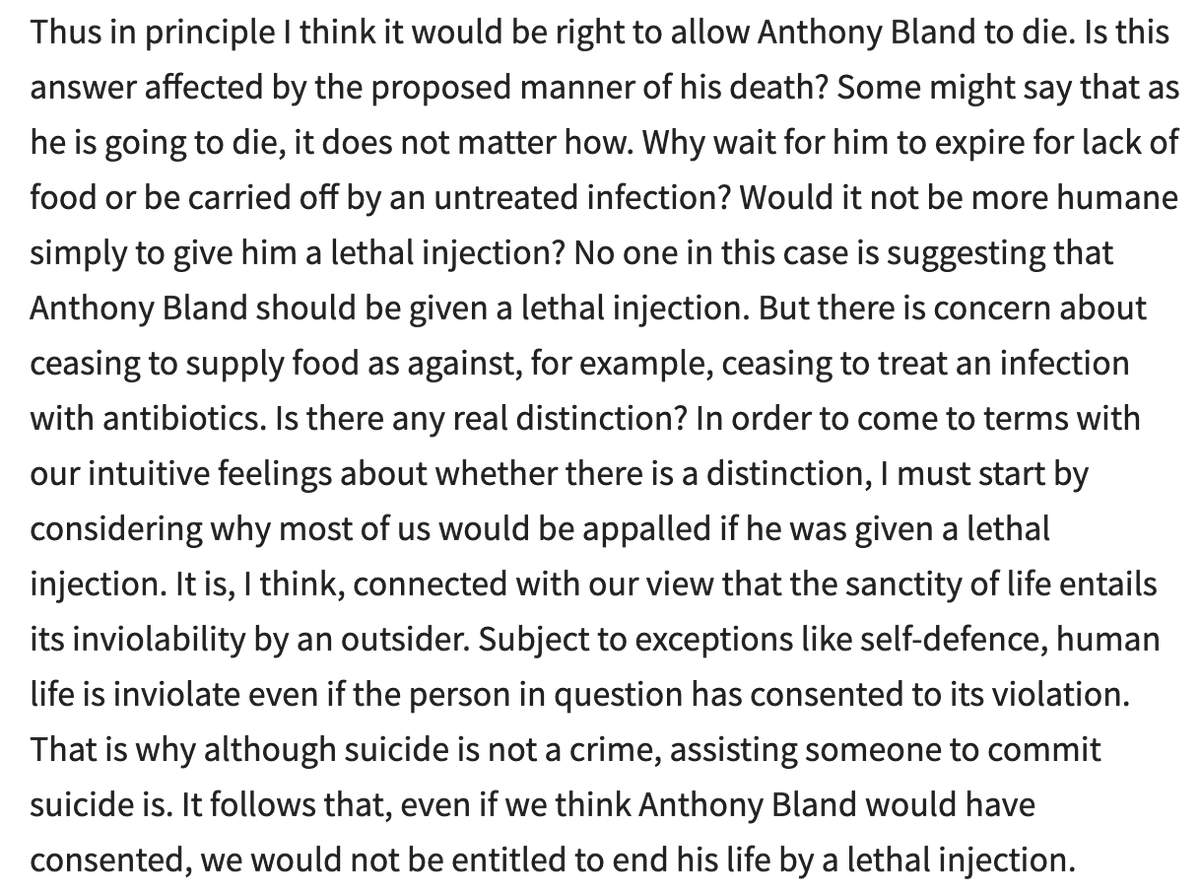
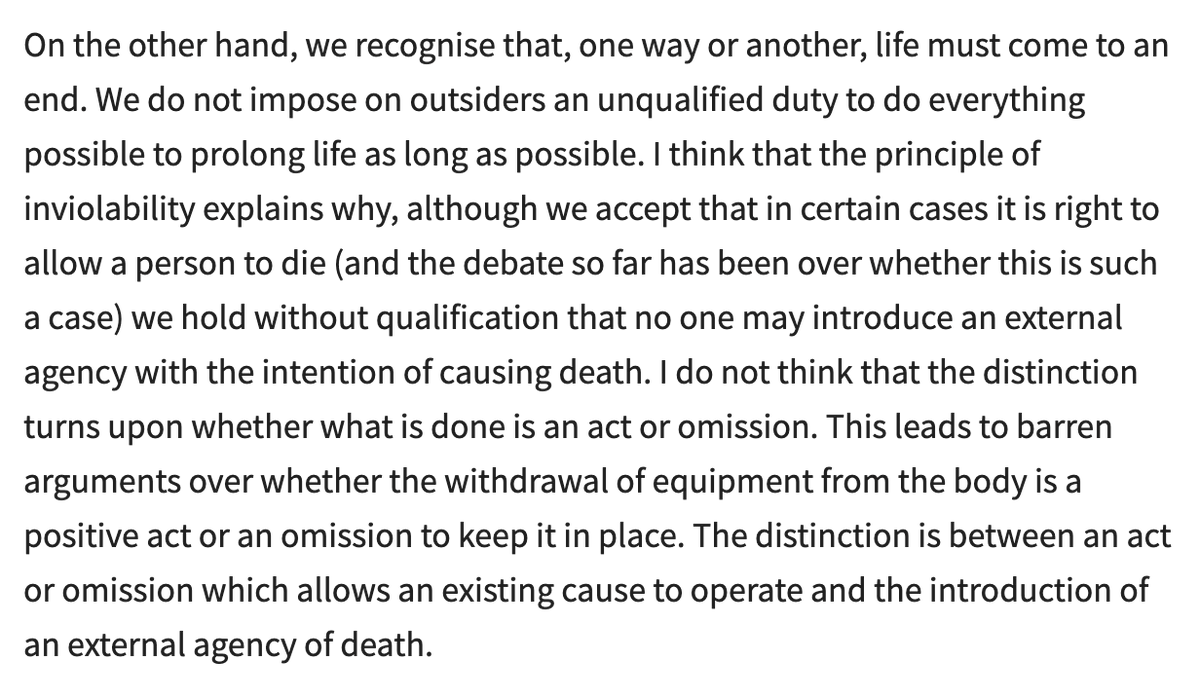
The question behind Pannick's remarks: if they can die by refusing treatment why can't they die by injecting themselves with barbituates? Hoffman LJ answered that question in the Bland case: because this would be contrary to the inviolability of life.
@treesey@itvnews Did Lord Falconer just concede there is an eating disorder loophole in his bill?
Has anyone mentioned to him that anorexia is not the only eating disorder?
9/ TLDR: At least 60 people with eating disorders have died by assisted death worldwide.
In the US, three states have confirmed deaths of people with anorexia but not disclosed how many, and eight others could not confirm or rule out whether such deaths had occurred.
We cannot verify how many have died under “the Oregon model” because states use vague reporting categories, and two of the confirmed US deaths were reported in ways that did not identify anorexia at all.
1/ How many people with eating disorders have died by assisted death under “the Oregon model”?
There has been understandable confusion about the findings of our systematic review. For now, I will leave aside the problems with the term “Oregon model.”
Here is what we know from the available evidence, with receipts.
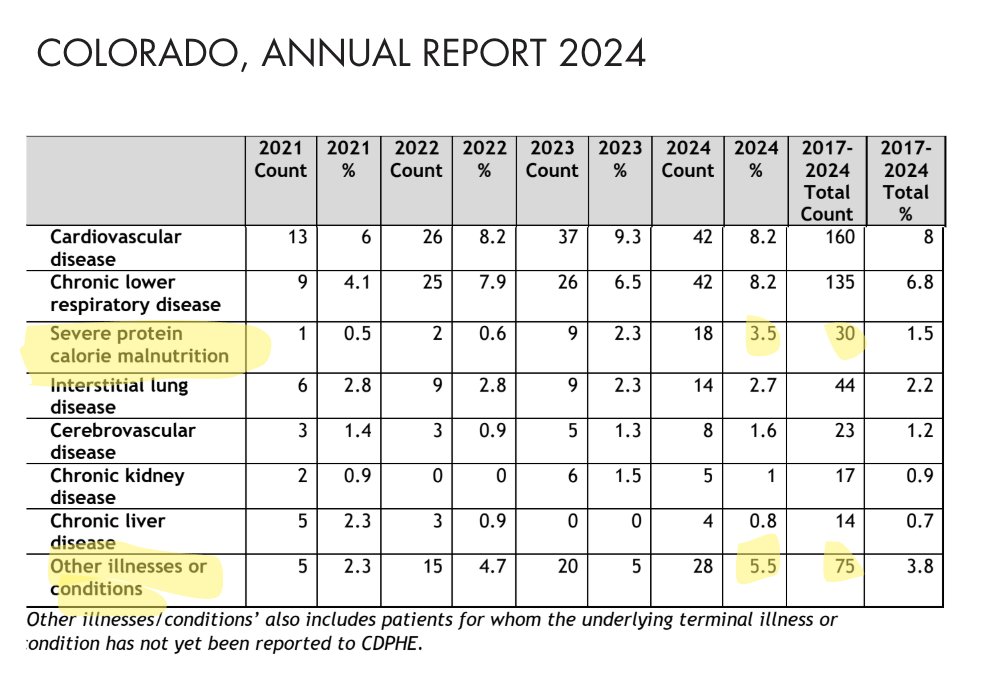
8/ What about “severe protein calorie malnutrition”?
Since our study was published, a further 43 assisted deaths where “severe protein calorie malnutrition” was listed as the primary qualifying terminal disease have been identified: 30 in Colorado and 13 in California.
We cannot determine whether these cases were related to anorexia, VSED, or another condition from available data.