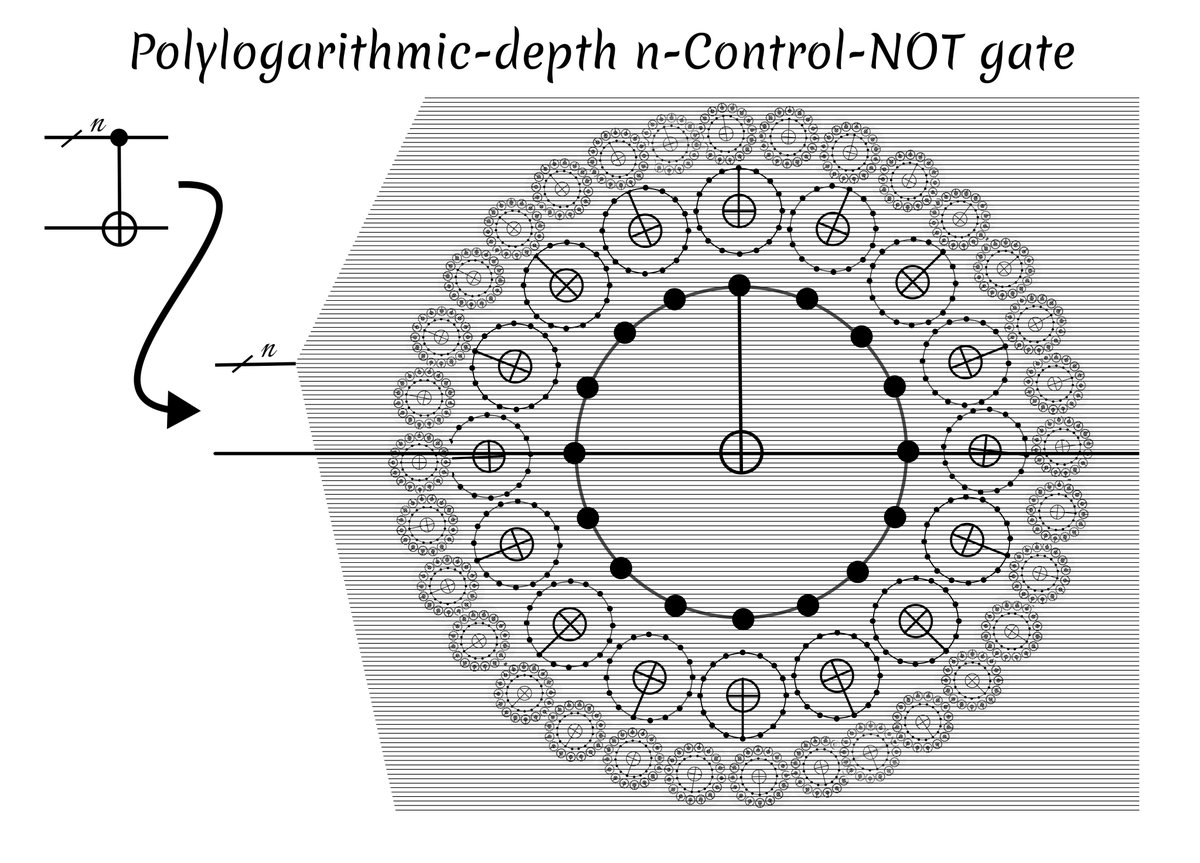
It turns out that, often, clean workspace qubits can be used in a way that's "viral". Where you end up with more and more workspace that you can use as-if-it-was-clean. Very useful trick, found in parallel by several recent papers. https://t.co/M0MCHn4xZc
🚨Important #quantumcomputing results published in @NatureComms today🚨:
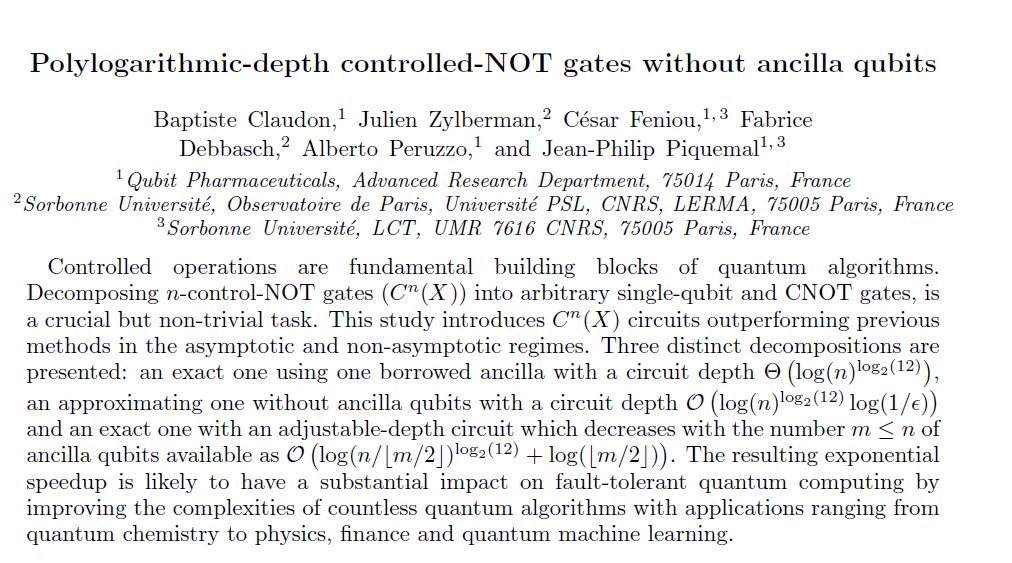
"Polylogarithmic-depth controlled-NOT gates without ancilla qubits"
👉: https://t.co/7NmHkqNmuG
In quantum computing, multi-control NOT gates are the quantum equivalent of classical ‘AND’ operations. While being true building blocks of quantum algorithms, their decomposition into native quantum gates is non-trivial. In this work, we achieve exponentially shorter circuits than previous state-of-the-art. The resulting exponential speedup is likely to have a substantial impact on fault-tolerant quantum computing by improving the complexities of countless quantum algorithms with applications ranging from quantum chemistry to physics, finance and quantum machine learning.
Kudos to @BaptisteClaudon, @ZylbermanJulien, @ChemCesar and nice collaboration with F. Debbasch and @alberto_peruzzo. @LCT_UMR7616@Sorbonne_Univ_@CNRSchimie@qubit_pharma
Check out also the associated blog on the Nature Physics community:
https://t.co/VAwgZJSUZi
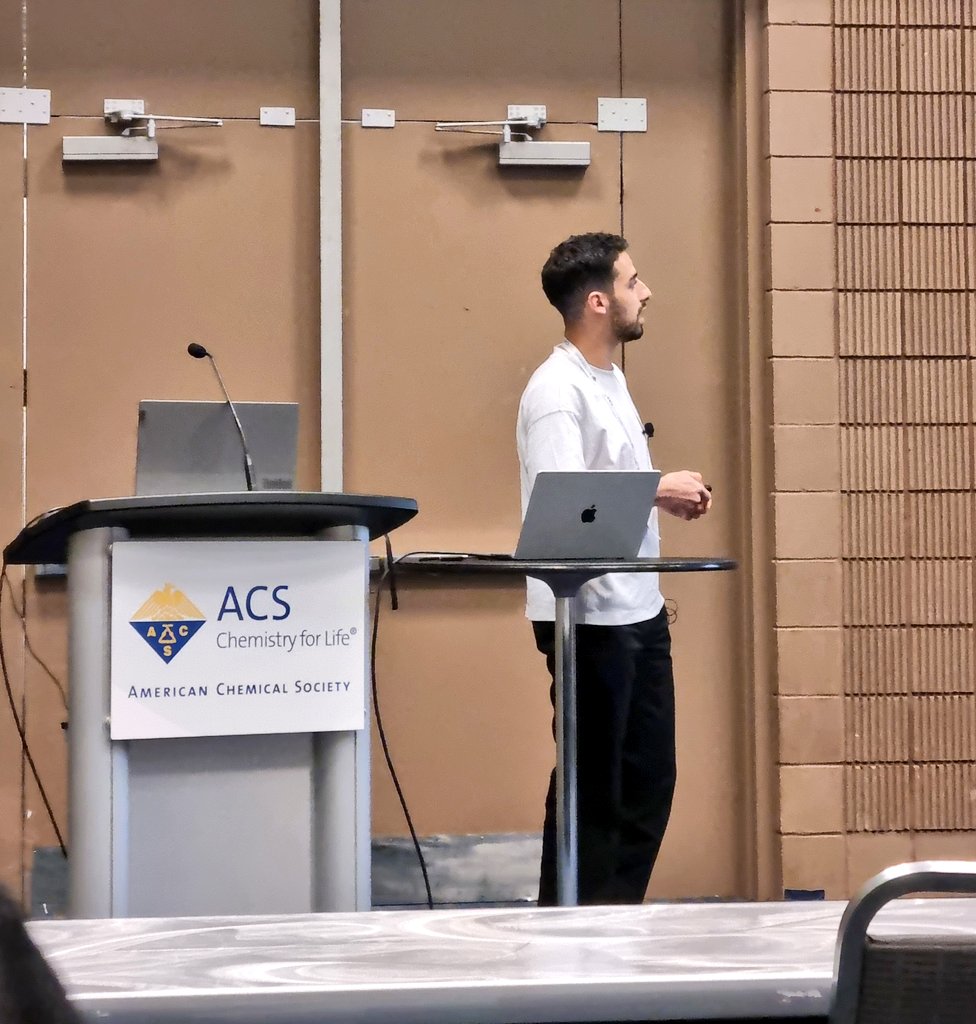
I did my first presentation at the #ACSSpring2024 this morning. It was an incredible opportunity to show my final year PhD projects and connect with fellow researchers. Excited for the discussions and collaborations ahead! Thank you @AmerChemSociety ✨️
#compchem#PhD
#compchem
🚨Just out in J. Phys. Chem. Lett @JPhysChem 🚨and incoming Front Cover:
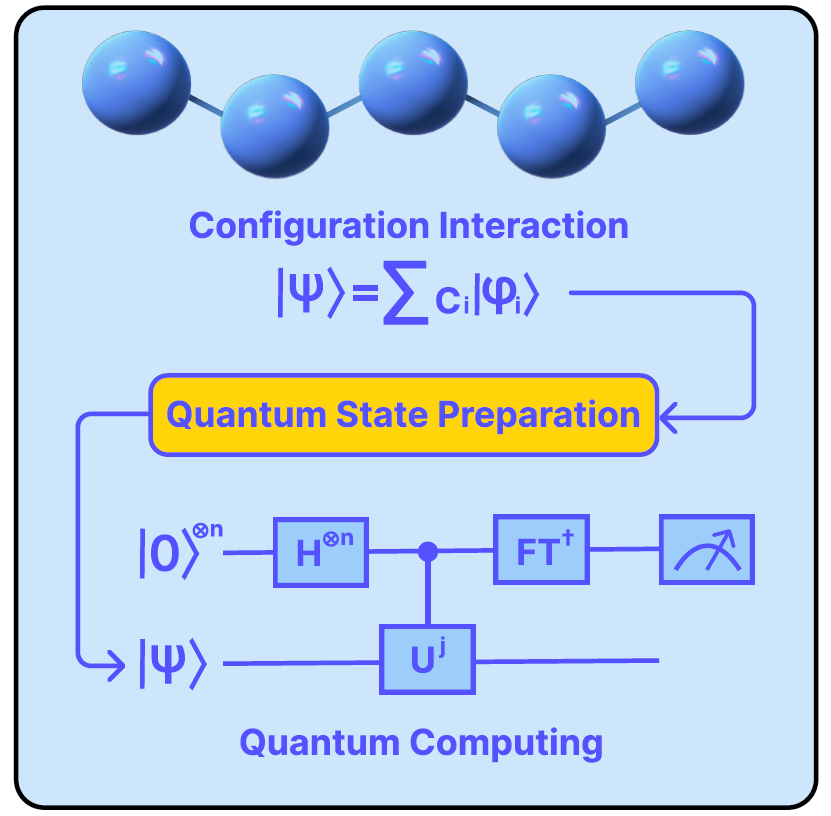
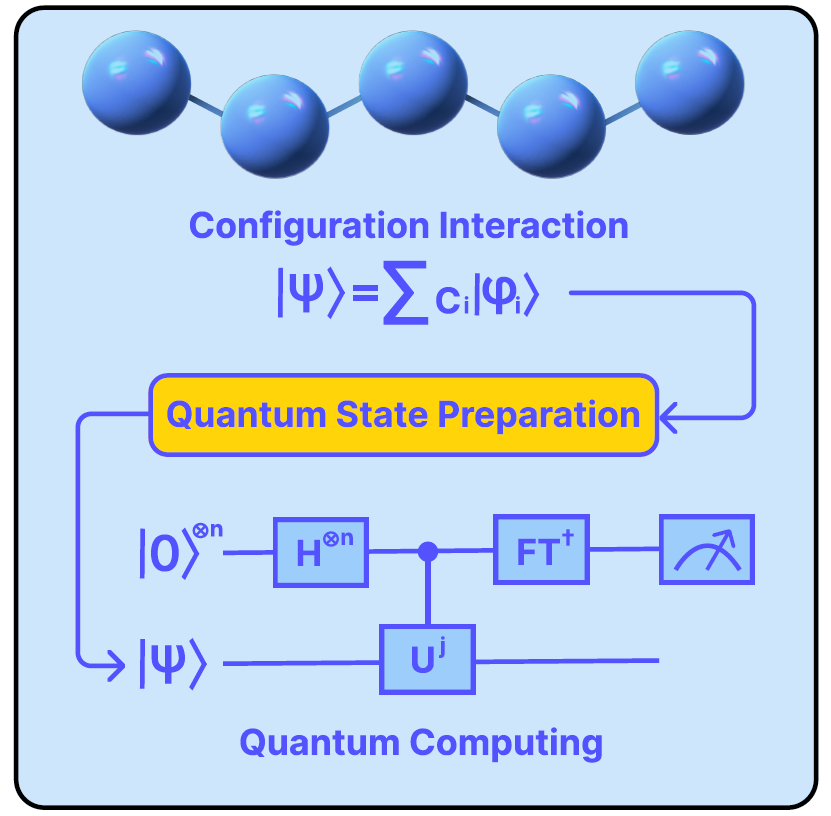
𝐒𝐩𝐚𝐫𝐬𝐞 𝐪𝐮𝐚𝐧𝐭𝐮𝐦 𝐬𝐭𝐚𝐭𝐞 𝐩𝐫𝐞𝐩𝐚𝐫𝐚𝐭𝐢𝐨𝐧 𝐟𝐨𝐫 𝐬𝐭𝐫𝐨𝐧𝐠𝐥𝐲 𝐜𝐨𝐫𝐫𝐞𝐥𝐚𝐭𝐞𝐝 𝐬𝐲𝐬𝐭𝐞𝐦𝐬.
https://t.co/dlpy8v2CVm
First peer-reviewed paper using our #GPU-accelerated Hyperion-1 quantum computer emulator. This work presents extensive 28 logical qubits simulations performed on a single @nvidia (8 X A100 GPU) #HPC node.
We conducted quantum state preparation for complex molecular systems using various advanced methods that are evaluated and compared in terms of their circuit depth, CNOT count & classical computational complexity. Our simulations indicate that the recently developed Overlap-ADAPT-VQE algorithm (Commun Phys, 2023, 6, 192) offers the most advantageous performance for near-term applications. Congrats @ChemCesar@qubit_pharma! Nice collaboration with E. Giner @LCT_UMR7616. Supercomputer time @Genci_fr.
@CraigGidney Any thoughts on thm1? it seems to me that the given C...CX is only O(n) depth and not O(logn) (possibly due to a missing pre-factor in the depth recursion). A polylog decomposition with similar construction was previously given in https://t.co/0LPJXdDrQh
New #preprint between our group @LCT_UMR7616 and @qubit_pharma :
Polylogarithmic-depth controlled-NOT gates without ancilla qubits.
https://t.co/gEGbrNiLjP
The question of decomposing efficiently any n-qubit operation into a reasonable number of primitive single- and two-qubit operations is one of the major challenges in #quantumcomputing. In this context, multi-controlled operations (n-Toffoli gates) act as building-blocks of many prevalent quantum algorithms. For this reason, achieving more effective decompositions of multi-controlled operations has the potential to bring about significant enhancements in quantum algorithms. We propose a complete strategy to obtain an exponential speedup for these tasks. It is likely that such results will have a substantial impact on fault-tolerant quantum computing (#FTQC) by improving the complexities of countless quantum algorithms including key #compchem ones.
Stellar work from Baptiste Claudon, @julienzylberman and @ChemCesar. Great collaboration with F. Debbasch and @alberto_peruzzo.
@Sorbonne_Univ_@CNRS
#compchem New #quantumcomputing preprint:
Sparse quantum state preparation for strongly correlated systems.
Check it out here: https://t.co/X9GNuGY704
We conducted quantum state preparation for complex molecular systems using various advanced methods that are evaluated and compared in terms of their circuit depth, CNOT count & classical computational complexity. Our simulations indicate that the recently developed Overlap-ADAPT-VQE algorithm (Commun Phys, 2023, 6, 192) offers the most advantageous performance for near-term applications.
Our findings are supported by computations up to 28 qubits thanks to our in-house (multi)GPU-accelerated state-vector emulator => 28 qubits on a single @nvidia DGX-A100 !!!
Great work by @ChemCesar and another nice collaboration between the @piquemalgroup (@LCT_UMR7616 ) and @qubit_pharma. @OlivierApp Emmanuel Giner
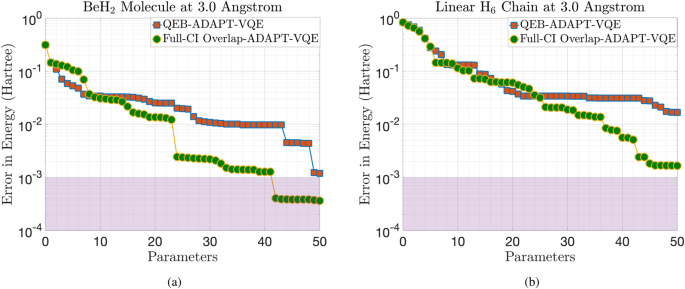
Quantum computers are likely to outperform classical devices on a range of chemical simulations. This front page highlighted paper by @jppiquem and collaborators explores with creating compact ansatz wave-functions while achieving chemical accuracy.
https://t.co/MUo8BRWm0l
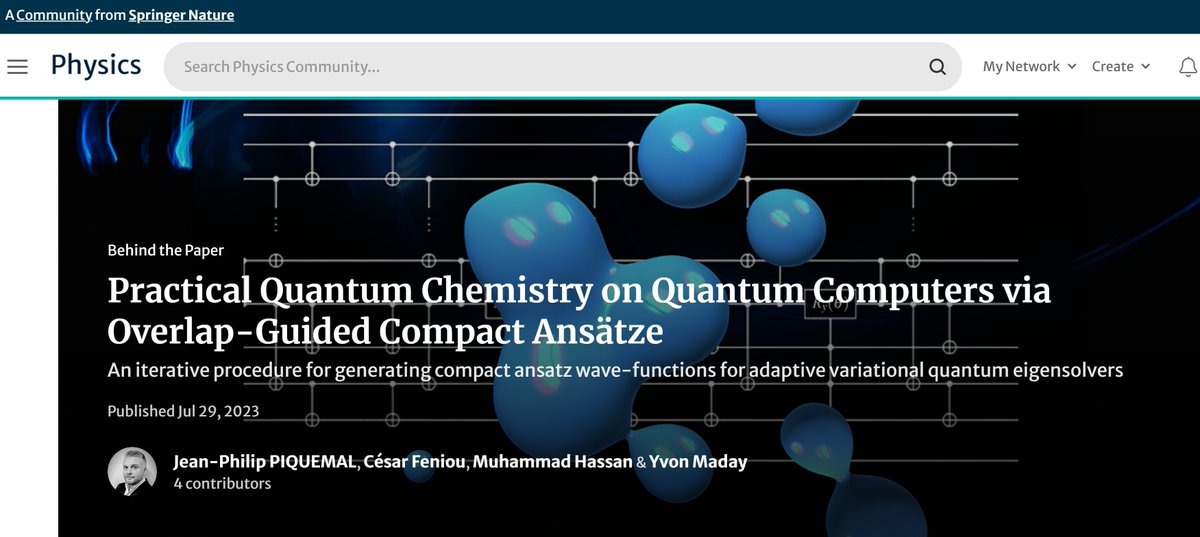
Interested by compact ansätze to perform quantum chemistry computations on #QuantumComputing devices?
Read our paper @CommsPhys🔥🔥.
Shout out to the amazing César Feniou @ChemCesar & Mohammad Hassan. Great #compchem/#mathematics collab. with Yvon Maday.
https://t.co/C8DYTvrKhE