Sustainable Energy for the AI and Space Era | Head of Energy Strategy, Data Center Power, and Infrastructure Sustainability for AMER & EMEA @ ByteDance/TikTok.
SpaceX is redefining industries on Earth and aiming to create new ones beyond it.
On June 11, it successfully priced its $75B IPO.
Goldman Sachs is honored to have served as lead left bookrunner.
Capital frenzy aside, this is the future.
Space and multi-planetary infra, energy systems, and human habitation are equally or more important than any development on Earth for the entire 21st Century and onward.
TERAFAB: the next step to becoming a galactic civilization
Together with @Tesla & @xAI, we're building the largest chip manufacturing facility ever (1TW/year) – combining logic, memory & advanced packaging under one roof
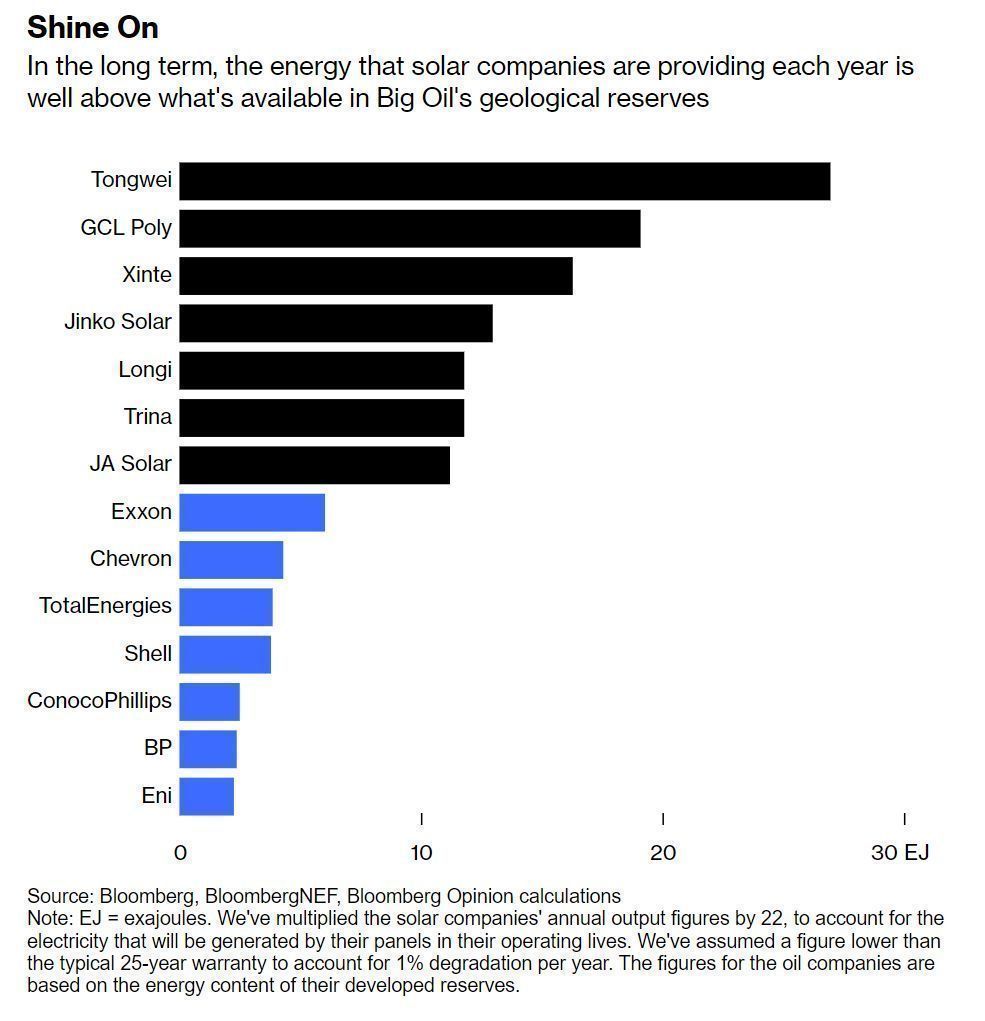
Seven solar companies most people haven’t heard of, are ALREADY providing more energy for the global economy than Exxon, Chevron, Shell, and BP: https://t.co/J8aYAmlQvH
We have the solutions. Time to dump the oil economy and implement them. #ActOnClimate#climate#energy
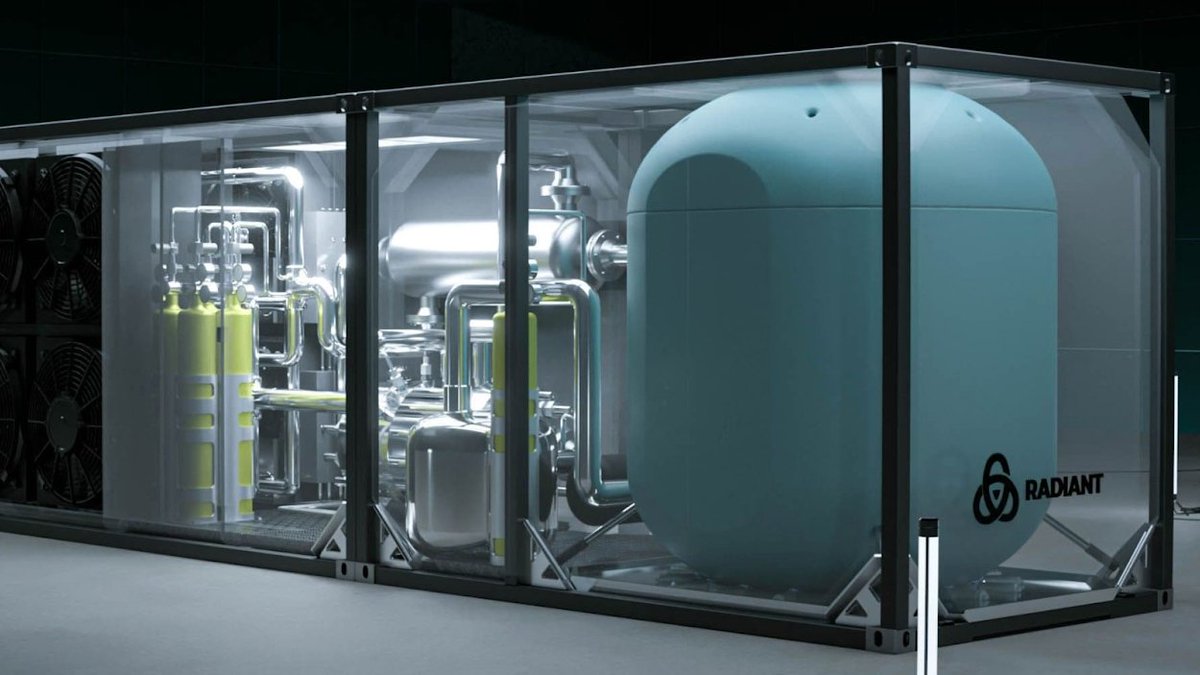
MEGAWATT IN A BOX? This high-temperature gas reactor being developed by @RadiantNuclear could be a potential replacement for diesel generators.
Radiant is on track to become the first company to test its fueled reactor experiment in DOME — the world’s first microreactor test bed.
📁 Matthew McConaughey says he wants a private LLM, fed only with his books, notes, journals, and aspirations, so he can ask it questions and get answers based solely on that information, without any outside influence.
Artificial intelligence isn’t just eating the world’s software - it’s eating its electricity.
Training a single SOTA large language model can consume as much energy as 5,000 U.S. homes use in a year. And with hyperscaler data centers, infrastructure funds, and sovereign AI efforts around the world sprouting up, power grids will feel the strain globally.
This incredible AI boom is on a collision course with the limits of our grid in the US. Just in the US, data centers used 176 TWh in 2023, which is 4.4% of all U.S. electricity, and are expected to reach 580 TWh of usage by 2028 (12.0% of all US electricity) – nearly tripling our electricity usage in 5 years.
At @KindredVentures, we're excited to invest in Aalo Atomics, as part of their new $100M Series B led by Valor Equity Partners, who are backers of @Tesla, @SpaceX, @CrusoeAI , and @extropic. Aalo Atomics is on a mission to build and deliver advanced nuclear-powered data centers designed specifically for AI compute, with its first advanced reactor design going live next year, with the goal of mass-production in under five years.
Enter nuclear energy and @AaloAtomics.
Aalo Atomics has developed the world’s first mass-manufactured XMR (Extra Modular Reactor) nuclear power plants designed specifically for AI data center colocation. Founded by CEO @MattLoszak and nuclear architect and CTO Yasir Arafat, who hails from Idaho National Laboratory and helped design MARVEL, which is the only recent reactor that the US Department of Energy has approved. Their advanced reactor design will be deployed onsite, connected to AI data centers, and is under review for approval by the US DOE for a 2026 test reactor build.
How are they pulling forward the nuclear energy timeline?
Aalo delivers 50-100 MWe XMR (Extra Modular Reactor) systems that can be factory-produced and deployed in under six months directly onsite at data center locations, versus the decade-plus timelines of traditional nuclear infrastructure.
🟧 🟩 🟦 Lego blocks for nuclear energy.
The Aalo Pod represents a fundamental architecture shift for nuclear power: five sodium-cooled, 10 MWe reactors paired with single-turbine redundancy, using readily available LEU+ fuel rather than scarce HALEU not even available until 2033.
🚚 🚚 🏗️
The system ships in 30 pre-fabricated containers from Aalo’s 40,000 sq ft Austin pilot factory for on-site assembly, enabling N+1 modularity and grid-optional operation.
⚗️🧊🌡️
Sodium coolant provides 100x the thermal conductivity of water, eliminating pressurization requirements and enabling thin-walled vessels that can be manufactured in days rather than years.
🏡 ⚡ 🏘️ ⚡ 🏡
For sense of impact long term, one (1) Aalo Pod could not only power a large hyperscale data center, but also the electricity usage of 50,000 homes, or a small-to-medium-sized city.
At Kindred Ventures, we have been systematically investing across the AI model and software infrastructure stack, from inference platforms like @FAL that serve over one million developers with real-time generative media cloud capabilities, to specialized frontier model labs such as @PlayAIOfficial in the voice AI category and @_CausalLabs in the physics foundation model space, and further into application-layer companies like @perplexity_ai that post-trains models, runs its own inference, and provides search, deep research, and AI browser products to tens of millions of users each day, and @ParchaHQ that powers enterprise AI agents for the financial services sector. As these companies advance and scale their pre-training, post-training, and inference delivery and consumption at increasing volumes, our set of learnings with each of our investments in the AI space has reinforced our thesis that power generation as well as GPU access, and the resulting macro-level energy impact represents the fundamental bottleneck for artificial super-intelligence.
AI training and inference demands and advanced nuclear technology represents more than an investment opportunity—it enables entirely new categories of computing that are impossible with current infrastructure efficiency and energy constraints. Hyperscalers, infrastructure funds, and sovereign AI platforms, and their frontier lab, neocloud, inference engine, and enterprise customers need stable cost-efficient,clean, reliable, 24/7 power that can support large training clusters and latency-sensitive inference workloads without grid intermittency and price volatility.
The nuclear-powered AI era has arrived. We’re honored to support @AaloAtomics in building the mass-manufacturable modular nuclear reactors that will enable the next decade of AI innovation.
NUCLEAR 101: Fast reactors use fast-moving neutrons to make better use of nuclear fuel.
They can operate on both fissile material and recycled fuel from other reactors to drastically reduce waste while increasing the performance of nuclear power plants.
Here’s how they work:
I’m reminded of this exchange from Annie Bot where one character tells the other that the bot may not be human, but it is human to him, and when he hurts the bot, he’s inadvertently hurting himself
Clanker is less of a slur for robots, but a mirror to the human hate towards them