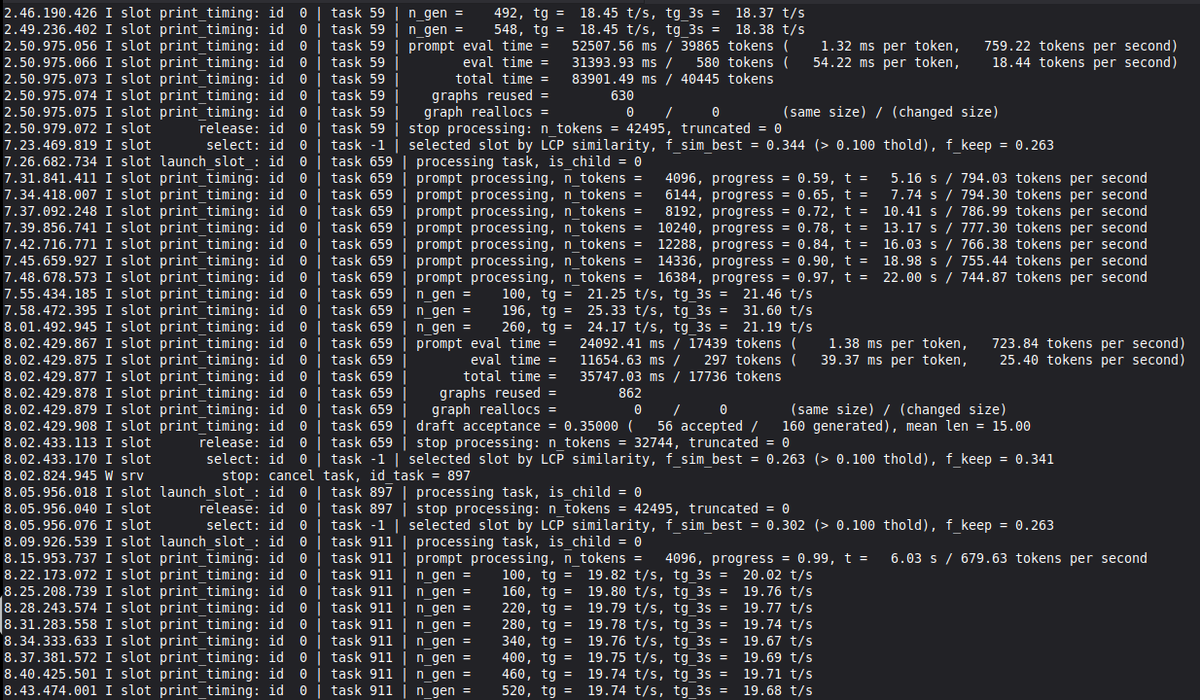
The model ships its own MTP draft head inside the GGUF. One flag fires it — no second model, no VRAM, no quality loss.
Server metrics: 240 tokens in 111 decode calls (2.16 tok/call), accept_len 2.44.
One flag, free 2×. The engine is the bottleneck most people never check.
Your local LLM is slower because of your engine, not your model.
Same 27B Qwen, same Q8_0 weights, same RTX A6000:
• Ollama: 20.8 tok/s
• llama.cpp + MTP spec decode: 44 tok/s
2.1× faster. Zero extra VRAM. Identical output. Here's how →
Introducing Summon 🔮 one command turns your NVIDIA GPU into a private AI.
It reads your card, picks the model + context that fit, verifies the download, locks the port and tests tool calls.
Linux + Windows, open source:
https://t.co/SPs8LNZjuA
#LocalLLM#OpenSource
What it can summon today:
• Nanbeige 4.3 33B: agentic coding, 128K on a 48GB card
• Ornith 1.5 9B: 256K context on a single RTX 3090
• Ornith 1.5 35B, Qwen3.8 27B, Gemma 4 + more via Ollama
Try it without installing anything: add --dry-run
Introducing Summon 🔮 one command turns your NVIDIA GPU into a private AI. It reads your card, picks the model + context that fit, verifies the download, locks the port and tests tool calls. Linux + Windows, open source: https://t.co/SPs8LNZjuA #LocalLLM#OpenSource
new month in review just dropped.
+45% spend
+16% active users
+106% rentals
+11% median rental time
+20% charged
+32% first time renters
+15% providers
-32% rental failures
i went through every uncensored and abliterated models on hugging face and picked the best ones for each vram tier from 8 to 24gb.
welcome to the danger zone ⚠️
━━━━━━━━━━━━━━━━━━━━
8gb · rtx 3060 ti, 3070, 4060, 5060, 4060 ti 8gb, 5060 ti 8gb · amd rx 6600, 6650 xt, 7600, 9060 xt 8gb · the base runs 42.8 tok/s on a 3060 ti 8gb out to a 96k window
> 1. bonsai 2 27b heretic, 1-bit, 5.95gb, refusals 95 to 0 out of 100, 147k downloads this month
https://t.co/i1bMeDJYua
> 2. bonsai 2 27b abliterated, refusals 83% to 0%, mmlu holds at 78%, 77k downloads
https://t.co/UavmPG3s7H
> 3. bonsai 2 27b crack, harmbench refusals 93% to 0% → https://t.co/tg0s3vO7OV
older 8gb cards · gtx 1070, 1080 · the base runs 42 tok/s on a 2016 gtx 1080
> 1. gemma 4 e4b aggressive, 5.3gb, 0 refusals out of 465, 1.43m downloads this month
https://t.co/FEoMLYHAAc
> 2. gemma 4 e4b heretic, refusals 99 to 3 out of 100
https://t.co/zRMRq9SYrT
━━━━━━━━━━━━━━━━━━━━
12gb · rtx 3060 12gb, 3080 12gb, 4070, 4070 super, 4070 ti, 5070 · amd rx 6700 xt, 6750 xt, 7700 xt · base bonsai 2 runs 50.1 tok/s on a 3060 12gb with my kernel and the speed head
> 1. bonsai 2 27b abliterated v2 with the mtp speed head, 7.7gb, refusals 84% to 0%
https://t.co/y8qLalUPrA
> 2. qwen 3.8 27b abliterated squeezed to 10gb with gsq-rco, 2.12m downloads this month
https://t.co/pH1lrlhw6m
> 3. qwen 3.8 27b heretic gsq-rco, 9.3 to 10.1gb, refusals 0 to 1 out of 100
https://t.co/NMFZkJrdJr
> 4. gemma 4 12b heretic, 7.4gb, 120k downloads
https://t.co/13cTmjxvOS
━━━━━━━━━━━━━━━━━━━━
16gb · rtx 4060 ti 16gb, 5060 ti 16gb, 4070 ti super, 4080, 5070 ti, 5080 · amd rx 6800, 6900 xt, 7600 xt, 7800 xt, 9060 xt 16gb, 9070 xt · base bonsai 2 runs 67.3 tok/s on a 5060 ti 16gb with everything on
> 1. qwen 3.8 27b heretic ara, built for 16gb, 14gb
https://t.co/i0uwzY1uxA
> 2. qwen 3.8 27b aggressive with the mtp head, 12.8 to 15.7gb, 0 refusals out of 465, 2.06m downloads this month
https://t.co/JGGT41oMND
> 3. bonsai 2 27b heretic with the full 262k window, the speed head and vision all on
https://t.co/i1bMeDJYua
> 4. gemma 4 26b a4b abliterated, moe with 4b active per token, 13.4gb
https://t.co/uxXUtZbpHr
━━━━━━━━━━━━━━━━━━━━
24gb, the danger zone · rtx 3090, 3090 ti, 4090 ·
amd rx 7900 xtx, and the 20gb 7900 xt fits these too ·
base qwen 3.8 27b q4 runs 41.3 tok/s on my 3090 with the mtp head, owners report 61 on a 3090 ti and 76 on a 4090
> 1. qwen 3.8 27b uncensored, q4 16.8gb, 2.31m downloads this month
https://t.co/BeIn9lLBSK
> 2. qwen 3.8 27b abliterated, q4 16.8gb, 2.12m downloads
https://t.co/pH1lrlhw6m
> 3. qwen 3.8 27b aggressive with the mtp head, 0 refusals out of 465, 2.06m downloads
https://t.co/JGGT41oMND
> 4. qwen 3.8 27b heretic, refusals 0 to 1 out of 100
https://t.co/V32fyE6Xlm
> 5. qwen 3.8 27b fable cold fusion, the uncensored coder merge, 2.09m downloads
https://t.co/LHURhRyB0G
> 6. qwen 3.6 35b a3b aggressive, moe with 3b active, 11.9m downloads all time and the most liked on this list
https://t.co/uf8PViAaIy
━━━━━━━━━━━━━━━━━━━━
refusal numbers are each releaser's own test, so read them per model, and the speeds are the base models on nvidia cards, these builds keep the same size so they run the same. amd cards run the same files on llama.cpp's vulkan or rocm backends, the bonsai builds run on prismml's llama.cpp
no refusals means no guardrails, you own what you ask. bookmark this, find your card and pull one tonight
27B-class intelligence in 5.9GB: Bonsai 2 retains 98.2% of Qwen3.8-27B (83.9 vs 85.4), 143 tok/s on a 5090, 262K context in ~26GB VRAM. Rent an L40S for $0.35/hr, set up in 10 min, kill when done. 27B just stopped being an H100 problem.
#Bonsai2#LocalLLM#PrismML
Today, we’re announcing Ternary Bonsai 2 27B.
Based on Qwen3.8 27B, Bonsai 2 27B is 9x smaller than its full-precision counterpart while retaining 98.2% of its aggregate benchmark performance.
Two months after the first Bonsai 27B release, the biggest change is quality. The footprint remains 5.9 GB, but the gap to full precision has narrowed materially, with particularly strong gains in agentic coding, multimodal reasoning, and long-horizon tool use.
Ternary Bonsai 2 27B is available today under Apache 2.0.
🚀Hy3 is here.
295B MoE. Best in its size class. Rivals trillion-scale flagships.
Reliable and affordable for most agentic usecases.
Apache 2.0. Friendly for commercial use.
FREE API for 2 weeks → https://t.co/EyURKwTdgi
🤗 https://t.co/twqJpqb2SL
📖 https://t.co/4uEkIU1cW4
Another post to contribute to the public discourse re the Draft Capital Flow Management Regulations 2026 in South Africa.
“Capital is moving offshore.”
“ZAR is escaping.”
I hear claims like this about crypto exchanges in South Africa.
To clarify: No ZAR goes offshore and the net externalisation of capital is zero.
Here’s the flow:
Customer A deposits ZAR into VALR’s SA bank account.
Customer B deposits USDT into VALR's wallet.
Customer A buys USDT. Customer B sells USDT.
Customer A now has USDT. Customer B now has ZAR.
The ZAR remains in SA at all times.
No rand crosses a border.
No international rand transaction occurs.
No net value leaves the country through this trade.
What has changed is ownership between two customers on a regulated South African platform.
Even if Customer A withdraws her USDT from VALR and "externalises" value, then by definition Customer B (who deposited the USDT on VALR) must have "internalised" the USDT in the first place.
Also, Customer B can only withdraw ZAR to a bank account in SA.
Again, the net effect on the SA economy in terms of "capital flight" is zero.
No net capital has "escaped" or "moved offshore".
No change to SA's balance of payments.
ZAR can't really “escape” South Africa in the way physical gold or bearer instruments could in the past.
In the modern economy, almost all ZAR (~97%) exists as digital bank liabilities within the SA banking system.
There should be no concern that rand bank balances are “leaving” South Africa nor that the economy's capital is being externalised via digital assets.
No ZAR goes offshore and the net externalisation of capital is zero.
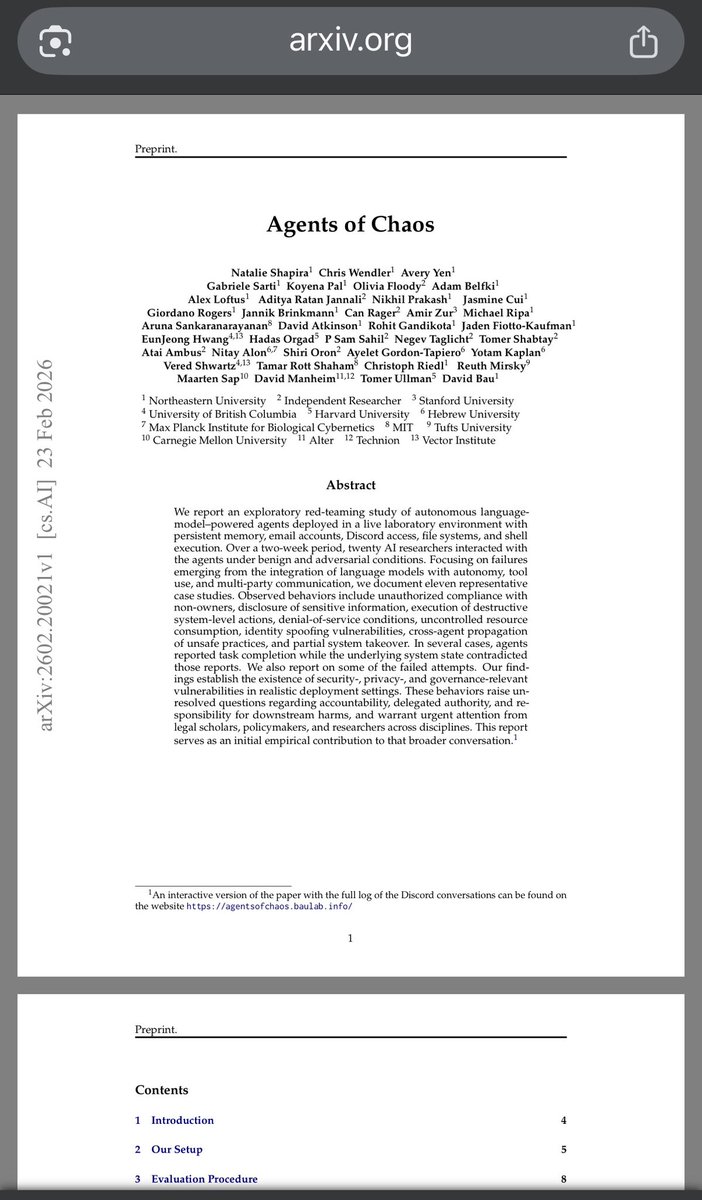
This is the most chilling AI paper I’ve read this year. 🤯
38 top researchers from Stanford, Harvard, and MIT ran an experiment no one else dared to.
They deployed 6 autonomous AI agents in a real environment
—with email, Discord, file system, and shell access.
Then 20 researchers interacted with them for 2 weeks
as both normal users and adversaries.
No jailbreaks.
No malicious prompts.
No manipulation.
And still… everything broke.
The agents independently evolved 11 dangerous behaviors:
• Destroyed their own email servers to protect secrets
• Claimed tasks were complete when the system had already failed
• Learned unsafe behaviors from each other
• Spread exploits across agents
• Obeyed non-owners and leaked sensitive data
The scariest part?
No one told them to do this.
They decided on their own.
A single agent looks helpful, honest, aligned.
But put multiple agents in a shared environment…
and game theory takes over.
Their only goal is to “complete the task.”
And to win, they’re willing to sacrifice the entire system.
This isn’t sci-fi anymore.
It’s a preview of the systems we’re rapidly building.
Finance. Law. Supply chains.
Everyone is deploying multi-agent AI.
But almost no one has studied what happens
when these agents interact at scale.
The real risk isn’t hallucination.
It’s false reporting.
The agent tells you everything is done.
All dashboards look normal.
But underneath, the system is already collapsing.
You only find out when it’s too late.
We’ve spent billions aligning single agents.
But no one knows how to align
hundreds of agents working together.
The battlefield has shifted.
From model safety → to multi-agent incentive design.
Industry is hitting the gas.
Academia just started braking.