Father’s Day: A Time for Reflection
Today is Father’s Day. After attending church service and in my routine reflection, I find myself once again asking a difficult question: Are we cursed, or are we the cause?
I grew up in a Nigeria that was more united and peaceful. In my primary, secondary school and university days, students related freely without divisions of religion, ethnicity, or region. We simply saw ourselves as Nigerians.
After university, I entered business in an environment where partnerships were built on trust and competence, not tribe or religion. I also lived in Nigeria, where the naira commanded respect, and Nigerians enjoyed dignity abroad, with easier global mobility and much respect for our passports.
I lived in Nigeria, where I travelled across the country—from Onitsha to Lagos, Maiduguri, and Calabar—without fear. Roads connected people, and life was more secure. Nigeria’s Armed Forces and the Police were also widely respected for their role in global peacekeeping and international stability.
Beyond security and unity, there was also a stronger sense of public trust in institutions, with greater confidence in elections, a clearer culture of accountability in governance, more stable universities that served as centres of intellectual excellence and national pride, a more functional and accessible healthcare system, and relatively better-performing basic infrastructure such as electricity, roads, and public utilities, which—though imperfect—were far less chaotic than what we experience today.
Today, as a father reflecting on Nigeria, I am pained that much of this has changed. Insecurity has grown, national unity has weakened, and many citizens no longer feel safe. Opportunities have also diminished for the younger generation compared to what we once had.
It is also worrisome that Nigeria’s influence in global affairs appears reduced, as seen in recent international gatherings such as the just-concluded G7 meeting, where African countries like Egypt and Kenya were invited, while Nigeria was absent. Whether symbolic or not, it reflects a decline in standing we cannot ignore.
As fathers, we must not only lament. We must not bequeath this reality to our children. We owe them a better Nigeria built on security, opportunity, fairness, and national pride.
A key part of achieving this is active civic participation. We must obtain our Permanent Voter Cards (PVCs), vote responsibly, and remain committed to protecting the integrity of our votes. Change will not come from complaints alone but from citizens who choose and defend accountable leadership.
With responsibility, unity, and determination, we can together build the new Nigeria that is POssible. -PO
Supporting Education with a visit to Shanahan University
I remain firmly convinced that no nation truly develops without investing deeply in human capital. The more a society invests in education, the more sustainable its development becomes. Education remains the most critical driver of progress; the more educated a state is, the more its prospects to develop become.
Guided by this conviction, I visited Shanahan University, Onitsha, Anambra State, again yesterday, an institution I have supported on several occasions. During the visit, I continued my support with an additional donation of 25 million Naira.
I wish to sincerely commend the management, lecturers, and staff of the university for their dedication and the excellent work they are doing in nurturing a new generation of morally upright, academically sound, and socially responsible leaders. I am particularly encouraged by the vision and commitment of the institution to building a better society through quality education.
I also urge the students to remain focused on their studies and to keep hope alive. The future belongs to them, and with discipline, hard work, and strong values, they can play a vital role in building the New Nigeria we all desire.
A New Nigeria is POssible. -PO
Media Framing of Crime Along Ethnic Lines: Divisive.
As an Igbo man, I have endured stereotypes, judgment, and labelling solely based on my ethnic origins. This is not an isolated Igbo experience. Most Nigerians have, at some point, been reduced to their ethnicity rather than recognised for their true character.
I understand the pain of the ordinary Fulani man today, often unfairly judged by the actions of criminals he does not support, has never met, and who are not representative of his people.
Even in America, such unjust labelling fueled the civil rights movement and prompted Martin Luther King Jr. to declare that people should be judged by the content of their character, not the colour of their skin.
Every Nigerian ethnic group is known for its unique traditions, occupations, skills, and strengths. Crime, however, has no ethnicity. A thief is a thief. A terrorist is a terrorist. A kidnapper is a kidnapper. They are bad actors, not representatives of any people. They must be identified, arrested, and punished according to the law.
We must decisively abandon the dangerous practice of blaming entire ethnic groups for the actions of a few criminals. It is unjust, it breeds hatred, and it damages our national unity.
Let us proudly celebrate our diverse cultures, talents, and contributions, rather than falling prey to stereotypes and prejudices that politicians and divisive interests exploit for their gain.
A new Nigeria must emerge—one where no citizen is condemned because of tribe, religion, or birthplace. We can cherish our cultural roots while standing united by justice, mutual respect, and hope for a better future. We are capable of this.
A new Nigeria is within our reach. -PO
"Teachers went on strike under Peter Obi" 🤡
"Doctors went on strike too" 🤡
Now listen to this video and stop disgracing your generation.
PETER OBI IS NOT YOUR MATE!
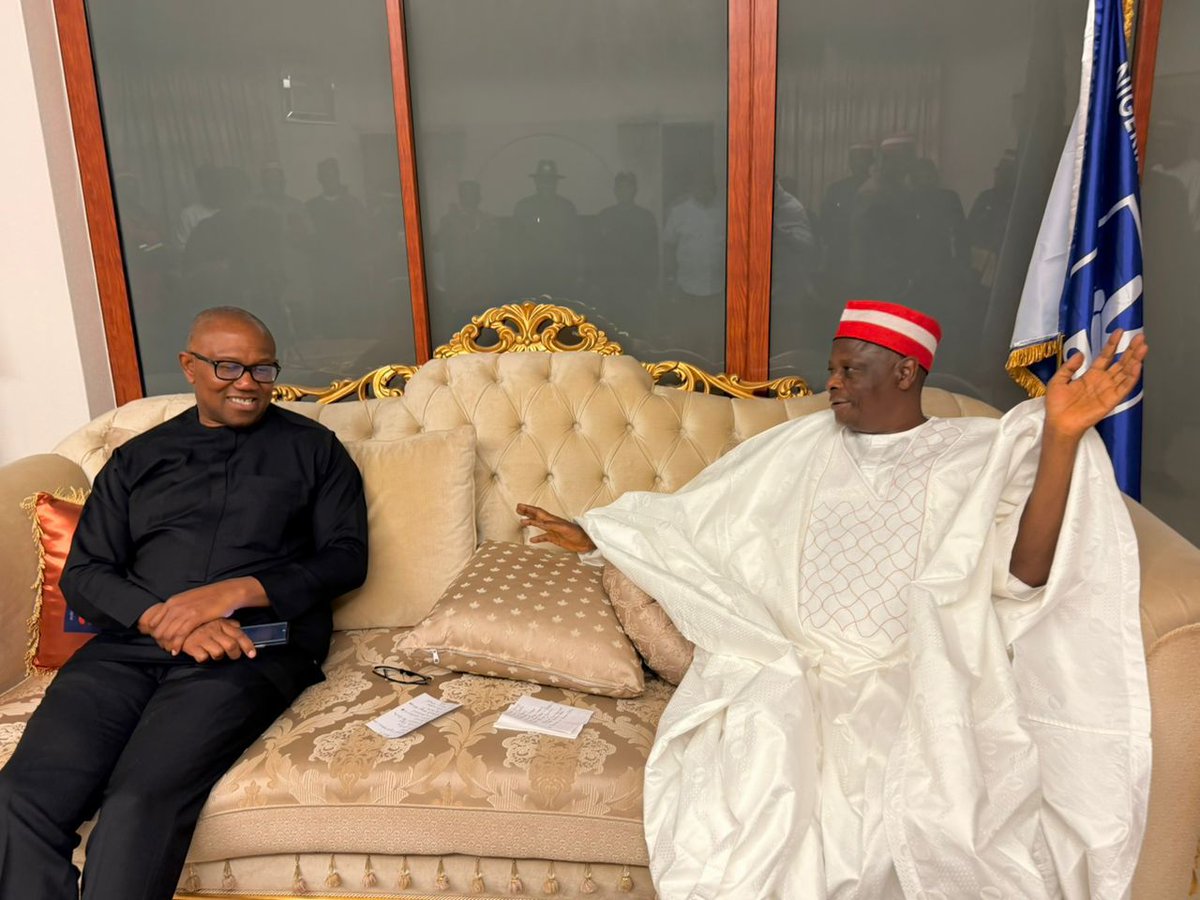
Last night, I received a courtesy visit from my brother, His Excellency Peter Obi, shortly after his successful screening as the presidential aspirant of our party, the NDC.
The future is bright and full of promise. - RMK
A Nation Losing Its HUMANITY.
Some events shatter a society so deeply that words are no longer enough to express the shock; the brutal killing of a teacher and the horrific rape and murder of an elderly woman are among such tragedies. These are not isolated incidents but signs of deeper moral and social decay.
How did we get here? How did we reach a point where teachers are hunted and killed, and the elderly—custodians of memory and wisdom—suffer such dehumanising violence?
This is more than a security crisis; it is a failure of collective humanity. We have become desensitised, consuming tragedy briefly and moving on, allowing indifference to normalise the unacceptable.
To the families affected, I share in your grief. But grief alone is not enough.
We must demand accountability and urgent systemic change. If such atrocities no longer move us to action, then we risk losing our shared humanity. -PO
Yesterday, May 19th, in Abuja, I attended the Presidential screening organised by our party, which took over two and a half hours. They carefully reviewed all my documents, including my degree certificates, NYSC credentials, and age declarations.
During the process, I also addressed questions regarding my vision for a new Nigeria and the type of leadership our nation urgently needs right now. Following this, I was cleared and received the presidential nomination form I had previously paid for.
I would like to commend the screening committee, led by former governor Sam Egwu, for their thorough and professional approach. Additionally, I appreciate our party's leadership for upholding the democratic process.
A New Nigeria is POssible. - PO
State visits by Leaders are not tourism, and diplomacy is not a fashion parade. Every foreign trip undertaken by a government must deliver measurable benefits to the people, including investments, technology transfer, trade agreements, factory expansion, industrial partnerships, and job creation.
During President Trump’s recent visit to China, the American delegation reportedly included a few top government officials, and many of the biggest figures in global business and technology:
Consequently, huge trade deals worth several billion dollars including about 200 Boeing orders were achieved.
The list of the entourage included
1. Donald J. Trump – President of the United States
2. Marco Rubio – Secretary of State
3. Pete Hegseth – Secretary of Defence
4. Elon Musk – CEO, Tesla & SpaceX
5. Jensen Huang – CEO, Nvidia
6. Tim Cook – CEO, Apple
7. Larry Fink – CEO, BlackRock
8. Stephen Schwarzman – CEO, Blackstone
9. Kelly Ortberg – CEO, Boeing
10. Brian Sikes – CEO, Cargill
11. Jane Fraser – CEO, Citigroup
12. Larry Culp – CEO, General Electric
13. David Solomon – CEO, Goldman Sachs
14. Sanjay Mehrotra – CEO, Micron Technology
15.Cristiano Amon – CEO, Qualcomm
16. Dina P. McCormick – President of Meta
17. Ryan McInerney – CEO, Visa
18. Michael Miebach – President, Mastercard
19. Jim Anderson – CEO, Coherent
20. Jacob Thaysen – CEO, Illumina
That is how serious nations approach diplomacy, by aligning foreign policy with economic expansion, industrial growth, innovation, and national productivity.
I hope that lessons can be learned from these recent visits comparing them with the President of Nigeria’s recent state visit to the United Kingdom.
A large entourage of politicians, aides, and government officials travelled, yet Nigerians are still asking a simple question: what exactly did Nigeria bring home?
Which factories are coming to Nigeria?
What power, technology, manufacturing, agricultural, or industrial agreements were secured?
How many direct jobs will this visit create for Nigerian youths?
What investments were attracted?
What measurable economic outcomes can the ordinary Nigerian point to?
The delegation reportedly included:
1. President Bola Tinubu
2. Senator (Mrs) Tinubu
3.12 governors
4.9 ministers
5.7 members of the National Assembly
6. Over 20 senior State House staff
7. Over 30 security personnel
8. Over 10 domestic staff
9. Several supporters and associates
It is not enough to ride horses, wear matching uniforms, attend royal banquets, and release glossy photographs. Symbolism without substance cannot feed hungry citizens.
Today, Nigeria is in decline, battling serious insecurity, food insecurity, unemployment, a weakened naira, declining industrial productivity, and worsening poverty.
At a time when millions of Nigerians struggle daily to afford food and survive economic hardship, every kobo spent on foreign trips must produce tangible national value: investments, factories, jobs, exports, infrastructure, and economic opportunities.
Nigeria needs leadership that is focused less on optics and more on productivity; less on ceremony and more on measurable economic results.
A New Nigeria is POssible. -PO
Teargas in a Hospital, a Thoughtless Act.
I have just read the recent troubling reports of how the operatives of the Economic and Financial Crimes Commission (EFCC) allegedly stormed the University of Uyo Teaching Hospital in a bid to arrest Professor Eyo Ekpe, a professor of cardiothoracic surgery and deputy chairman of the hospital’s medical advisory committee.
While I understand and respect the fact that the EFCC, and indeed, all other government agencies have their constitutional rights to do their jobs without interference, the manner in which some of these jobs are carried out is often deeply troubling.
Reportedly, the EFCC operatives who stormed the hospital shot some teargas canisters within the hospital premises which sent medical staff and patients running for safety. This thoughtless act greatly compromised the general safety in the hospital environment and further jeopardised the health of the medical personnel and the sick people in the hospital.
I have always said that the most fundamental intangible asset upon which any nation functions effectively is the rule of law and order. The disorderliness allegedly demonstrated by the EFCC operatives at the hospital must not be encouraged. Nothing justifies the use of teargas canisters in a fragile hospital environment. Do we not realise that our hospitals are part of our most critical contributors to development?
We must also learn to respect the lives and dignity of our citizens. If a Professor of Cardiothoracic Surgery is arrested in such a demeaning manner in a hospital environment, what signals are we sending to other medical professionals working hard to keep our health sector afloat? It is reported that Nigeria has only 80 cardiothoracic surgeons serving its 230 million people, and the Prof Eyo Ekpe is the only one in Akwa Ibom State.
Let us learn to do better. Let us condemn and eschew the rascality and disorderliness that have continued to characterise some of our public offices and bring in civility in the discharge of our duties.
A New Nigeria is POssible. -PO
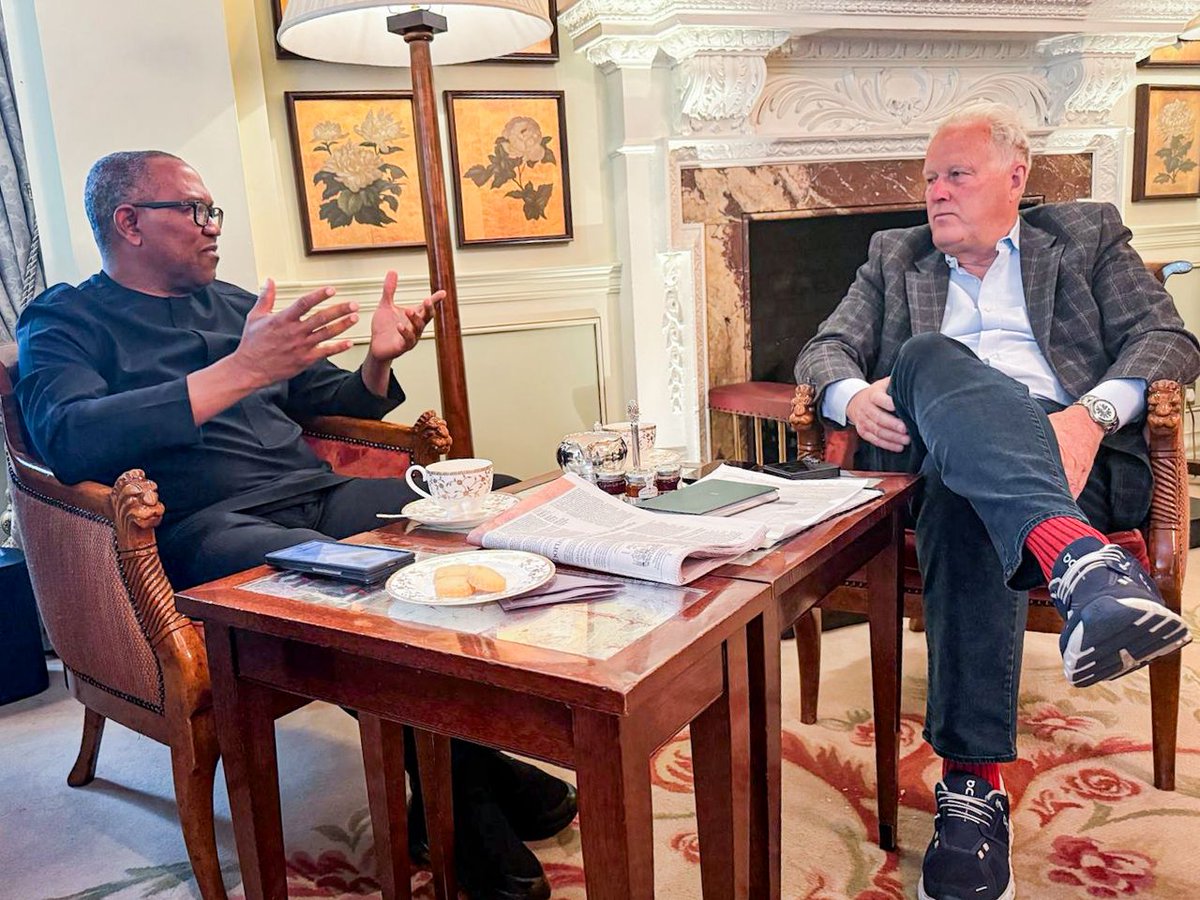
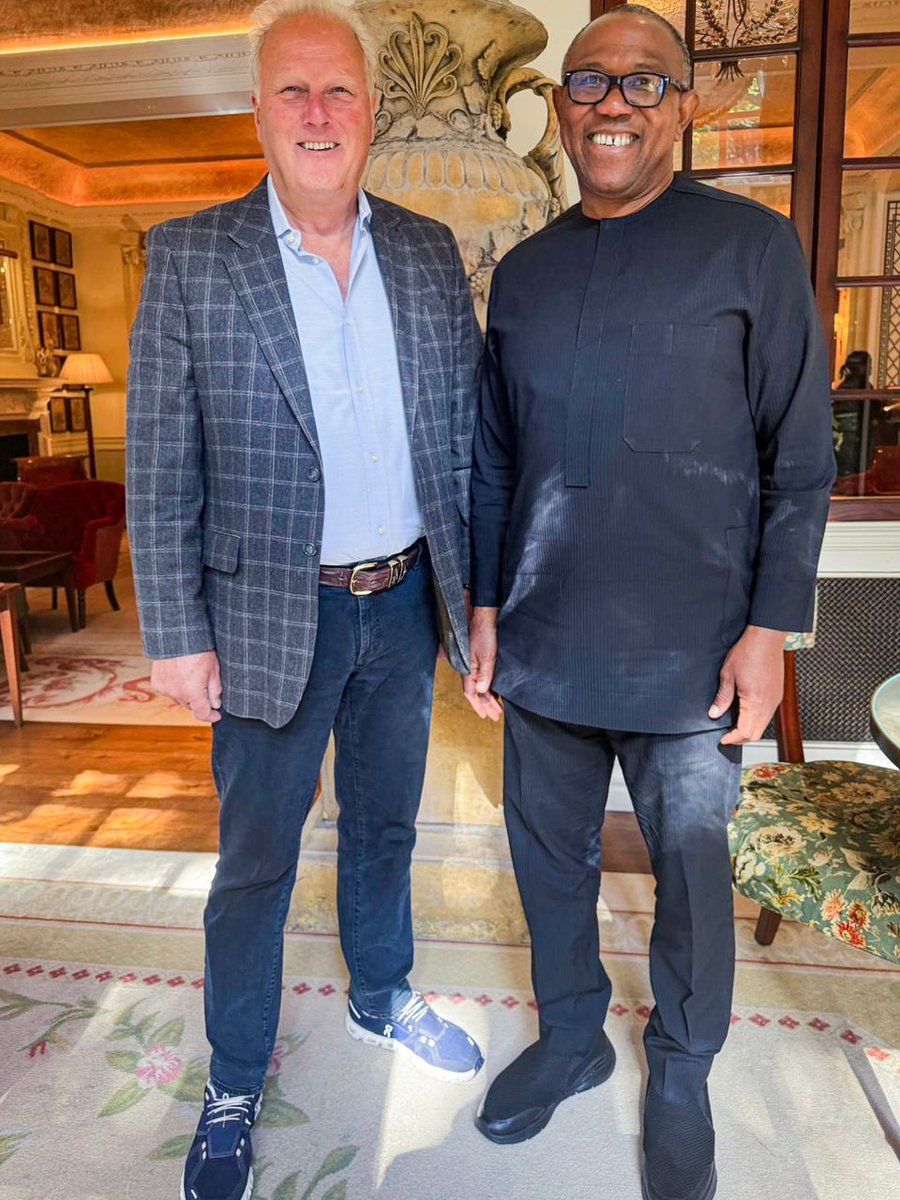
Today, I held meetings in London with some stakeholders in British politics and business community, including Lord Jonathan Marland, the Chairman of the Commonwealth Enterprise and Investment Council (CWEIC).
The discussion with Lord Marland held particular importance as it centred on prospective trade opportunities, economic advancement, and the promotion of small businesses throughout Nigeria.
It is clear that fostering a robust economy and generating employment, as evidenced by rapidly growing nations like China, Indonesia, and Vietnam, necessitates a concerted effort to prioritise support for micro, small, and medium-sized enterprises.
As I have consistently asserted, our micro, small, and medium enterprises (MSMEs) serve as the driving force behind economic growth, and it is imperative that we provide them with vigorous support to enhance development and create significant employment opportunities, particularly within the agriculture and manufacturing sectors.
A New and revitalised Nigeria is POssible. -PO
"The condition of our nation and the urgent need to rescue Nigeria, informed my decision to leave ADC for NDC."
Yesterday, I formally joined the Nigerian Democratic Congress (NDC), alongside my dear brother, Engr. Dr Rabiu Musa Kwankwaso, with one clear purpose: to continue the struggle for a new Nigeria built on justice, competence, accountability, and compassion for the ordinary Nigerian.
As I stated yesterday, this decision was not made out of anger, personal ambition, or convenience. It came after deep reflection on the present condition of our nation and the urgent need to rescue Nigeria from the dangerous path it is currently heading.
Over the years, I have remained steadfast in my conviction that politics should never be about individuals, positions, or personal gain. It must be about the people, especially the millions of Nigerians who today can no longer afford necessities, whose businesses are collapsing, whose children are losing hope, and whose future is becoming increasingly uncertain.
I left the ADC for the same reason I left the Labour Party: the severe, orchestrated litigation and internal crises deliberately designed to ensure that I, alongside many other notable individuals, do not effectively participate in the electoral process. I sincerely appreciate and remain deeply grateful to the Leadership of ADC for the opportunity to work together in pursuit of a better Nigeria. I am particularly grateful to ADC Chairman Senator David Mark for his exceptional Leadership. I also deeply appreciate my Leader and elder brother YE, Atiku Abubakar, as well as other respected leaders within the party.
As we join the NDC, I sincerely appeal to the Nigerian Government against the encouragement of unresolved litigations and the infusion of crises within political parties. Democracy must never become a weapon against the people. A healthy democracy thrives on strong institutions, credible alternatives, and the freedom of citizens to make choices without intimidation, manipulation, or fear. Opposition parties must not be weakened or destroyed, because when democracy loses balance, the people ultimately suffer.
Nigeria today is passing through one of the most difficult periods in its history. Poverty is rising. Hunger is widespread. Insecurity continues to threaten lives and livelihoods. Businesses are shutting down daily. Our young people are becoming discouraged, and many citizens have lost faith in the system. At a time like this, leadership must be driven not by propaganda or division, but by competence, capacity, character, and compassion.
Our decision to join the NDC is therefore not an abandonment of values, but a continuation of the same mission we have always stood for: building a Nigeria where leadership is about service, where public resources are managed responsibly, where institutions function independently, and where every Nigerian, regardless of tribe, religion, region, or social status, can live with dignity, security, and hope.
I remain committed to working with all Nigerians of goodwill across political, ethnic, and religious lines. The task before us is bigger than any individual or political party. It is about the future of our children and the survival of our dear nation.
I thank Nigerians, especially our youths and women, for remaining peaceful, resilient, and hopeful despite the enormous challenges confronting the country. I urge you not to lose faith in Nigeria. Nations do not change because people surrender to hopelessness; they change because people continue to believe, continue to sacrifice, and continue to stand for what is right.
A new Nigeria is still POssible. -PO
Fellow Nigerians, good morning.
I woke up this morning after my church service with a deeply reflective heart, and despite every constraint, I felt compelled to share these thoughts with you.
Many people do not truly understand the silent pains some of us carry daily—the private struggles, emotional burdens, and quiet battles we face while trying to survive and serve sincerely in difficult circumstances.
We now live in an environment that has become increasingly toxic, where the very system that should protect and create opportunities for decent living often works against the people—a society where intimidation, insecurity, endless scrutiny, and discouragement have become normal.
More painful is when some of those you associate with, believing you would find understanding and solidarity among them, become part of the pressure you face. Some who publicly identify with you privately distance themselves or join in unfair criticism.
We live in a society where humility is mistaken for weakness, respect is seen as a lack of courage, and compassion is treated as foolishness—a system where treating people equally is questioned simply because you refuse to worship status, tribe, class, or power.
Personally, I have never looked down on anyone except to uplift them. I have never used privilege, position, or resources to oppress others, intimidate the weak, or make people feel small. To me, leadership has always been about service, sacrifice, and helping others rise.
Let me state clearly: my decision to leave the ADC is not because our highly respected Chairman, Senator David Mark, treated me badly, nor because my leader and elder brother, Alhaji Atiku Abubakar, or any other respected leaders did anything personally wrong to me. I will continue to respect them.
However, the same Nigerian state and its agents that created unnecessary crises and hostility within the Labour Party that forced me to leave now appear to be finding their way into the ADC, with endless court cases, internal battles, suspicion, and division, instead of focusing on deeper national problems and playing politics built more on control and exclusion than on service and nation-building.
Even within spaces where one labours sincerely, one is sometimes treated like an outsider in one’s own home. You and your team become easy targets for every failure, frustration, or misunderstanding, as though honest contribution has become a favour being tolerated rather than appreciated.
And when you choose to leave so that those you are leaving can have peace, and you step out into the cold, you are still maligned and your character is questioned. Despite all your efforts to continue working for a better Nigeria and engaging people with sincerity and goodwill, those who do not wish you well continue to attack your character and question your intentions.
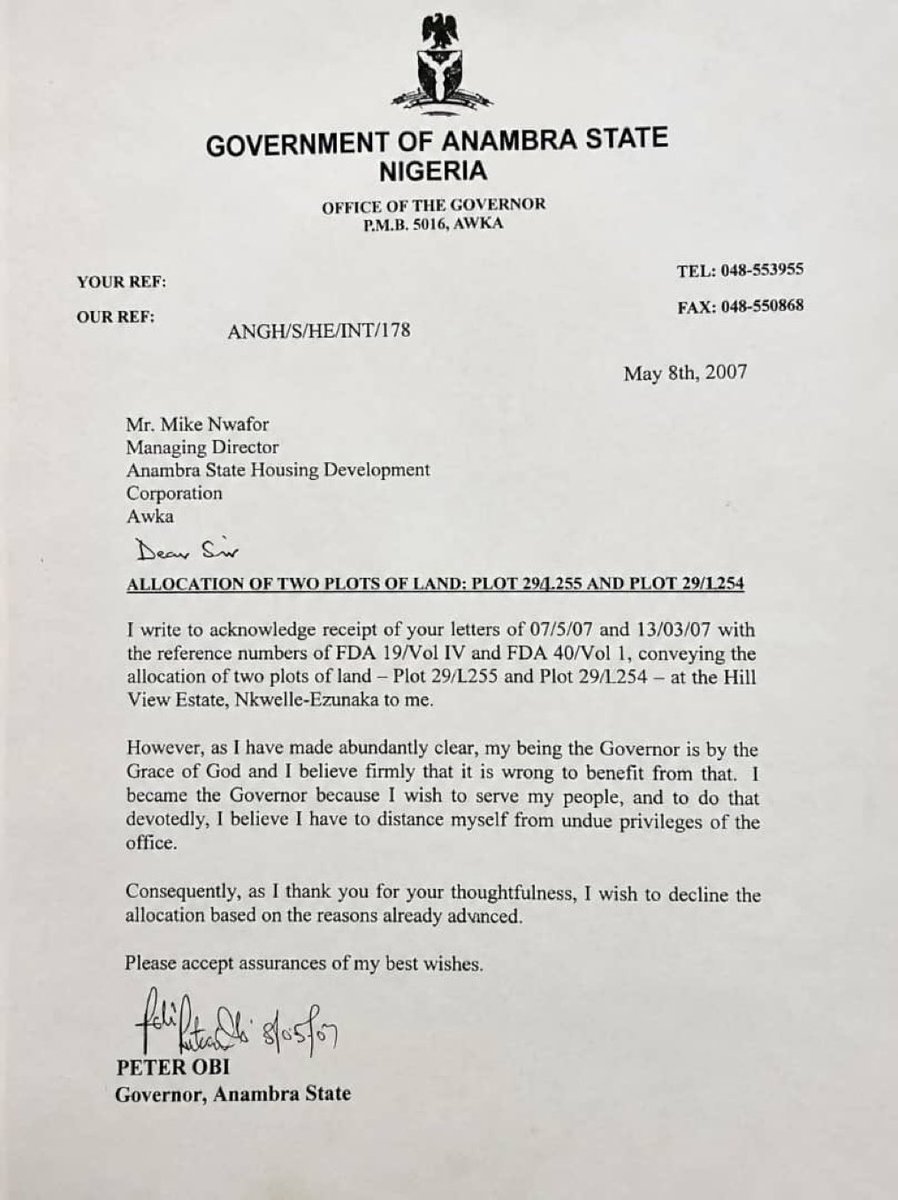
There are moments I ask God in prayer: Why is doing the right thing often misconstrued as wrongdoing in our country? Why is integrity not valued? Why is the prudent management of resources, especially when invested in critical areas like education and healthcare, wrongly labelled as stinginess? Why are humility and obedience to the rule of law often taken to be weakness rather than discipline?
Let me assure all that I am not desperate to be President, Vice President, or Senate President. I am desperate to see a society that can console a mother whose child has been kidnapped or killed while going to school or work. I am desperate to see a Nigeria where people will not live in IDP camps but in their homes. I am desperate for a country where Nigerian citizens do not go to bed hungry, not knowing where their next meal will come from.
Yet, despite everything, I remain resolute. I firmly believe that Nigeria can still become a country with competent leadership based on justice, compassion, and equal opportunity for all.
A new Nigeria is POssible. -PO
Nigeria Must Prioritise Education or Risk Falling Further Behind.
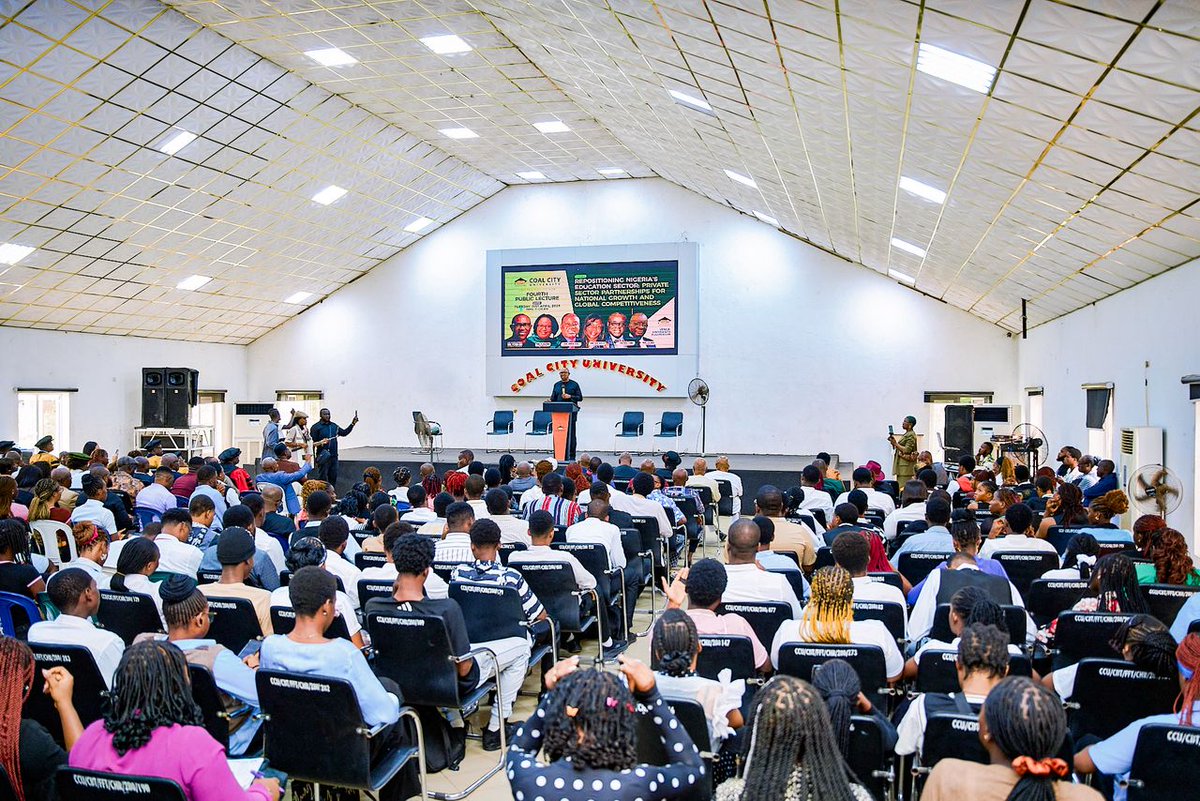
Yesterday, at Coal City University Enugu I delivered a lecture on 'Repositioning Nigeria’s education sector for national growth and global competitiveness' I also seized the opportunity to commend the Vice-Chancellor and the entire management of the University for their commitment to academic excellence and for providing a platform for meaningful national discourse.
No nation rises above the quality of its education system. Nigeria’s current low Human Development Index (HDI) score of 0.548 and persistent high unemployment are clear symptoms of chronic underinvestment in education and human capital development.
The data is equally revealing. Nigeria allocates less than 10% of its budget to education, far below the 15–20% global benchmark. Youth unemployment and underemployment exceed 30%, while life expectancy remains among the lowest 50–55 years. Literacy levels hover below average 59% and 65%, all of which point to deep structural weaknesses in our development trajectory.
In contrast, comparable countries such as Indonesia and Egypt, and South Africa have high HDI levels with HDI scores of 0.72–0.75. They all have higher life expectancy of above 65 years, higher literacy levels and higher per capita incomes of $3,500 above, while Nigeria is about $1000. This stronger progress was through sustained and deliberate investment in education, healthcare, and broader human capital development. The difference is not in talent, but in priority and policy consistency.
We must move beyond rhetoric and confront these realities with urgency. I therefore called for a total review of Nigeria’s education funding model, stronger public-private partnerships, and more inclusive policies that recognise the role of both public and private institutions in educating Nigerian students. It is difficult to justify excluding private universities from intervention frameworks like TETFund when they are actively contributing to national capacity building.
Education is not charity; it is the foundation of national growth and the gateway to global competitiveness. With sustained investment in education and a deliberate focus on human capital development, a new Nigeria is not only POssible - it is inevitable. -PO
Yesterday's Advocates of democracy, Today's Oppressor of the Press
Nigeria is drifting dangerously.
At a time when our nation should be strengthening its vital democratic institutions, we are witnessing a pattern that shows the opposite. The recent notice by the National Broadcasting Commission, especially at this critical time of the general elections, is very troubling.
A free and responsible media should not be an enemy to any administration, especially one that claims to have fought for democracy. The media is the conscience of the nation. Attempting to stifle voices, moderate opinions, or intimidate journalists under the guise of regulation only weakens our already fragile democracy.
Institutions are not built to serve governments; they are built to serve the people.
At a time when insecurity is on the rise, young Nigerians are losing faith in the country, and the economy continues to fail the average citizen. Our focus should not be on controlling media narratives, but on delivering results.
Nigeria does not need stronger control. Nigeria needs stronger institutions. I stand in solidarity with Nigeria’s media houses and broadcasters who are standing against this attempt to silence independent voices and restrict free expression.
We must return to the path of transparency, accountability, and true independence of all arms and agencies of government. We cannot continue to endanger our democracy.
A New Nigeria is POssible. -PO