The China Made research initiative at the Center for Asian Studies @CUBoulder explores domestic & international dimensions of China’s infrastructure development
Indonesia's Railway SOE gets $200m of state capital injection to cover 25% of the Jakarta-Bandung cost overruns. The other 75% will be financed by China Development Bank https://t.co/HkEEaD77wO
@TylerRHarlan writes about renewable energy infrastructures and how these have turned western China into a “low-carbon frontier,” a resource-rich region that generates low-carbon value for the national green economy. https://t.co/FBiZSvyg7U
Two more ChinaMade articles just out at The China Quarterly! Part of a forthcoming special issue on Chinese Infrastructure: Techno-politics, Materialities, Legacies. @dtbyler @TylerRHarlan
@dtbyler writes about the material infrastructures of industrial parks in Xinjiang and how they are productive of the “camp fix”: the creation of Muslim workers who are controlled through the built environment. https://t.co/B48YltAfRc
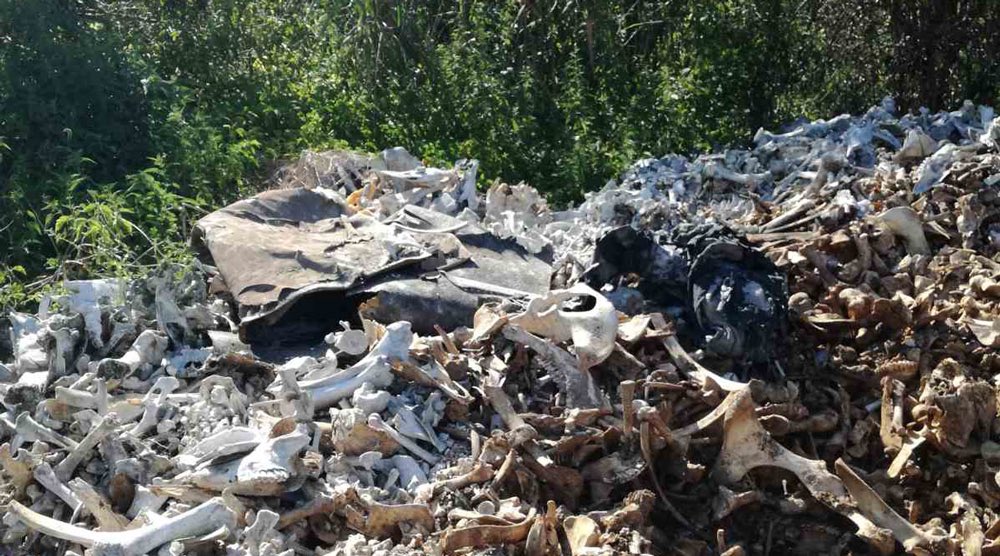
Adam Liebman writes about high metabolism infrastructures in urban China by exploring the scrap trade and challenging common assumptions of ‘wasteful’ urbanization. https://t.co/ZvJtV4ucMe
Two new ChinaMade articles by Emily Yeh and Adam Liebman just published at The China Quarterly! Part of a forthcoming special issue on Chinese Infrastructure: Techno-politics, Materialities, Legacies.
Emily Yeh writes that “The arrival of natural infrastructure marks a national-scale infrastructural time that promises a new future in which village-controlled scenic areas have no part, leading to a ruination of their imagined futures.”
https://t.co/orqo1W8mfl
Herre de Bondt and Rivke Jaffe analyse how rats in Amsterdam were transformed from unhygienic ‘epidemic villains’ to useful ‘waste workers’: https://t.co/cEwjX3wwsN
Ognjen Kojanić argues that instead of seeing the proliferation of golden jackals in Belgrade as a problem of irresponsible citizens failing to properly dispose of their rubbish, one should think of alternative ‘multispecies infrastructures of waste’: https://t.co/aazYByZDY7
In his study of northern Myanmar, Jacob Shell shows how elephants play a key role in amber prospecting and extraction, and raises questions about the future of elephant-reliant transport in the face of infrastructural modernity: https://t.co/v3WvFea2n4
Based on archival sources, Jack Greatrex shows how British extractive infrastructures in Malaya facilitated the movement of locusts, creating a new a habitat for these insects through the novel ecologies that emerged along roads and railways: https://t.co/IaR4NKjEUV
700MW, $1.2bn, CNEEC-Sinohydro built hydropower plant in Nigeria is set to open Q1 2023.
(w/ large-scale rail, pipelines, power-plants, roads, ICT etc. works happening in Nigeria -- why does it seem to get such less focus from BRI watcher/researchers)
https://t.co/7Iz5JRSDFF
Looking forward to the Cooling Asia Workshop. Registration and programme for the hybrid event at https://t.co/uBOwKeeMWJ Presenters include @CJCourtneyWuhan @underground259@bhar_venkat@nha3383 @drgokcegunel @DanielABarber @n_str Organised by @nus_ari
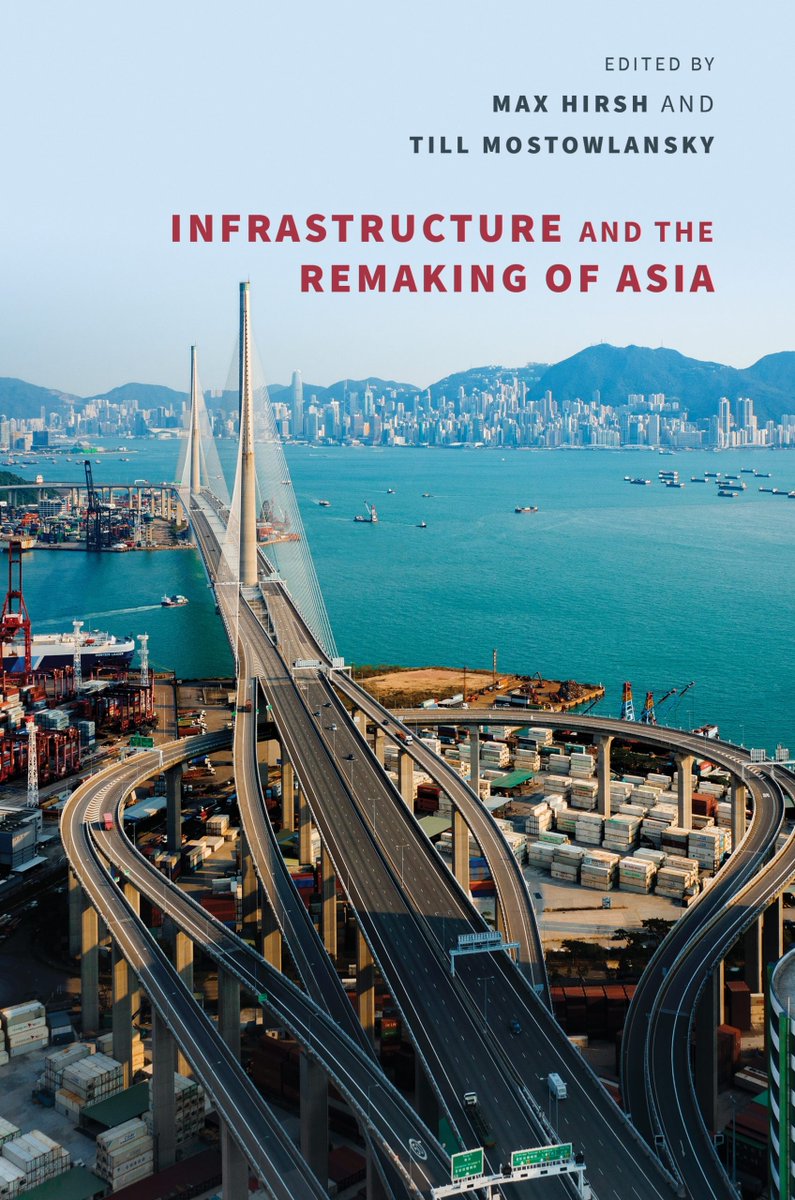
What are the implications of Asia’s big infrastructure push? 10 in-depth case studies on infrastructure’s leading role in climate change, digitalization, and China’s emergence as a superpower.
Book launch next week! Nov 9th 4:00 PM MDT.
"Infrastructure and the Remaking of Asia" is out in OA with the University of Hawai'i Press. The print version will follow soon. We've built a website for the book. Check it out and download the PDF or EPUB!
https://t.co/GuteD8LoBb
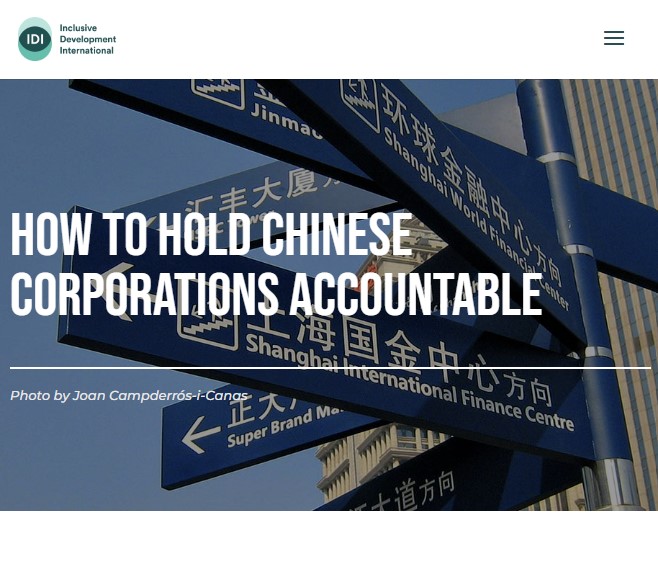
We are excited to share our newest resource for #corporateaccountability and #bizhumanrights advocates around the world: How to Hold Chinese Corporations Accountable. https://t.co/1Qk9qRuMnM