On this day in 2011, revolutionary Libyan leader and pan-Africanist Muammar Gaddafi was captured and executed by NATO-backed rebels. Not long after, The Atlantic published an article with the headline: 'As Qaddafi Died, So Did His Craziest Dream and Mistake: Pan-Africanism.' Yes, they actually said the quiet part out loud.
The article boldly states, "Qaddafi's death -- and the outpouring of support for the late Libyan leader in sub-Saharan Africa following his demise -- is a reminder that pan-Africanism was an historic mistake of enormous proportions -- a simple-minded political ideology that for the past 50 years or so has done more harm than good for Africa's standing in the world."
People across the political spectrum still debate whether Gaddafi really was the brutal dictator the West made him out to be. Was he killed because he was hated by his own people? Or did his anti-imperialist politics and refusal to bow down to the West play a decisive role? Today, in 2024, there is a significant body of evidence that the West had a vested interest in removing Gaddafi, who was working to liberate and unify Africa. This article by The Atlantic was an early clue.
The most persuasive evidence that there was a Western plot to destroy pan-Africanism through Gaddafi's assassination comes directly from email correspondences between former US Secretary of State Hillary Clinton and former aide to President Bill Clinton, Sidney Blumenthal. Here’s an extract from one email:
"This [Libyan] gold [reserve] was accumulated prior to the current rebellion and was intended to be used to establish a pan-African currency based on the Libyan golden Dinar. This plan was designed to provide the Francophone African Countries with an alternative to the French franc (CFA)... French intelligence officers discovered this plan shortly after the current rebellion began, and this was one of the factors that influenced President Nicolas Sarkozy's decision to commit France to the attack on Libya."
They did not want Africa to unite under the golden dinar currency that Gaddafi proposed, so he had to go.
This Is For Igbos Who Have Forgotten The Evil Gowon Did To Their People: Listen To General Ojukwu Explaining The Atrocities And Genocide That Was Melted On The Igbo’s Under The BLOODY MURDERER Yakubu Gowon. How Millions Of Igbos Were Slaughtered By Gowon..
THE SAHEL REVOLUTION: REAL DECOLONISATION!
People throw about the term 'decolonisation' left, right and centre. University campuses say they’re decolonising curriculums, and corporations - the workplace. But true decolonisation is a question of land, sovereignty and self-determination.
Today, three countries in Africa - Burkina Faso, Mali, and Niger - have taken revolutionary steps towards achieving just that. They have booted out Western troops stationed on their territories and torn up exploitative contracts with multinationals.
Now the trio is pushing ahead with building nuclear power plants, gold refineries, solar-panel fields and other critical development projects. These are vital, as, for example, up until now, people in the three Sahel nations have had little access to electricity, while France has been getting 15% of its (electricity generating) uranium at bargain-basement prices from Niger.
Obviously, the West can’t stand it when Africans stand up for themselves. So the EU and the US have sanctioned Mali, with Brussels also targeting Niamey. There have been multiple destabilisation attempts in a bid to remove the leaders of the so-called Alliance of Sahel States (a mutual collaboration and defence pact between the three, now upgraded to a confederation) - in particular, alleged assassination plots in Burkina Faso.
So while it’s important to decolonise curriculums and workplaces, if we are serious about the struggle, we must defend the gains made by our brothers and sisters in the Sahel. What are your suggestions for how best to do that?
Video credit: https://t.co/3UPGx6SNoO
NIGER HONOURS REVOLUTIONARIES, NOT COLONISERS
On 15 October, the anniversary of revolutionary Burkina Faso President Thomas Sankara's assassination, the government of Niger re-named street names and monuments after him and other great Pan-Africanists. A portrait of a French coloniser, Parfait-Louis Monteil, was replaced with the image of Sankara and a memorial of his likeness was remade in his honour using images.
The Nigerien capital of Niamey's Charles de Gaulle Avenue was named after the great Nigerien freedom fighter Djibo Bakary, founder of the Sawaba Party, a mass socialist Pan-Africanist party that campaigned against French neo-colonialism. When Bakary was exiled from Niger, he was embraced by presidents, such as Kwame Nkrumah of Ghana, Modibo Keïta of Mali and Ahmed Sékou Touré of Guinea. He and his comrades received military training in China and Algeria to launch a guerilla struggle to liberate Niger, which was unsuccessful.
Francophone Plaza was also re-baptised as the Alliance of Sahel States Plaza after the anti-imperialist Pan-African federation aiming to unify Mali, Burkina Faso, and Niger into a single federal state with an eye on unifying the whole continent.
This is just one of several steps toward decolonisation since President Abdourahamane Tiani came to power through a military coup d’état on 26 July 2023. Like neighbouring Burkina Faso and Mali, Niger has expelled the French military from its soil. Niger also became the first country to boot the US Africa Command (AFRICOM). Niger's government has also revoked the mining license of the French company, Orano, which was exploiting Niger's uranium deposits. Niger nationalised water after kicking out a private French company and decreased the public cost of medical treatments by 50 per cent. Nigerien citizens organise regular rallies to express support for the Tiani-led government.
What do you think of Niger re-naming their streets and monuments? Let us know in the comments.
BURKINABE HONOUR SANKARA’S LEGACY
On Tuesday, it was the 37th anniversary of Thomas Sankara's assassination. That may seem a long tome ago, but the people of Burkina Faso still come out in large numbers every year in the capital Ouagadougou to remember him. At this year’s event, government officials, ambassadors and members of civil-society came together to pay tribute to his life and legacy. They gathered at the Thomas Sankara Memorial - the site of his assassination.
African Stream was also there - speaking to Burkinabe about the significance of the ceremony within the context of the newly formed Alliance of Sahel States (AES). The AES is a pan-African, anti-imperialist confederation seeking to unify Burkina Faso, Mali, and Niger. It’s a project that’s very much in line with Sankara’s vision for his homeland and Africa.
Today, his life and legacy are more important than ever as the current president of Burkina Faso, Ibrahim Traoré, works to put the country back on a 'Sankarist' path. While Sankara only spent four years in power in Burkina Faso, he transformed the country through literacy campaigns, public-health drives, environmental projects, infrastructure development, food sovereignty, increased power for women and more. He is believed to have been murdered by his right-hand man Blaise Compaoré, who was found guilty of his assassination by a Burkinabe court in 2022. Many also believe that the CIA and France were involved in the plot. Compaoré ruled over Burkina Faso for 27 years after Sankara's death until he was overthrown in a popular insurrection in 2014.
HOW TRUTH ABOUT HAITI IS SUPPRESSED
During the 79th session of the UN General Assembly (New York, 24-30 September 2024), the president of Haiti’s Transitional Presidential Council (TPC), Edgar Leblanc Fils, delivered a poignant speech. However, it was overshadowed when a clip showing him taking a swig of water from a large pitcher surfaced and went viral. That was rather convenient for some - for, in his speech, he highlighted how the West was largely to blame for the challenges faced today by Haiti, which was once a prosperous nation but suffered profoundly under oppression and colonisation.
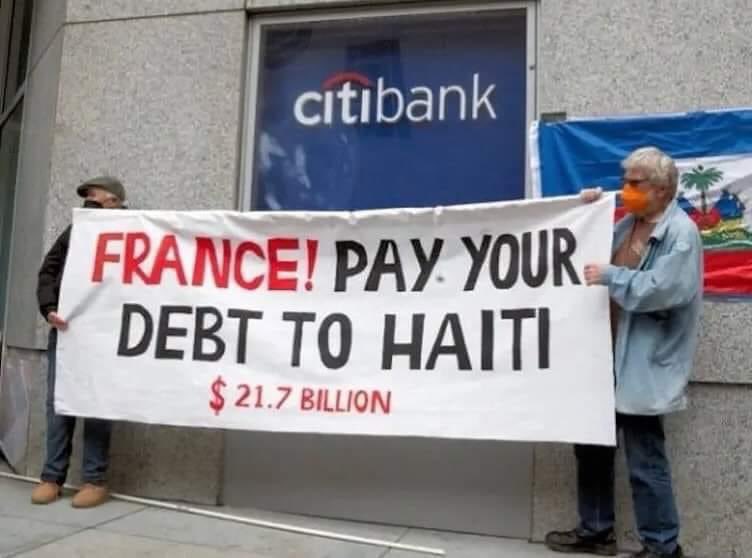
The island gained independence after the Haitian revolution in 1804 - the world's only successful slave revolt. This played a role in ending slavery in all French colonies and inspired neighbouring countries to seek independence. France only recognised Haiti's independence in 1825, but it also demanded an indemnity that drained the island nation's resources, pushing it into a cycle of impoverishment. Leblanc referred to this as "a form of punishment for our audacity in breaking free from slavery." Haiti continues to struggle under the influence of foreign interventions.
In this clip, online social commentator @humannoresource guides us through his speech and its suppression by the media. Please share.
Video credit: @humannoresource
They first came to Africa as explorers, later invaders, then colonizers now they are here as Investors. Their sole aim in Africa is to exploit the continent by using their puppets.
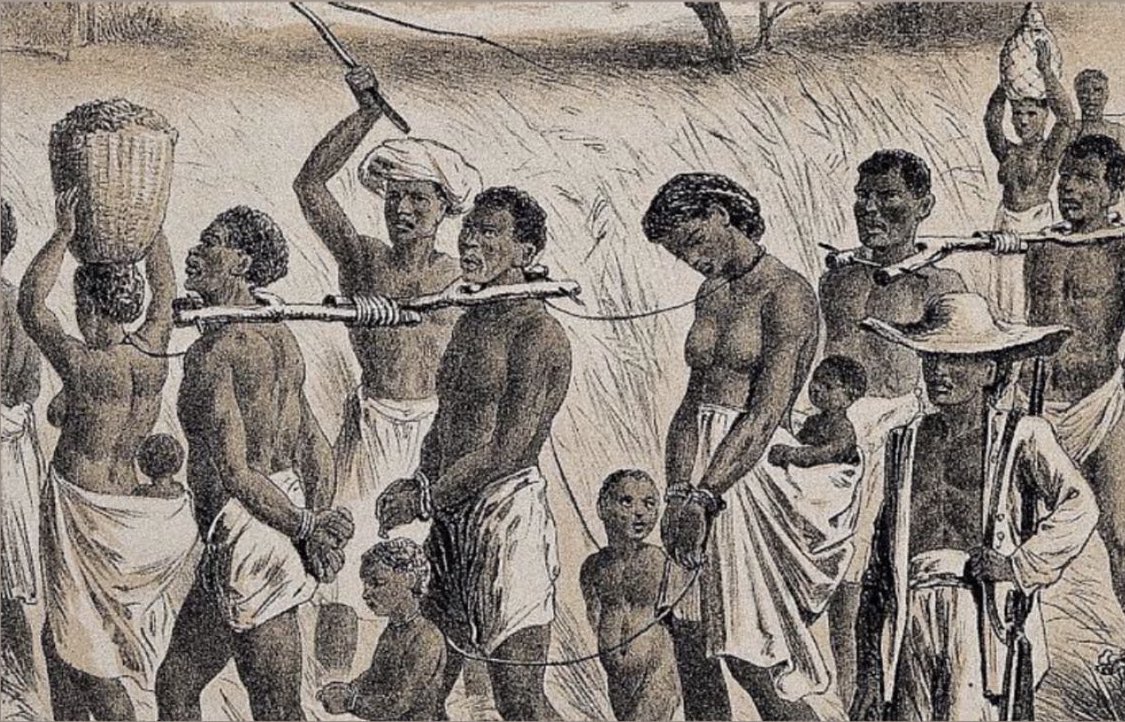
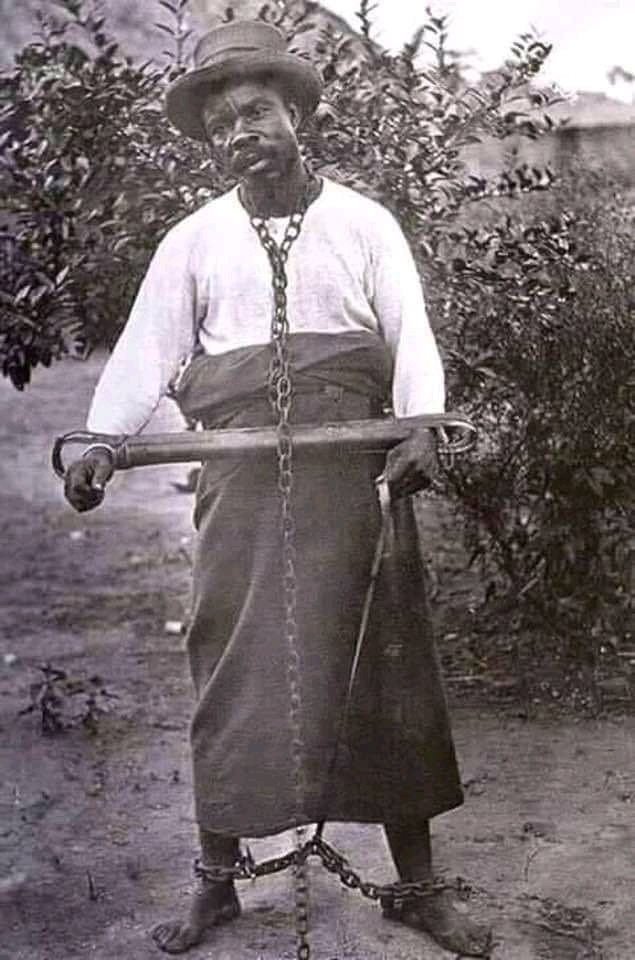
Arab slave trade was one of the worst things to happen in history of mankind. A reminder in African history, During the Arab slave trade, the male captives were castrated to avoid procreation. The enslaved male was meant to serve one, singular purpose alone: to work and work till the day he drops dead.
The females were mostly used as concubines, maids and to serve the pleasures of those who had bought them from the slave raiders in the Sudan, iberia and the Slavic regions of Europe.
Enslaved Black people are mostly depicted as very docile and didn't fight back. However, this was not the case and there were numerous slaves rebellion.
A THREAD!
Israel 🇮🇱 doing it, never allow your enemies to breathe!
Biafrans will continue to stand with Israel and anytime there is need for ground troops, Biafra Government promise to Israel for 15k foot soldiers remain intact.
The Biafra people are facing the same extinction threat from the same people but we will win at the end.


![african_stream's tweet photo. On this day in 2011, revolutionary Libyan leader and pan-Africanist Muammar Gaddafi was captured and executed by NATO-backed rebels. Not long after, The Atlantic published an article with the headline: 'As Qaddafi Died, So Did His Craziest Dream and Mistake: Pan-Africanism.' Yes, they actually said the quiet part out loud.
The article boldly states, "Qaddafi's death -- and the outpouring of support for the late Libyan leader in sub-Saharan Africa following his demise -- is a reminder that pan-Africanism was an historic mistake of enormous proportions -- a simple-minded political ideology that for the past 50 years or so has done more harm than good for Africa's standing in the world."
People across the political spectrum still debate whether Gaddafi really was the brutal dictator the West made him out to be. Was he killed because he was hated by his own people? Or did his anti-imperialist politics and refusal to bow down to the West play a decisive role? Today, in 2024, there is a significant body of evidence that the West had a vested interest in removing Gaddafi, who was working to liberate and unify Africa. This article by The Atlantic was an early clue.
The most persuasive evidence that there was a Western plot to destroy pan-Africanism through Gaddafi's assassination comes directly from email correspondences between former US Secretary of State Hillary Clinton and former aide to President Bill Clinton, Sidney Blumenthal. Here’s an extract from one email:
"This [Libyan] gold [reserve] was accumulated prior to the current rebellion and was intended to be used to establish a pan-African currency based on the Libyan golden Dinar. This plan was designed to provide the Francophone African Countries with an alternative to the French franc (CFA)... French intelligence officers discovered this plan shortly after the current rebellion began, and this was one of the factors that influenced President Nicolas Sarkozy's decision to commit France to the attack on Libya."
They did not want Africa to unite under the golden dinar currency that Gaddafi proposed, so he had to go.](https://pbs.twimg.com/media/GaTxOTrW8AA5u4_.jpg)