First, phages helped us to modify bacterial genomes (lambda-red), now bacterial defense related elements- retrons- help to modify phage genomes - so cool. Will be very interesting to use this method- ordering oligs for cloning:)
A new retron-based method from the innovative @seth_shipman lab now allows making multiple mutations in a phage genome in a single, easy process - from point mutations to small insertions and deletions
Read the overview by @IlyaOsterman
https://t.co/MMgsieS5Hp
Immense gratitude to Luciano (@MarraffiniLab) for his support, @daltonbanh for his invaluable guidance, and @ChloeFishman for daily laughter and inspiration. Studying bacTIRial ;) immunity with you all has been one of the greatest joys of my life. https://t.co/1a3WvkiT69
Multiple packaging simulations produced globally different conformations of the packaged genome, suggesting that the packaging process itself gives mature virions individual traits encoded by the topology of its genome.
New preprint! Simultaneous multi-site editing of individual genomes using retron arrays. We're trying to make it easier to make multiple, non-adjacent, precise mutations to a genome without long cycles of editing, isolating , and editing again. https://t.co/rGYp3ay2oX
“The microbes we found in Hawaii could be similar to microbes that once lived on Mars, or even microbes that live there today,” says @ChloeFishman. Fishman is now an RA at Gladstone. Read more about her work prior to joining our team. ⬇️
https://t.co/ROb2c1Wp5i
While in a Hawaiian lava tube, astrobiologists discovered new species of microorganisms thriving in the extreme environment! Data gathered will inform future missions to Martian lava tubes, locations some suspect life could’ve migrated to after Mars’ surface became inhospitable.
*Preprint Alert* This one’s in a new area for the lab: phage editing! We're using retrons to produce recombineering donors ~inside~ bacterial hosts. A wild-type phage infects the host and an edited phage comes out. https://t.co/8T0IGXBnge
I’m excited to share our new paper on the fundamental biology of RETRONS.
Retrons are incredible molecular machines that produce small fragments of reverse transcribed DNA in bacteria that functions in phage defense.
https://t.co/sahkEclevd
@NAR_Open @GladstoneInst@UCSF_BTS
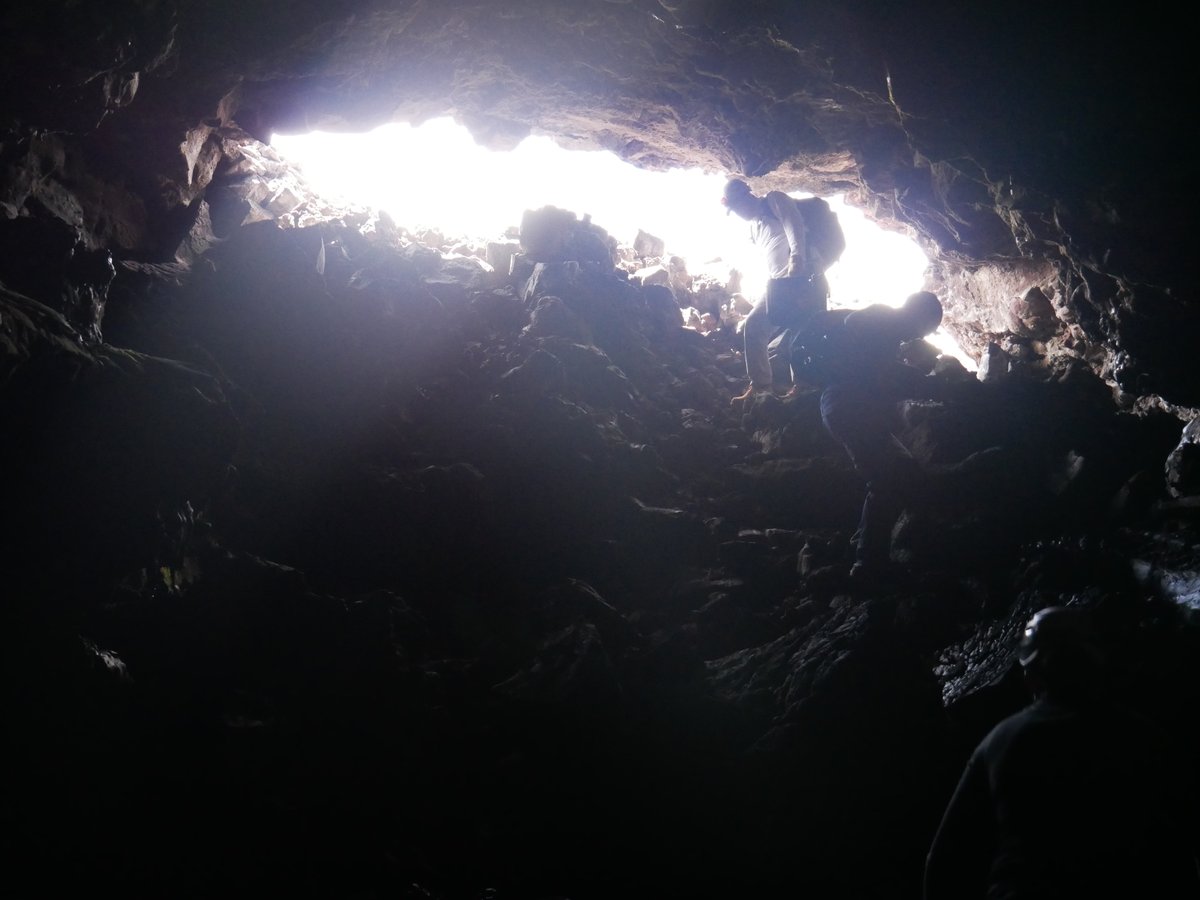
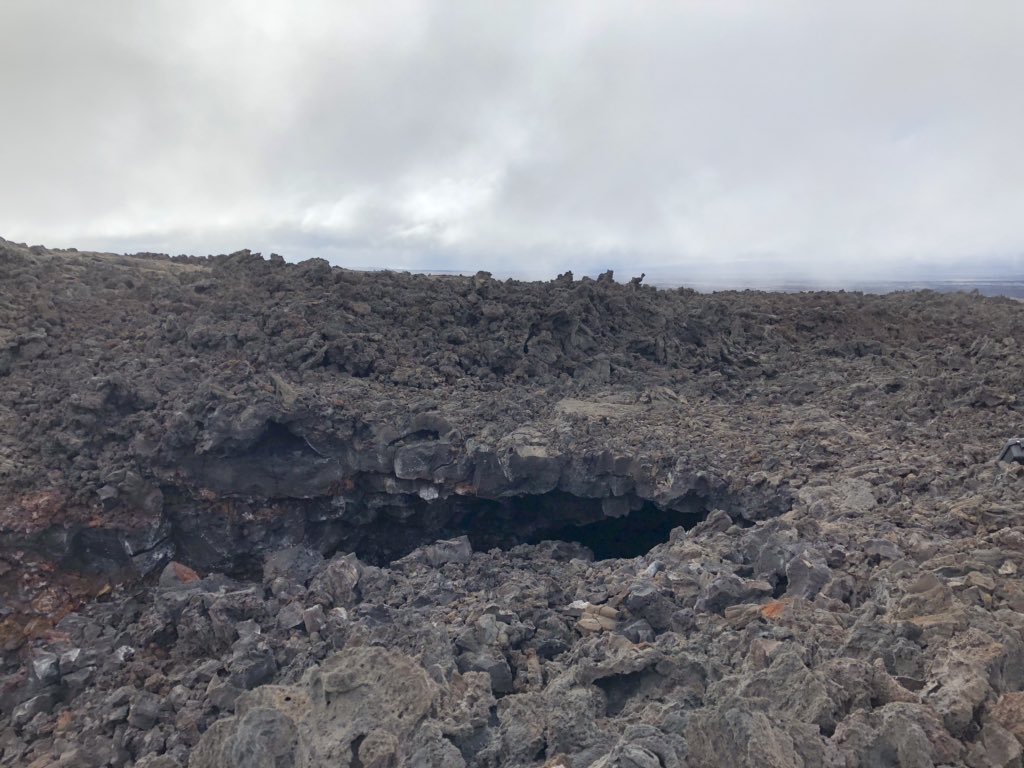
This week, the @NASAGoddard Instrument Field Team (GIFT) is on the Mauna Loa volcano in Hawaii, researching underground caves formed by molten lava, called lava tubes, so we can better understand them on other planets.
We are testing methods to detect those microbes and also defining where in the lava tube is a good place to find them. That way, when we go to Mars we can know how and where to look for microbial life.
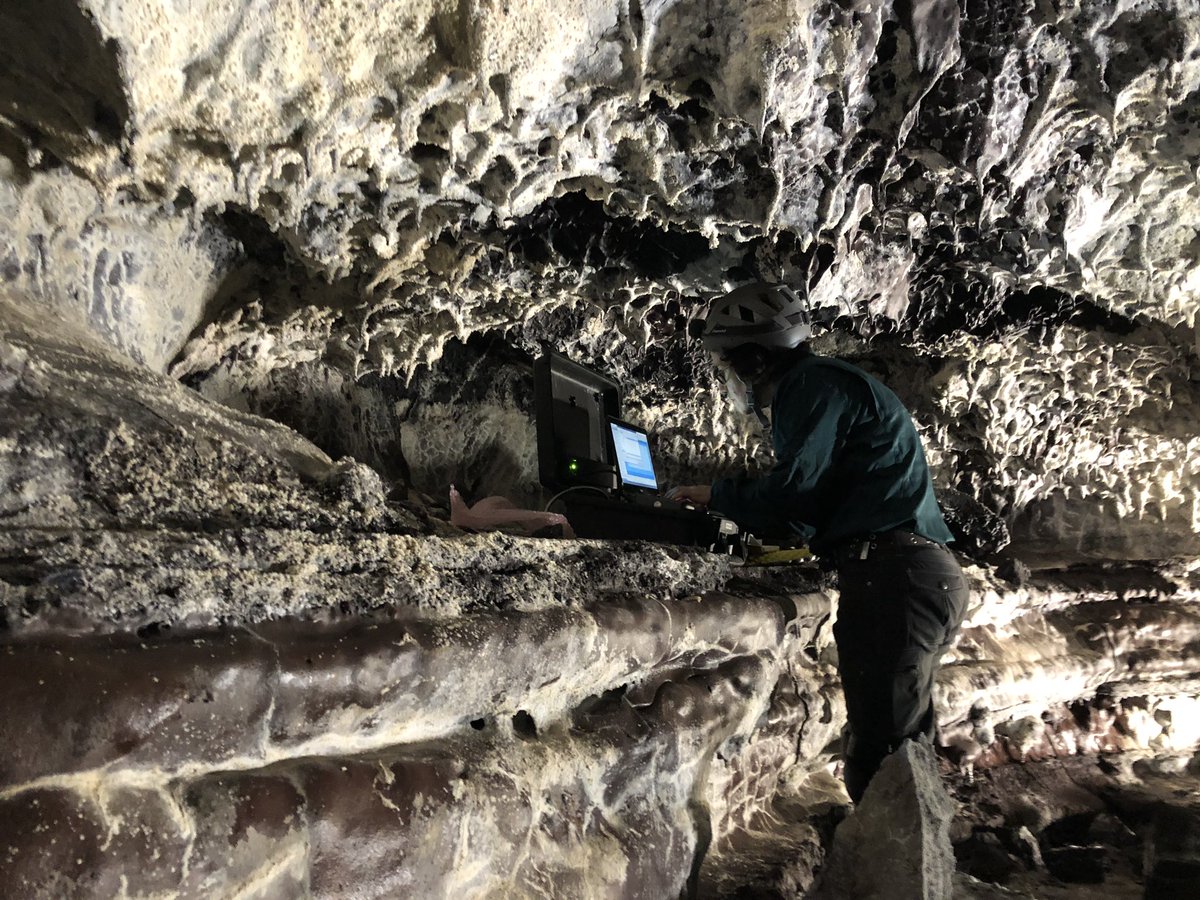
Okay out of the tube again. See all that white stuff from the lava tube? It’s full of life. We are here to find out what microbes are there and how they get their energy. From chemicals? Water? Sunlight? For example some bacteria use sulfur to live & reproduce.
Day 3 - heading into the lava tube with the Geochemistry team. The team is collecting samples and taking measurements with a few different instruments - all with the goal of figuring out what the rocks in the lava tube are made of. Do they contain life? What kind?