Beyond the great events of a timeless epic lived a love that transcended time.
Sītāsvapna - Sītā’s Dream imagines the quieter profound spaces within the Ramayana - a first glance, laughter over a game, walks through Ayodhya, the shock of exile, and the tenderness of building a life together in the forest.
Not the story of Rama and Sītā as the world remembers them, but a dream of how they remembered each other.
A film by @mumukshusavitri
#SitaRama #Ramayana
100 AI Styles in 100 Days
Day 77/100:
📷 Art style: Indian Mythic Folk Art
(Indian mythological art + folk illustration + flat geometric shapes + vintage editorial/storybook)
📷They set his tail on fire. He set the whole city on fire. 🔥🐒
Inspired by the ancient Indian epic, Ramayana.
📷 Created with Seedance2.5 on @ImagineArt_X@imagineart_creo
2014 में ���क पिता ने अपनी बेटी के ऑपरेशन के लिए AIIMS में पैसे और खून जमा कराया था। उसे भरोसा था कि अब उसकी बेटी ठीक हो जाएगी लेकिन 12 साल तक अस्पताल के चक्कर लगाने के बाद सर्जरी नहीं हुई और उसकी बेटी की 2026 में अभी मौत हो गई।
12 साल तक तारीखें मिलती रहीं, जांचें होती रहीं, शिकायतें होती रहीं और एक पिता ��पनी बेटी को लेकर AIIMS के चक्कर लगाता रहा।
2026 में उसकी 15 साल की बेटी की मौत हो गई।
यह कहानी है मुकेश परियानी और उनकी बेटी की, जिसके इलाज को लेकर पिता ने AIIMS पर गंभीर आरोप लगाए हैं।
मुकेश के मुताबिक, वह पहली बार 10 अक्टूबर 2012 को अपनी बेटी को लेकर AIIMS की OPD पहुंचे थे। बच्ची के इलाज के लिए एक कमरे से दूसरे कमरे तक भेजा गया और शुरुआती जांचों में करीब एक साल लग गया।
बाद में उन्हें डॉ. सचिन तलवार के पास भेजा गया�� पिता के अनुसार, डॉक्टर ने ऑपरेशन के लिए पैसे और खून जमा कराने को कहा। उन्होंने 4 अप्रैल 2014 को पैसे और खून दोनों जमा करा दिए।
फिर आई 2 सितंबर 2015 की तारीख। पिता ऑपरेशन की उम्मीद लेकर अस्पताल पहुंचे, लेकिन उन्हें बताया गया कि ऑपरेशन दिवाली के बाद होगा।
इसके बाद उनका आरोप है कि ऑपरेशन की तारीख लगातार टलती रही।
उन्होंने PMO में शिकायत की। शिकायत के बाद अस्पताल से ब���लाया गया। लेकिन पिता का आरोप है कि डॉक्टर ने शिकायत वापस लेने तक ऑपरेशन करने से इनकार कर दिया।
2018 में फिर जांचें हुईं। 2023 में फिर AIIMS पहुंचे। 2025 में दोबारा शिकायत की। 28 जुलाई 2025 को अस्पताल बुलाया गया, लेकिन डॉक्टर छुट्टी पर थे। बाद में परिवार से कहा गया कि बच्ची दवाइयों से संभाल सकती है।
9 फरवरी 2026 को पिता ने फिर शिकायत की। जांचें चलती रहीं, लेकिन उनके मुताबिक ऑपरेशन नहीं हुआ।
और फिर वह दिन आया, ज��सका डर एक पिता को सबसे ज्यादा होता है।
उसकी 15 साल की बेटी की मौत हो गई।
अब मुकेश का सवाल है—अगर 2015, 2016 या 2017 में ऑपरेशन से बेटी ठीक हो सकती थी, तो इतने साल तक ऑपरेशन क्यों नहीं हुआ?
क्या इलाज में देरी हुई? क्या समय पर ऑपरेशन से बच्ची की जान बचाई जा सकती थी? इतने वर्षों में अस्पताल और डॉक्टरों की ओर से क्या-क्या कदम उठाए गए?
पिता के आरोप बेहद गंभीर हैं। इनका सच सामने आना जरूरी है।
AIIMS और संबंधित स्वास्थ्य अधिकारियों ��ो पूरे मामले की निष्पक्ष जांच कर यह स्पष्ट करना चाहिए कि आखिर 2012 से 2026 के बीच इस बच्ची के इलाज में क्या हुआ और उसकी मौत के लिए अगर कोई जिम्मेदार है तो वह कौन है?
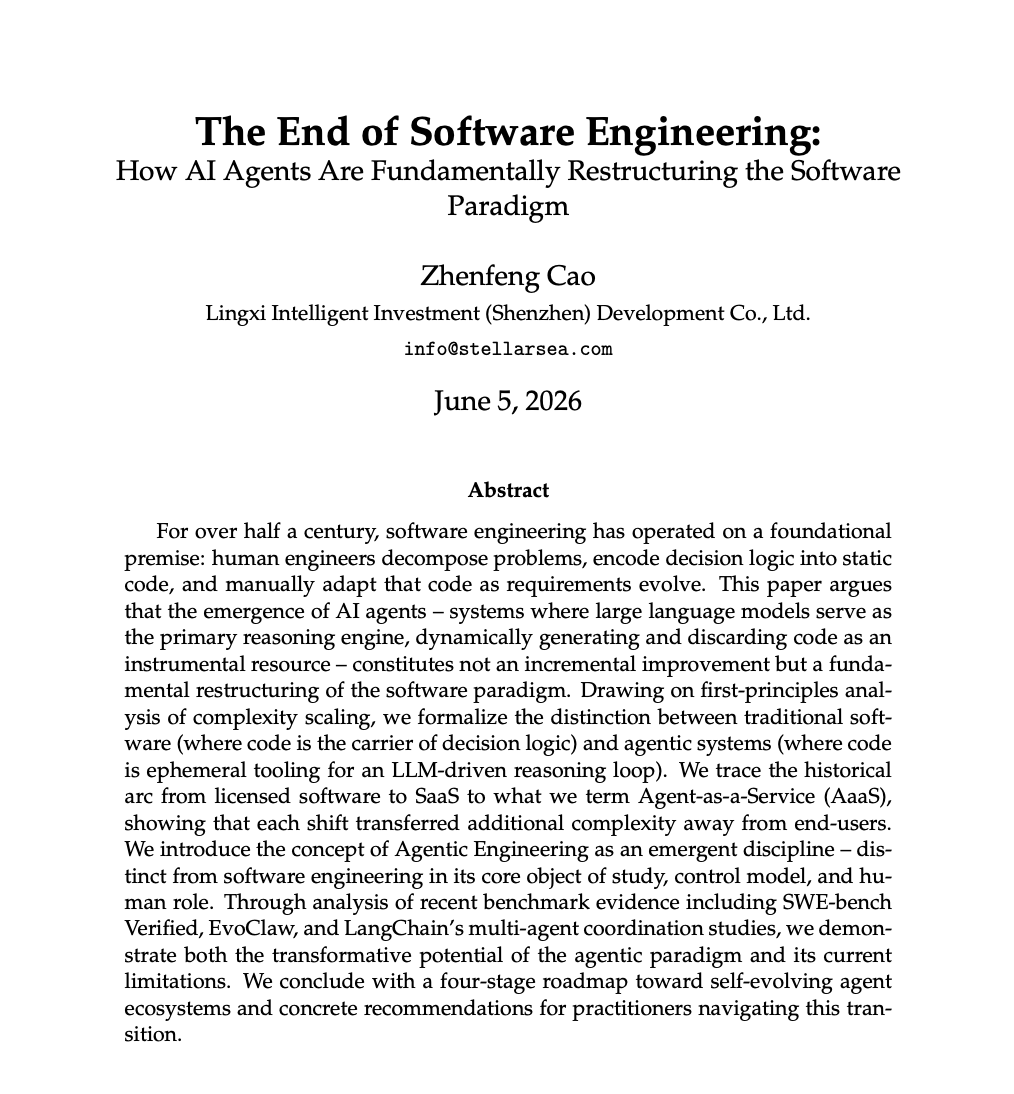
Chinese researchers published a paper with a devastating title: "The End of Software Engineering”
it argues software engineering is finished.
In traditional software, code is the carrier of pre-written human logic.
In agentic software, the AI agent is the software.
Code is no longer a permanent monument built by human hands. It is completely ephemeral, dynamically generated, executed, and discarded on the fly by an LLM-driven reasoning loop.
Think about how software delivery has evolved:
�� Era 1: On-premise licensed software (you installed it locally)
• Era 2: SaaS (hosted in the cloud, managed by vendors)
• Era 3: Agent-as-a-Service (AaaS)
Each historical shift transferred complexity away from the user. But this latest shift transfers something entirely different.
It transfers decision-making complexity itself.
The paper argues that traditional engineering is hitting a hard complexity wall. Human brains can only hold so much state, manage so many dependencies, and debug so many lines at once.
LLM-based agents scale non-linearly.
They don't just write functions faster. They navigate architectural complexity by outsourcing reasoning to models that improve every single month.
Which means the role of the developer is permanently changing.
You are no longer a code author typing syntax line by line.
You are an intent architect.
Your job is no longer writing the implementation. It is specifying goals, designing multi-agent coordination loops, and auditing outcomes.
A teacher in Dehradun told his class that light travels only in straight lines.
One boy in that room spent the next forty years bending it, and the internet now runs on what he built.
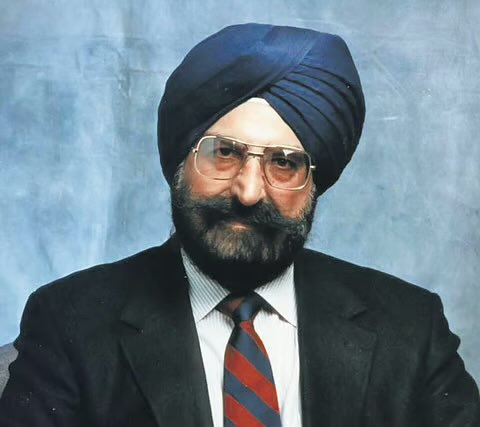
His name was Narinder Singh Kapany.
Born in Moga, Punjab in 1926. Schooled in Dehradun, graduated from Agra University, worked as an officer in the Indian Ordnance Factories. In 1952 he went to Imperial College London.
There, with a professor named Harold Hopkins, he bundled thin strands of glass together and transmitted a clear image through them. Around corners. Along bends. Nobody had done it before.
That is fibre optics. Undersea internet cables, endoscopy, laser surgery. He gave the field its name in a 1960 article in Scientific American.
Nehru wanted him back in India as scientific adviser to the defence ministry. He went to America instead. Founded Optics Technology, took it public in 1967, held over a hundred patents, and became one of the first Indians to build a company on that scale in Silicon Valley.
In 2009 the Nobel Prize in Physics was awarded for the transmission of light through glass fibre. It went to Charles Kao, who had solved the problem of impurities in the glass swallowing the signal.
Kapany was not named.
Whether he should have shared it is still disputed by people who understand the physics. What is not disputed is that Fortune had already listed him among the seven unsung heroes of the twentieth century, ten years earlier.
He died in California in 2020, aged ninety four. India awarded him the Padma Vibhushan the following year.