Christopher Carani Esq. is a partner at the Chicago-based IP law firm of McAndrews, Held & Malloy, Ltd. He is a leading authority in the field of Design IP Law.
Check out my latest article: Zombies of Design Patent Law: Feature Filtration, Claim Verbalization, and the Need for En Banc Clarity https://t.co/OXwveRfDoi via @LinkedIn
On Thurs, Dec 7 from 12:00pm-1:30pmCT, I will be moderating a FREE webinar regarding the pending EN BANC case before the Federal Circuit, LKQ v GM, which regards assessing obviousness in the context of design patents. Registration can be found here: https://t.co/gNO3e64bqv
Update on the pending en banc design patent case LKQ Corp. v. GM, which is before the Federal Circuit Court of Appeals . The issue at play is whether the Supreme Court's 2007 KSR holding abrogates the current framework used for analyzing obviousness in the design patent context.
Below is a chart showing the various briefs and the associated counsel. Whereas the amicus briefs in support of appellant LKQ mainly come from the replacement part and insurance industry, the recent wave of amicus briefs in support of GM come from a much wider spectrum.
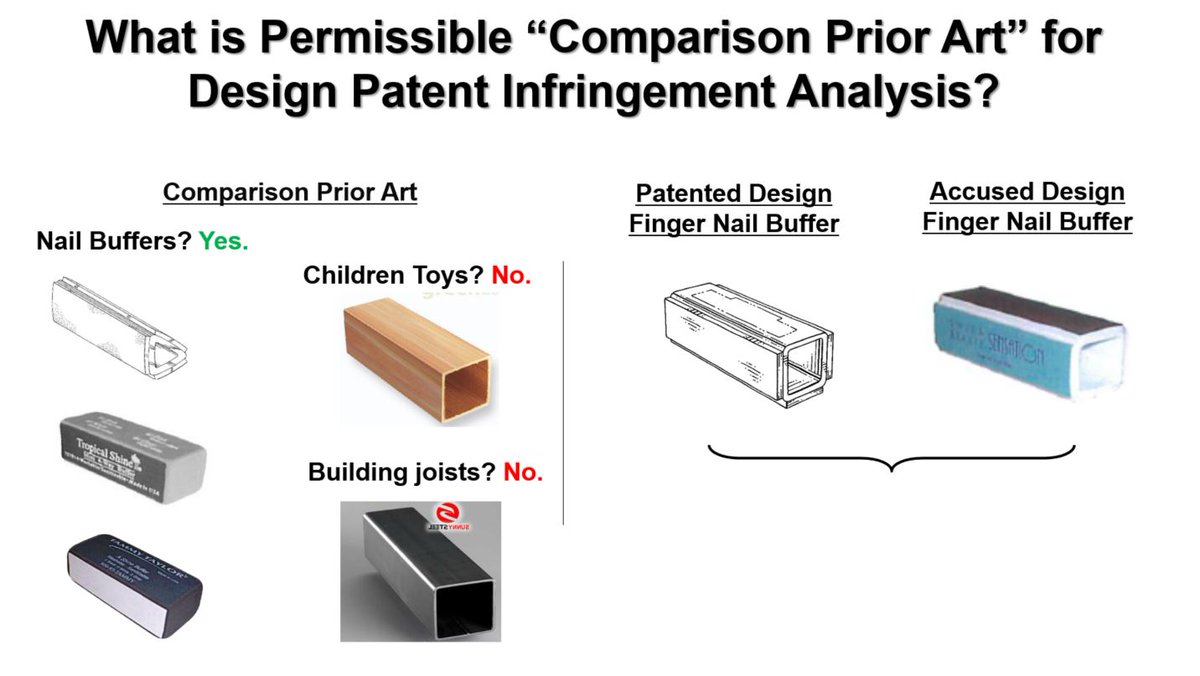
In a case of first impression, the Federal Circuit holds that the "comparison prior art" used in the design patent infringement test is limited to designs on the SAME article of manufacture identified in the asserted design patent claim. Columbia Sportswear v. Seirus (9-15-2023)
The Columbia Sportwear holding (2023 for comparison prior art for infringement) now brings needed equilibrium between (i) the scope of a design patent claim, and (ii) the prior art by which design patents are judged for both anticipation and infringement.
Happy to be joining the conversation as a panelist on today's USPTO webinar entitled "Everything Design: A regional exploration of design patent strategy."
https://t.co/WB9ji0l5v5
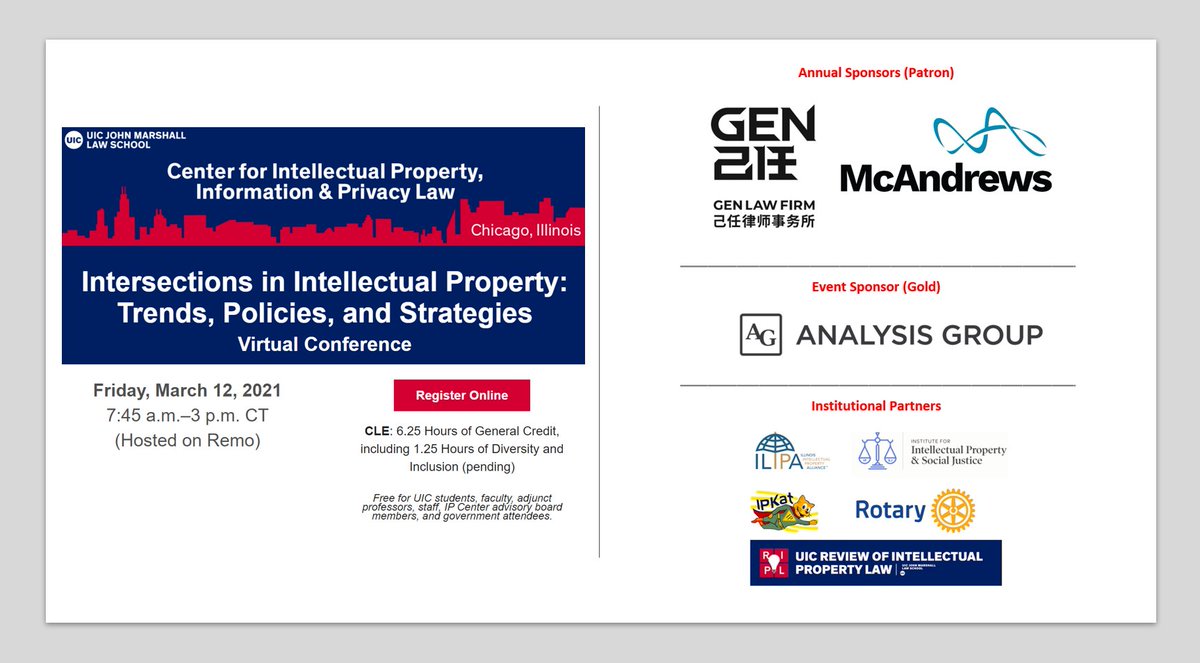
"Intersections in IP"—data privacy and antitrust, health and social justice, functionality and infringement in copyright, trademark, and design law, as well as legal issues arising from the Supreme Court case of Google v. Oracle. @UICJohnMarshall https://t.co/YjKuz21wpR
Tomorrow, UC-Berkley hosts Symposium on Design Patents. https://t.co/NrSfbXNe5a. Leading academics and practitioners to debate hot topics in design law, including the ever-present issue of functionality. Here's my article: https://t.co/4F1niXYb3Y
Thank you to the Asociacion Mexicana para la Protecccion de law Propeidad Intectual (AMPPI) for inviting me to present on procuring international IP protection for product designs using The Hague Agreement. I will be joined by three experts in the field. Details below:
Los invitamos a escuchar el próximo 3 de diciembre, la experiencia de profesionales del extranjero sobre la implementación del arreglo de La Haya respecto a los modelos industriales en sus respectivas jurisdicciones.
Registro en: https://t.co/J0xTMEZ0wJ
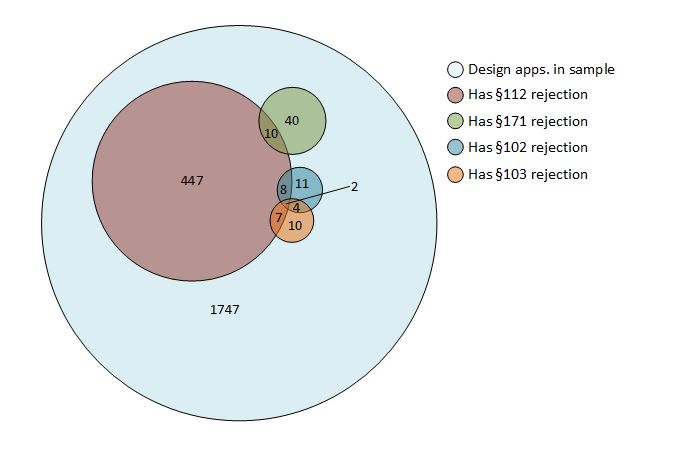
@WIPO The percentage of rejections based on Sect. 112 almost doubled in the 10-year span. Much of this rise has to do with the @USPTO treatment of priority, continuity and amendment practice when dealing in partial designs. See new scholarship from @design_law https://t.co/bafRSUCk1T
@McAndrewsIP concludes large-scale study of design patent applications filed @USPTO during 5-year period spanning 2014-19. Results can be found @BigPatent https://t.co/nrSAJCtQUm. #Designpatents no longer sail through USPTO unscathed. Kudos to @DunstanBarnes for taking the helm
Study includes data on U.S. originated cases vs. Hague cases, types of rejections, rejections vs. objections, number of multiple embodiments, priority-continuity data and a break down of the most common rejection 35 USC 112 (written description, definiteness and enablement)@WIPO