Time for some reviews of gems from the #ASCO26 poster halls. In the first example we explore how targeting resistance in a novel and tolerable fashion may be helpful in the KRAS niche:
https://t.co/L2UNi53kwa
People who don't follow cancer research often ask me why we haven't cured cancer. That perception masks a wonderful reality: We make amazing, stepwise progress every year, and the result is that many people live much longer today than they would have previously.
Right now we're in the thick of the annual meeting of the American Society of Clinical Oncology, the biggest research meeting on new cancer medicines, and this morning a bunch of really important studies dropped. I'm going to review them here.
This first image is the result for daraxonrasib, a treatment for pancreatic cancer that is generating consdirable excitement. The green line is the probability of living for patients who got the new drug; the gray one is the chemo control group.
If you follow cancer drugs, a chart like this will make your breath hitch a little. I'm going to review these and some other data here.
Our latest review from #ASCO26 explores KRAS inhibitors and why potency doesn't equal durability:
https://t.co/5HBTWpGVH2
All is not what it seems.
I still find it amazing what was one such an intractable target is now made druggable by a wide range of different inhibitors.
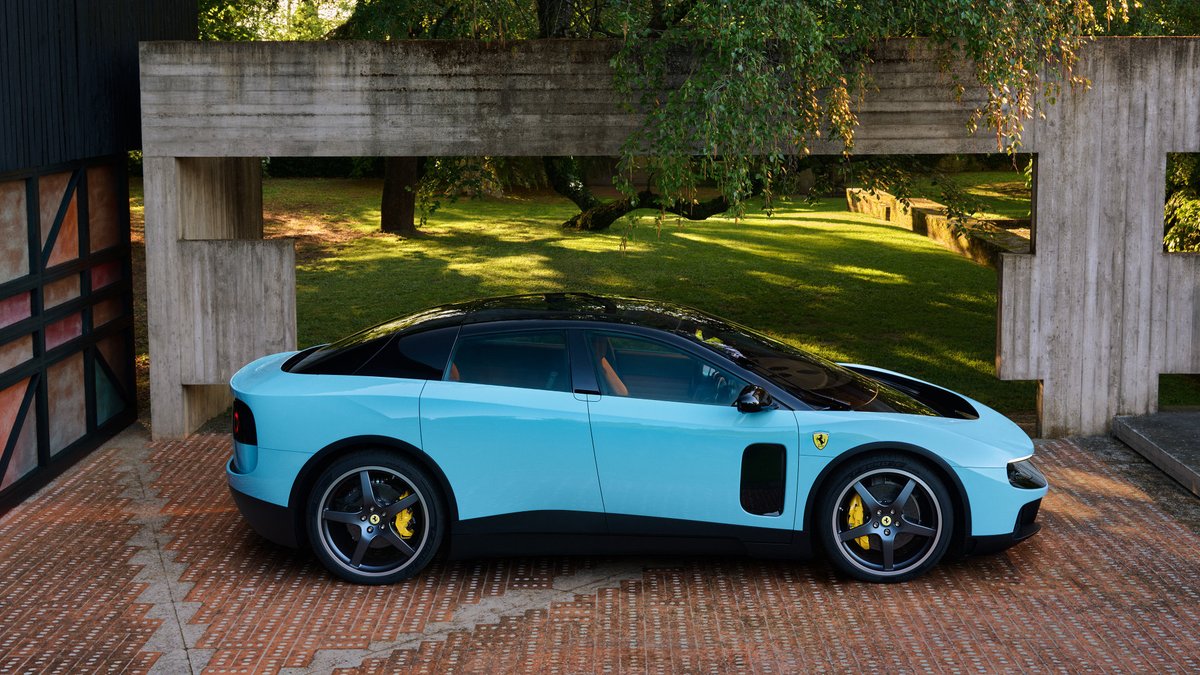
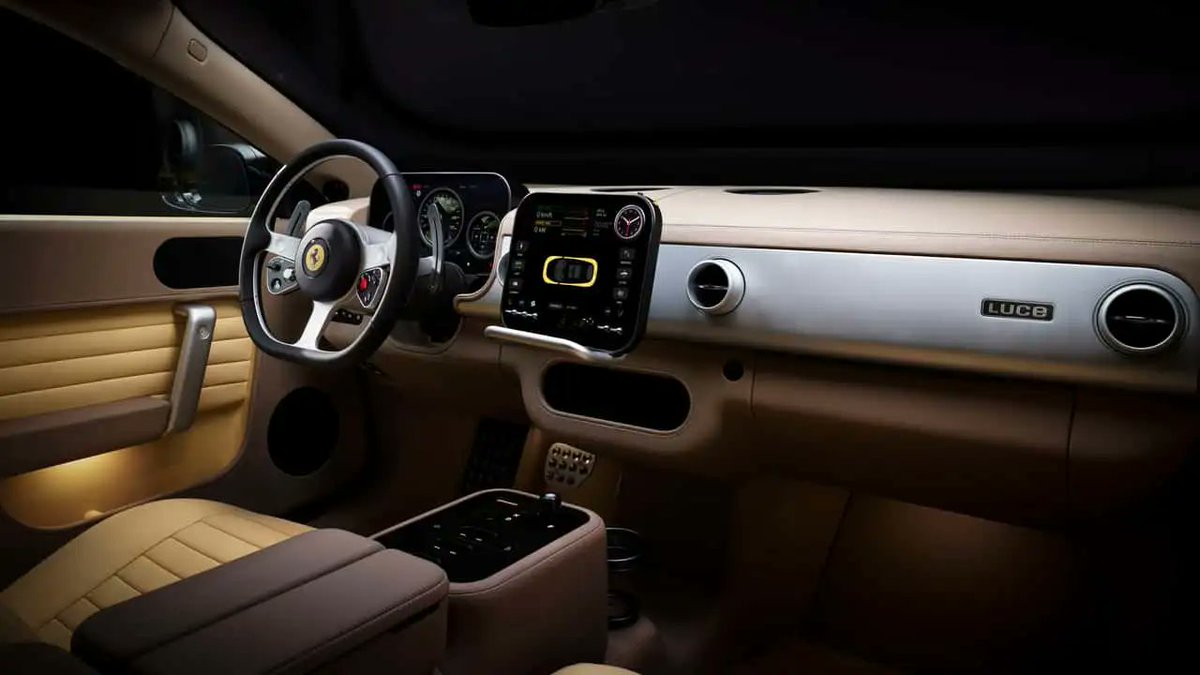
Ferrari has just officially unveiled its first ever all-electric car, called the Ferrari Luce.
• Starting price: $640,000
• Interior co-designed with Apple's former head of design, Jony Ive
• Range: 280 miles (expected EPA)
• Peak charging speed: 350kW
• 122 kWh battery
• 1,050 horsepower
• 0-60mph: 2.4s
• 800v
• Four-door four-seater
• Four electric motors
• OLED screens
• Weight: 4,982 lbs
• Front motors spin to 30,000 rpm, rears hit 25,500 rpm
• Car uses an accelerometer to capture real vibrations from the electric motors & rear chassis. An algorithm filters out unpleasant frequencies and amplifies only the more “musical” sounds. This can be heard inside and outside the car.
• Paddle shifter on steering wheel changes how aggressively torque is delivered, with five different levels
• The trunk has 21.1 cubic feet of space, the largest luggage capacity the company has ever offered
• 197.6 inches long, about as long as a Tesla Model S
U.S. deliveries start in Q2 2027. More photos in the thread below:
$BBIO Neil Kumar at #STATBreakthrough laying in to investors and executives building companies just to sell to pharma
“You can't take a contrarian bet, that's why we have… 150 PDL1 ones, 300 GlP-1s, like everyone's doing the same stuff”
I saw the Genmab/ProFoundBio/China news today & I know it's become popular in biopharma circles to increase the amount of dealmaking in China to follow the trends, but maybe take a trip or two (or more) to North Carolina also:
@PearlF It is odd. Where I live (Durham, North Carolina) we have lab space, manufacturing facilities, office space (all at a fraction of the cost) plus a large concentration of talent because the CROs employ so many. Very few companies are intentionally started here.
Who's putting the boat out at #ASGCT26 when it comes to in vivo CAR-T cell therapies and what to watch out for.
Some surprises in store...
https://t.co/8vf35LEDpt
Most people do not distinguish between the intramural NIH and the extramural (grant providing) NIH. I agree that the grant funding has been too conservative and too prone to reward those who are already well established. I disagree that the intramural NIH is “me too”. 1/2
Probably Craig Venters last interview.
The people who drone on about the necessity of NIH “basic science” are the duds and dropouts of the class.
It’s food stamps for the underachievers.
I want to meet the best biotech operators out there.
Ashlins Pharma has identified multiple evidence-backed, rare-disease assets with clear development paths, and we’re looking for CEOs ready to work with us to build their next venture.
This is my favorite study of the year.
What a waste of money. But keep telling physicians to see more patients every hour. Because that is working so well….
Important paper out from @s_vanoost, Judith Bovee &co at @LUMC_Leiden reporting two immune subtypes of chordoma with distinct transcriptional and metabolic profiles, plus contributing the first integrated spatial transcriptomics, metabolomics and lipidomics data sets to the field.
Links to data sets 👇https://t.co/ZzXzqDUYrF
Turns out there’s a lot of interest in a fast and free experimental benchmark of AI small molecule discovery capabilities. 👀
As a result we’re announcing a few updates to the TBXT Challenge:
1. June 1, 2026 is the last date we will accept new entrants. To register and reserve testing slots, please email us at [email protected] by June 1st. (Or if you know anyone who might be interested please encourage them to get in by then)
2. To participate in the Challenge, a competitor’s first batch of compounds must be received by CF Labs by September 1, 2026.
3. Competitors with compounds found to have Kd <10 μM in their first or second batch submitted to the Challenge may step out of the Challenge and perform hit optimization under a sponsored research agreement (SRA) with CF Labs. In this scenario, the competitor has the option to fund testing of up to two rounds of 60 compounds (up to a total of 120 compounds) in the SPR assay. If a two-fold increase in potency is achieved after these two rounds, up to two additional rounds of 60 compounds may be tested. After completing testing under an SRA, a competitor may re-enter the Challenge by submitting the remainder of their 96 allotted compounds for evaluation within the Challenge.
Please reach out with any questions and good luck to those competing!