@NYPD28Pct Can you please send a patrol into the 110th St station? The bums are getting out of control- drugs, threats, throwing trash in the tracks. You can go there now before something serious happens because its just a matter of time.
@NYPD28Pct why dont you get down here and clean this garbage up? Whole bunch of drugs and crime happening right here in 110th St subway. Haven't seen a patrol around here in a decade.
Fannie & Freddie, Toxic Twins No More No More? Excerpt
Recently, both news and gossip has picked up.
August 1st, Bloomberg reported that Trump was meeting with CEOs of the biggest banks to discuss monetizing the GSEs.
On August 8th, the WSJ cited sources claiming the valuation for the two would be roughly $500 billion. A couple days later Bloomberg reported on plan where Treasury sells 5-15% in each, totaling a $30 billion IPO.
August guidance from President Trump indicated they would continue under government oversight as public companies. That is not new. Even pre-GFC they operated under government oversight – as my history lesson many words ago detailed.
In October, Trump claimed homebuilders were sitting on 2 million empty lots and urged the GSEs to “get Big Homebuilders going.” This is the too-familiar cry of populist ignorance, but it also implied Trump is in a hurry to get the GSEs forcing the issue in the US housing market again.
The GSEs cannot aggressively expand their retained whole loanbooks, launch new products, or lower fees until they raise more capital. They are working under capital-constrained conditions. Again, the IPO is the only thing that can cure that anytime soon. So,investors, cheer populist ignorance!
Also in October, FHFA Director-for-a-bit-longer Bill Pulte stated on X that the IPO could occur in the first half of 2026. Again, an implication that the administration is now in a hurry to stimulate housing.
Last month, Pulte mentioned the IPO would be for an initial stake of about 5%. Surprising small, but potentially a big clue for our analysis. Save for later.
Finally, just a few days ago, Commerce Secretary Howard Lutnick was on CNBC to tell us that an IPO is well down the road, and that maybe something happens during the first quarter of 2026.
It is time to analyze what this all means and put some numbers down.
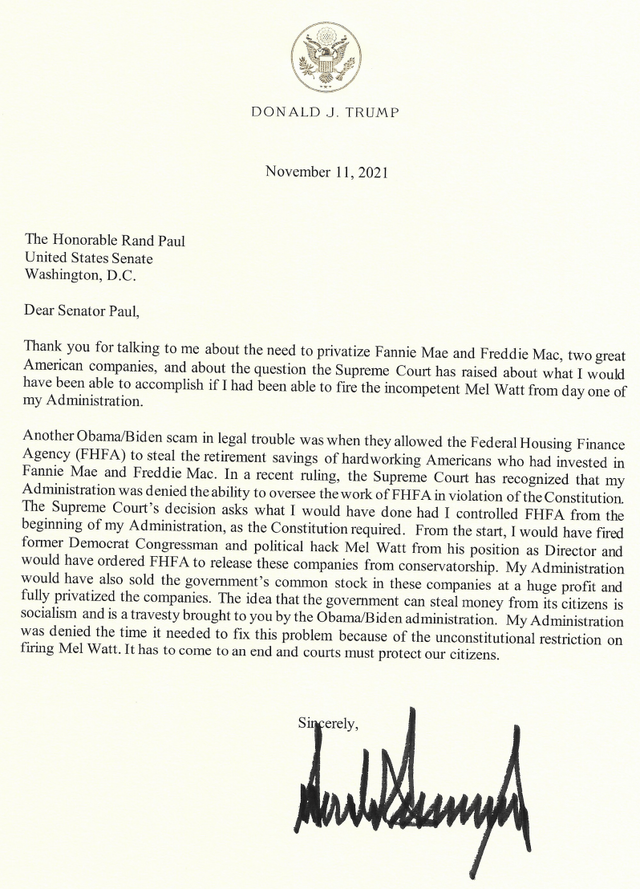
Putting this all together, I created share price scenarios using a number of variables, but focusing on the capital ratio and the potential negotiated down or eliminated Senior Preferred Stock (SPS) Liquidation Preference owned by Treasury.
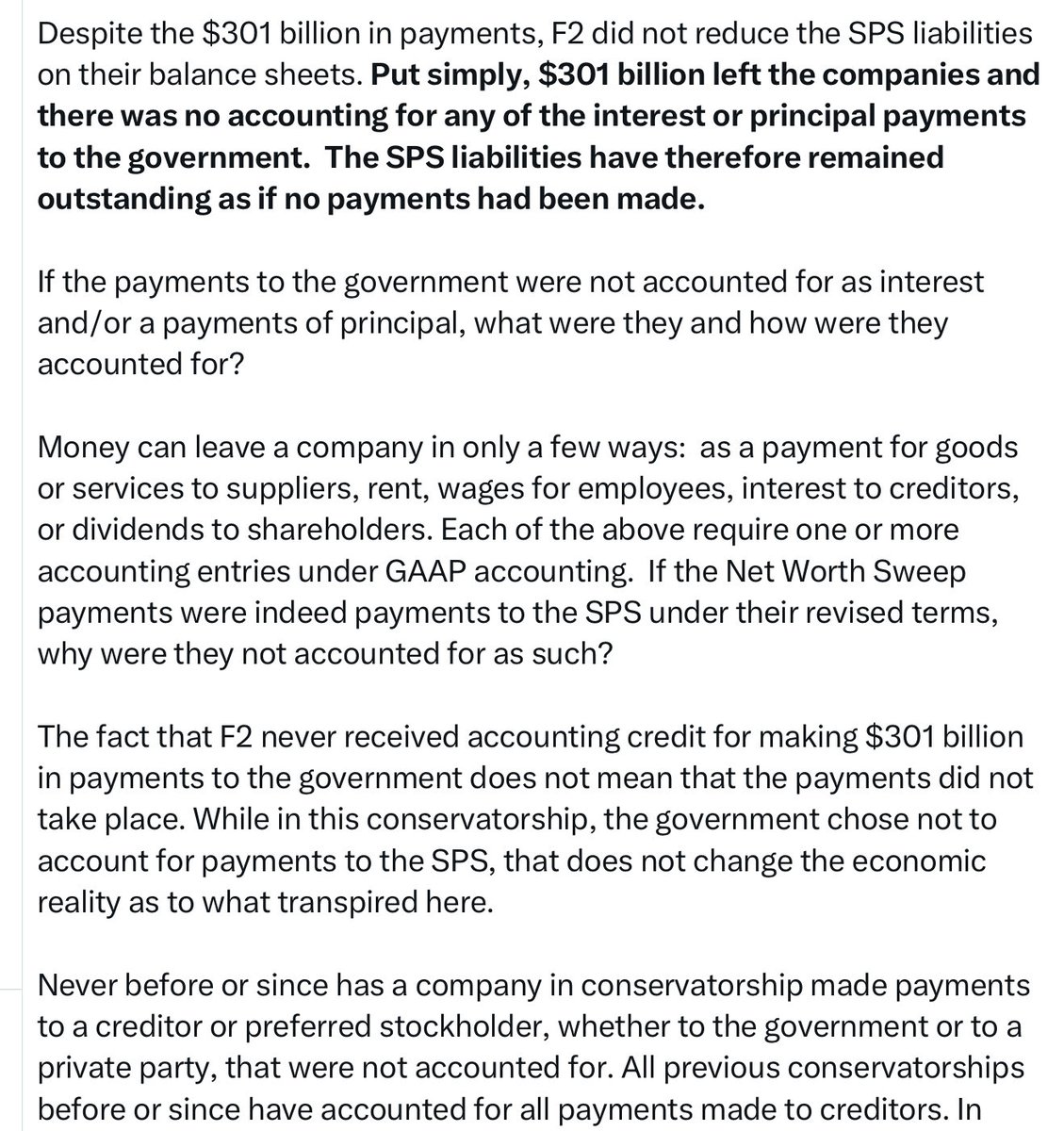
@BillAckman What you and no one else to my knowledge have highlighted is that--as detailed below--the U.S. has received ~2.5X more wealth from its investment in the GSEs than if it had invested the same money in the stock market! Thus, the U.S. has been handsomely compensated well beyond any reasonable expectations, and the SPSs should thus be deemed paid. This is because the government received a total return of approximately 2,268% return on its investment in the GSEs, and the S&P 500 has averaged a total of 852% return over the same period. Here’s the math and the reasoning: All of the non-U.S. stakeholders in the GSEs (commons and preferred shareholders) repeat over and over that the government has been “overpaid” by $25 billion on the SPSs per their terms. This is obviously true. BUT the SPSs also came with warrants for 79.9% of the GSEs' common stock. Thus, in exchange for investing a total of $191.4 billion (the amount actually paid into the GSEs by the U.S. since 2008), the U.S. has received NOT ONLY $301 billion in payments from the GSEs (principal and interest due PLUS the $25 billion), but also the value of 79.9% of the enterprise value of the GSEs—potentially up to ANOTHER $300 billion!!! That is, if the SPSs are deemed paid today by Executive Order, the U.S. will have still have received up to $600 billion (consisting of $301 billion in actual payments plus up to $300 billion for the value of the 79.9% warrants) for investing $191.4 billion. This all occurred over time, so the rate of return will have to be calculated precisely. My instinct tells me that it would all end up in the government's receiving something like a 20% annualized return over this whole sordid affair—i.e., 2008 to present. I used Grok to do the calculations, and it arrived at 20.2% average annualized return for the government’s GSE investments. Over the same period, the S&P had a 14% annualized return. When you total the annualized returns over this period, the government received a total return of approximately 2,268% on its investment in the GSEs, and the S&P 500 has averaged a total return of 852% over the same period. Thus, the U.S. has received 2.5X more wealth from its investment in the GSEs than if it had invested the same money in the stock market! Drop. The. Mic. When you use this, please give me credit! I'm a longtime investor in the GSEs, and I firmly believe that the U.S. has been ENORMOUSLY overcompensated for its bailout of the GSEs at the expense of shareholders. Here's my back-of-the-envelope logic and calculations using Grok: https://t.co/K9aLEehaqK
Prior @pulte you said if you could personally invest in Fannie / Freddie you would!! I’m glad you’re finally removing yourself from being a stock tout / adviser. We don’t need another illegal like Bob Corker hanging over us and America 🇺🇸
Keep doing your job and please let us know the progress being made with Nvidia. We are waiting.
Material changes must be announced as per the rules you know that and never forget nobody is above the law. $FNMA
👯