WHO have just issued a new update on the Hantavirus outbreak.
I’m very pleased to see them explicitly stating in this latest update that:
“ANDV transmission may include […] AIRBORNE transmission (via inhalation of infectious respiratory particles)”
https://t.co/Brk9ra7Usa
Many aggressive cancers are “addicted” to the amino acid glutamine, which they use as a major fuel source for rapid growth. When glutamine is cut off — for example through targeted therapies — some resilient tumor cells activate a backup metabolic pathway involving the mitochondrial enzyme pyruvate carboxylase (PC) to keep growing.
Researchers at the University of Lausanne have discovered that this emergency pathway has a critical weakness: it depends entirely on biotin (vitamin B7). Without biotin, pyruvate carboxylase becomes inactive, blocking the cancer cells’ ability to use pyruvate as an alternative fuel and effectively halting their proliferation.
The effect is particularly strong in tumors with mutations in the FBXW7 gene, a common alteration linked to chemotherapy resistance in many cancers. In these cells, the backup system is already compromised, making them even more vulnerable when biotin is restricted.
[Lisci, M. et al. (2026). "Functional nutrient-genetic profiling reveals biotin and FBXW7 are essential to bypass glutamine addiction." Molecular Cell. DOI: 10.1016/j.molcel.2026.02.002]
Scientists and clinicians studying the current Andes hantavirus outbreak warn that several factors may increase transmission risk, including unclear timing of infectiousness, possible spread before symptoms appear, unreliable early PCR testing, and incubation periods that may extend beyond 45 days.
In this new editorial, the WHN Science Communications team reviews what is currently known about the outbreak, lessons from prior Argentine outbreaks, the role of quarantine and respiratory protection, and why international coordination and clear public communication matter as the situation evolves.
Read the full article:
https://t.co/IcrFhXgU3g
#Hantavirus #AndesHantavirus #PublicHealth #HealthEducation #GlobalHealth #InfectionPrevention
"Singapore saw the number of Covid-19 cases surge by 59% in just one week (May 10-16) with the total reaching 12,700..
This is a significant jump from the previous week’s total of 8,000 Covid cases..
The NB.1.8.1 variant, a descendant of the JN.1 variant, is the main Covid-19 variant circulating in Singapore, accounting for more than half of locally sequenced cases..
The surge could be due to several factors, including waning population immunity.."
Waning interest must be one of these factors.
'Singapore Covid cases soar 59% in one week'
https://t.co/wFkbahon1X
Researchers have identified a promising new target that could halt osteoarthritis progression before irreversible joint damage occurs.
Current treatments for osteoarthritis primarily manage symptoms through pain relief, anti-inflammatory medications, or eventual joint replacement, but they do little to prevent the underlying breakdown of cartilage.
A team of South Korean scientists has now discovered that the orphan nuclear receptor Small Heterodimer Partner (SHP, also known as NR0B2) acts as a natural protector of cartilage. In a study published in Nature Communications, they showed that SHP levels drop sharply as osteoarthritis advances in both human patients and animal models. When SHP is absent, cartilage degradation accelerates.
Using genetically modified mice and human cartilage samples, the researchers demonstrated that loss of SHP leads to more severe joint damage and pain. Conversely, restoring SHP expression in damaged joints significantly slowed cartilage breakdown, reduced inflammation, and improved joint function.
Mechanistically, SHP protects cartilage by inhibiting the IKKβ/NF-κB signaling pathway, which in turn suppresses the production of key cartilage-degrading enzymes, particularly MMP-3 and MMP-13. The team also tested a gene therapy approach, delivering the Nr0b2 gene via viral vector into osteoarthritic joints. A single treatment markedly reduced disease progression in animal models.
[Eun-Jung Kang, Jung-Ran Noh, Jae-Hoon Kim, et al. “Small heterodimer partner protects against osteoarthritis by inhibiting IKKβ/NF-κB-mediated matrix-degrading enzymes in chondrocytes.” Nature Communications (2026). DOI: 10.1038/s41467-026-69864-5]
NOAA’s latest projections indicate that a powerful, potentially record-breaking El Niño is rapidly developing in the Pacific and could push global weather patterns into dangerous territory.
Sea surface temperatures in key regions of the equatorial Pacific are forecast to climb as much as 4.5°F (2.5°C) above average by late 2026, rivaling the strongest El Niño events on record.
El Niño occurs when unusually warm water spreads across the central and eastern Pacific, weakening trade winds and dramatically altering global atmospheric circulation. The consequences are far-reaching: some areas face extreme rainfall, devastating floods, and intensified tropical storms, while others endure severe drought, heat waves, wildfires, and agricultural losses. Fisheries can collapse, disease patterns often shift, and food security is frequently threatened worldwide.
What makes this event particularly concerning is that it is emerging against the backdrop of a planet already at or near its warmest levels in recorded history due to human-caused climate change. Superimposing a strong El Niño on this elevated baseline is expected to significantly amplify extreme weather events.
Scientists have drawn comparisons to the catastrophic 1877–1878 El Niño, one of the most destructive in modern history, which triggered widespread droughts, famines, and disease outbreaks that claimed millions of lives globally.
While forecasts still carry uncertainty and the final intensity will depend on how ocean conditions evolve, current models are increasingly alarming. If the projections hold, the developing El Niño could serve as a severe stress test for societies and ecosystems already strained by climate extremes.
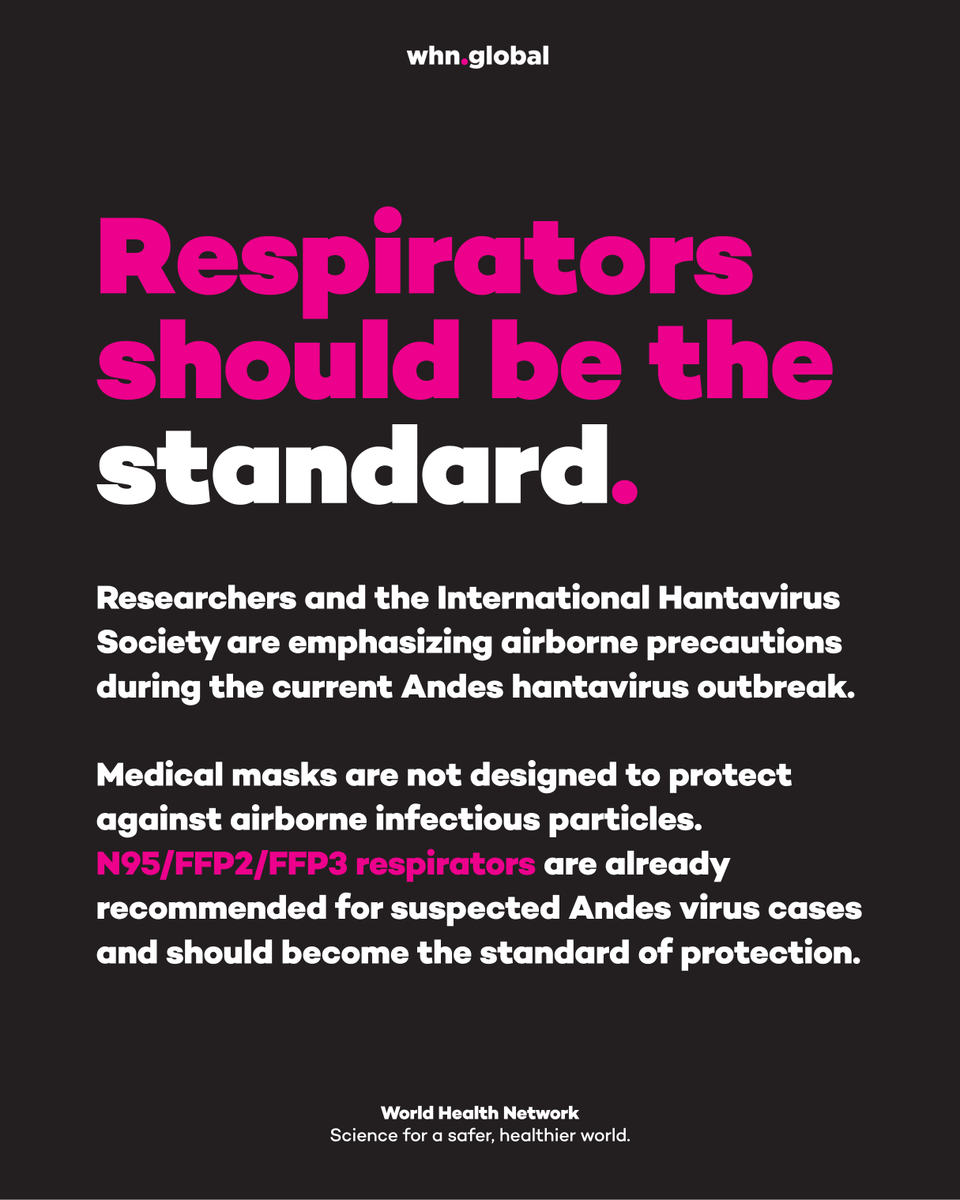
As the Andes hantavirus outbreak linked to the MV Hondius cruise ship expands across multiple countries, researchers are warning that airborne transmission must be taken seriously.
Current guidance in some settings still recommends medical masks, despite respirators such as N95, FFP2, and FFP3 masks being specifically designed to protect against airborne infectious particles. Medical masks are not designed to provide the same level of airborne protection.
With documented person-to-person transmission, uncertain infectious timing, and long incubation periods, the World Health Network is calling for stronger airborne precautions, including universal respirator use and clearer public communication around airborne risk.
Read the full piece here: https://t.co/IcrFhXgU3g
#AndesHantavirus #Hantavirus #PublicHealth #Respirators #CleanAir #AirborneProtection
Chris Dall, co-host of the Osterholm Update podcast, shares a sneak peek 👀 of this week's episode.
Chris & @mtosterholm will discuss:
-Hantavirus
-Ebola
-VIP's review of evidence on Tdap vaccination during pregnancy & more!
🎧 Episode 209 posts 5/21. https://t.co/Bw1d1sJJqj
MUST READ!
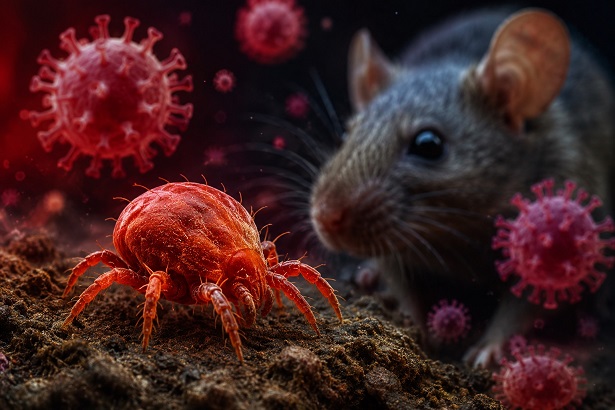
Study Finds That Mites Can Be Vectors for Hantaviruses from Rodents and Can Also Serve as Long-Term Viral Reservoirs
#BreakingNews#Hantavirus
Hantavirus cardiopulmonary syndrome kills within 24h of hospital admission — and there's no antiviral. New Lancet ID review: what every ICU clinician needs to know.
The UK government’s latest grab for patient data is happening at the worst possible time.
A single patient record is a good end goal. But the timing sets it up to be an expensive—and potentially toxic—mistake, writes @rebeccacoombes
https://t.co/gTaV6dvbqJ
New Research: A review on shared genetic architecture of endometriosis and migraine: from pleiotropy to convergent inflammatory pathways https://t.co/QBoGlb5JJv #FrontiersIn#Neurology





![_CatintheHat's tweet photo. WHO have just issued a new update on the Hantavirus outbreak.
I’m very pleased to see them explicitly stating in this latest update that:
“ANDV transmission may include […] AIRBORNE transmission (via inhalation of infectious respiratory particles)”
https://t.co/Brk9ra7Usa https://t.co/qMLBctmX13](https://pbs.twimg.com/media/HJet03TWcAUVpfT.jpg)
![Rainmaker1973's tweet photo. Many aggressive cancers are “addicted” to the amino acid glutamine, which they use as a major fuel source for rapid growth. When glutamine is cut off — for example through targeted therapies — some resilient tumor cells activate a backup metabolic pathway involving the mitochondrial enzyme pyruvate carboxylase (PC) to keep growing.
Researchers at the University of Lausanne have discovered that this emergency pathway has a critical weakness: it depends entirely on biotin (vitamin B7). Without biotin, pyruvate carboxylase becomes inactive, blocking the cancer cells’ ability to use pyruvate as an alternative fuel and effectively halting their proliferation.
The effect is particularly strong in tumors with mutations in the FBXW7 gene, a common alteration linked to chemotherapy resistance in many cancers. In these cells, the backup system is already compromised, making them even more vulnerable when biotin is restricted.
[Lisci, M. et al. (2026). "Functional nutrient-genetic profiling reveals biotin and FBXW7 are essential to bypass glutamine addiction." Molecular Cell. DOI: 10.1016/j.molcel.2026.02.002]](https://pbs.twimg.com/media/HJfWpCZWsAI9qtW.jpg)


![Rainmaker1973's tweet photo. Researchers have identified a promising new target that could halt osteoarthritis progression before irreversible joint damage occurs.
Current treatments for osteoarthritis primarily manage symptoms through pain relief, anti-inflammatory medications, or eventual joint replacement, but they do little to prevent the underlying breakdown of cartilage.
A team of South Korean scientists has now discovered that the orphan nuclear receptor Small Heterodimer Partner (SHP, also known as NR0B2) acts as a natural protector of cartilage. In a study published in Nature Communications, they showed that SHP levels drop sharply as osteoarthritis advances in both human patients and animal models. When SHP is absent, cartilage degradation accelerates.
Using genetically modified mice and human cartilage samples, the researchers demonstrated that loss of SHP leads to more severe joint damage and pain. Conversely, restoring SHP expression in damaged joints significantly slowed cartilage breakdown, reduced inflammation, and improved joint function.
Mechanistically, SHP protects cartilage by inhibiting the IKKβ/NF-κB signaling pathway, which in turn suppresses the production of key cartilage-degrading enzymes, particularly MMP-3 and MMP-13. The team also tested a gene therapy approach, delivering the Nr0b2 gene via viral vector into osteoarthritic joints. A single treatment markedly reduced disease progression in animal models.
[Eun-Jung Kang, Jung-Ran Noh, Jae-Hoon Kim, et al. “Small heterodimer partner protects against osteoarthritis by inhibiting IKKβ/NF-κB-mediated matrix-degrading enzymes in chondrocytes.” Nature Communications (2026). DOI: 10.1038/s41467-026-69864-5]](https://pbs.twimg.com/media/HIwLchbXcAAjChe.jpg)