LETS make something clear....
👉This is not, never was, never will be a PROFESSIONAL account
👉 You want a professional encounter make a formal appointment
👉 If you insult me I WILL no longer remain quiet
👉 You don't like it I suggest you unfollow this account.
An 80-year-old woman with advanced Alzheimer's, all but silent for five years, took 5 grams of psilocybin and woke up the next day telling stories about her life.
This case study was published just a few days ago in Frontiers in Neuroscience, and I can't stop thinking about it.
She had lived with Alzheimer's for a decade. The last five of those years she spent in the state we are all taught to dread: she was incontinent, could barely walk, and couldn't dress herself.
Her speech had collapsed into single syllables, and her family had come to a painful acceptance that the woman they remembered was no longer reachable.
Then she took five grams of psilocybin mushrooms in a single supervised session in Brazil. The first hours of her journey were hard, with heavy sweating and a long, deep sleep-like state. Then, roughly nineteen hours later, she woke and spoke about her own life for close to four hours, pulling up real memories and events from her past.
Over the following days, the changes kept coming.
She regained bladder control after five years. She started dressing herself and walked with far less help than before. She started meeting people's eyes again. She recognized her family and remembered who had visited her and what they had said.
A month later, with the improvements still holding, the clinicians gave her a second, smaller dose of 3 grams. In that session, she described surfing with her son on a peaceful island, her whole face lighting up as she spoke. At one point, she looked at the people caring for her and said, simply, "It is pleasant to come here."
Her neurodegeneration is still there, and many of these improvements lasted for only weeks. Psilocybin did not completely reverse her Alzheimer's.
But it forces a new potential to the surface, one that would stop any family that has lived through this in its tracks.
We have treated the silence of late-stage dementia as a direct readout of dead tissue. We assumed the lost functions were gone, erased along with the neurons. This case suggests those functions may never have been destroyed at all, only locked away, and that a powerful enough shake-up of the brain's networks can briefly make them accessible again.
I wrote recently about a 92-year-old woman with advanced Alzheimer's who had slipped into a near-vegetative state after eleven years with the disease.
Once her caregiver began giving her microdoses of LSD, she started talking, reading, and recognizing the people she loved, and her wit and personality came back with her.
Both psychedelics produced the same result no one thought was possible: a person their family had already grieved, back in the room with them for a while. If this much can come back, even briefly, then the question worth asking is what else we could reach through responsible psychedelic therapy.
Which neurological condition would you most want to see psilocybin studied for next?
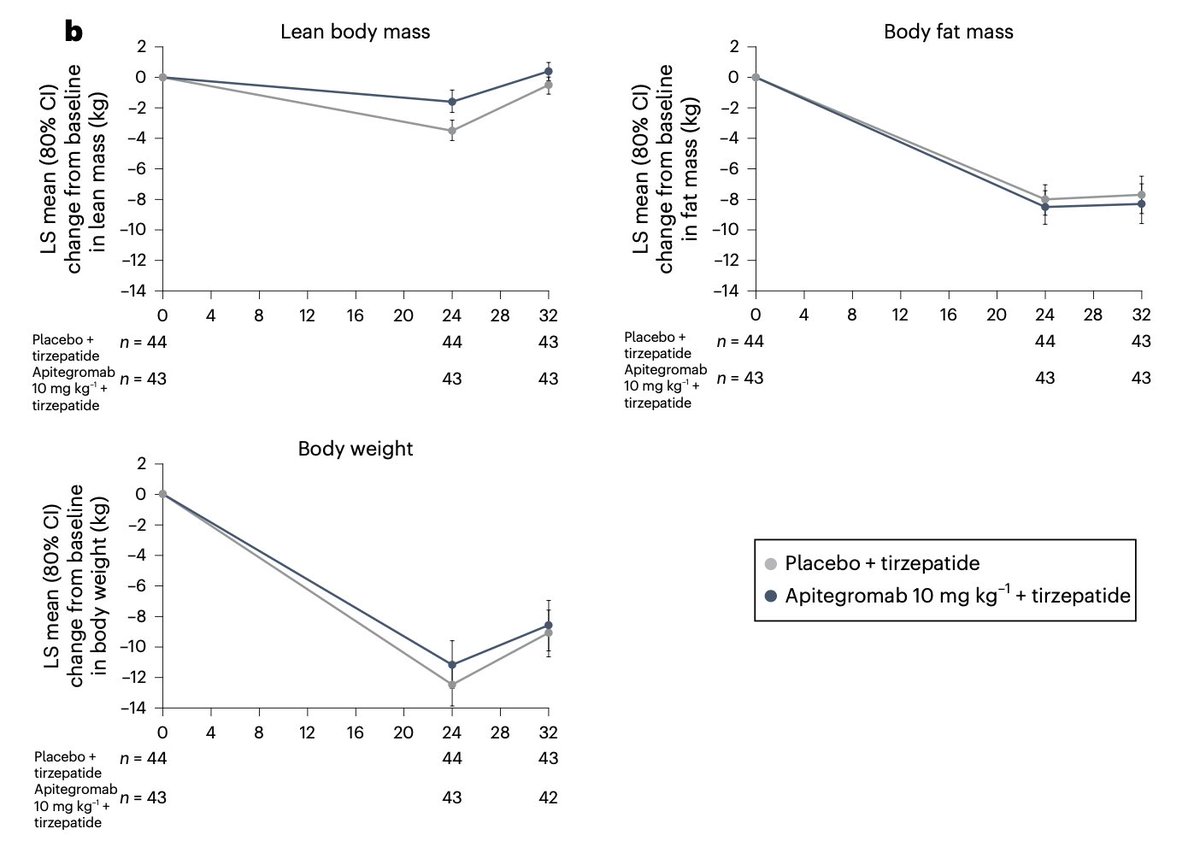
Preserving lean mass during tirzepatide (Zepbound) treatment. A randomized trial of a myostatin inhibitor for muscle mass building shows proof-of-concept.
A 55% retention of lean mass compared with placebo
https://t.co/urw9Gvy11L just published @NatureMedicine
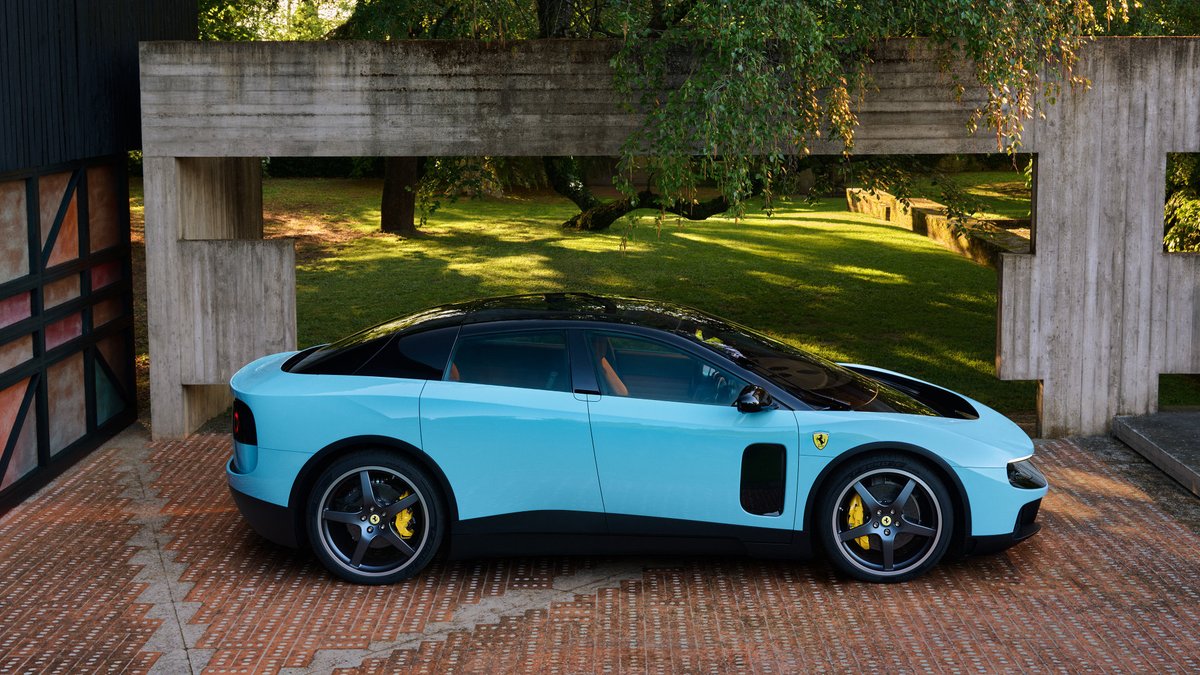
Ferrari has just officially unveiled its first ever all-electric car, called the Ferrari Luce.
• Starting price: $640,000
• Interior co-designed with Apple's former head of design, Jony Ive
• Range: 280 miles (expected EPA)
• Peak charging speed: 350kW
• 122 kWh battery
• 1,050 horsepower
• 0-60mph: 2.4s
• 800v
• Four-door four-seater
• Four electric motors
• OLED screens
• Weight: 4,982 lbs
• Front motors spin to 30,000 rpm, rears hit 25,500 rpm
• Car uses an accelerometer to capture real vibrations from the electric motors & rear chassis. An algorithm filters out unpleasant frequencies and amplifies only the more “musical” sounds. This can be heard inside and outside the car.
• Paddle shifter on steering wheel changes how aggressively torque is delivered, with five different levels
• The trunk has 21.1 cubic feet of space, the largest luggage capacity the company has ever offered
• 197.6 inches long, about as long as a Tesla Model S
U.S. deliveries start in Q2 2027. More photos in the thread below:
Researchers show that a type of #AI known as a large language model often outperformed physicians at diagnosing complex and potentially life-threatening conditions, including decreased blood flow to the heart, even in the fast-moving stages of real ER care when information is limited.
In early ER cases, the model identified the correct or a very close diagnosis in about 67% of cases, compared with roughly 50% to 55% for physicians. And the technology is only getting better.
Learn more: https://t.co/BwKX8r8BQq
Robert Sapolsky es un neurocientífico de Stanford que demostró que el estrés crónico es el asesino silencioso que los médicos ignoran.
Reveló 10 hábitos que haces todos los días y que te quitan años de vida.
1) Repasar conversaciones en tu cabeza
🚩😴 DORMIR POCO IMPIDE QUE PIERDAS GRASA Y GANES MÚSCULO
⚠️En comparación con dormir 7 horas por noche, dormir 5,5 horas por noche causa:
❌MISMA pérdida de peso, PERO:
⇩⇩ 50% MENOS pérdida de grasa.
⇧⇧ 50% MÁS pérdida de masa muscular.