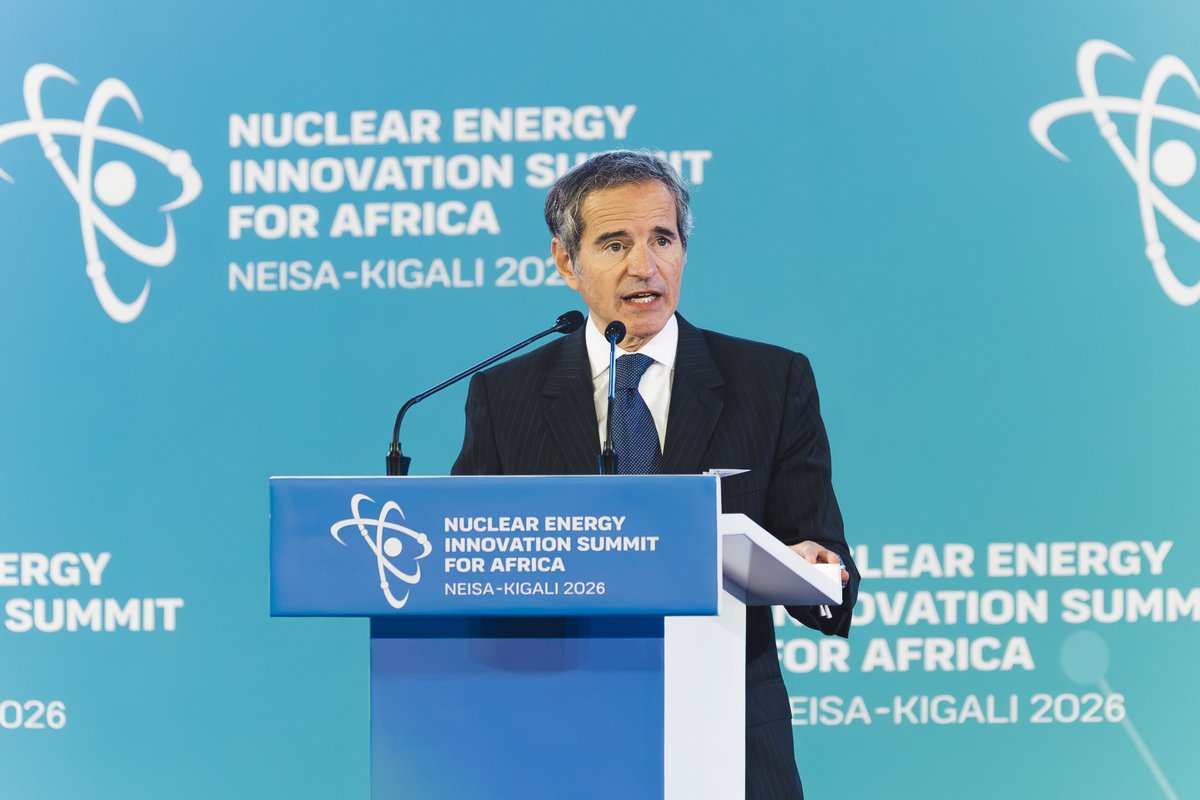
“Speeches can be very nice, but what we need is a reality that changes the lives of people out there. And nuclear energy can be a part of that.” — Rafael Mariano Grossi, Director General of the IAEA
A strong message delivered during the Official Opening Ceremony of #NEISA2026 in Kigali, as leaders and global partners focus on practical action, financing, and implementation pathways for Africa’s energy future.
The Summit continues to drive conversations that move beyond ambition toward real impact, sustainable development, and long-term energy security for the continent.
Learn more: https://t.co/OJOkERXWLu
Stay connected: #NEISA2026
“Africa’s nuclear future in the 21st Century will not look like the nuclear industry of the 20th Century. Small Modular Reactors and Micro Modular Reactors are game-changers. This technology offers greater modularity, enhanced safety, shorter construction timelines and better adaptation to our electrical infrastructure.” @SinaZerbo, chairperson of @RAEB_Rwanda speaking at the Nuclear Energy Innovation Summit for Africa. #NEISA2026
This morning at the Kigali Convention Centre, President Kagame officially opens the second edition of the Nuclear Energy Innovation Summit for Africa (NEISA), joined by H.E. Faure Essozimna Gnassingbé, President of the Council of Togo and H.E. Samia Suluhu Hassan, President of the United Republic of Tanzania as well as Rafael Mariano Grossi, Director General of the International Atomic Energy Agency. NEISA 2026 convenes heads of government, regulators, financiers, industry leaders, and technology partners to discuss concrete pathways toward advancing Africa's nuclear energy ambitions. Follow live: https://t.co/vJDT2DlzuY
“There will be no African sovereignty without African energy sovereignty. Energy lies at the heart of sovereignty and sovereignty lies at the heart of Africa’s future” said @SinaZerbo at
#NEISA2026 in Kigali, Rwanda.
@NEISAfrica
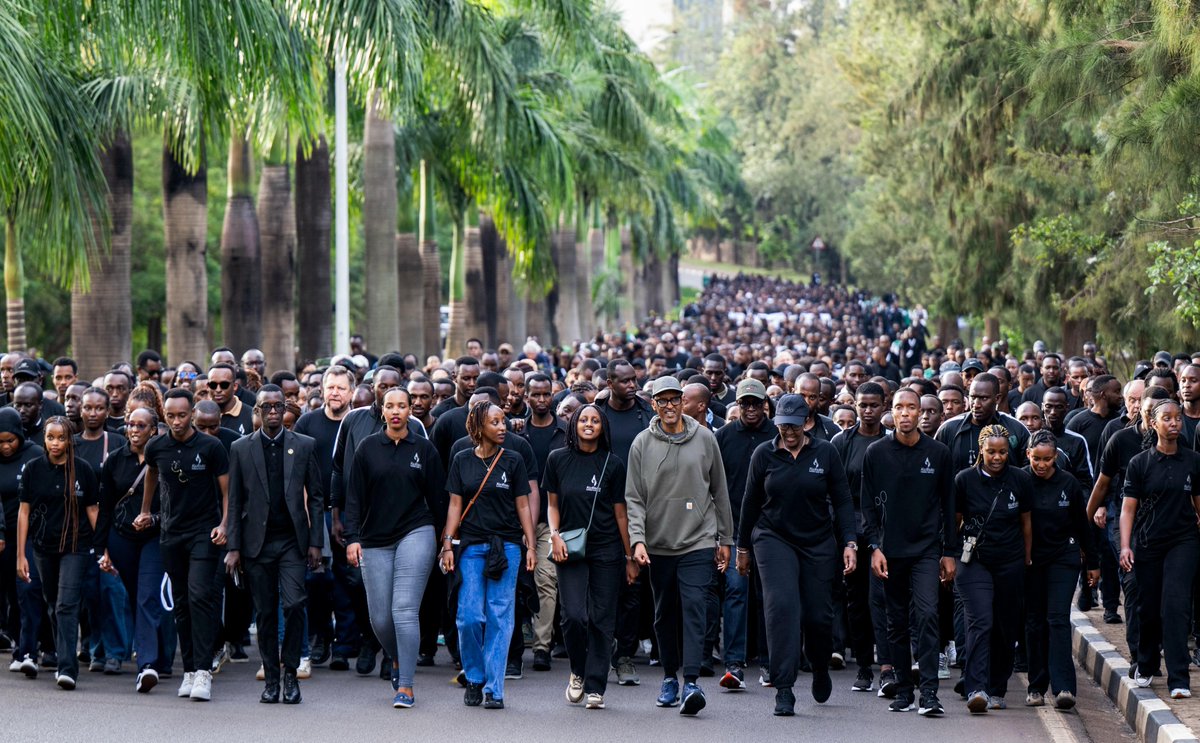
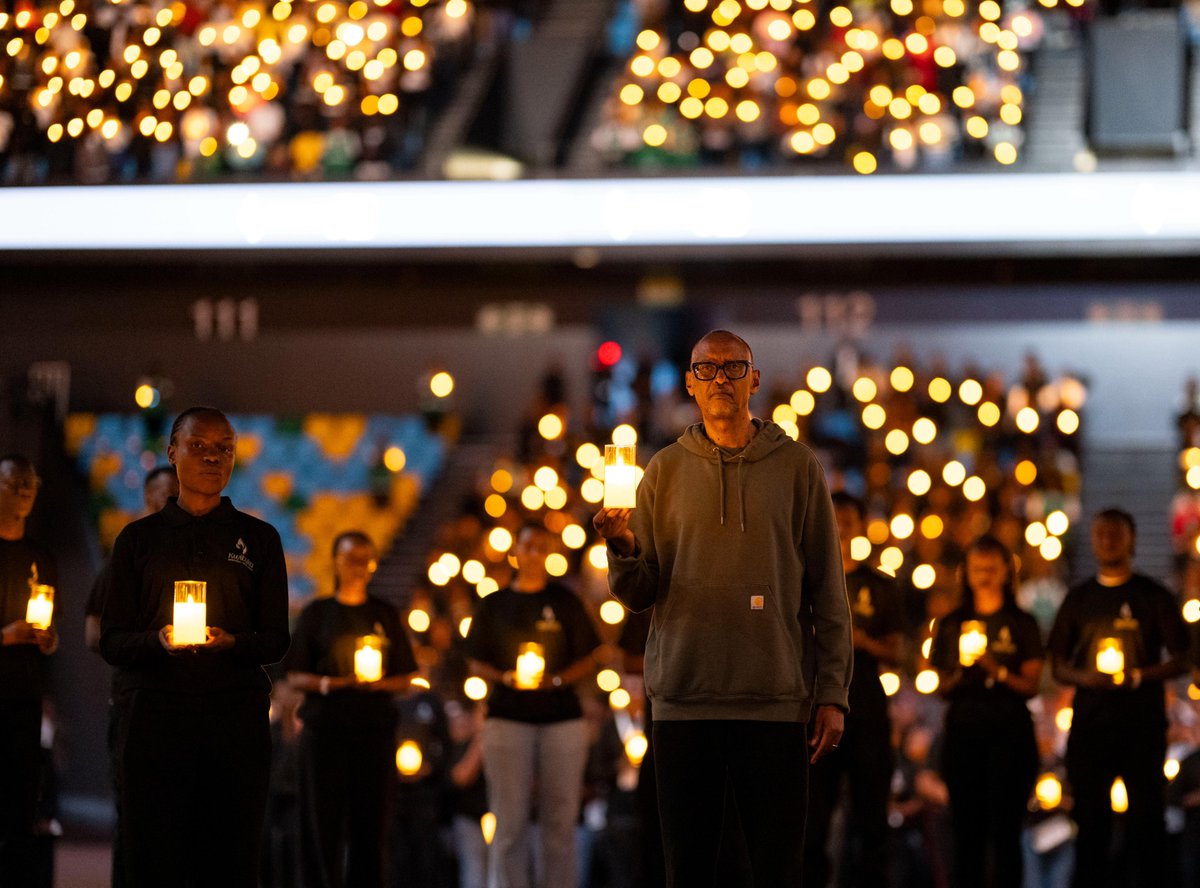
This evening, President Kagame and First Lady Jeannette Kagame joined thousands of Rwandan youth for the annual Walk to Remember and Night Vigil at BK Arena, as part of the #Kwibuka32 remembrance activities, where young Rwandans stand together to uphold the memory of the victims of the 1994 Genocide against the Tutsi.
@YvanKirenga@JosephRyarasa@reg_rwanda Power plants produces electricity to be used instantly. It’s like cooking for people who must eat now. GoR already subsidizes our low demand, making REG bleed cash and so unprofitable. So, adding supply without demand equals more losses. It’s not just generation, it’s balance.
@JosephRyarasa Curious to know where the policy gaps or ambiguity lie. And examples of specific constraints practically hindering private sector participation or delaying the progress?
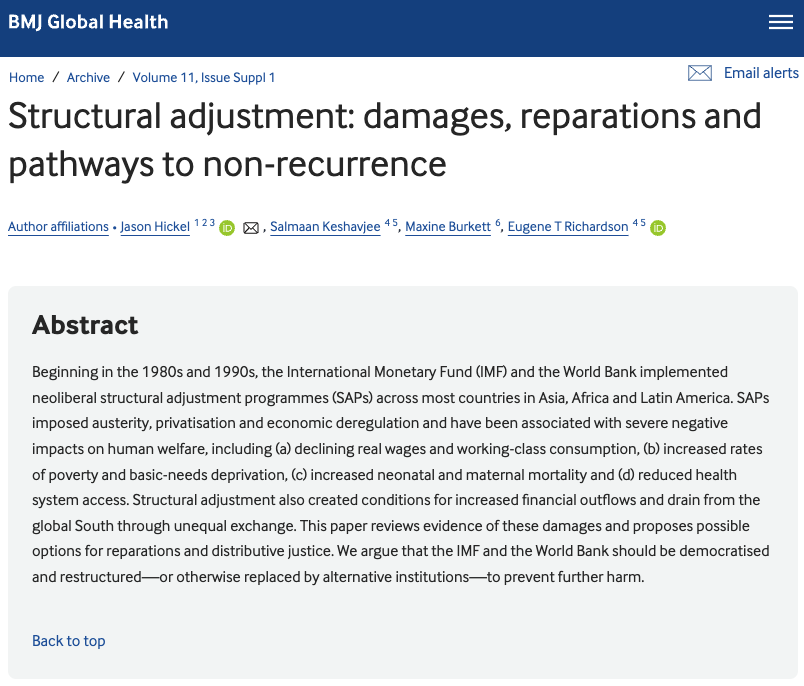
I'm happy to announce this new paper — we compile evidence on the extraordinary harms caused by IMF and World Bank structural adjustment programmes in the global South since the 1980s.
The empirical record is devastating: documented negative impacts on wages, poverty, inequality, maternal mortality, infant mortality, healthcare access, etc.
SAPs inflicted misery on the periphery in order to curtail their consumption, scupper independent development, and make labour and resources more cheaply available for the core.
https://t.co/21awBtifPu
@Jsabex@JosephRyarasa@gateteviews Numbers & digitization are important but fundamental decent. must be rooted in the depth of authority transferred. Fiscal autonomy & decision-making power at the district level works better for decent. And some services must remain cent. for stability and to avoid elite capture.
World Bank has banned PwC Kenya, PwC Africa, and PwC Rwanda for 21 months over a Sh150 billion fraud case linked to an electricity project in Ethiopia.
#Iran has been making at least $100 millions per day from oil exports due to oil prices surge.
Today, US is considering removing #sanctions on Iran’s oil to contain energy prices.
Iran’s attack on oil facilities is not only a military strategy but an economic one too.
Why aren’t there commercial SMRs out here yet?
1: Nuclear licensing in the US takes hella long 10-15 yrs
2: This is first-of-a-kind tech, meaning immature supply chain…. crazy high cost. So, SMR’s economics rely on mass manufacturing.
Rwanda actually have strategic advantage!
The current SMR vendors are likely booked out for many years by AI giants building data centers. We also know that key power generation equipment like steam turbines are already booked out years ahead.
On the construction side, vendors are unlikely to dedicate significant resources to build a single reactor in East Africa when they already have numerous orders across the Americas, Europe, and Asia. It would be more attractive for a vendor to invest resources in Africa if several countries on the continent were placing orders for the same reactor.
Since we can’t control the supply chain, we can focus on what we might be able to control; skilled labor.
If Rwanda gov’t can convince an SMR vendor to hire Rwandan nuclear scientists and engineers so they can train for several years alongside experienced teams, that could eventually make Rwanda an attractive location for the company to establish a regional team with intention of supporting SMR deployment across the region.
It will be a tough task to secure priority ahead of tech giants, but if anyone can pull it off, it’s the Rwandan gov’t.
Amazing how energy crises suddenly make “principles” a little bit flexible. You sanction a force on Monday and need the same force on Tuesday for protection of your billion-dollar projects?😅
The EU's financial support for Rwandan troops helping to fight an Islamic State-linked insurgency in Mozambique looks set to end https://t.co/GEO2YY3TiI
IEA releases record oil reserves to counter Iran war energy shock
Agency director Fatih Birol called the oil challenges “unprecedented in scale”, sending Brent crude prices a further 5 per cent higher to $92.30 a barrel.
https://t.co/m1q7k1s4Wz via @ft
Another Middle East war, another oil crisis. Energy security is no longer just geopolitics—it’s a transition question.
In this piece, I argue why energy shocks often strengthen the fossil system.
The nuclear path Rwanda took is a security measure.
https://t.co/bxX8FHnpuA
The new form of foreign aid is a great tool for political coercion and a great instrument for strategic resources control and exploitation. More effective than its predecessor.
At a time when many voices are calling for sanctions and external financial coercion, this piece highlights analytical gaps in treating such measures as the primary pathway to peace in Eastern DRC—and explains why that is a wrong starting point.
https://t.co/xxklQqQ0nC